Game Development reports and market data
Documents

Ex-Take-Two AI chief Luke Dicken warns AI bubble could "make 2008 look like a walk in the park"
The current generative AI boom within the gaming industry represents a significant capital misallocation driven by corporate hype and speculative investment rather than genuine technological utility.
- The current AI boom represents a massive misallocation of capital, with companies attempting to justify $2 trillion valuations on revenue bases as low as $65 million.
- Large-scale data center infrastructure is being built through circular financing and debt leverage, creating a bubble that may collapse before projects are even completed.
- The industry faces a long-term talent crisis because generative AI is being used to reduce junior roles to mere output, preventing the development of the next generation of senior talent.

Google Playground, AppLovin’s court battles, Scopely’s next game and plenty more
The mobile gaming industry is currently navigating significant shifts in platform technology, legal scrutiny, and market consolidation.
- Scopely is reportedly developing 'Project Comet,' a cross-platform action RPG based on the Marvel IP, intended to compete with Genshin Impact.
- AppLovin faces two major legal challenges: an anti-competitive lawsuit from Unity and a lawsuit from San Diego County alleging the company served inappropriate ads to children and collected sensitive data from their devices.
- Google has announced 'Google Playground,' an AI-powered game creation tool integrated with Unity Spark, signaling a strategic push into web-based gaming outside traditional app stores.

The Hidden Way Video Game Companies Exploit Workers
The video game industry frequently utilizes a tiered employment structure that creates a significant divide between full-time staff and agency-hired contractors.
- Video game companies frequently use external agencies to hire 'contractors' who perform the same full-time, long-term roles as permanent staff but are denied equivalent benefits, paid time off, and company perks.
- The use of agency workers allows companies to bypass significant employment costs, including expensive healthcare premiums and mandatory severance packages during layoffs.
- When major companies like Xbox announce large-scale layoffs, the figures often exclude agency workers, meaning the actual number of people losing their jobs is significantly higher than reported.
How Undead Labs saved itself and State of Decay from oblivion
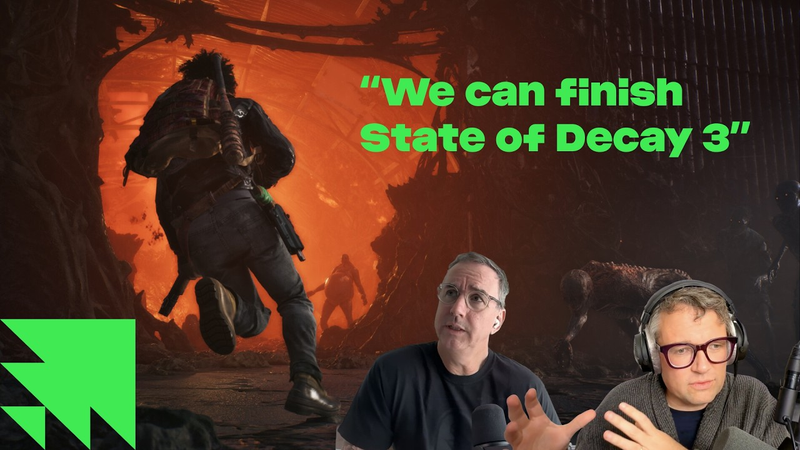
Undead Labs has successfully navigated a complex transition from a Microsoft-owned entity to an independent, employee-owned studio.
- Undead Labs transitioned from a Microsoft-owned entity to an independent, employee-owned studio to ensure the long-term viability of the State of Decay franchise.
- The studio implemented a workforce reduction to align operational costs with its new independent model while issuing stock options to remaining staff to foster shared ownership.
- The State of Decay franchise has reached a milestone of 25 million players, with significant growth driven by the discoverability and scale of Xbox Game Pass.

How Behavioral AI Helps Fight Cheating
The gaming industry faces a significant security crisis as the professionalized cheat-as-a-service economy reaches an estimated valuation of $5 billion to $8 billion.
- Anti-cheat technology is shifting from software-based detection to behavioral analysis, which monitors player inputs to identify anomalies regardless of the underlying hardware or game file modifications.
- Behavioral analysis is increasingly necessary to combat 'cheat-as-a-service' economies and hardware-assisted cheats, such as DMA (Direct Memory Access) cards and second-PC setups, which bypass traditional OS-level security.
- Studios should integrate anti-cheat strategies from 'day zero' of development, as cheating directly impacts player retention, game economy stability, and the overall reputation of the title.

Why Great Hires Fail at Startups | Garry Hill, Makers Fund
Startup recruitment failure frequently stems from excessive hiring speed and an over-reliance on narrow technical requirements.
- Startup hiring failure is primarily driven by excessive speed and an over-reliance on pedigree from major tech firms, which often masks a lack of the grit and adaptability required for early-stage environments.
- Founders must replace informal hiring with structured, multi-step interview processes that prioritize 'culture add' and T-shaped talent over candidates who simply mirror the existing team.
- When evaluating high-profile candidates, recruiters must distinguish between an individual's actual contributions and the support provided by the established corporate infrastructure of their previous employers.
Why Video Game Studios By Big-Name Developers Fail So Often
The frequent failure of independent game studios founded by veterans from major AAA companies stems from a disconnect between the resources of large organizations and the realities of smaller, independent operations.
- New studios founded by AAA veterans often fail because they lack the specialized infrastructure—such as dedicated marketing, cinematic teams, and administrative support—that large companies like Blizzard or Rockstar provide by default.
- Founders frequently struggle to adapt to modern market realities, such as the necessity of Early Access, community building via Discord, and iterative beta testing, instead relying on outdated 'surprise launch' strategies that are no longer effective.
- Excessive venture capital funding, common during the 2021–2022 zero-interest-rate period, often leads to 'scope creep,' where studios artificially inflate project size and headcount to match their inflated budgets, resulting in complacency and unmanageable complexity.

The Age Of AI Copy Cats Is Upon Us. Here's What Game Devs Should Do...
The rapid proliferation of artificial intelligence in game development has created a landscape where simple, gimmick-based games are increasingly vulnerable to immediate replication.
- To protect games from being easily cloned by AI, developers must move beyond simple gimmicks and infuse projects with a unique, cohesive artistic voice, personal storytelling, and a distinct perspective.
- A game's defense against replication lies in its 'humanity,' which is achieved by limiting inspirations to a few specific, sharp influences rather than relying on the broad, average data sets used by AI models.
- Developers should prioritize building a dedicated audience, which acts as a 'lever' that ensures a player base exists even if a game's core concept is copied by competitors.

Games media crisis deepens, Bloober hunts weird horror titles, and New York Games Week launches
The games media landscape is currently undergoing a period of profound instability, marked by widespread layoffs and a fundamental shift in audience acquisition as AI-driven search algorithms disrupt traditional traffic models.
- The games media sector is facing significant instability due to layoffs and AI-driven search algorithms disrupting traditional traffic models, leading to a shift toward niche publications and podcasts.
- Bloober Team is launching the 'Broken Mirror Games' label, led by Tymon Smektała, to expand into a global horror platform by managing two first-party and five second-party titles.
- New York Games Week is debuting as a decentralized event model that utilizes existing city infrastructure and coordinates with New York Comic-Con to replace traditional, rigid trade show formats.
Game Development Workforce Report: New Zealand 2026
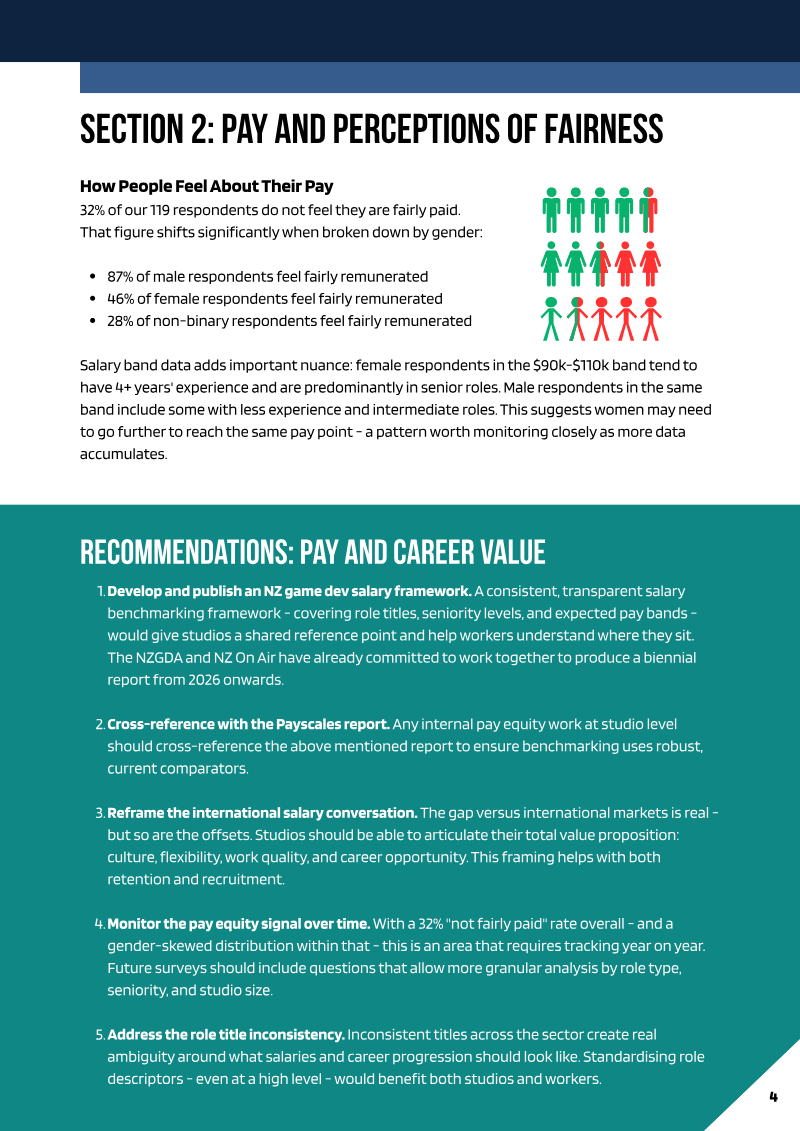
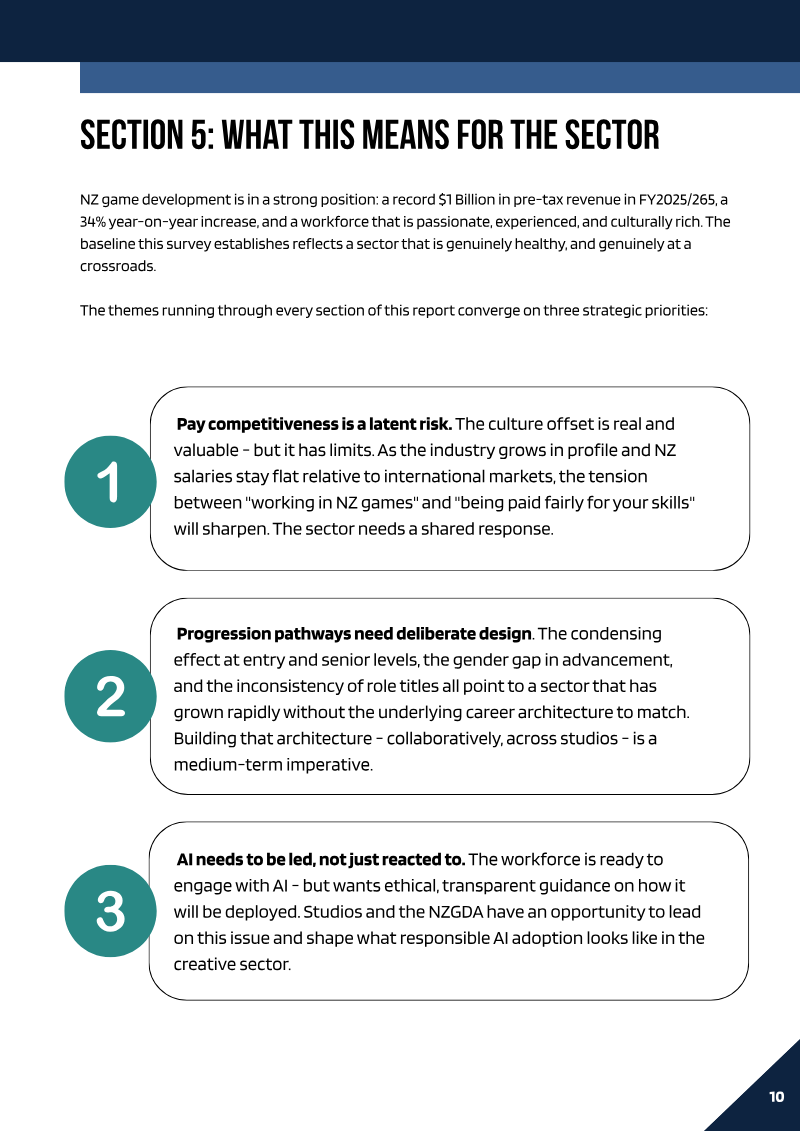
The 2026 New Zealand Game Development Workforce Report provides a comprehensive baseline analysis of the nation’s gaming sector, focusing on workforce demographics, compensation, workplace culture, and the impact of artificial intelligence.
- 32% of industry professionals report dissatisfaction with their remuneration, highlighting a critical need for standardized salary frameworks and transparent industry-wide benchmarks.
- While 60% of workers recognize the utility of AI in technical tasks, 55% express discomfort with its integration due to concerns regarding job security, creative quality, and the erosion of junior-level skill development.
- The New Zealand game development workforce is currently composed of 59% male, 24% female, and 4% non-binary employees, with a high concentration of senior and lead-level roles.

As a Battlefield studio, is Criterion Games really still Criterion?
Criterion Games has evolved from its origins as an independent developer of high-octane racing titles like Burnout and Need for Speed into a foundational pillar of the Battlefield franchise.
- Criterion Games has transitioned from an independent racing developer into a core support studio for the Battlefield franchise, working alongside DICE, Ripple Effect, and Motive.
- The studio maintains its creative identity by applying its historical expertise in high-octane, responsive gameplay mechanics to the Battlefield live-service model.
- Nearly 25% of the studio's workforce has over a decade of tenure, providing the institutional knowledge necessary to preserve the studio's design culture during its integration into a larger ecosystem.

Tencent’s bid to create the next FromSoftware and Larian
Tencent Games, through its Interactive Entertainment and Game Global (IEG) division, is actively pursuing a long-term strategy to cultivate category-leading game studios capable of achieving the global success seen by developers like FromSoftware and Larian.
- Tencent is shifting its global strategy to cultivate category-leading studios capable of producing high-quality console and PC titles, modeled after the success of FromSoftware and Larian.
- The company currently manages approximately 20 studios worldwide, utilizing a 'long game' approach that prioritizes creative autonomy and operational support over rigid corporate oversight.
- Tencent is leveraging the global success of Chinese-developed titles like Black Myth: Wukong to bridge the gap between its traditional mobile-centric expertise and the high-end console market.