VideoThe Game Business
Games media crisis deepens, Bloober hunts weird horror titles, and New York Games Week launches
1 Oct 202653 min video

This week we dive into Blue Team's new horrorbased games label and we discuss the future of events [music] with New York Games Week. Hello and welcome to the Game Business Show. Now this week's edition is sponsored by Keyword Studios. They are of course the video game industry's biggest endto-end partner. They help developers to make their games, launch them successfully, and they make sure they're supported at a global scale. They've got 13,000 people across 26 countries to ensure they can do just that. and they have strong technology. They know how to partner with people and connect teams with the right experts around the player experience. Now, for the fans, that means marketing shaped around players, the communities, and the culture. From audience insight and campaign strategy to global creative activation, Keyword Studios helps developers reach fans with work that feels relevant, timely, and built the way players actually discover, share, and engage with games. You can find out more on the Keyword Studios website or alternatively check out the links in today's newsletter that's attached with this show. And speaking of this show,
we've got a huge one for you. We've got a couple of big interviews. One is with Tim Smecktala and Pota Babiano. Now Tim is the new head of Broken Mirror Games, which is the sub label of Blue Team and Piet is the CEO of Blubbert. We're going to chat to them about building and signing experimental games alongside their big AAA projects such as Silent Hill. It was a really good interesting chat and we have Guy Bloomberg coming on after that. Guy is an events veteran. He's worked at Dream Hack. He's worked at PAX. He's worked with me on numerous games in biz events. He and I actually were a little involved in E3 as well, the one that never came out. Anyway, he's going to talk to us about his new project, New York Games Week, and we just sort of chat about the events industry in general. So, look forward to that one as well. That's later on in the show. But before we get to them, I have a few notices. First, we're going to have a bunch of events coming up over the next three months that we'd love to see you at. So, if you'd like to meet me, if you'd like to meet the game business team, come along to these. We're going to Middlesbrough in the UK in the middle of October to host a couple of sessions, including an onstage interview with video games legend, the
father of PlayStation, Ken Karagi. We're then going to be in London at the end of October for Comic-Con to do an interview with Brenda and John Romero. That should be interesting. There's also going to be, you know, all of this will be put out as a podcast, by the way. So, you know, if you don't can't make it, you'll still get the content. And then we also have a couple of interviews potentially happening at an exclusive legal event that's also in London taking place just before the Game Awards. So join us for those if you want to. I'll give you more details as we get closer to them. Well, before I continue, I do want to mention a throwaway line in last week's episode of the show which led to some, shall we say, unwanted headlines. So for those of you who are paid subscribers, you'll know that I do something on a Monday called Here's the Dr. And here's the Dring is basically an opinion from me. Sometimes it's a bit of a gossip column as well. It's it's pretty casual and it's for those who pay to subscribe to TGB. Now, last week I did one for Tokyo game show. It was me reporting on all the things I heard in the Tokyo bars, which was what was the industry chatting about basically. And one of the many things in that newsletter was the
Hidekima to Xbox story. And in that column, I talked about some of the numbers that were being thrown around about how much his game Fizzen was going to cost to make. Now, this was gossip. This was rumors. But the numbers that were being thrown around range from $300 million to $600 million. The one I heard most frequently was $400 million. In fact, they were the people that I would most potentially trust with getting the right number. But even then, like it's not something that I would run a headline on. Ultimately though, nobody really knew what Xbox had agreed on in terms of their price. Now, in last week's news and analysis show, this equivalent of this show last week, I actually mentioned that $400 million figure. It wasn't in the script. I kind of went off script a little bit. It isn't in the newsletter. I just casually mentioned the reported number that I'd heard. Now, naturally, this got picked up by Reta, by Reddit. I got a text on Saturday to say, "Hey, are you saying that Xbox paid $400 million for Kjima's game?" So, I had to quickly clarify this was just a rumor that had leaked over from one podcast into another. People were reporting my rumored figure as
fact, and it's absolutely should not be treated as that. however, actually do now know now roughly exactly what Xbox is paying for Vizant and it's less than half that rumored number. Maybe the $400 million figure is what PlayStation were being quoted. Maybe PlayStation wanted different things. I I don't know. It's all speculation. Maybe someone was just making it all up. My point being the $400 million quote from last week was just a bit of gossip that I'd heard. I now know that's absolutely not what Xbox paid for it. Now, if you actually listen to the podcast, it was kind of irrelevant. I was sort of talking about the fact that Xbox was still investing in big projects. They weren't just cutting stuff. They were making things as well. And that was a point I was trying to make. And whether it was 400 million, 200 million, 150 million, 10 million, the point still stands. But regardless, I just just want to clarify that that number was isn't true. Anyway, before I head over to our interviews this week, I just wanted to talk about the games media very briefly. It's been a bit of another tough week for people working in the world of writing about video games. We just had layoffs at future including people at Games Radar and Tech Radar. There's also been Metro
in the UK. That's a UK newspaper that has a big gang section. Yeah, they've all been put on notice as well. We've talked about the state of the games media a lot. Um, there's a few things going on here. The ad market sort of okay at the moment, but people are struggling with traffic acquisition. This is partly to do with Google. In fact, it's mostly to do with Google, the AI Google algorithm, which means that now you don't need to click through to the website to get the information you need. Google's scan the website, take the information and present it on the Google search bar. And some media outlets view this as stealing their content effectively. Now, obviously, there are journalists doing the things that I'm doing with Substacks and podcasts and pay walls and patreons and all sorts to try and break their reliance on Google, but although that's okay for influencers and sort small outlets like the game business where we don't have huge overheads, it's tough for more dedicated websites where big teams are built on basically getting lots of traffic. Now, AI is really unsettling the media space right now. And more important than ever, it's become about audience, which is a good thing, but unfortunately, there is a whole media industry that's having to
adapt to that. And frankly, it's going to inevitably get smaller, and we're seeing lots of people lose their jobs as a result. As much as I believe in the rise of niche publications such as this one, obviously I believe in this, there's very little room for growth in terms of being able to hire multiple journalists. So, stuff like this or what Steven Tortillo is doing and all those wonderful people, it's interesting. I think it's fascinating. I enjoy doing it, but I can't actually see it replacing what's sort of falling away. Of course, traditional media won't go away entirely. It'll get to the level it get to a level it will stabilize. And GTA should be a nice boost for the media sector as well come November, but I don't think that will be a long-term boost. And we will have see more of these stories in the months, weeks, and years ahead. Now, on that cheery note, let's talk about horror, shall we? Um, one of the big horror studios in the world is Blubbertine. They make Silent Hill 2. They make Kronos. They do loads of cool stuff and the developer started off making when they started they did sort of okay horror games. They were all right and then they've been getting gradually better and Silent Hill 2 was like brilliant. The developer now wants
to become known as the greatest horror game studio in the world. And to do that alongside it big AAA games it's now launched a new label designed to find more interesting unique different horror titles from other studios. That label that they've launched is called Broken Mirror Games and it's being led by a chap called Tim and Smecktala who used to be the franchise director on the Dying Light series. Now, Broken Mirror Games is working on numerous titles, but the two that have been announced are the licensed game Sword Genesis and the Switch to exclusive called Onyx the Dark Grip, which I actually saw at Tokyo Game Show. It's very interesting. And the reason why I thought this interview would be good is we just had 10 cent on the show on Tuesday just gone. and they talked about how the studios it looks to invest in are studios that are like Larry and and from software that have a long-term vision to be leaders in the sector that they're in. Maybe not with game one, maybe not with game two, maybe not even with game three, but eventually have a path to becoming the leader in the space they operate in. Blubber team, which has been invested in by 10 cent, has that goal. That's what it wants to be, the world's leading horror studio, and this new label is part of that
vision. So, I found this really interesting. So do enjoy my chat with Peter and Timian and Broken Mirror Games. Uh hello, welcome to the show.
Hello, welcome.
So are you are you new to the family?
Me? Of course. I'm uh new to the Blue Team family. I have joined starting September. So basically this is my first month. But I'm not of course new to the industry. I have spent more than 20 years in the game industry. And on a lot of that time was like the early part of my career was uh a game journalism. I was covering the whole industry in the biggest Polish magazine called CD action. But this is actually ancient history for me because the last 13 years I have spent at techland where I was working on the dietite fractures and in their last few years uh I started basically as a producer/junior game designer. I ended up as a a franchise director for the whole series. So I it was quite a quite an adventure
quite a trip and in the last years I was responsible for the franchise as a whole it's position on the market trans media publishing also game direction so a lot of things in in that area and now I based on the invite from blue team I decided to join um our own curated imprint called broken mirror games which I will take over managing the whole our portfolio and and making sure that it delivers the quality and uh some additional elements that we would talk about in
wow guess quite a step to go from that massive franchise to what why make the move what what was the inspiration
I think the the promise and the vision for both blue team and broken video games that I got from Peter was uh it was something that excited me a lot because I think the strategy for the whole group is super clear blue info focuses on the on on their particular
brand of psychological horror. So, Blubber knows what he's doing, but also Blooper wants to basically become a platform, a name to go do for horror games. And then when you focus like when you know what you're doing, when you focus on the thing that you do best, you also realize that there are different aspects of horror, different perspectives of horror. And the broken mural games is supposed to deliver that. So we are this crazy inventive adventurous child of Blueberry team that that has the liberty to to try different things and I think the titles that we have already announced and that the public knows about them already kind of show that and we look at horror from different angles. So, so definitely that was that was the thing. I am that kind of a person that constantly is looking for something new. Constantly is looking looking for new experiences and uh if you look at my history, I have spent 13 years making Parker zombie games. So, I decided it's time to, you know, open up
some new setups synapse collections in my brain.
I went to see Onyx at Tokyo Game Show. Um, and you can already get a a distinct vibe there. You sort of said it there, but sort of I've got it top line. What is the vision for Broken Mirror? What is the the goal of it? You've sort of talked about why it's different to blubber.
It's actually daring the name. It's a broken mirror. So, we want to show different perspectives of of of horror. When you break a mirror, it gets fractured and like even though you look at the same thing through it or then each part of the of the mirror shows it slightly differently and this is exactly what we are trying to do. So, so it's single player, it's multiplayer, it's, you know, a big release PC consoles or Switch exclusive. It's more actionoriented table horror. It's like whatever we come up with, whatever we find exciting, whatever we feel that can bring something new to the horror genre, we will try to explore that.
So, obviously, this is great and I think
it's a really cool thing to do something that allows you to explore and be inventive. And I'll ask about Onyx and stuff in a moment, but the how do you make sure it doesn't get in the way of those important AAA projects that you know the Silent Hills, the Kronos that sort of blue team. How do you make sure you can stay focused?
Can I [laughter] Well, so we also have a very unique development model where Blue team has its own teams. They work on the games that Blue team does and uh we kind of build the expertise there. for uh broken view games. We look at partners through model development studios either established I would say horror luminarist or or just people we believe in people we trust in people that sometimes even come up to us with a pitch. Uh, and if we see a developer that gets the horror in the same way or with the same depth that we do or maybe has a cool game idea and needs that blue team expertise to bring horror into that cool game idea or make sure that the horror is expressed there. Those are the
approaches that we are considering. Of course, everyone knows that the industry is in a very tough place. So we also need to be um meaningful of the of the budget side of it and the business side of it. But definitely we start with the idea, we start with the pitch, we start with question, does it bring something new to the genre? Is it something that excites us? Is it something that we have not done before because we also don't want to repeat ourselves too much.
Well, I think onyx talk about that because I I think that kind of embodies it in a way because um I I I look Peter, we talked about this last year. I'm big Eternal Darkness fan. Um I was excited when I saw that project. Um um one of the first things I did was say, "Hey, can I go and see this at Tokyo Game Show?" But it's a switch to exclusive. You can only play in handheld mode. Um it feels like quite a risky project. It's, you know, you're narrowing down your audience quite a bit by doing that. Is that sort of indicative of what we can expect? The fact that actually, you know, we're not necessarily going to follow the rules of what, you know, of what the what the industry says? So I
cannot say I cannot say will just jump only on the risky projects. I don't I don't think Peter will allow me to do so. But uh but still of course onx is something that that interest us but also what's important to say here is that we are looking at this long term. I have just joined so you know everything is special.
But when we are talking with regarding how we see broken mirror games we are not talking about how we see broken mirror games today. We are not talking about how we see broken mirror games in 6 months. We are talking about how we see it in a year. We actually have a much more long-term plans for the for the print and Onyx is a good example of that. We understand it's a risky project, but this is actually a project actually maybe risky is not the best word. I will get back to it in a second. But it's also a project that allows us to build a relation with Nintendo and allows us to build a relation with Nintendo players. And and now I will get back to the risky part. You say risky, I
would prefer to call it innovative or novel or trying to invent something new. And and also when you look at at Nintendo as a brand, Nintendo has the quality that they bring to the market, the gaming market, this is exactly what Nintendo is bringing. Like they they don't chase the trends. They don't chase higher specs and poor shaders. What they chase is innovation that fuels gameplay. And so Onyx is that kind of of a game. Sometimes you just have to take those innovation leap of faiths and we are doing that with Onyx. I actually would love you to play the version of OnX that we have right now in the studio because the Tokyo one is is not the newest one which I think shows even more how how innovative this game will be. And uh but of course that's that's maybe for the future. So
yeah,
I think that kind of answers your question. I think Chris we talked together at GameStop more than a year ago.
Yeah.
And I told you that I'm a fusion of how long was very little in my house. And by
the way, I was also a game journalist and I made the first website in Poland which was the world of Nintendo and then I organized the first two Nintendo camps in Poland also. It was pretty cool. And uh right now because of only I'm also making my dream culture because I really would like to have an exclusive horrors on internet platforms and the gold era with game cube now with eternal darknesses and TV with NB zero or which was a really cool game. I would like to get back to those times trying to do this right now.
So as you can see it's not only business. It's just you know making dreams come true. Resident Evil Zero and the remake and four and and Eternal Darkness. It was a glorious time to be a horror fan and a Nintendo fan. And Luigi's Mansion obviously as well to a degree. I guess last year you told me, I think you said you were 250 people at Blubber last year and you talked about doing the best you can to avoid layoffs because if you can keep a team together,
they can, you know, they learn and they develop and I I love that. And that would make me assume that you were going to be a little bit more risk averse, be a bit safer with the projects that you choose to sign and work on. Whereas this, I know the word risk isn't the word you use there. It's novel and innovative, but it feels like you're taking a few, you know, rolls of the dice on that. I mean, what makes you comfortable doing this sort of thing?
You know, I'm always telling you that every single step should be safe for the company. This project will not destroy the studio. So, I told you about 250 people. Right now, we have 170.
Okay. So we are going into a little bit contrary to the to the market and uh we don't want to be bigger and we don't want to create projects which are very big but taking at the same time risks. So if you think about onx if you think about some other second party projects they are a little bit smaller than those which you are doing on first party but
at the same time we are putting a lot of our attention and even if we are feeling that maybe it's too much to put to much bigger budget into this project we still believe in the quality because you are as good as your last project and we would like if we are not sure that we are able to deliver the quality, it's better to cancel the project. Right now we have seven titles in our portfolio, two on first part and five on the second part and we are very proud about what we are doing. So I hope that as long as you are keeping doing this job you will be able to succeed and and you know the way that we organized our company in a little bit more vertical rather than horizontal way is helping us to understand players but also not making the same mistakes by creating the other games. Because if you are doing a different kind of game, it's a huge
choice that you will fail again. And if you did something great in your last idle, you will be able to improve it if you are going into the same river. So balance I would I say of course there's this old saying that you cannot have all of your eggs in one basket, right? So, so actually this is that open games the second party is is also a way to build another pillar around stability but we try to apply logic apply reason apply sense first when we look at things is it self-publish is it publisher how big the team is what's the general who's the marketing partner so even though the project might seem risky then I think the business side is is is much more stable and and actually tries to balance different different approaches and different things. I think this is something that elasticity that that that that being agile is actually something that the current state of the industry wants.
It's interesting because I was talking to Tencent, right? you know, um, it's this week's episodes with Tencent and I know that there's there's history there, but their strategy is that they believe that a studio should focus in on something they're really good at and then the next game they talked about the from software journey where they went from Demon Souls to Dark Souls to to Bloodborne and then it led to Elder Ring and it sort of you can see the journey because they were they basically stayed in a genre and they learned from it and they developed it and they did sort of side ones but it all led to a sort of a journey for that studio. Larium was another one that went, you know, those of divinities led into Boulders's Gate. And I guess that's the sort of similar thing that you're doing here with you've got your horror games, you know, the ones you're making first party, you're working with these other studios. You're learning from them. You're seeing what works, what doesn't work, and then it all feeds into basically becoming a better studio at the thing you do. And and I get that's why I picked up on what you just said, Peter. It sounds like a sensible, thoughtout strategy. [laughter]
There's no question there.
Yeah. But actually, I think there's something that I can add to because I think there's actually even slightly more to it. Of course, Tesla is everywhere in the game industry right
now and everyone listens to what they say. But the first party, the Blubber team is exactly doing that. They building expertise within the genre, within the type of experience, within the type of the game that Blue wants to make. But at the same time, I think the ambition is bigger than just be creator of this particular brand of games. The ambition for Blubber team is to be the flur household name. Yeah. Horror platform and then and it seems it makes sense looking at the popularity of horror in pop culture. The biggest franchises in movies are basically the horror franches. So Blubber follows the strategy that you convention that it seems is also championing but also has bigger ambitions and tries to build a bigger platform a bigger perspective on horror in general. And I think this is actually where it starts to make even more sense. Would we be able to do this viney our first party games? Of course, from technical point of view, but it's like
breaking the eye of the studio. So, so that's why we would like to speak what what we are doing the best at first party and on second part broken mural games. We are able to create new things by working with the studios which have expertise on this particular things. You said you're working on is it five at the second party broken mirror side of things at the moment. How many can you is there a limit to how many you can handle? Is it is it five
right now? Again, it's a it's a question of balance and I think we would not like to work on more today. I'm not saying what like what what what the answer will be next month. I'm not saying what the answer will be in two months. But I think we already have our plate full and um of course we are focusing on the games that have been already announced and um this these are Soul Genesis and Onyx that are great both with the release plan for next year. It is a lot definitely and I also don't want to kind of jump onto it expanding the team too
much right now just blown crazy with ideas. We already have a lot actually five is a super substantial number come to think of it. Uh so so I would not like to extend that much.
Mhm.
But having said so if there's a great idea, if there's a great pitch, if we find a game that's I don't know like Gamescom Asia and we find a game from Thai team that is super interesting and and we feel it has potential then of course we will consider but but I think again you have to be risk averse with the current climate. You have to be reasonable. You have to be kind of focused on what you are doing and this is the path to success and this is what we are trying to achieve from the business perspective. We don't suit more than five but we are dream catchers and if we will find something like comics for example again uh I can't promise you that we are not bor [laughter] what do you look for then you mentioned there it's sort of a unique teams doing innovative things that sort of catch
your attention is there something more nailed down that when it comes to partners that you do work with is there like you need a proven track record or the pitch needs to be strong and when I say pitch needs to be strong I don't mean that there's a nice deck where you know all of the USPS and P lines are defined. It needs to be an idea where we look at it and we say, "Wow, this is something that that really brings a new take on the horror genre." Like basically we need to see, you know, new backdrops, new obsession in a game form. Like if you get the parallel and even if we look at something that's a little bit established, like for example, the online horror multiplayer of So Genesis, I think the experience that we will be bringing with so Genesis is different than everything that's out there in the market. This is a genre. Okay. But how we take on the genre is different in a way that like the dynamics between the hero and let's say judge in our in our case and and the victims the accused in our case is completely different. We built a completely different experience just using some of the elements of the
genre. So definitely the creative first. Uh you were asking about teams. Uh so far we are working mostly with teams that we have some kind of a history um as blubber uh that were partners for us for some time and we kind of build a relation build trust build common understanding of what we are trying to achieve. So uh for example for soul genesis it's actual studios for onyx is parasite a studio that basically was built by ex blubber team members so so you know there's a history there but it's not the whole story I don't want to go into too many details that we have just announced those two titles at this at this moment
and again uh I would also like to emphasize that we will be looking everywhere for those horror experiences. So, if it's a cool horror game made in Thailand or Brazil or or somewhere in Poland, uh then then we will definitely
consider that.
I mean, I don't know if you're allowed to say it. Is that is there like a limit on the sort of budgets that you work within?
We don't have limitation in thinking. Of course, it has to make sense. We don't want to get smaller products. I would say that Orex is perhaps the jealous bar because you know we we are additional value. We spent a lot of time by creating double A and almost triple A and we are feeling here very well. So you could expect those things which we'll be doing in the future rather not small but a little bit smaller than this what we are doing in the first part. Uh but again like we don't have that defined. I think that's the best answer to your question. Is the top budget for a broken mirror games project defined? It's not what again we start with the creative part and then we try to make it work if we believe in it. So looking for partners trying to finance them by
ourselves just trying to find a build a business case behind it. So I can easily imagine that like if those stars align you can also go triple A if if if that will happen. But I think the order of things is there's a good idea there's a a great developer that we trust and that we feel has this vision defined in their heads in their documentation in the team they know what they're trying to believe and they have a chance of delivering it and then we try to build the business case around. I don't know how big is the the broken mirror team is it entirely self-contained do you lean on resources from blubber as well
a little so like it's mostly you know because we work in majority with external developers that a lot of the development work is handled by those teams
[clears throat]
uh what we have here is I would say like a creative and production and business and marketing team that understands that gets additional broken your games and can help to produce those games can with
the creative part, with the design part, with the direction part of course can help with the with publishing the marketing if that's on our side and then DNA the creative part the DNA this is something that you can also attach to our project as broken mirror games and and this uses the heritage then the knowledge the knowhow of team now when it comes to development resources if you put it this way depends on the setup sometimes you use the um let's say the the mocha teams the the animation teams, the audio teams, whatever is needed and wherever Blubber can apply the experience that it gets and I think that it's also correlated with the actual stage of first party development because for example we are working on peruction the whole thing is not involved in the peraction. So so we are able to uh put some of our box into second part. In some way, it's also giving us the right balance because we don't need to think
about okay, we are finishing the game, so maybe we should cut some stuff. We always are thinking, okay, how we could use our resources and you know the best of all is that most of those people are with us for more than 5 10 years. So, they have DNA of Blue team and we don't want to change it.
[clears throat]
I think I need to say this at this point that maybe embarrassing Peter a little but I think the first thing that I got and I got it almost instantly as I entered at the office is that that you know the longterm family based relation building that happens in this team is something very very in a way like we have a Polish heart but this is super Japanese in a way that you know we we build those relations that basically last decades and uh honestly like I have just joined but but I I can easily see myself working there at at Google team and and being with broken mirror games in like 20 years even from now.
Oh wow.
If a house because we have the youngest
you [cough and clears throat]
Yeah, this is [laughter] although I'm sorry I'm worried about Timman's cough that he might not make it might not make it might not make it to the end of the interview at this point.
Very very strong AC here. So that's that's the reason. Sorry.
Um well I'll end actually with one final question. is a question I often ask at the end because you've talked about having this long-term you know relationships. You start here and then you know you're not you're thinking pops multiple games ahead and all that kind of stuff but where would you like to see broken mirror in 5 years shall we say?
Well I I think it's actually a very easy thing to answer like so first of all I think bigger in terms of blue team what I would like to see and also help to happen is that we'll get closer to building that horror platform. So when players think horror game, the first developer, they they think about it's blue, right? They see they see that logo and they say, "Oh, wow. We are into like a really tense horror, right? Like we'll get scared and we'll have lots of fun as as we get scared." And when it comes to
broken neuro games, I see us as adding to that legacy by being this this imprint that surprises people that that you know that basically I I like this metaphor. So sorry, but I will repeat it. I'd like us to be the basically the backwards the obsession, right? Like this year you got insidious, you got eel dead like the established horror generous they were successful but then back surprised everyone like no one expected this this movie to be so strong and it's a different thing of horror so I would like us to be able to deliver that and now going back to what players will feel what I would like to achieve is that imagine there's like the game awards or summer gamefest and the logo appears broken mirror games imprint of blue and they already think, "Oh, wow. I will get scared. I will have lots of fun. And I wonder what they have cooked up this time because I'm sure this will be something that I have not never played before."
It's always quite special, I imagine,
for a studio when the the logo of the studio is the one that gets the roar from the crowd, right? Yeah. [laughter]
So, absolutely, this is this is the goal for us as Blue team and and like me adding a little part with the team uh from the broken lure game side.
Brilliant. Well, thank you so much for your time. I look forward to Onyx. It's on my wish list if they existed on on Nintendo. But I I'm very much I'm very much looking forward to that game and um yeah, I think it sounds fun what you're doing. So um good luck with it all.
Thank you so much.
Thank you to Peter and Tim there. Right. Next week there is a video games event on. You may not have heard about it because they've announced it quite last minute. It's called New York Games Week. It's a collection of events under this one banner all taking place in New York City. And one of the people behind it is Guy Bloomberg. The guy is an old friend of mine. He's a video games events veteran. He's worked on packs. He's worked on E3. He's worked on Comic-Cons. He's worked on Dream Hack. He's very, very, very well known for working on big video game shows. And he's sort of soft launching this New York project. Now, he's taking a slightly different
decentralized approach to this one, which he hopes will enable the event to avoid some of the challenges that other events like GDC have been facing. So, I decided to chat to Guy all about it, and here he is. Hello, Guy. Welcome to the show.
Hello, D. How are you?
I'm I'm doing really well. It's been a long time. Well, actually, it's not been a long time since we've spoken. It's [laughter]
No, it's probably been a while since we've we've been in an official capacity with each other. How's that?
Yeah, that is that is absolutely true. And now you're doing a new event. Sort of. It's a f is a festival. Is that right to call it? Or is it is New York Games Week?
I think festival is accurate. I think festival is a celebration like you know, it's more celebratory. It's more fun. And so, yeah, it's over the the period of week New York Games Week. Yeah,
you announced it quite late. [laughter]
We're doing New York Games Week. Oh, by the way, it's on in a month. Yes. Has it been behind the scenes for a little while or was this experimental? Talk me through it.
Well, I just don't think people have the attention span to actually think about an event more than one month out. So, we figured we'd just announce it one month out. No, that's not true. Uh, we've been
This came about the beginning of the year. So, I'm I've been in New York for about 8 years now. And I know a lot of the event organizers here, the Game Days of Color, Tribeca Games Festival, uh the Harold and the New York Game Critics Circle, uh Game Awards, and and all this kind of stuff. And a lot of these smaller gaming events are kind of they're awesome in their own right, but they're very disperate and spread out. And there was this idea, this collaborative idea to try and get everyone to kind of uh come together during a a similar period of time to try and create like a a sense of, oh, we should be in New York around about this time. And [snorts] so the idea came about at the beginning of the year and then it's just been slowly worked on. We were going to actually do it next year when we had enough time, but we figured uh let's just uh let's just do it this year. Let's put a flag in the ground and see how it goes. That way you can kind of iron out the bugs and figure out what doesn't and doesn't work a bit without, you know, too much pressure. Um, but it's gone much bigger and much uh better than anticipated for the first year,
which is a good good and bad on on mid levels.
So, you've gone into early access on uh New York Games Week.
I think that's a great way of phrasing. I I I wouldn't want to call it like the the the beta or the trial period or things like this, but um uh it's it it is what it is and it's coming together pretty well.
So, what is coming together pretty well? It's funny because you and I have been working in event. We've done events and we've been around events and then many people listening to this obviously, you know, experience with events. This is coming at it without the idea of a singular physical location. The the way I'm kind of thinking about it is almost decentralized. I think a lot of gaming events that we go to are trying very hard to try and pull people back into the physical location and rightfully so. You know, like everyone we go to a lot of events and it's like, "Oh, you're going to that event?" "No, I'll be in the city around about that time. I'll be at the hotel bars around that time." The idea of this was, "Well, what if we can create something that works around that
and goes backwards from that?" So, it is industry focused. There's a B2B component to it, probably the most important component, but it's also consumer focused. Every bar and venue around the city is going to be doing something. There'll be signage up around the city and, you know, a celebration. That's the festival component. But the part that interests me the most is maybe possibly building a B2B industry FOMO event where the city itself is the venue, which I think is uniquely specific to New York City, but we'll see. This is why it's kind of new and interesting and exciting to see what happens
because we obviously briefly and you know we've still got the scars touched on E E3. We did
and and that was that was tough because there were lots of people as well going oh we can be around the city and I know from an attendee point of view going to E3 and then having to go through multiple different security checkpoints and go and even now Summer Gamefest which is brilliant um there's still
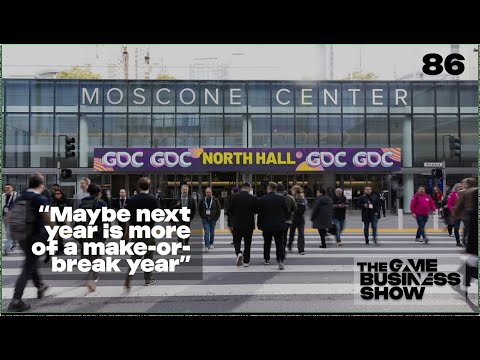
multiple you know you're still traveling around and things experience GDC is obviously trying to embrace the city approach as well as well as having the centralized
thing but I guess
I guess for me I've always worried about the business model behind it of course What is the role of the central organizing committee? I guess but I guess you start from the point you don't you don't have the got to protect the show floor. You've got that. Yeah. I'm talking I'm giving your answer for you.
No. Well, but that's kind of the interesting thing like I haven't really seen anyone else try and do this before. This is why it's it's interesting and I'd say there's there's three tiers that I think about when you come to like a B2B business uh you know event model. And the tiers of it of people that come to it. One tier is students. you know, students or people trying to get into the industry, uh, or trying to actually, you know, uh, meet and network or or find out more information for them. I think a lot of panels and talks and and, you know, curated opportunities and workshops and things of this are really important and valuable. The second tier, I would say, are people that are either starting out or they're from
underrepresented countries or they don't have a lot of contacts within the games industry. When they come to an event like GDC or DICE or like a game speed or whatever, like they don't know a lot of people there. They're trying to forge those relationships and those connections. And then you got the third tier, which is the people that already know everyone or the people that know most people or they're going to the event, but they're not going to the event. They're just going around the event because the fact that they're in town, most their meetings will actually happen around those events. So, if you think about those three tiers, right? And I think about the people primarily who are, you know, like you or me or a lot of, you know, colleagues and and people that we know that they go to these spaces and they're around they're organizing their own dinners and meetups and they're hanging out in the hotels and a lot of the the rooms where they're doing demos and things of this like they don't need a physical location. And for the other folks, is there a better way to actually connect people rather than telling them you need to buy a ticket and go to this physical location? I don't know. We'll find out.
[laughter]
I think you might know. Uh what's the
goal then? You're not calling it a test run, but I appreciate there's an element of getting feedback this year and seeing how it goes and then adapting, but where do you want this to be?
You know what? I would like this to become a beat on the global gaming calendar. I would like this to be in the same conversation that a lot of people talk about when they're like, "Oh yeah, we're going to Yeah, we'll be at Gamescom or we'll be at PAX. We'll be at DICE. We'll be at like, you know, a Tokyo game show, whatever kind of thing." I would like New York Games Week to be part of that same conversation because there really outside of, you know, PAX East, there's not really a lot of beats on the East Coast here in North America that really draw people here.
Why is that?
I think the West Coast uh is primarily where a lot of your game publishers and game developers have sprung up from. We think about LA and San Francisco and and areas over there. That's the Silicon Valley. That's where Microsoft, that's where Amazon, that's where, you know, Seattle and and the the West Coast, that's where they're all located. Not so much here. New York is interesting because you don't have a lot of the developers. You've got no publishers
except for, you know, Rockstar and Atari. You know, you've got very few uh uh mid-tier gaming companies. What you do have is your finance, you have your journalists, you have your media, you have your headquarters. And I think that's interesting. What if we can actually build a beat where a lot of the people that have funding or money or are adjacent marketing or in the film industry or IP? What if they're all here and we have a reason for everyone else in the games industry to actually come together? I don't know. It's I'm curious. I'm curious to see how it goes as well. But I'm pretty excited that we've been able to put something together with the support of the economic development group and the mayor's office as well. So yeah. Well, starting from scratch because obviously one of the things I know when we came out of COVID was trying to make existing events work and you know trying to maintain what was already built and trying to adapt to where the market is today. Obviously where do you see this is quite a broad question but where do as someone who's worked on PAX and you know and and dream hacks and all this sort of where do you see the problem
with events that you're hoping that you can avoid by starting from scratch basically?
Yeah. I think I think there's there's two sides to it, right? And you and I did this when we were doing the E3 stuff. We're trying trying to trying to solve a problem and trying to find a solution, you know, that makes sense for the industry as opposed to actually just trying to maintain the relevance of an existing or long-standing brand. Right? The idea of coming at New York Games Week fresh is we're not actually building up any physical component of it that might not be needed. I think the goal is if you can get everyone in town
[laughter]
Ironically, around that same time, then you'll actually see what is needed uh pop up around that. There's a there's thoughts that we've got in the future such as what if we can get like a a networking or meet to match system that exists over the top of all of it, which is what they're doing down in Melbourne International Games Week, which I love to see. Uh what you know, how important are the conference or talk or panel components to it compared to the the
networking or or you know, components to it? You know, what what is actually needed? I like the idea of filling in those gaps once we see or hear it as opposed to actually creating something based off a model that might be outdated. Um the other one is like I think again we're we you and I were trying to do this with with E3 and we see it with with GDC with like the they're trying to you know uh uh work with the community events. Summer GameFest is a perfect example of decentralized you know even though it's got you know Jeff and John's like activations and whatnot. It very much is like, you know, this thing where people are in town. So, we'll see. I I I think creating it and starting it was very much just, like I said, putting a flag in the ground being this is New York Games Week. Thankfully, it doesn't really compete with a lot of other gaming events either, uh, outside of North America at the very least. Like, it's pretty in between a lot of the big global beats, which is nice. So, I think there's a chance for it to to really pop off.
Plus, and the big one is New York City is a destination location.
Yeah.
People like the idea of coming here, right? Right, Chris? Right.
Yeah. Well, I'd love to go. I went to New York once for the launch of the PlayStation 4 for like 24 hours. I think [laughter]
or the reveal of the PlayStation 4, rather.
You need to spend a little bit more time here in New York City. And I mean, the pitch, the great thing about New York Games Week is you'd get around the city. You're not just going to stay inside a convention center in
Neverland. Well, I did. One of the things about uh New York that I've been quite like the brief appearance I was there it reminded very much of a European city. It feel I feel I felt oddly at home in America but um who's involved then who so you've got so you mentioned some of the names of the other events that you're who who's involved in it this year. other events. Yeah. So, it's actually being put on by myself, uh, Amit, who runs the IGDAN NYC chapter here, and, uh, Christy Pride, who runs the PlayNYC, uh, the larger gaming consumer event that's been in town for a while and is now partnered with Anime NYC. Other events that are popping up
like we've got RGD Gamer Palooa, uh, which is like a the largest indie, uh, event that's showcasing, I think about 70 or 80 indie developers are showcasing there. Uh there's a uh all the different venues around the city, Wonderville and OSNYC and Coexist are popping up with uh talks and panels and activations and showcases. NYU, the Alamo Draft House is doing a bunch of D&D campaigns. Uh all the gaming uh industry groups uh Gumbo uh the IndieNYC collective uh are doing industry events. There's a uh there's a boat trip uh on a on a yacht under the Brooklyn Bridge for industry folks. the gig, the games industry. Gathering is doing a a meeting. Gumbo is celebrating 10 years. Uh the there's there's a bunch of industry specific stuff and then consumer stuff. Sega's doing a big 35th anniversary for Sonic the Hedgehog. There's a launch party for uh Clive Barker's Hellraiser. Uh there's a
uh fashion in gaming awards event. New
York Comic-Con is part of it as well. I think that's a a big thing. This giant consumer show that might not be gaming but has a huge amount of gaming elements in it. And I think there's an there's another interesting part to this which is not really being promoted or spoken about yet because we need to figure out how this all fits together. But New York Games Week happens the same time as New York Comic-Con, the same time as New York ad week, advertising week, and the same time as the New York Film Festival. And it's interesting that there's all these other not gaming but gaming adjacent industry things that are taking place during the week which has led to a lot of really interesting conversations about you know there's a there's a couple of I don't know there's some industry dinners and and parties that are being held by you know IP holders that are trying to connect with developers. There's some some interesting conversations to be had.
Is the city involved?
Yes. Yep. We got the New York Mayor's office that are behind it and they're
supportive of it. Uh Zoran and the and the team are I mean they're they're they're gamers. They get it. They've been supporting the games industry here in New York for quite some time. Uh the e economic development association are behind it as well. So we've got the support of the city and uh the promotion, the marketing that's going to blast this out to the entire of New York City as well, which is, you know, important. So yeah, it feels really good.
It's difficult because obviously, you know, I love video game events. I do think the value of them isn't always easy to explain on a spreadsheet, but I think when you go to and I know you feel the same way, but um it does feel challenging. Gamescom just had a very successful Gamescom if you ignore the heists, but I think it, you know, it was a very busy and very successful event, but it's of a certain scale that
Yeah.
And then you've got GDC's I think GDC was actually pretty good, but it's it's struggling, right? It's trying to re build itself in a way for the industry going forward. I look at impactes are sort of still there and you know I and then the London Game Festival is doing a thing where it's now moving closer to a week and
they're sort of scaling up a little bit.
Yeah.
But yeah, I I I do think that that entire segment of the industry is proving difficult. Uh you know, I mean, you've got you got those things like Reboot and stuff that collapsed and and those sort of things and and and people trying to work out what they need in in an industry where there isn't a lot of money at the moment going around and that's why a lot of people go to these events is to find the money.
Sure. Um, I don't have a question. [laughter]
I was I was wondering where you were going with it. But it's it's but it is interesting, isn't it? Like, you know, Gamescom is like the model. And even, you know, when we were doing E3 stuff, like that was that was the model that we were looking for. This consumer and industry kind of, you know, two-hander that that could justify getting everyone coming coming to it. But at scale, that's what works. I actually at a personal level, I think what's more interesting is the smaller, more regional events.
I agree. you know, that actually happened and bring the industry together in in a specific location and create more of a community. I think that's really interesting and that's really powerful. Um, I do think like GD I love
the stuff that GDC are doing with their business hall kind of thing. You know, it's like, oh, we're creating more of a space for business. I'm just looking at it from a from an east coast. There's not really much here, but there should be. But I wonder if we can build a gaming convention or a gaming component that serves a purpose in a more maybe more meaningful way or or a way that future proofs it in a different way. I don't know.
Yeah. Well, good luck with it. I mean, we did do an investment summit back in the day at PAX East, didn't we? And um lots of people turned up to it. You know, it was um it was a it was a very busy event and I think it just shows that you could be putting
Well, Chris, I'm I'm so glad you brought that up because I guess he'll be doing a a game business uh investment summit at New York Games Week next week. That's great. We've heard it here first. [laughter]
Brilliant. I love to hear it. That's such a great commitment this far out.
Yeah, I I' [laughter] would love to. Oh, for next year. Oh, maybe the um seems like next week. Good luck. Um the um but um
maybe a game business live. Um, uh, see if we can get who with big names from New York. Maybe Reggie or Strath.
I mean, [clears throat] yeah, [laughter]
I mean, you certainly could. Oh, actually, that's that's I mean, look, I don't know if this is for the video or not or whatever, but like because of the support from the mayor's office, venues and things of this, anyone that does want to come and actually do like a B2B event, like we've got access to venues and spaces, the Comic-Con folks are, you know, the repop folks are actually really open to this as well. like if there's someone that wants to do like a conference or a big B2B component, they've got spaces and access too. Like I think there's a lot we can do for next year when we have the time to think about it, you know? So, but for right now, it's just the fact that we're doing it. It's gotten a lot of attention. It's got a lot of positivity both with the local New York gaming industry and re relevant gaming communities. And I, you know, I think people want an excuse to travel to New York and this would be a good one. So,
good luck with it, guy.
Thanks, Chris. Thank you to Guy there. That's it for
our interviews today. The only thing left for me to do is our news wrap-up. Um there's only a few stories, but uh some of them good ones. Um Xbox's disc the digital program is now available to all users. The feature which lets players turn their Xbox One and Xbox Series X discs into digital games. Has been available for testing to Xbox insiders since the end of August and now it's going to be available to everybody. Moving over to the other platform holder, Sony is skipping CES 2027. It's historically been one of the show's biggest exhibitors, stretching all the way back to 1967. Sony says it is due to shifting its focus towards entertainment, IP, and technology that supports creators. Positive sales number here. Warogs, who of course have been on our show, has now sold 3 million copies worldwide. The shooter is from Bulkhead Interactive in the UK. We had a couple of stories from Meta last week. Meta revealed AI powered game tools that let players make games using prompts on mobile devices and browsers. Horizon Create is designed for mobile, while Horizon Studio is intended for browsers. Both platforms allow assets, systems, and iteration history to transfer between them. Users simply
make text prompts describing their desired game. The Meta Horizon engine then generates a playable game, which can be published to Facebook and Instagram. Lots of that going on at the moment. Meta also unveiled VR glasses. This VR is back at Meta, which will have Unity support from day one. The glasses are five times lighter than Meta Quest 3, do not include straps or heavy hardware, and feature a 5K infinite display. It will cost $1,300 from spring 2027. Minds Eye developer Builder Rocket Boy has appointed administrators following its recent wave of layoffs. The studio formed by Leslie Benzes was initially developing a large metaverse style project but pivoted to a smaller action title but failed to impress gamers. Killer 7, No More Heroes and Romeo is a dead man developer Grasshopper manufacturer is separating from Netis Games to become an independent studio. So another Chinese company pulling out of a Japanese company. It's been a bit of a trend that one. And our final two stories, Trophy Games will acquire Plarion, the studio behind Airlines Manager and Airport Simulator First Class. It will cost them $2.6 million. Plarion is currently owned by Paradox Interactive. And finally, Kings signed a collective bargaining agreement with two
Swedish unions that prevented a plan strike last week. Well, that is it for me today. Thank you all for joining us. We've got loads of big episodes next week as well. I'll tease you about those and to our paying subscribers on our Monday morning edition. So, stay tuned for that one. If you're not a subscriber paying or otherwise, you can become one by going to the gamebus.com and signing up to our newsletter and you'll get an alert every time we put out an episode. That's it from us today. Until next time, thank you for tuning in.
Auto-generated captions from YouTube — names and numbers may be misheard.
The games media landscape is currently undergoing a period of profound instability, marked by widespread layoffs and a fundamental shift in audience acquisition as AI-driven search algorithms disrupt traditional traffic models. While legacy outlets struggle to sustain their business models, the industry is seeing a rise in niche publications and podcasts. This contraction is occurring alongside broader corporate restructuring, exemplified by Grasshopper Manufacture’s transition to independence from NetEase and Sony’s strategic withdrawal from major trade shows like CES 2027.
In response to these shifting market dynamics, Bloober Team is aggressively expanding its footprint to become a comprehensive global horror platform. By launching the Broken Mirror Games label under the leadership of industry veteran Tymon Smektała, the studio is diversifying its portfolio beyond its own AAA projects. This strategy involves balancing two first-party titles with five second-party projects, prioritizing creative, experimental horror experiences over fleeting industry trends. By providing internal production and marketing resources to external partners, the studio aims to foster long-term operational stability and establish a distinct brand identity synonymous with high-quality, innovative horror.
Simultaneously, the industry is experimenting with new event models to replace traditional, centralized conventions. New York Games Week is emerging as a decentralized festival that leverages the existing infrastructure of New York City to facilitate networking and B2B opportunities. By coordinating disparate events around New York Comic-Con with support from local government, organizers are attempting to create a more sustainable, flexible alternative to the rigid show-floor models that have historically dominated the gaming calendar. These developments, coupled with the integration of AI-powered game creation tools by companies like Meta, reflect a broader industry pivot toward regional community-building and technological adaptation in an increasingly volatile economic environment.

The Game Business · 2026

The Game Business · 2026

The Game Business · 2026

The Game Business · 2026

The Game Business · 2026

The Game Business · 2026

The Game Business · 2026

The Game Business · 2026

The Game Business · 2026

The Game Business · 2026

The Game Business · 2026

The Game Business · 2026

Deconstructor of Fun · 2026

Naavik · 2026

Deconstructor of Fun · 2026

The Game Business · 2026
The Game Business · 2026
Naavik · 2025
Deconstructor of Fun · 2025
Konvoy · 2025
Informa · 2024

Naavik · 2024
Perforce · 2023

GDC · 2022
Comments