Game Development reports and market data
Documents

Life at the Speed of Play: Mark Pincus, Zynga founder, on Leadership and Risk
Product success in the gaming industry hinges on the ability to distinguish between intuitive instincts and flawed ideas.
- The gaming industry has grown from a $23 billion market in 2007 to a $280 billion global powerhouse, yet it remains dominated by ephemeral, time-wasting experiences that lack social or dimensional depth.
- Founders should utilize the 'proven, better, new' strategic framework, which anchors products in established mechanics and incremental improvements to mitigate the high failure rates of purely novel features.
- Effective leadership requires a 'democratic dictatorship' model where CEOs prioritize being right over being liked, dedicating at least 50% of their time to product strategy rather than administrative tasks.

How COVID Led To Big Walk, One of This Year’s Best Video Games
The development of the cooperative game Big Walk serves as a case study in how the social isolation of the 2020 COVID-19 pandemic catalyzed creative innovation within the Australian studio House House.
- Big Walk, developed by the five-person Australian studio House House, has sold over 2 million copies since its August 2026 release.
- The game's core mechanic is proximity-based voice chat, which forces players to communicate in unorthodox ways to solve puzzles and discourages the use of external voice platforms like Discord.
- Development of Big Walk spanned six years, driven by a commitment to a consistent original vision rather than scaling the studio's headcount beyond its five core members.
How to Succeed in Co-Development: Sam Carlisle Interview
Co-development represents a strategic evolution in game production, shifting away from traditional, transactional outsourcing toward deeply integrated partnerships.
- Co-development is increasingly essential for industry sustainability, allowing studios to balance resources, diversify revenue streams, and scale production without the risks of hiring full-time staff.
- External development partners provide greater organizational resilience than traditional in-house models because they typically work on multiple titles simultaneously, protecting them from the impact of a single project cancellation.
- When selecting a co-development partner, the strength of the personal relationship and the partner's willingness to communicate problems early are more critical to project success than technical quality alone.

Xbox Layoffs, Halo To Activision, Destiny's Back (And More)
The gaming industry is currently navigating a period of significant structural shifts, characterized by ongoing corporate restructuring, long-term project planning, and strategic pivots for major franchises.
- Microsoft is laying off approximately 300 additional employees as part of an ongoing restructuring, with the company reporting it is now 75% through its planned reset.
- Halo development is being moved to Activision, with a small team remaining at Halo Studios to support existing games and the community, while Playground Games and Turn 10 are merging.
- Bungie has reversed its stance on the future of the Destiny franchise, announcing that Destiny 2 will unvault previous campaigns, destinations, and raids to remain a foundational part of the studio's future.
Is Xbox making the right decisions? Plus, how AI is (and isn’t) transforming game localization
Xbox is currently executing a major organizational reset aimed at improving profit margins and stabilizing its portfolio.
- Xbox is undergoing a major organizational reset, cutting 206 positions and consolidating development efforts under the Activision and Bethesda umbrellas.
- The company is shifting its strategic focus to core franchises, including the transfer of the Halo intellectual property to Activision.
- As part of its restructuring to improve profit margins, Xbox is divesting studios such as Ninja Theory and Undead Labs.

AI Makes Game Creation More Accessible
The integration of AI-native game engines and decentralized infrastructure is fundamentally reshaping the landscape of user-generated content by lowering technical barriers to entry.
- Sandbox Studio aims to move beyond 'vibe coding' by providing a structured, editable game codebase that allows creators to inspect, debug, and modify their projects rather than relying on unpredictable LLM-generated black boxes.
- The platform leverages institutional knowledge from seven years of Sandbox development, using existing voxel asset libraries and historical workflow data to guide creators through the development process.
- Sandbox Studio is shifting its strategy to function as a multi-platform engine, enabling creators to publish standalone games to external platforms like Steam while offering incentives for those who choose to integrate with the Sandbox ecosystem.
Rainbow Six: Siege boss: We'll treat our players like kings and queens when GTA 6 comes out
Rainbow Six: Siege maintains its long-term viability by prioritizing a service-oriented model that emphasizes technical stability and tactical depth over the development of a sequel.
- Ubisoft is prioritizing long-term player retention and service quality to mitigate potential market disruption caused by the upcoming release of GTA 6.
- The development team manages a workforce of over 600 people to maintain the game through a modular architecture that avoids the need for a full sequel rebuild.
- The studio is leveraging a strategic partnership with Tencent to improve communication, bolster regional expansion, and enhance security protocols following previous cyberattacks.
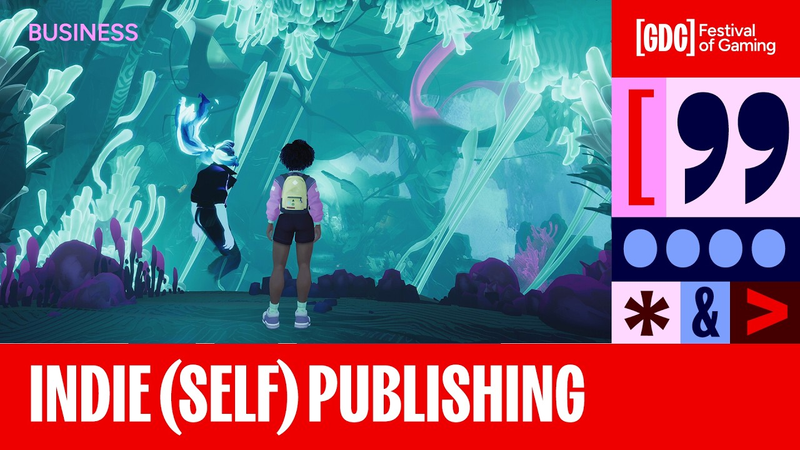
What Indie Game Publishers Really Think: 15 Years of Industry Insights from Finji's Rebekah Saltsman
Indie game publishing functions as a strategic partnership designed to mitigate the financial, operational, and interpersonal risks inherent in software development.
- Indie publishers typically manage titles with budgets of $2 million or less, focusing on small teams across all genres while providing essential business development, marketing, and operational support.
- Publishers act as mediators for team communication and project health, protecting their own reputation and financial investment by ensuring developers avoid burnout and adhere to platform-mandated schedules.
- When pitching to publishers, developers must demonstrate they can ship by providing realistic schedules, documented budgets with appropriate buffers, and clear team breakdowns to de-risk the project.
What Was That Noise: Mastering Creative UI Sound Design with Intention
Effective user interface sound design functions as a vital communication tool that bridges the gap between player input and game response.
- Apply UX design principles—specifically the isolation effect, cognitive load, selective attention, Occam's razor, and flow—to ensure UI audio communicates information effectively without requiring visual reliance.
- Use specific sonic characteristics to convey emotional intent: rising pitches and major scales signal positive outcomes, while distinct, unmissable sounds are required for critical gameplay feedback like parries.
- Match UI sound materials to the visual interface, such as using metallic sounds for metal UI elements or organic textures like bone and bubbling liquids for thematic environments like a witch's hut.
These 3 Mistakes Will Destroy Your Game
Achieving a "Very Positive" rating on Steam is a predictable outcome of rigorous product management rather than viral marketing or gimmicks.
- To maintain high review scores, developers must simplify their game's core identity into a clear, concise message—such as a single hook—to ensure the product delivered matches the player's expectations.
- Bugs, Optimization, Pricing, and Settings (BOPS) are the primary factors that destroy review scores, with game-breaking bugs and inconsistent frame rates being the most critical technical failures.
- Developers should conduct thorough playtesting with a diverse group of testers—including critical peers—to accurately predict performance, as evidenced by a 97.5% recommendation rate from 170 playtesters closely mirroring the game's 94.9% Steam score.

Colossal Order's Mariina Hallikainen on leaving Paradox and life after Cities: Skylines
Colossal Order CEO Mariina Hallikainen reflects on the studio’s 17-year history, its recent departure from long-term publisher Paradox Interactive in November 2025, and the company’s future trajectory.
- Colossal Order ended its 15-year partnership with publisher Paradox Interactive in November 2025 after releasing four games, including the Cities: Skylines franchise.
- The studio is now self-sufficient and no longer requires publisher funding, allowing them to explore self-publishing or alternative partnerships that prioritize trust and open communication.
- Colossal Order is currently developing a new, unannounced simulation title, maintaining its long-standing focus on the PC simulation genre.

The shooter that Tencent abandoned: Wardogs hits 2m sales in one weekend
The tactical shooter Wardogs has emerged as a significant commercial success, achieving 2 million unit sales during its opening weekend.
- The tactical shooter Wardogs achieved 2 million unit sales during its opening weekend, reaching profitability shortly after launch.
- Bulkhead successfully launched Wardogs independently after losing support from Tencent and navigating a period of organizational instability.
- The studio’s operational model prioritizes internal autonomy and a developer-led creative vision, explicitly rejecting external publisher influence and industry trends.