VideoPocketGamer.biz
Ex-Take-Two AI chief Luke Dicken warns AI bubble could "make 2008 look like a walk in the park"
8 Oct 202640 min video
Transcript
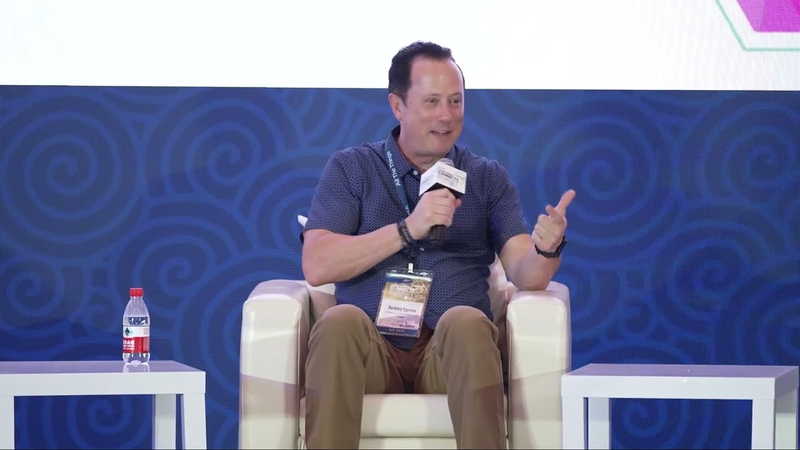
Now, those same people are like, "We want AI in our game. Yes, let's do that." Um, and that at least has moved the conversation forwards in some ways, but um the the line that I've been using is like I've dedicated my career to advocating for the use of AI in games and the monkeys poor killed and now I'm like, "Not like this. Not like this." Hello everyone and welcome back to PGC's in the hot seat. Now my guest today was doing AI and game games long before chat GPT or Claude made everyone an expert. Now he has a PhD that had to be called simulated virtual worlds because his university wouldn't print games on the diploma. I mean I'm sure that's since changed. Um he spent a decade building Zinger's applied AI group and then became head of AI at take 2 and he now runs his own consultancy Ludic AI and he'll be excitingly at PGC Nordics later this month to talk about surviving the AI hype cycle. Dr. Luke Dickin, welcome
to the hot seat. It's so good to have you.
Thank you. It's uh it's fantastic to be here.
Yeah, we're so excited to have you join us shortly, too. Now, I mentioned this before we hit record, but I have much to ask you. you are at such an exciting sort of inflection point as I can imagine for your sort of role and you've been doing this for so many years and you've been you did your PhD in this. Um so as I mentioned your PhD was officially on simulated virtual worlds because the university wouldn't print games on a doctoral diploma. So has games AI finally earned its academic respectability or do you think that fight is sort of still going on? I I mean it's a fun line for a bio. Uh and it it was true at the time. Uh I think
I mean that was geez that was 10 years ago now. Uh the that well I say it was 10 years ago. I graduated 10 years ago. I started the thing and actually picked the title
more than 10 years ago. Two too many years ago let's say. Um I think that this is something that that has been evolving quite a bit. Obviously, the conversation around AI has changed over the last, let's say, four or five years. Um, I I think we probably won that fight and got to put games uh on the front of the PhDs probably a while ago. Um but certainly you know coming up and and and as I was getting my start we really did have to to do quite a bit of mental gymnastics for you know oh it's it's an it's an environment where uh we control everything and it's a simulated system and we meant games but uh you know a lot of the the of our contemporaries certainly in in the research group I was in were working in robotics they were working in like automated warehouse kind of stuff uh space was a a big uh application environment. Um we were very
much the silly unserious people. On the other hand, uh you know, as we know, games is a massive industry and yeah, okay, it's it's entertainment and it's a little bit of a of a luxury, but it's a massive industry and and I think I think it's been for the better that that it's taken more seriously now.
Yeah, definitely. Um, and look, you've been doing this, as I said, for a decade before Chhat made everyone an AI expert. Now, what's the biggest misconception that you think people have arrived at, let's say, in 2023, that they still sort of haven't shaken? I mean, you've studied this at in-depth level. So, what's one thing that you think that people are still getting sort of wrong?
We could spend the rest of the day on that question. Um uh I think the thing that I would probably push back on the most
is I [clears throat] mean you you probably have a similar experience where you you open LinkedIn and you immediately start taking psychic damage from uh [laughter] okay
don't don't get started on the LinkedIn AI slop. So this idea that people who there are so many consultants uh and I I out of deference to my colleagues I will not name names uh who you know I 6 months two years ago they were metavis uh experts and then they were NFT experts and now they're AI experts and I'm like you're not an expert because you've played around with a website and think you know how it works like that's not what expertise is so what's the the biggest kind of thing that people are getting wrong that anybody has a clue what's going on with this stuff as you'll find out in a couple of weeks uh when I do a long this long form session in Helsinki uh I'm much more of a cynic about a lot of this and and a lot of my cynicism is not necessarily about the AI of it but about the
big tech capitalism of it and one of the
things that that is interesting thing is to what extent do the kind of security instance that we're hearing about an awful lot right now, how much of that is actually real and how much of that is just really good PR. Um, and call me a jaded cynic. uh because I am but I just think that you know it suits a narrative that is coming out about these companies to highlight how how scary their systems are and they've been saying versions of this for years but if you look at uh Cory Dotoro had a a tear down of this and the punchline was like hacking security system type stuff is something that has been regular ly featured at conferences like Defcon and Black Hat. When you escape out of the sandbox, the the thing is not, "Oh my god, you you're
incredible at hacking." It's you're at making sandboxes. Like, you know, we'll we're kind of creating an environment where the narrative is not the irresponsibility of this. It's the power of these kind of magic eightballs to do these things. Definitely now hundreds of billions have gone into generative AI and the compute behind it. As someone Lucas who's had to sort of justify AI spend inside a public company. You talked a little bit about cynicism, but does that level of investment look rational to you?
I mean, you said hundreds of billions. It's trillions. uh when you factor in um the capex spending by the magnificent seven as they've taken to call themselves uh and the um offbook uh debt stuff that they that they've put together. I think the last number I saw
for the combined spend put it at 3 point something trillion. Um yeah, that's the right face to be making. Like this is wild. um uh Anthropics IPO. The last numbers that I saw on this was a valuation of 2 trillion on net losses of uh I don't have this number in my head. I think it's about 40 billion a year. Uh and that's on revenue of 65 billion. There is no business math that allows you to get to that number. like you know if you uh if you take that revenue number as um you know on the face of it uh and you should but they've also announced margins of 80% but with the caveat that they didn't factor in training uh costs and revenue share agreements that they have and like you know the margin on my business is fantastic if I don't factor in my costs
and anything like what are we what are we doing But uh there is no world where you can go from 65 million rev to a $2 trillion valuation. Uh so when you look at at what's happening in the world, we are we are seeing one of the largest kind of misallocations of capital through the system that assures us it's the most efficient way of of allocating capital. It's drives me crazy honestly. It's cuz there's so much that we could be doing and this is kind of gets to to I think the the earlier question of like how much are we seeing in terms of taking this this stuff uh seriously and the maturity around game AI. All of the oxygen is being sucked out of the room by billion dollar press departments more so than by um actual innovation. Now, that's not to say that there's no value to the generative AI conversation, but there
was an awful lot of things that we could be doing in the game AI space that are being drowned out by Alman and Dario's kind of media circus. And at the end of the day, it comes back to like there's there's push and pull to it because one of the things that that I really found is is that the the zeitgeist has made game teams more willing to accept the possibility that AI could be assisted to them. um things that you know five or six years ago we would go to a game team and say hey we could do level generation as a as an example and the game team would go oh no our game is this special little snowflake and our level designers know exactly how this game works and there's no way that you could algorithmically do this now those same people are like we want AI in our game yes let's do that um and that at least has moved the conversation forwards in some ways but
um the the line that I've been using is like I've dedicated my career to advocating for the use of AI in games and the monkeys poor killed and now I'm like not like this not like this. Uh so that I mean that's my life.
Yeah that actually leads me like quite nicely to my next question. So narrowing it to our industry Luke games where is geni gen earning its keep and where do you think there's still work to be done? What would and also now that you've said that where would you like it what what's your perfect vision look like? I know that's a heavy question, but what would you like to see more of that you think is lacking so much?
So, there's three questions in one there. Uh, and I can't promise I'm going to remember them all, so keep me honest. Um,
okay.
So, let's start with where is is it Yeah. earning its keep right now.
Um, so I think that there are definitely areas where it is. Uh, and I I'm going to come off in most interactions as a as
a big hater of this technology. I'm a big hater of hype and overblown stuff. Not everything about generative AI is overblown. Not all of it is hype. I think that areas where I see a lot of value. Kind of taking a step back and thinking more abstractly are areas where um intentionality matters a little bit less. You know, this gets into a lot of arguments on Blue Sky about like, well, you know, if it doesn't matter, why is it going in the game? And and that's a whole thing that we can unpack. But like, if you want fantastic marketing materials, you probably shouldn't use generative AI. You probably should be more focused on human authored intentional content. A lot of marketing materials aren't that. You know, you know, when we think about performance marketing in mobile games, a lot of that without being thoroughly disrespectful, a lot of that already was kind of human authored slop. So, it's probably okay
that it's it's AI offered slop. Um, a lot of what I kind of come back to is is a sort of thinking about in food ter when we think about, you know, food as an industry. There's space within that industry for very high-end fancy restaurants, uh, Michelin stars, and there's space for McDonald's. And that's fine. Not every element within your business process needs to be, you know, a Michelin meal. Every leaf on the plate has been intentionally placed. Equally, not everything should be a a burger with a bit of cheese on top that's kind of been slapped into a bit of wrapper and it it's all a bit haphazard. Your business process probably ought to be a blend and and where you draw the line depends on on what you're trying to achieve. So like I say, marketing material uh per performance marketing in particular is something that that I think is um real useful. I see a lot of
opportunity for um and you hear a lot about kind of like, oh product managers can now make prototypes. Fantastic. I love that. Don't ever ship it. You know, making sure that these things that are are vibe coded because when we talk about vibe coding, we're talking about standing up a prototype real quick. Then strapping the things that you need to strap to it to make it production ready is tricky because the heart of the thing is kind of gross and and made mechanically and and not necessarily super grockable. So, but again, the business process is supposed to have been we've convinced ourselves, although we don't always follow it, that after you've made a prototype, you toss it out and you you start from scratch to to make a production system. So, is there a problem with that? Probably not. Um, production code is definitely an area that that is getting an awful lot of of traction right now. I'm a little bit worried about that, honestly. I I think
um I think that there is a a potential state where we're going to find that we're shoving a lot of asbestos into the walls here and then we're going to be like, "Oh, that was a terrible idea. We need to rip it all out." But that is very opinion based rather than like objective. And I think again for different businesses, different risk appetites, people should probably be working out what they're prepared to to go with. And this is why the the session in Helsinki is called a pragmatist view because I'm walking this middle line that really pisses off everybody rather than satisfying anybody. Um, for me when I think about, you know, how we think about all of this stuff, it really is like if what you need is something quick and dirty, generative AI is going to be great. A lot of areas of our businesses don't need quick and dirty. That was a long answer to a short
question. Sorry,
that was only part one of my part three question. So, part two, let's go. What? So you you mentioned the first aspect. So where do you think what do you think is actually sort of missing and what would you like to see more of on a personal you I mean you're an expert in this. I think we can it's safe to say that. What would you like to see more of that's missing in this space?
I think the the big thing here is that generative AI systems have come to dominate the entire conversation. Uh they're they're one area of AI. So the way that I think about AI is uh I I I sort of frame it as anytime uh a computer is making a decision that's AI. And that's a very broad definition that kind of encapsulates an awful lot of stuff. You know, you could you could squint and argue if else is AI by that definition. And it's sort of where you draw the line becomes a semantic argument and you end up in philosophy that is unhelpful. I think of
intelligence as more of an attribute-based system. I don't, you know, we've both been out on the street. There are some dumb people around, real dumb people. We wouldn't say that they don't have the attribute of intelligence. We would say that qualitatively they have a low value of intelligence. So, the same is true for a lot of our systems. Generative AI is just one and it it you know, the clues in the name. It it really is designed to be generation. There's a a new model uh came out a couple of weeks ago called Jev that is kind of trying to force this generative system to be more of a classification system. And this is this is where the the whole wheel wheels come off this whole thing because like we already had classification systems that didn't need this crazy amount of training. So for me, the the piece that's really missing here is a broader understanding of AI as an industry and as a as a scientific field that encapsulates the fact that we already
have classification systems. LLMs aren't reasoning systems, but reasoning systems do exist and and they sit over here. and kind of a grand unified theory of AI is is like the bit that seems to be missing when I think about what we could do. You know, it's more about combining legacy techniques, what we've taken now to call good old-fashioned AI, and using LLMs and generative AI as a a bit of um uh now I'm trying to work out what the UK name for for what I'm reaching for. This is new. Uh, normally I'm trying to reach for the US name, you know, trying to to trying to use an LLM to kind of fill in the gaps between what the reasoning systems can do because an LLM is really good at kind of that little bit of extra detail and flavor. um where a more kind of structured system kind of the has gaps between what
it's trying to present from a from a structured point of view because there's always going to be something that players do that we haven't fully thought about um but treating it as like more of a filler than than the core and heart and soul of the system.
Does that make any sense at all? It makes a lot of sense and and it's nice to hear sort of the pragmatic I don't you know it's like you like when I hear you speak it's almost like it's a this runaway idea um the things are happening and assumptions are being made before people are actually understanding what they're dealing with and that's where I feel like you have this sort of pragmatic view that we all need to be listening to in this industry studios are making sort of real decisions like headcounts road maps pipeline bets based on a version of the tech that doesn't actually exist I feel like that links back to what I said previously. Um, but [snorts] what are your worries surrounding that?
I mean, the
head account and pipeline are the two biggest worries. Um, I I think that there is a problem coming on both fronts, you know. Um, again coming back to another Curry Dr. just has fantastic oneliners that get stuck in my brain. Uh AI is not good enough to do your job, but it is good enough to convince your boss it can do your job. Um and that's a problem when we're thinking about it from a from a headcount point of view because you do see, you know, [clears throat] the industry is on fire right now. Um and when we think about what the impact of that is, we're seeing a bigger impact on junior talent. we're seeing that you know it's harder to break into the industry and in a lot of cases the the sort of sentiment is that AI is sufficiently good that it can do junior
roles um with supervision and that you know I I think there's a a little bit of an asterisk next to next to that sentence um but at the same time it reduces junior talent to output and I don't think that that was the sole reason and it shouldn't be the sole reason that we hired juniors. I mean fundamentally from a long-termist point of view you hire juniors because you want seniors. If you stop hiring juniors then you know you can tell a really good story at earnings calls for the next few quarters maybe few years and then collectively as an industry you have a major major problem. You know, if you think about how old we are as an industry, we are, you know, sort of 40, 50 years old as a as a sort of functional corporate industry, um, we've not really had a major
retirement event. We're about to and we're going to get to a more of a treadmill where our our senior talent is aging out of the workforce and we need to be more intentional about how we're replacing them at a time when we're choosing, you know, and I say we collectively as an industry um and and perhaps not intentionally but more as a as a factor of the what's in play right now. we're choosing to invest less in the next generation. That seems unwise. So, that's kind of my headcount rant. My pipeline rant is uh a little bit more kind of um structured around business concerns rather than kind of longevity and and health of the industry concerns. We know that the frontier models are currently subsidized. um you know they're they're being vastly
kind of underwritten by venture capital right now and and funding from hyperscalers. Um we've seen this playbook before. We've seen it particularly with Uber where Uber wanted to displace existing legacy taxi businesses. So they came in at a much lower price point. They got everybody really acclimatized to to the kind of behavior of open an app, summon a car, jump in it, and and off you go. Um, and once they kind of started to get to a place where their businesses needed to be profit making, suddenly the price of of all of those rides started jacking up and and we've all sort of gone along for that ride. Uh, I still use Lyft and it's more expensive than it really has felt like it's ever been. I worry that we're seeing that same kind of conditioning behavior where all of these folks want to push you to to use these technologies and build your pipelines around stuff. I I was talking to somebody just yesterday
who uh actually had seen this pitfall coming, but was like, "Hey, we're we're building this and it's sending us stuff off to Claude and we can't do it any other way, but what happens when Claude starts ratching its prices up and and this pipeline starts becoming like fundamentally more expensive to a point where is it even ROI positive anymore?" There's kind of two pieces in that. One is understanding the value of that pipeline and what the incremental value of actually having it being an AI enabled pipeline is and second is kind of really being mindful of what that that cost and what that vendor lockin can look like. Vendor lockins aren't anything new. Um and we all got a a shock wave sent through the industry a few years ago when Unity tried to change their pricing structure, but it's the same kind of thing here and and we are actually just walking into it. I my kind of guess and it is a guess because um it's it's an edgy guess but
it's until they actually are public companies they don't have to release kind of uh gap based financials. It's all kind of vibes based.
Um my guess is that we're going to see like something like a 20x uh price jump when it moves into uh out subsidization model. That's there's a lot of layers currently being subsidized and they are burning an awful lot of money. Um
well what one of the things to to keep in mind here is that there is currently um something like 50% of the GPUs being purchased are not being installed. They're going into warehouses uh pending data centers coming online. Um, and this all sounds, you know, okay, so what the financial implication of that is that right now those GPUs have been uh cash has been exchanged for an asset and the asset sits on their books at market value. soon as it gets installed into a
data center, it starts depreciating and it starts impacting P&L. At which point you then need to So there's multiple layers of the system that are stacked together that are losing money right now or not actually being reflected in terms of of actual financials that being reported. When you kind of sit down and combine all of that, it's going to get bad. It's going to get real bad. So this is where like again this pragmatic view of like if you think that your pipeline is so good and delivering so much value that it doesn't matter whether it's whether that that uh price increase hits great love that for you fantastic let's go but you have to be aware and mindful of of what the deal is and you know I see so many people where the the companies are just crowbaring this stuff into pipelines mostly out of FOMO and so that they can tell their board that they have AI. Um,
and that scares the out of me.
If a company Luke who's, and you mentioned profit and revenue there is building these models and never sort of turning a profit, what does the fallout actually look like for games? And do you think they ever will given what they've spent? What are your thoughts on that? I mean, now we're getting into some very crystal ball math.
Um, I'm I'm worried. I I'm really worried. I think for games
when we think about what what the future looks like here, I'm not sure it's that the Frontier models aren't um or the Frontier Labs, I should say, uh aren't profitable or or need to ratchet up to become profitable. I do think that we're looking at a potential shock wave through financial markets and and this
is a level of finance that like I'm not super, you know, I I dabble, but I don't know. I'm not an economist. I'm I'm not a finance guy. I think that there is a version of this that makes 2008 look like a walk in the park. Uh so that's uh fantastic for everybody. Um, but I mean the thing that that we sort of [snorts] we all know to be true, but we don't really sit down and grapple with is the extent to which until this pops, we have hardware problems. You know, I mean, we know that the Steam Machine came out at a higher price point because it's harder to get our hands on on hardware right now. Um, a lot of the chip fabricators are dedicated to to creating this uh uh high bandwidth [snorts] RAM uh that's going into the GPUs. So, they're generating less of the the chips that go into consumer hardware. That has some pretty big implications for us
throughout the entire thing. uh you know it probably means that we need to be figuring out how to ek more out of the current gen hardware because consumers are going to struggle to kind of invest in in new hardware and I think that that's going to apply not just in in kind of uh home devices whether that be PC or console I think it's going to apply in handheld devices as well you know I mean mobile phones are going to become more expensive and and consumers are going to have less disposable income and how do we eat more out of this generation is really the thing and you know in some ways that's an interesting technical problem and and like the nerd in me is like yeah like a lot of tech has become very wasteful in how it uses resources and and maybe we need to dial back on that. So I think that that is probably the the bigger thing here is what happens to our industry when we're working with older hardware and when
consumers have less disposable income and you know the rest of the macroeconomics is going to have to maybe see to itself or at least somebody smarter than me can talk about it. [snorts]
Yeah. the dialing back aspect makes me a bit nervous as you said I just like immediately felt like a pang of worry cuz and it's a strange parallel to draw but kind of reasonable like when we think about the environment and sort of the degrees or or so that the these um summits have put together like we are just racing ahead with no concern and we've been told multiple times through multiple mediums that we need to slow down or or it is catastrophic and it's kind of like when have we ever slowed down you know that's where my mind's going as you're speaking
you know that's what where I kind of went when you talked about um dialing it back.
Yeah. Um I I do actually uh have some stats on this if you're interested. Um
please Yeah, please do. Sh.
Uh so, uh I'm just going to hopefully nothing breaks if I click to a a
different tab that I've got open. Um but I have these stats open. Uh so right now there's something I only have stats for uh North America uh to hand at least but there's something on the order of like 56 GW of data capacity uh data center capacity right now uh operational of that something like 16 GW is uh kind of AI specific compute. So what's important to understand is that like when we think about data centers, there's like traditional CPUbased data centers that are you know powering legacy AWS um you know all the the stuff and then there's these new kind of like dedicated GPU data centers. There's about 16 GW uhish uh and some of this is kind of uh a bit fuzzy math and and squinting between the lines. Um there is currently from a planned capacity point of view uh 310 gaw uh currently kind of planned uh and
keep in mind that I'm saying there's 16 that exists today. So something on the order of like a and again this is something like 15 to 15 to 20x scale up. But my question and I think we're hitting all the highlights of what I'll end up talking about uh in a couple of weeks, but my question is what do we get for that? Um you know chat GPT Claude and and all these guys came out of that 16 gaw what where is the bottleneck right now? certainly from a user side and it it's you know inference side of the equation rather than training side of the equation but like I don't get messages saying hey we're at capacity were you your questions in a queue like that's we don't seem to be hitting a a ceiling so why do we need so much more stuff built
who's making these decisions out of
curiosity like who's the guy that says like yeah we need like x more is it I think
so I I mean, a lot of that is coming from uh the Microsoft uh you know, Microsoft, Google, AWS, the big dogs. Uh
yeah. Yes.
That's all who can afford to be building this stuff. Um but they've all bought the GPUs. So then they need somewhere to put the GPUs and then um they need to do kind of weird financing and and it they end up kind of having SPVS that are going to build out the data center and then lease it back. uh and the the the sort of circular financing and the debt leverage against these data centers means frankly my sense is that a lot of them exist only on paper and will it will disappear you know before in a lot of cases before they even get built uh or even break ground on on the project.
But if you think about like how many announcements we see in in kind of press releases, like it's a crazy amount, but how many are actually coming online? It's a lot less.
That that is actually a good point. Yeah. So Luke, you mentioned a little bit about your PGC Nordics talk and it is, as you mentioned, called surviving the AI hype cycle. for a studio watching this from the sort of sidelines and thinking, "Oh shit." What's the one move that can sort of protect them, do you think? Either way, is there even one move they can kind of consider right now?
So, this is this is where I'm this is where I get yelled at by the proi people. Um, if you sit on the sidelines right now, my view is stay on the sidelines. Um,
that's a big big claim. Well, so it is grounded in in the pragmatism of the thing. Um, I draw parallels, you know, technology aside,
just look at at at business trends. We've seen this kind of upheavalish before. Um, when the industry transitioned into 3D, we're seeing an awful lot of people dash around like headless chickens trying to figure out how to apply AI into tool chains. Um my sense is that 3 to 5 years from now that will have normalized. And the thing about our industry is that you know people move around people talk even you know they might be under NDA but they they still move from one place to another and ideas percolate throughout the industry. I don't understand how much benefit there really is to being the first to figure out the AI for productivity conversation. 3 to 5 years from now that conversation will have normalized and we will have established what consensus is around
what our tool chain should look like and in the same way that we adopted kind of Maya and Blender and all our 3D tools we're going to see a standardization in my opinion of what the AI tools look like. [snorts] All of the kind of headless chicken act right now is throwing a lot of money at FOMO. And there is not zero value in being the first to figure all that out, but it's certainly, you know, it's an incremental value there. There is, you know, a little bit of area under the curve of being the first to get there and having that advantage for, you know, however long you have it. the real opportunity in my mind is figuring out what the new player experiences are. Uh, and this is really the thing that that has always driven kind of a lot of how I think about these things is, you know, I've identified as an AI guy for games for 20 years. Um, for 15 of those years, it was about
forward-looking uses of technology. uh and this last five years has been weird. Um but when we think about what the forward looking uses of that technology are, productivity is the one that's dominating the conversation, but really it's incremental. Um what can this technology do or enable us to do with our players that we just couldn't do before? What does that look like in terms of the player experience? what does it look like in terms of the new kinds of games we can open up? Those are kind of the more transformative opportunities from a business point of view. So, for a company that's not already in the chasing the shiny object mode, like that could actually prove to be a useful way of just kind of calling your shot to follow the herd once the herd's decided where it's going. If you're already in that, then, you know, let's hope that for your sake that you're one of the folks that are
figuring it out rather than kind of chasing shiny objects down a rabbit hole that's just wasting money. But equally, right now, the amount of turbulence in AI land means that even if you do figure it out right now, 2 weeks from now, some new thing could have come along that's changed the game completely. People that are are chasing the productivity conversation are just running on a treadmill. Um, and they've got to keep running on that treadmill. So, again, if you're on the sidelines, which was what the question literally said, uh, stay there maybe. Uh, and if you're in it, keep running. But kind of taking that step back and thinking about the bigger picture is really, I think, where the opportunity is. This
might be one of the first instances where staying on the sidelines actually plays out to be a massive benefit. I mean, or I'm completely wrong, but I'd be surprised.
Fantastic stuff, Luke. What a fascinating discussion. I feel like I'm
walking away equal parts scared, uh, fascinated, and excited almost to see what comes next from everything that you've said. Um,
I I think that that's the right blend. Um, my my my whole thing has been, you know, as long as everybody is kind of as long as I say something and everybody's a little bit nervous rather than one group in particular being exceptionally hyped, I'm probably getting the the balance right.
Yeah, absolutely. We need your pragmatism. And it's so I have to say that it's actually such a breath of fresh air to have someone who's not just talking about this is what AI can do and it can do this and that and actually someone who you who's kind of saying well let's take a step back guys and see what we're actually doing here. Um so thank you. Thank you again for such a fantastic conversation.
That's been it's been great and uh I'm sad I won't see you uh in Helsinki but hopefully I'll see other people uh out there and you can hear even more about
this stuff.
Yeah, we can't wait. Thanks Luke. Thanks again.
Auto-generated captions from YouTube — names and numbers may be misheard.
Key insights
7 takeaways · ~3 min read- 01The current AI boom represents a massive misallocation of capital, with companies attempting to justify $2 trillion valuations on revenue bases as low as $65 million.
- 02Large-scale data center infrastructure is being built through circular financing and debt leverage, creating a bubble that may collapse before projects are even completed.
- 03The industry faces a long-term talent crisis because generative AI is being used to reduce junior roles to mere output, preventing the development of the next generation of senior talent.
- 04Reliance on third-party LLM pipelines creates significant risks regarding vendor lock-in and unpredictable price hikes, which could render AI-enabled workflows ROI-negative.
- 05Generative AI is best suited for 'quick and dirty' tasks, but it is currently being over-applied to areas requiring human-authored intentionality, such as high-quality marketing materials.
- 06Effective game AI should move away from pure generative models toward a hybrid approach that combines legacy reasoning systems with LLMs to fill in gaps in detail and flavor.
- 07The current industry behavior is driven by FOMO-based spending rather than innovation, mirroring past technological hype cycles that may eventually require costly 'ripping out' of poorly integrated systems.
Ask AI about this video
Cite this video
Citation
Generating citation…





















Comments