Game Development reports and market data
Documents
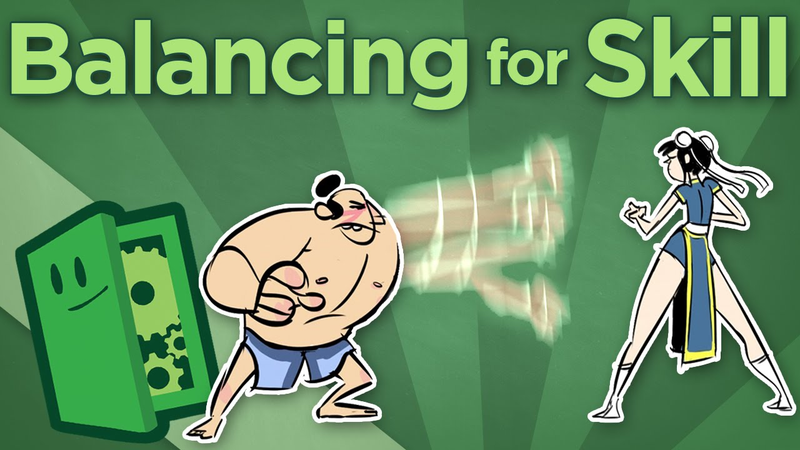
Balancing for Skill - The Link from Optimal Power to Strategy - Extra Credits
Effective game design requires balancing not just the raw power of mechanics, but the relationship between player skill and the power output of those mechanics.
- Game balance requires aligning player skill levels with the power output of specific mechanics to ensure long-term engagement.
- High-power, low-skill entry points are essential for retaining novice players and preventing the formation of exclusionary, stagnant communities.
- Designers must create clear progression paths that incentivize players to move beyond simple, repetitive tactics to avoid hitting difficulty 'brick walls'.
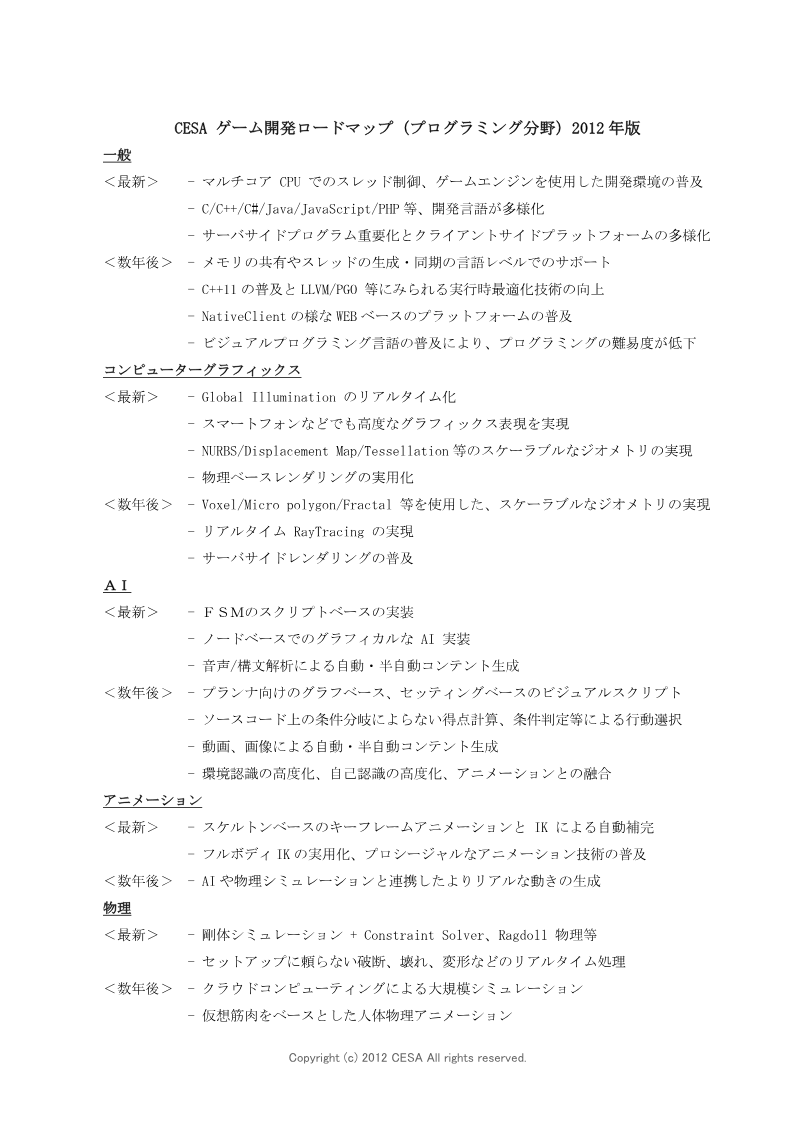

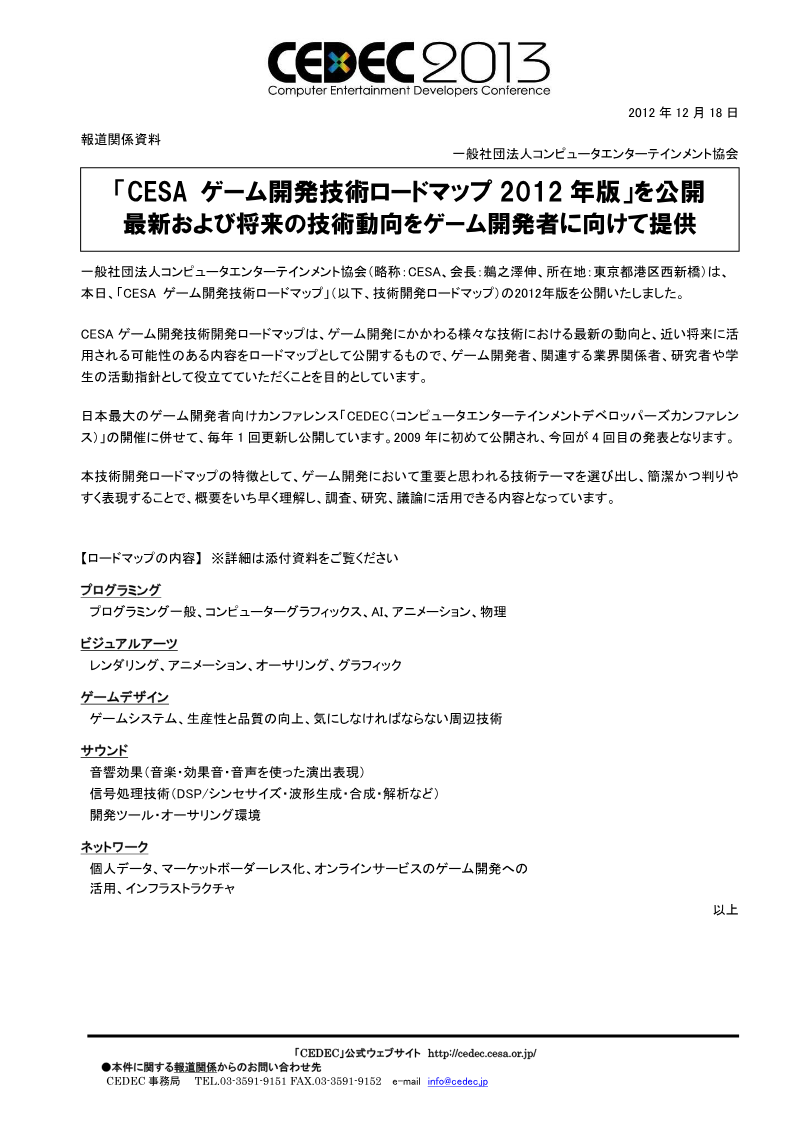
CESA Game Development Technology Roadmap: 2012 Edition
The 2012 CESA Game Development Technology Roadmap serves as a strategic guide for industry professionals, researchers, and students, outlining current trends and future technological trajectories in game development.
- The industry is transitioning toward highly integrated, automated development pipelines characterized by cross-platform compatibility and the maturation of standardized game engines.
- Development strategies are increasingly shifting toward cloud-based services, necessitating new focus on data privacy, cybersecurity, and the ethics of content accessibility.
- Game design is being fundamentally reshaped by the adoption of free-to-play business models and the use of player analytics to optimize user experience.
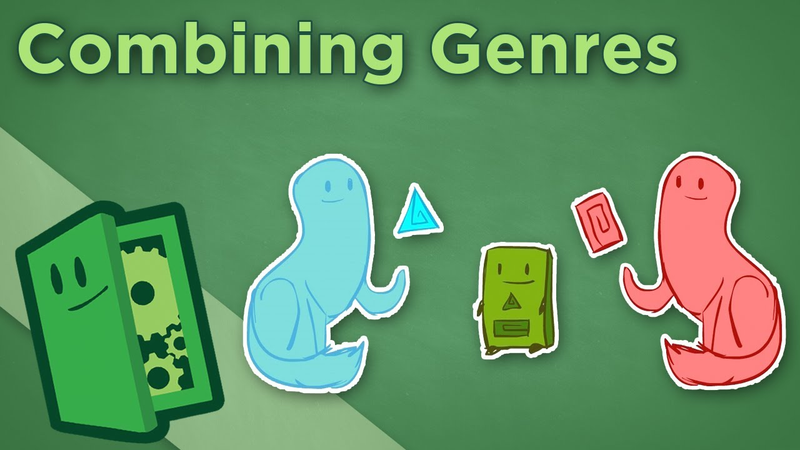
Combining Genres - How to Pick the Right Design Mechanics For Your Game - Extra Credits
Successful genre integration in game design requires a disciplined focus on the core player experience rather than the arbitrary combination of disparate mechanics.
- Successful genre blending must be driven by a clear, core emotional or aesthetic goal rather than personal preference or market trends.
- Designers should use secondary genres to fill functional gaps or address specific deficiencies within the primary gameplay loop.
- Every borrowed mechanic must be evaluated for its ability to reinforce the game's central purpose; otherwise, it risks creating a disjointed experience.
"My Name Is Ozymandias..." - How to Archive Games for Future Generations - Extra Credits
The preservation of video games represents a critical challenge for the medium, as the rapid evolution of hardware and software threatens to erase the cultural and historical record of game design.
- Video games face a high risk of permanent loss because they are tethered to obsolete hardware and degrading physical media, unlike traditional art forms that remain accessible over centuries.
- Mandatory online connectivity and server-based multiplayer create 'dead-end' software that becomes functionally unplayable once developers shutter the supporting servers.
- The reliance on specialized input methods, such as trackballs or unique arcade controllers, prevents modern ports and emulations from accurately replicating the original design experience.
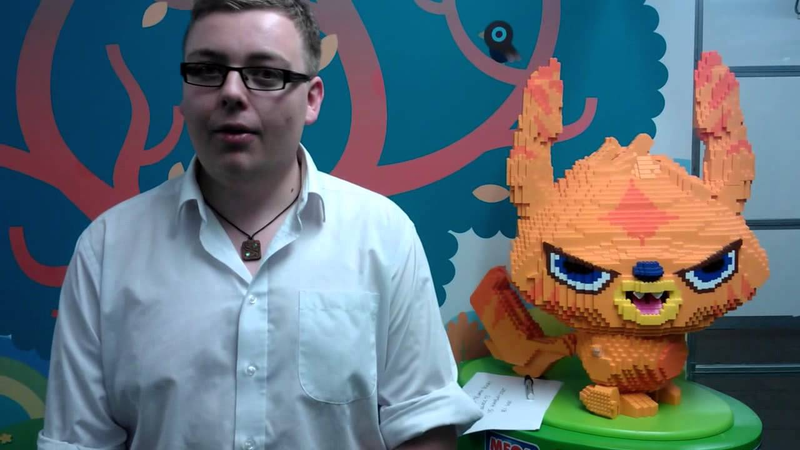
Best of British Game Hack 2
The Best of British (BOB) game hack serves as a collaborative, high-intensity development event designed to foster creativity and rapid prototyping within the UK game industry.
- The Best of British (BOB) game hack is a 48-hour development event held at Mine Candy headquarters where professional developers create and ship functional mobile games for iOS and Android.
- Participants utilize a standardized, pre-built framework to integrate multiple mini-games into a single, cohesive, and shippable software product.
- The event mandates a design philosophy inspired by the WarioWare series, requiring mini-games to last exactly seven seconds each.

Will Luton talks about the second Best of Brtiish game hack
The Best of British (BoB) game hack serves as a collaborative industry event designed to foster creative competition among mobile game developers.
- The Best of British (BoB) game hack is a collaborative industry event where mobile development teams compete to build rapid-fire, seven-second games.
- Games are linked sequentially in a WarioWare-style format, with gameplay speed increasing progressively as the player advances through the segments.
- Participating companies contribute teams of two to develop these high-intensity, condensed game mechanics within a constrained timeframe.

Spilt Milk's Andrew Smith on Best of British Hack
The Best of British game hack serves as a collaborative platform for professional developers to rapidly prototype and release mobile titles within a compressed 48-hour timeframe.
- The 'Best of British' hackathon challenges professional developers to conceptualize, build, and ship mobile games for iOS and Android within a strict 48-hour timeframe.
- The event utilizes a micro-game structure where individual gameplay segments last approximately 17 seconds, optimized for rapid mobile engagement.
- Participants are encouraged to step outside their traditional professional roles, such as developers taking on artistic responsibilities, to broaden their skill sets.
Horror Protagonists - How Ordinary Characters Make Scarier Games - Extra Credits
Effective horror design relies on a triad of the monster, the setting, and the protagonist.
- The protagonist is the most critical element of horror design, as the effectiveness of fear is determined by the relationship between the character’s capabilities and the threats they face.
- Horror protagonists must be ordinary, relatable individuals rather than trained combatants to ensure the audience can project themselves into the narrative and experience disempowerment.
- True horror requires the protagonist to be fundamentally outmatched; if a character is too powerful, the genre shifts from horror to action.


Game Developer Index: Sweden 2012
The Swedish video game industry underwent a period of unprecedented expansion in 2012, characterized by a 60 percent increase in total turnover to 414 million euros and a 163 percent surge in profits to 38 million euros.
- In 2012, the Swedish video game industry experienced rapid growth, with total turnover rising 60% to 414 million euros and profits surging 163% to 38 million euros.
- The industry workforce expanded by 30% to 1,967 full-time professionals, supported by the launch of 37 new companies.
- Market success was driven by global hits like Minecraft and Candy Crush Saga, alongside established AAA output from studios such as DICE and Starbreeze.
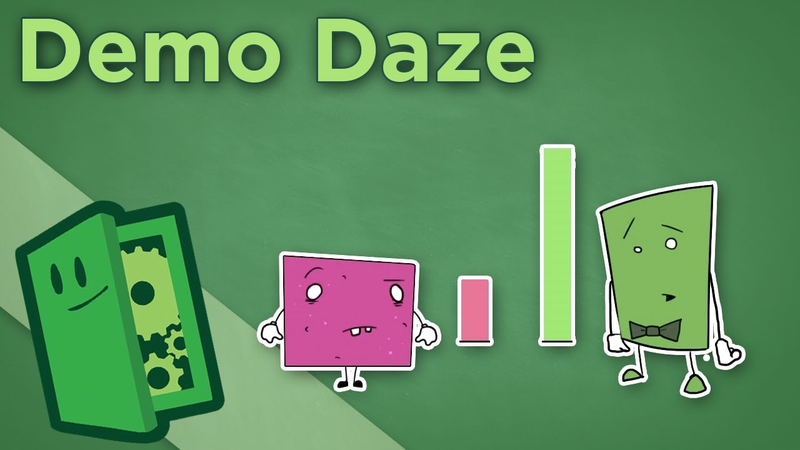
Demo Daze - Why Don't Creators Make Game Demos Anymore? - Extra Credits
The decline of game demos is primarily driven by unfavorable economic outcomes for developers, rooted in shifting consumer purchasing habits.
- Industry data indicates that releasing a game demo frequently results in decreased total sales, as demos often satisfy player curiosity enough to discourage a full-price purchase.
- Developing a demo is a poor business investment for most studios because it requires significant time, money, and certification resources that could otherwise be used to improve the core game.
- An analysis of nine potential outcomes for demo releases shows that only two scenarios result in a net positive for developers, highlighting the high risk of negative financial impact.
Aesthetics of Play - Redefining Genres in Gaming - Extra Credits
The current method of categorizing video games by mechanics—such as camera perspective or input type—is fundamentally flawed and limits design innovation.
- The industry's current practice of categorizing games by mechanics, such as camera perspective or input type, is fundamentally flawed and stifles design innovation.
- Designers should adopt the Mechanics, Dynamics, and Aesthetics (MDA) framework, which prioritizes the psychological reasons for play over the underlying rules and systems.
- Player engagement is driven by nine primary aesthetics: sense pleasure, fantasy, narrative, challenge, fellowship, competition, discovery, expression, and abnegation.
Beyond Fun - Why Games Need to Be More than Fun - Extra Credits
The gaming industry is currently constrained by an over-reliance on the concept of fun as the primary metric for success and design.
- The gaming industry’s over-reliance on 'fun' as the primary design metric restricts creative potential and prevents the medium from achieving the narrative maturity found in literature and cinema.
- Prioritizing 'engagement' over 'fun' allows developers to explore a broader spectrum of human experiences, including fear, sadness, and intellectual curiosity, without the pressure to rationalize every design choice as amusement.
- Forcing 'fun' into titles intended to be tragic or challenging often results in diluted design and incoherent critical discourse.