Game Development reports and market data
Documents
Special: PAX 2015 - Scott Explains How Extra Credits is Made
The production process for the educational web series Extra Credits involves a structured, multi-stage workflow that balances research, technical synthesis, and artistic animation.
- The production of Extra Credits follows a structured, multi-stage workflow that balances research, technical synthesis, and artistic animation to maintain a consistent weekly release schedule.
- The show's signature high-pitched narration originated from a technical necessity to condense a college project into a specific time limit by accelerating playback speed.
- Artists utilize Adobe Flash to create episode visuals, dedicating approximately 10 to 20 hours of labor per episode.
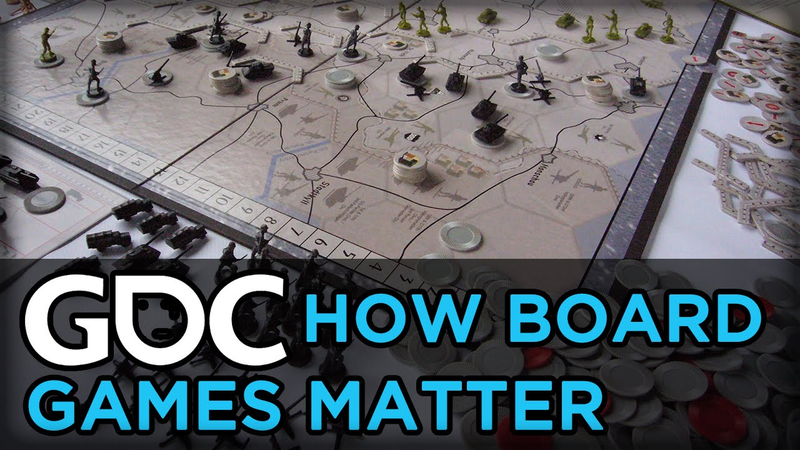
How Board Games Matter
Board games serve as a primary case study for the necessity of transparency in interactive design.
- Transparency in game mechanics increases player comfort and engagement by allowing users to understand the potential results of their actions before they commit to them.
- Complex systems, such as the diplomacy and happiness mechanics in Civilization IV, should be broken down into granular, readable UI elements that explain the specific modifiers behind AI decisions or game states.
- Designers should avoid forcing players to make critical, high-stakes decisions—such as drafting a deck in Magic: The Gathering—before they have had the opportunity to learn the game's core mechanics.
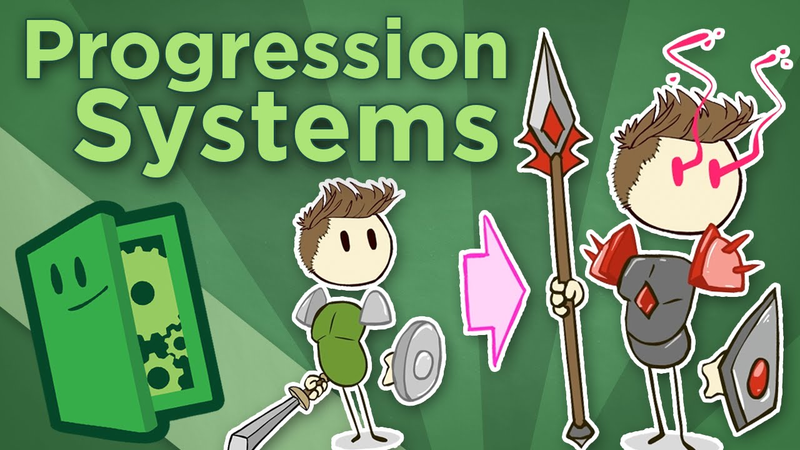
Progression Systems - How Good Games Avoid Skinner Boxes - Extra Credits
Progression systems in video games are frequently criticized for functioning as Skinner boxes—psychological traps designed to induce habit-forming behavior through repetitive, unrewarding grinds.
- Effective progression systems should function as core gameplay components that enhance strategic depth and narrative immersion rather than serving as manipulative Skinner boxes designed to artificially extend playtime.
- Developers should prioritize player agency by allowing for character customization and build flexibility, including mechanisms for re-specing to prevent player frustration.
- Progression systems act as a framework for managing learning curves by introducing mechanics incrementally, which allows players to master skills at their own pace.

Returning to WWII - Four New Approaches to War Games - Extra Credits
The World War II first-person shooter genre has historically suffered from creative stagnation, characterized by a repetitive focus on a narrow set of Western-centric battles.
- The WWII shooter genre suffers from creative stagnation because the industry repeatedly focuses on the same 5% of the war's historical events.
- Developers can revitalize the genre by shifting focus away from Western-centric battles toward underrepresented theaters like the Burma campaign, the conflict in China, or the experiences of soldiers in Greece, India, and the Philippines.
- Moving from linear shooter formats to contained, single-battle environments allows for deeper emotional resonance and a more personal sense of progression for the player.
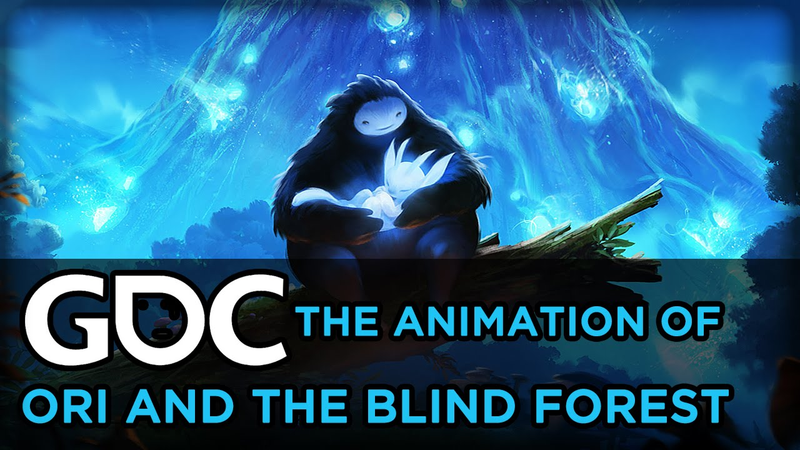
The Animation Process Of Ori & The Blind Forest
The animation process for Ori and the Blind Forest was driven by the need to achieve a lush, Ghibli-inspired aesthetic within a 2D Metroidvania framework, despite the development team’s limited size and the lead animator’s lack of traditional 2D illustration skills.
- The Ori & The Blind Forest animation pipeline utilized 3D models rendered as 2D sprites, allowing for perfect non-uniform bone scaling to achieve extreme squash-and-stretch effects that would be difficult to execute with traditional 2D art.
- By rendering 3D assets with an orthographic camera and removing all 3D lighting information, the team successfully mimicked the flat, silhouette-heavy aesthetic of Studio Ghibli films while maintaining the technical advantages of a 3D rig.
- The team bypassed the limitations of traditional 2D animation by baking complex 3D features—such as particle effects, motion blur, and dynamic contact shadows—directly into the sprite frames during the offline rendering process.

Mike Bithell on strategies for indie success
Independent developers achieve long-term sustainability by prioritizing unique, non-clonable experiences over chasing fleeting market trends.
- Prioritize unique, non-clonable game experiences over chasing market trends to ensure long-term studio sustainability.
- Maintain lean business structures by capping headcount to preserve agility and using rapid prototyping, such as game jams, to test core mechanics.
- Utilize platforms like Early Access to integrate player feedback throughout the production cycle, which aligns the final product with audience expectations and extends the game's lifecycle.
A Generation of Remasters - Welcome Updates or Troubling Omens? - Extra Credits
The proliferation of video game remasters represents a complex shift in the industry, balancing the preservation of gaming history against a potential stagnation in creative innovation.
- The industry's reliance on remasters signals a broader struggle to fund and produce original, high-budget AAA titles due to the high costs and risks associated with new development.
- Publishers prioritize remasters of recent console-generation games because they are low-risk, cost-effective, and leverage existing fan bases to fill release schedules.
- There is an economic paradox where truly necessary remasters of 1990s-era games require complete rebuilds, making them as expensive and high-risk as developing entirely new intellectual property.

Biz Daily: Gumi Berlin's high risk, high reward strategy
Japanese mobile developer Gumi is expanding its global footprint by establishing a new development studio in Berlin, marking a strategic shift from its previous European operations, which were primarily focused on marketing and support.
- Gumi is establishing a new development studio in Berlin to create mobile strategy games specifically for Western audiences, shifting away from the ineffective practice of retrofitting Japanese titles for international markets.
- The Berlin studio will operate with a lean, specialized team of 10 to 15 experienced developers tasked with high-risk design experimentation rather than iterating on established genre formulas like Clash of Clans.
- This strategy reflects a broader industry trend where publicly traded companies are prioritizing disruptive innovation over safe, incremental updates to secure the next billion-dollar franchise.

Speedrunning - Games Done Quick and Developer Tips - Extra Credits
Speedrunning represents a significant phenomenon in gaming, characterized by players attempting to complete games in the shortest possible time.
- Developers should prioritize mechanical consistency and precise, responsive controls, as identical player inputs must yield identical results to support the repetitive nature of speedrunning.
- Designers should avoid singular, forced paths through a game, instead offering versatile problem-solving options that encourage player experimentation.
- Scripted enemy behaviors are preferable to complex AI systems because they reduce unpredictable variables that can frustrate high-level players.

Mike Bithell on indie design - PG Connects Bangalore 2015
The definition of independent game development has shifted from a focus on production scale to a philosophy centered on creative autonomy and the willingness to take calculated risks.
- Indie development is defined by creative autonomy and calculated risk-taking, requiring a balance between a singular personal vision and rigorous, iterative playtesting.
- Small teams must adopt a jack-of-all-trades mindset to prioritize core mechanics and emotional resonance early, maintaining the agility that larger corporate studios often lack.
- Marketing and design must be integrated from the project's inception, utilizing channels like YouTube to capture authentic player reactions for actionable feedback.

Disney on games that capture India's imagination - PG Connects Bangalore 2015
The Indian mobile gaming sector is undergoing a significant maturation phase, characterized by a strategic shift from Western-dependent design toward the creation of high-quality, locally relevant content.
- The Indian mobile gaming sector is transitioning from Western-dependent design to a professionalized ecosystem focused on high-quality, locally relevant content.
- Developers must choose between targeting the massive, untapped demographic of first-time domestic mobile users or pursuing established global markets in the US, UK, and Australia.
- Success in global markets requires a data-driven approach, high-quality user experience, and a strategic shift toward premium models in educational and ultra-casual segments.
Procedural Generation - How Games Create Infinite Worlds - Extra Credits
Procedural generation serves as a powerful tool for game developers to create quasi-random content, such as levels, enemy encounters, and loot drops, rather than relying solely on manual construction.
- Procedural generation shifts the developer's role from a direct creator of content to an architect of the rules, constraints, and logic that govern how a game world is built.
- The primary advantage of procedural systems is achieving economies of scale, allowing for massive content generation that would be logistically impossible to produce through manual construction.
- To prevent broken states like unreachable goals or dead ends, developers must implement rigorous programming to identify and reroll problematic edge cases.