1 free read left. Create a free account for unlimited reading + AI research.
Create free account
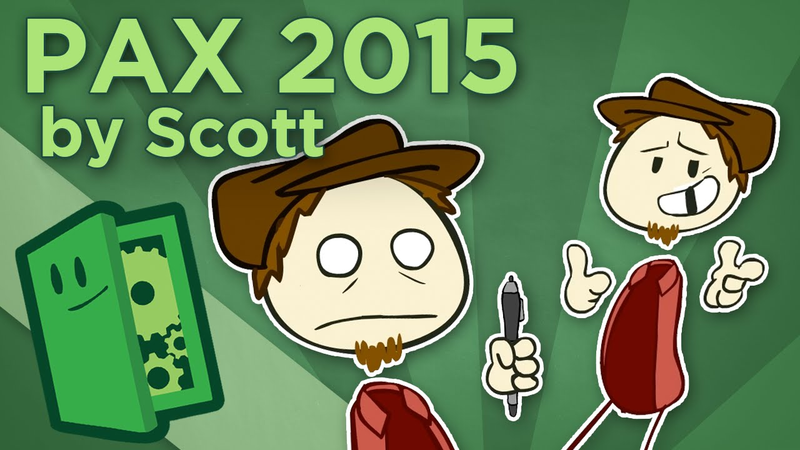
Special: PAX 2015 - Scott Explains How Extra Credits is Made
Key insights
6 takeaways- 01Topic selection for the series is driven by data analysis to ensure subjects remain relevant to both the gaming industry and the audience.
- 02The writing phase requires extensive research to ensure that complex game design concepts are both informative and accessible to viewers.
- 03The production of Extra Credits follows a structured, multi-stage workflow that balances research, technical synthesis, and artistic animation to maintain a consistent weekly release schedule.
- 04The show's signature high-pitched narration originated from a technical necessity to condense a college project into a specific time limit by accelerating playback speed.
- 05Artists utilize Adobe Flash to create episode visuals, dedicating approximately 10 to 20 hours of labor per episode.
- 06The production process concludes with a post-production stage where audio and visuals are integrated, final edits are performed, and content is distributed across digital platforms.
Ask AI about this video
Transcript
Hey folks, we don't have a regular EC episode for you today because PAX, but we do have something fun. Scott wasn't able to make it out for PAX this year, but it turns out he surprised us with a last-minute video to show at our panel. For those of you who didn't get to experience it live, here is that video. Enjoy. Hello, I'm Scott, artist of EXTRA CREDITS AND SOMETHING WAS GOT IN MY THROAT. I'M SORRY. I'm Scott, artist of Extra Credits, and I want to welcome you to our PAX panel. Because these things inevitably turn into Q&As for James, I want to do something a little differently this year and show you how an episode of Extra Credits is made. I mean, I work on these things, too. Do people subscribe to Scott recommends? No. Hello, yes, you in the front, you have a question? Uh yes, I have a question for James. They are part what? LET ME HAVE THIS. CHOOSING A TOPIC.
FIRST, we need a topic. But of course, there's so much to talk about. How do we decide? Well, I'm glad you asked. Our scientists at Extra Credits HQ use the most state-of-the-art computers to gather and parse information to decide which topic is most crucial to discuss at any given week. What if What if we made one about Angry Birds, too? Yeah, yeah, okay. Writing the episode. Next, James writes the script. These vary in length depending on the subject and require tons of research. Once that's done, Dan double-checks to make sure the script is palatable palatable palatable palatable. He makes sure the script is okay to record and for you to enjoy. Let's do this. Recording the episode. Next, Dan records and edits the script's audio in Audacity before sending it to the artists. Did you know Dan's voice
actually came from the need to shorten the length of a college project, the first episode of Extra Credits. Instead of cutting down video to meet the maximum time requirements of his project, he sped the video up and pitch of his voice was increased. That's right, Dan's high-pitched voice is entirely synthesized and Dan's definitely not two children in a trench coat. Next, the artists get the script and audio and begin to draw the episode in Adobe Flash, which is a wonderful program that definitely doesn't crash every 10 minutes. After about 10 to 20 hours of drawing and 20 to 30 hours of procrastinating looking at pictures of cats on the internet. Look at that cat. Oh my god, look at that one. Dan and Carrie take the final video, edit it and add any other touches that that particular episode needs before uploading it to the Escapist. I mean, Penny Arcade TV. I mean, YouTube. YouTube. And that's how an episode of Extra Credits is made. I hope you found that
fun and informative. Any questions? They um they all left with James. Can I come with you guys to Magfest? Mhm, no.
Summary
The production process for the educational web series Extra Credits involves a structured, multi-stage workflow that balances research, technical synthesis, and artistic animation. The process begins with topic selection, which relies on data-driven analysis to identify subjects most relevant to the gaming industry and the audience. Once a topic is chosen, the writing phase requires extensive research to ensure the script is both informative and accessible.
Following the writing phase, the production moves to audio recording and editing. A notable technical aspect of the show is the signature high-pitched narration, which originated from a necessity to condense a college project into a specific time limit. By accelerating the playback speed, the pitch was permanently altered, creating the distinct vocal style that defines the series. The audio is processed using digital audio workstation software before being handed off to the art department.
The visual creation process utilizes Adobe Flash, where artists spend significant time—typically 10 to 20 hours per episode—illustrating the content. This phase is characterized by the technical challenges of working within animation software, followed by a final post-production stage. During this concluding step, the team integrates the audio and visuals, performs final edits, and manages the distribution across digital platforms. This collaborative effort transforms complex game design concepts into the show's recognizable animated format, highlighting the blend of creative labor and technical constraints required to maintain a consistent weekly release schedule.














Comments