1 free read left. Create a free account for unlimited reading + AI research.
Create free account
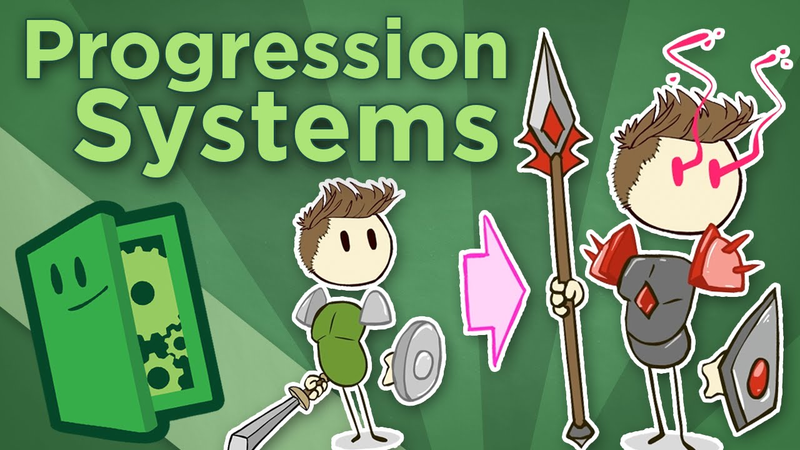
Progression Systems - How Good Games Avoid Skinner Boxes - Extra Credits
Key insights
6 takeaways- 01Progression systems act as a framework for managing learning curves by introducing mechanics incrementally, which allows players to master skills at their own pace.
- 02Designers should align their definition of efficiency with the player's experience to ensure that the most rewarding path through the game is also the most engaging one.
- 03Developers should prioritize player agency by allowing for character customization and build flexibility, including mechanisms for re-specing to prevent player frustration.
- 04Meaningful progression ties gameplay abilities to narrative development and faction alignment, ensuring that character growth reflects personal choices and world-building.
- 05Effective progression systems should function as core gameplay components that enhance strategic depth and narrative immersion rather than serving as manipulative Skinner boxes designed to artificially extend playtime.
- 06Well-designed progression provides continuity in games, transforming a series of disconnected missions into a cohesive and unified campaign.
Ask AI about this video
Transcript
One of our earliest episodes of Extra Credits was about Skinner Box mechanics and why they're actually harmful game design. You can find the whole episode here, but the short version is that often progression systems in games simply boil down to a series of psychological traps meant to keep us grinding. Even when if we stop to think about it, we realize we aren't actually having fun anymore. But progression systems don't have to be Skinner Boxes. In fact, progression systems can be a beneficial addition to a game and be a great part of the experience so long as they're actually part of the experience and not simply tacked on to train the player to come back or to add play hours without adding content. Now, as a developer, I know that there are times when you need to put in a little grind to control the speed of play, to keep players from blazing through all your content faster than you can release more. But if you're going to put in a progression system, there's no reason you can't also use it to make the experience better for the player. So let's talk about some of the ways progression systems can be used to improve a game. First off, they can add
a long-term strategic to the game. Most of our in-game decisions are usually pondered for a few minutes at most, but a progression system gives the player an opportunity to plan out and contemplate game decisions for hours or even days. To use the simplest example, let's compare the talent tree in a game like World of Warcraft to the system some JRPGs are still using too frequently where stat boosts and new abilities are awarded to characters at each new level in a predetermined unchangeable fashion. Anyone who's played an MMO knows how much time they spent thinking about their build, how they were going to maximize their damage output or squeeze out the last few points of healing, and that's an enjoyable part of the MMO RPG experience. It adds to the game and it gives you something fun to brainstorm about even during those dull parts of the day when you aren't able to play. It keeps you engaged with the game even when you aren't at the machine. That's just the simplest example, but using your progression system to provide an extra layer of long-term strategic play can add a great deal to a game experience. And especially if you feel compelled to use a timer or an energy system, at least provide your players with the engagement of plotting what
they're going to do with their energy while they're waiting, rather than just creating forced downtime. Be aware though, in order to make a progression system engaging, you've got to reward the player for thinking through the strategic problem you're presenting them, but you've also got to give the player some way to backtrack if they're not happy with their solution. This is why World of Warcraft allows you to respect your character for a small cost. This way, there's still an incentive to think hard about the strategic problem of building your character, but you can't completely ruin your own experience by making mistakes. Let's talk about some of the other ways we can use a progression system to benefit the player. Progression systems can also be a great tool for shaping your learning curve and limiting the complexity of your game. I'll use World of Warcraft as an example again, but lots of games do this. If when you first logged into World of Warcraft, you were immediately given access to all the abilities in the entire talent tree, you'd feel really overwhelmed. A progression system can be used to introduce elements of the game to the player one by one, allowing them time to familiarize themselves and get comfortable with one facet of the game before moving on to the next thing they need to learn. The best thing about this
approach is that unlike standard tutorialing, the player has control over how long each step of the learning curve takes. If a player has an element of the game completely figured out, they'll be more efficient in tackling that step's challenges, which in turn should make them progress faster, which means they'll get to move on to the next step quicker. This is one of the best ways to create a self-regulating learning curve, which of course brings us to my next point. You can use your progression system to reward the most engaging types of play. As a designer, you can craft a system where the most efficient way to tear through your progression scheme also happens to be the most interesting, pushing the player to new heights of skill and encouraging them to master aspects of your game's mechanics that they otherwise never would have bothered with. Just make sure that your definition of efficient is the same as your players. If, for example, the designer is measuring efficiency in terms of time investment to reward, but players are measuring efficiency in terms of effort investment to reward, that's when something like the Destiny loot cave happens. From your players perspective, if the most efficient way to progress turns out to be the least
interesting thing to do, uh you don't want that. A progression system can also enhance your narrative or the feel of your game. Faction progression, where actions you take affect your alignment with a faction in the game's world, are good examples of progression systems that involve the narrative. On a more individual level, we can infuse our characters with a lot of personality and show character growth through the use of progression systems, too. Let me explain. In most games, we spend the majority of our time with the mechanics rather than the written story. And so, a character's gameplay abilities often shape our thinking about that character. The white mage and the fighter, for example, not only have different combat abilities, but in almost every game that gives them any character at all, they have different personalities. It's hard to write a character who's mechanically all about healing and protecting their companions exactly the same way you would write a warrior who's all about hitting stuff with an axe. Progression schemes also let us adjust our characters' abilities over time, thereby showing growth and change in the character themselves. Lastly, progression systems can also provide a sense of cohesiveness and continuity to games that would otherwise lack them.
Games like Dawn of War use the progression system to tie the battles together, to make the player feel connected to their units, and to give the single-player mode the sense of being a campaign rather than just a series of one-off missions. By using a progression system to create persistence, to tie instantiated events together, the player gets a sense of a holistic world, or at least a world that exists beyond the boundaries of the map they're currently playing. This makes it easier for the player to get immersed and invested. So, there are many, many ways we can use our progression schemes to enhance the player experience. So many that even when we decide that our game needs a progression system in order to keep players from simply blazing through all the content, we can still make it more than a treadmill, more than a psychological trap. We shouldn't be putting in these systems simply because everything has a progression system these days, or because we need it to disguise lackluster gameplay. We should use them because they add to the game itself. See you next week.
Summary
Progression systems in video games are frequently criticized for functioning as Skinner boxes—psychological traps designed to induce habit-forming behavior through repetitive, unrewarding grinds. The primary thesis is that developers should move beyond these manipulative mechanics by integrating progression as a core, meaningful component of the gameplay experience. When designed thoughtfully, these systems can enhance strategic depth, facilitate learning, and deepen narrative immersion rather than merely serving as a tool to artificially extend playtime.
Key strategies for effective progression design include fostering long-term strategic planning, such as allowing players to customize character builds. This approach encourages engagement even when the player is away from the game, provided the system includes mechanisms for backtracking or re-specing to prevent frustration. Furthermore, progression systems serve as an ideal framework for managing learning curves; by introducing mechanics incrementally, developers allow players to master specific skills at their own pace, creating a self-regulating educational experience.
Beyond mechanics, progression systems can reinforce narrative and world-building. By tying individual actions to faction alignment or character growth, developers can ensure that gameplay abilities reflect a character’s personality and development. Additionally, these systems provide continuity in games that might otherwise feel like a series of disconnected events, transforming isolated missions into a cohesive campaign. Ultimately, the goal is to align the designer’s definition of efficiency with the player’s, ensuring that the most rewarding path through the game is also the most engaging one. By prioritizing player agency and meaningful choices, developers can transform progression from a treadmill into a vital, enriching element of the overall game design.


















Comments