1 free read left. Create a free account for unlimited reading + AI research.
Create free account
Returning to WWII - Four New Approaches to War Games - Extra Credits
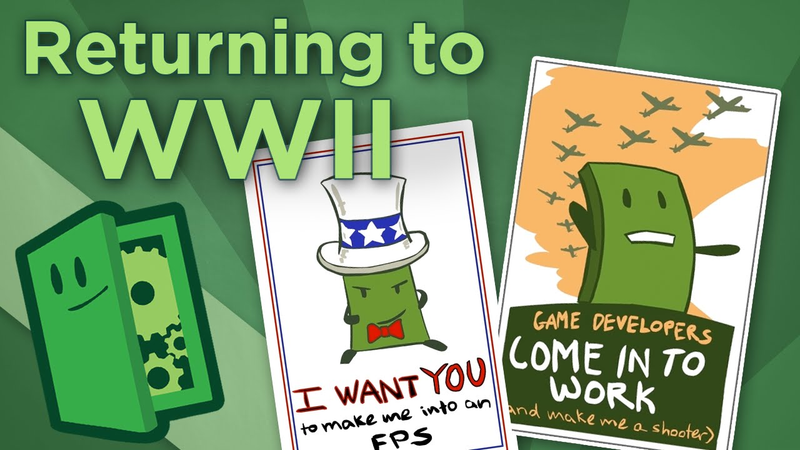
Key insights
6 takeaways- 01The WWII shooter genre suffers from creative stagnation because the industry repeatedly focuses on the same 5% of the war's historical events.
- 02Developers can revitalize the genre by shifting focus away from Western-centric battles toward underrepresented theaters like the Burma campaign, the conflict in China, or the experiences of soldiers in Greece, India, and the Philippines.
- 03Gameplay mechanics should evolve beyond standard linear shooting to incorporate survival, scouting, raiding, or mounted combat styles that reflect the tactical requirements of diverse geographic regions.
- 04Moving from linear shooter formats to contained, single-battle environments allows for deeper emotional resonance and a more personal sense of progression for the player.
- 05The industry's shift toward modern or science-fiction settings is a reaction to player fatigue caused by the recycling of familiar historical narratives rather than an inherent lack of interest in the WWII subject matter.
- 06Meaningful engagement with the war's complex themes, such as the Holocaust and period-accurate cultural elements like radio broadcasts, is necessary to move past repetitive genre tropes.
Ask AI about this video
Transcript
Hey, before we start, we got guests. This is Rob. He and James worked together on this episode. And this is Lil, she's doing the art. She's great. All right. Not long ago, World War II was the setting for shooters. Call of Duty, Medal of Honor, and Battlefield were all sepia-toned, borrowing the aesthetic Spielberg laid down in Saving Private Ryan. Recently, with the FPS warfare genre leaping head-first from modern to sci-fi, there's been some talk about returning to the Second World War and doing it over again with new tools and technologies we couldn't have imagined when Medal of Honor first hit shelves. But whenever that conversation comes up, you'll often hear the same groans. "Come on, World War II has been done. It's boring. We've run out of war." And that response makes sense on the surface, sort of. I mean, yeah, if we made a World War II action game exactly like we used to, I completely agree. It would feel repetitive and unnecessary. The naysayers are correct in declaring that we don't really need another game set in Normandy or the Eastern Front. Here's the thing, though. A lot of stuff
happened in World War II, and game designers have barely scratched the surface when it comes to that period in history. If you actually look, there's an incredible wealth of material that we've not even touched before. So today, I thought it'd be fun to look at just some of the exciting alternative possibilities for reapproaching the World War II action genre. Here we go. Idea one, globalize. The Second World War was a global conflict, so global that it's almost difficult to grasp. In occupied China, guerrilla fighters derailed trains and raided military bases. South African forces invaded German Namibia. Revolts across the Middle East challenged colonial authority. And firefights raged through the bungalows and tennis courts of British India. But for some reason, every time we build a World War II shooter, we always revert to the greatest hits album of famous battles. D-Day, Stalingrad, pretty much any skirmish that appeared in Band of Brothers. See, this is the thing. It's not that we're tired of World War II. We're just tired of playing the same 5% of World War II over and over. If you're considering building a World War II
shooter, why not focus on some of the lesser-known battles? I mean, the Pacific Theater has been tragically underexplored as a setting, and it's rich with drama from the invasion of Alaska's Aleutian Islands to the Burma campaign. Just because these battles aren't nearly so famous didn't make them less important or dramatic to the people on the ground fighting them, and the new types of terrain and tactics you'd find in these unexplored settings might open up new interesting game design possibilities, too. Besides, how cool would it be as a player to be put in the boots of soldiers from places like the Philippines, India, and Greece? Soldiers whose stories we've probably never heard before. Battles a lot of us may not even know who won. Plus, come on, who wouldn't jump at the chance to play as a Nepalese Gurkha? Idea two, boil down the conflict. A lot of times World War II games, especially the shooters and action games, will try to cram an entire offensive or even an entire war into one campaign. That's really not necessary, though. There are a lot of individual battles that raged for days or even weeks with the front line moving over lots of different terrain. A game about a single engagement could be made just
as interesting, maybe even more interesting if you did it right. Sure, quantum leaping to different soldiers continents away from each other to experience major battles in a bunch of different places has its benefits, but imagine sticking with one unit in one prolonged battle for one objective, experiencing the highs and lows every step of the way, every desperate victory, every tragic loss. It would take some creativity, but that sort of contained perspective on the war could feel far more personal and have a much greater sense of logical progression. Now, at first it might seem like staying in one place would mean sacrificing on variety, but most battlefields tend to have a wide variety of features, ranging from ridges to defensive fortifications, towns, low mountains, even specific structures like hotels or docks. More than enough to build a campaign around. Consider how Spec Ops: The Line managed to keep each location distinct without ever leaving the Dubai setting, or how each time you picked a level to play, it showed how far you'd progressed on a miniature sand table of the city. It gave the game a good sense of progression, both strategically and thematically. And while it might seem
like it's taking artistic license to make the environment reflect the emotions of the characters fighting there, there's actually a kind of realism to that. I know it seems cliche to talk about the environment becoming a character, but it's actually really common to hear veterans personify a battlefield's environmental features, to talk about the valley of death, or the fight for that damn hill. War tends to give geography an emotional layer, and by condensing the campaign to one battle, you could give players a little more sense of each feature being an important and memorable landmark, rather than just one more river, another factory, another barn, another bridge. Idea three, revamp the gameplay. One of the reasons World War II started to feel so stale in the action genre is because the guns and tactics were starting to feel too familiar. We had just clutched that M1 rifle while sprinting across the fields of France one too many times. One solution to this problem would be to find some underrepresented weapons, or feature some battlefield modifications that soldiers actually created. And consider what a change in tactics might do for gameplay. Imagine a World War II
game that played more like Far Cry than Call of Duty, where the objective was to scout, raid, and capture enemy installations. That's an entirely different experience. This is also where focusing on different regions of the world could pay huge dividends, since changing the geography will necessitate altering how the game plays and feels. Imagine fighting a guerrilla war in the jungles of Mindanao. That'll completely different from landing on Omaha Beach or advancing on Stalingrad Central Plaza. Or what about a game about resistance fighters in Manchuria, who were often mounted bandits rather than professional soldiers? That might play more like Red Dead Redemption than Medal of Honor. You see what I mean about how much more there is to this war than games have shown us? Idea four, engage with period themes. Our World War II games so rarely dive into the real questions about the war, exploring the things that made it vital and crucial. And the few times we have, the game has almost always been better for the effort. Call of Duty: World at War subtly judged you if you committed war crimes in an attempt to say something about how war can make people naturally fall into cruelty. And
despite the weird futurism of Wolfenstein: The New Order, that game is fundamentally about Nazi ideology and atrocities. I'm not saying that either of these games is 100% successful in engaging those questions, but both times the attempt resulted in a more gripping and potentially thought-provoking experience. And while I'm at it, I might as well talk about the elephant in the room. Look, the fact is we've been making games about World War II for about 30 years, and almost none of them even mention the Holocaust. The most notable one I can think of right now is Valkyria Chronicles, which is not even a World War II game. That's kind of messed up. Now, of course I understand why developers prefer to avoid it, but you can't make a whole genre of games about the Second World War without engaging this topic. You just can't. I understand that the Holocaust is an ugly, difficult, and con- troversial subject to confront, but if you're afraid of ugly and horrific subject matter, maybe you shouldn't make a game about the largest, most costly conflict in human history. It just kind of comes with the territory. And I'm not saying that the game has to gravitate around the Holocaust, but there should at least be some acknowledgement that this
catastrophe is happening, especially if the game is set in the European theater. You could build it into the scenery with German propaganda. You could include a mission about smuggling out a person who's been in hiding. It doesn't need to be a big focus. It just has to exist. Remember the concentration camp liberation sequence in Band of Brothers? Those scenes only took a few minutes of one episode in a 10-hour series, but they're memorable because it's a turning point in the soldiers' emotional journey. Even if you only include one or two references, those inclusions will speak volumes and help make the events of the war feel larger than what's on screen. On a lighter note, you could also flesh out the period by including pop culture or period music. We often use pop songs in Vietnam games, but we sometimes forget that World War II was very much a radio war. Troops listened to Armed Forces Radio both at sea and at the front, not to mention propaganda broadcasters like Tokyo Rose. It's an easy element to include, and it'll give a greater sense of the world outside the battlefield. I've barely even scratched the surface of possibility here, but I hope we've sparked your imagination a
little. The Second World War is just so full of untapped material that there are literally thousands of ways developers can approach it. And personally, I really hope they do. See you next time.
Summary
The World War II first-person shooter genre has historically suffered from creative stagnation, characterized by a repetitive focus on a narrow set of Western-centric battles. While the genre has largely shifted toward modern or science-fiction settings due to player fatigue, the underlying issue is not the subject matter itself, but rather the industry’s tendency to recycle the same 5% of the war. By moving beyond the "greatest hits" of the European theater, developers can revitalize the genre through four distinct strategic approaches.
First, developers should globalize their scope by exploring underrepresented theaters, such as the guerrilla conflicts in China, the Burma campaign, or the diverse experiences of soldiers from India, the Philippines, and Greece. Second, games could benefit from boiling down the conflict to a single, prolonged battle within a contained environment. This approach allows for deeper emotional resonance and a more personal sense of progression, mirroring the way veterans often imbue specific geographic features with significant meaning.
Third, gameplay mechanics should be revamped to match the unique tactical requirements of these diverse regions. Moving away from standard linear shooters toward styles that emphasize scouting, raiding, or mounted combat—akin to open-world or survival genres—would provide necessary variety. Finally, developers must engage more meaningfully with the period’s complex themes. This includes acknowledging the broader human cost of the war, such as the Holocaust, and integrating period-accurate cultural elements like radio broadcasts. By embracing the vast, untapped historical material available, the industry can move past repetitive tropes and create more thought-provoking, immersive experiences that honor the scale and gravity of the Second World War.














Comments