Game Development reports and market data
Documents
1 Day in the Life of an Indie Game Developer
Independent game development requires a disciplined approach to time management and task prioritization to maintain high levels of productivity.
- Maintain productivity by using structured time-blocking and taking breaks at least every two hours to avoid cognitive fatigue and diminishing returns.
- Prioritize iterative polishing of existing mechanics, such as AI and particle effects, over the constant addition of new content to create a more effective vertical slice.
- Enhance user experience through subtle technical refinements like code cleanup and post-processing effects rather than overwhelming the player with excessive features.
Animation Bootcamp: 2018 Tricks of the Trade
Modern game animation relies on a strategic blend of technical optimization and disciplined workflow management to achieve high-fidelity character movement.
- Reduce asset bloat by replacing complex, linear animation sets with data-driven systems that utilize orientation mapping and ground distance inputs.
- Prioritize the use of blend trees over state machines to achieve more responsive, seamless character transitions and dynamic movement.
- Maintain high-quality animation standards through low-tech visualization techniques, such as using dry-erase markers on monitors to track arcs and orthographic views to correct posing.

You're Not Broken: Finding Your Creative Way Through Difficult Times
Severe personal trauma, including illness and significant life loss, fundamentally alters cognitive function, often inducing a state of trauma brain that mimics the impairments associated with medical conditions like chemo brain.
- Severe trauma induces a physiological 'trauma brain' state that mimics medical cognitive impairments, leading to decision paralysis and an inability to perform creative work.
- Creative capacity is not permanently lost during periods of high stress but is temporarily obstructed by the brain’s survival-focused response.
- Restoring creative function requires prioritizing physiological foundations, specifically sleep, social connection, and environmental stability.
Harvesting Interactive Fiction
Interactive fiction, once considered a niche hobbyist pursuit, has re-emerged as a significant force in the mainstream gaming market, evidenced by the critical and commercial success of titles like 80 Days, Device 6, and A Dark Room.
- Interactive fiction has transitioned from a niche hobbyist pursuit to a commercially viable sector, exemplified by the success of titles such as 80 Days, Device 6, and A Dark Room.
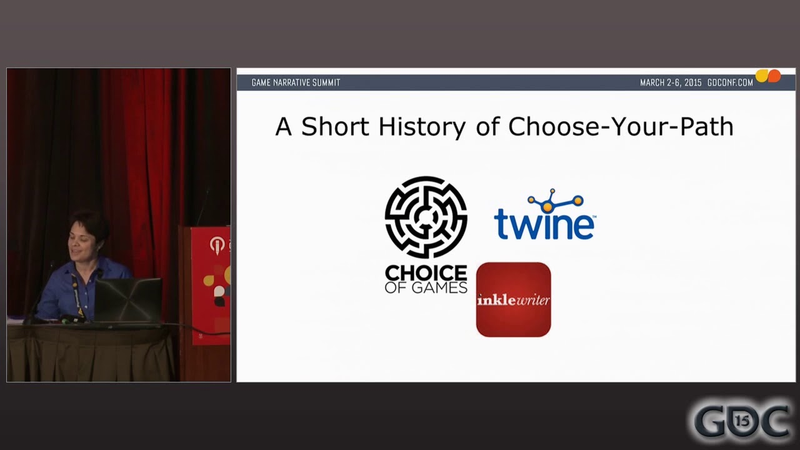
- Modern narrative design is shifting away from traditional parser-based inputs toward branching structures enabled by accessible development tools like Twine, ChoiceScript, and inklewriter.
- Developers can cultivate player 'complicity' by designing systems that grant players a sense of ownership over the plot, making inevitable narrative outcomes feel like personal choices.
The Digital Museum - Assassin’s Creed Origins Discovery Tour - Extra Credits
The Discovery Tour mode in Assassin’s Creed Origins represents a significant milestone in the integration of interactive entertainment and formal education.
- The Discovery Tour mode in Assassin’s Creed Origins establishes a proof-of-concept for AAA studios to repurpose commercial game engines into formal educational tools for historical study.
- By removing combat and incorporating expert historical consultation, the mode successfully transforms a high-fidelity game environment into a digital museum experience.
- The current implementation relies on a restrictive, linear 'on-rails' design that mirrors traditional audio tours, which limits the medium's potential for self-directed learning.
Narrative in Games - Role, Forms, Problems, and Potential
Video games possess a unique capacity for interactivity that distinguishes them from traditional linear media like film and theater.
- Game narrative design must shift from linear, pre-scripted cinematic sequences to dynamic, systemic frameworks that prioritize player agency.
- Current industry reliance on borrowed tropes from film and theater often conflicts with interactivity, leading to broken immersion and limited narrative potential.
- Meaningful storytelling in games should emerge as a byproduct of player interaction with the environment rather than through static, developer-authored plots.
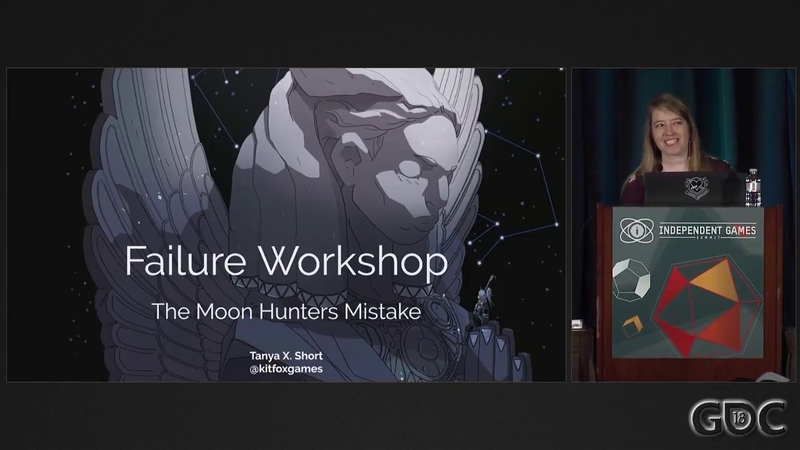
The 2018 Failure Workshop
The independent game development sector frequently suffers from a culture that prioritizes rigid production schedules over product quality, leading to avoidable commercial failures and significant psychological distress.
- Prioritizing rigid production schedules over product quality leads to avoidable commercial failures, negative community sentiment, and significant psychological distress for development teams.
- The case of Moon Hunters illustrates that rushing unfinished, buggy software to meet arbitrary deadlines results in immediate revenue loss and necessitates extensive, burnout-inducing post-launch support.
- Developers should shift focus toward long-term sustainability by prioritizing core gameplay quality over release efficiency, as flawed launches can be salvaged through consistent updates and transparent communication.
Watch Dogs: Hacking it to 11
The audio design for Watch Dogs centers on the challenge of maintaining a cohesive, narrative-driven sonic identity within the unpredictable constraints of an open-world environment.
- To manage memory and processor constraints, the audio team replaced long, multi-layered musical tracks with a modular system that chops compositions into smaller, reusable parts that trigger based on in-game actions.
- The team implemented a reactive music engine that uses short, looping segments to minimize latency between game events and musical transitions, allowing the score to skip or advance sections based on player input.
- The audio team utilized a 'piano validation' technique, testing complex synth or guitar riffs on a clean piano to ensure harmonic stability and compatibility before committing to final production.
Temporal Reprojection Anti-Aliasing in INSIDE
Temporal Reprojection Anti-Aliasing (TAA) serves as a critical post-processing solution for the game INSIDE, addressing the visual instability caused by the title’s side-scrolling camera movement and complex geometric detail.
- The TAA implementation for INSIDE on Xbox One achieves a performance cost of approximately 1.7 milliseconds at 1080p resolution.
- The system utilizes a 16-sample Halton 2-3 sequence to jitter the view frustum, allowing for the recovery of sub-pixel information.
- To prevent ghosting and smearing, the engine employs neighborhood clipping, which clamps history samples to the 3x3 pixel color space of the current frame.
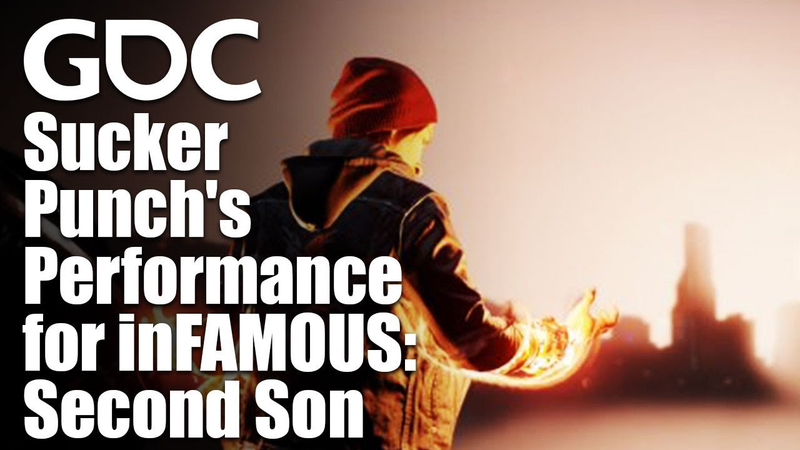
Sucker Punch's Performance Capture for inFAMOUS: Second Son
The development of inFAMOUS: Second Son marked a significant technical shift for Sucker Punch, moving away from traditional joint-only rigs toward a sophisticated, data-driven facial capture pipeline.
- Sucker Punch transitioned to a data-driven facial capture pipeline for inFAMOUS: Second Son, replacing traditional joint-only rigs with an example-based system rooted in the Facial Action Coding System.
- The studio utilized wireless head-mounted cameras and a consistent 168-marker set to capture actor performances in real-time, ensuring precise translation of physiological details like jaw depth and lip movement.
- The animation engine employs a pose-space deformation system that integrates skin clusters with vertex-level offsets, using radial basis functions to normalize blending and retargeting across character models.

5 Ways To Make Money As An Indie Game Developer
Establishing a sustainable indie game studio requires a multifaceted approach to revenue generation and community building.
- Achieving 20,000 wishlists on Steam is the primary benchmark for ensuring a high-visibility game launch.
- Developers should negotiate publisher agreements based on gross revenue rather than net revenue to minimize recoupment deductions.
- Maintaining ownership of intellectual property is essential for long-term monetization through merchandise and cross-platform expansion.
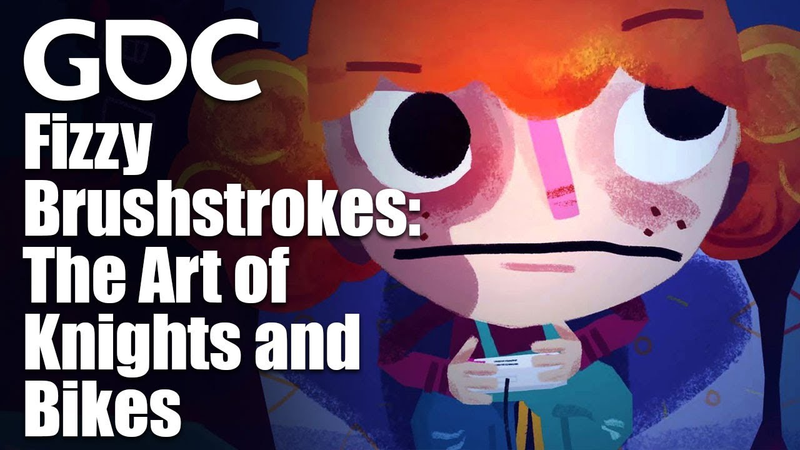
Fizzy Brushstrokes: The Art of Knights and Bikes
The development of Knights and Bikes centers on the intentional use of a constrained, hand-drawn aesthetic to capture the unfiltered imagination of childhood.
- To maintain a consistent, hand-crafted aesthetic in 'Knights and Bikes' using Unity, the team utilized thousands of hand-painted 2D assets as PNGs rather than developing a custom engine.
- The game's animation style employs a 'line boil' technique, where every asset is drawn three times to create a stop-motion effect that conveys the infectious, shifting energy of childhood.
- The art direction was heavily influenced by the work of Cornish painter Alfred Wallace, whose use of simple materials and lack of formal training provided a blueprint for creating 3D environments out of 2D assets.