Game Development reports and market data
Documents
Your Indie Game on Console: A Practical Guide to Porting
Bringing an indie game to console platforms is a complex, multi-month undertaking that demands rigorous technical planning and administrative foresight.
- Porting an indie game to console is a complex process typically requiring three to six months, with projects involving intricate online networking often needing extended timelines.
- Success depends on early integration of platform-specific requirements, including dev kit acquisition, age ratings, and backend configuration for achievements, well before the final submission phase.
- Developers must replace simplified local storage with robust, platform-compliant save systems to meet console-specific technical standards.
For Honor: From a Great Launch to a Challenging Live Period
The transition from traditional game development to a games-as-a-service model requires a fundamental shift in mindset, moving from the delivery of a static product to the ongoing management of an evolving ecosystem.
- Transitioning to a games-as-a-service model requires shifting from static product delivery to managing an evolving ecosystem, necessitating a move from intuition-based design to rigorous, data-driven balancing.
- Maintaining competitive integrity in live services depends on tracking granular metrics, such as win rates and move-usage patterns, across diverse player skill levels.
- Infrastructure stability is critical to long-term viability, as evidenced by the necessity of transitioning from peer-to-peer networking to dedicated servers to resolve post-launch performance vulnerabilities.
Inside the Indie Mind: Zach Barth (Zachtronics)
Zachtronics operates on a philosophy of open-ended, engineering-focused puzzle design that prioritizes mechanical innovation over traditional market research or progression systems.
- Zachtronics prioritizes mechanical depth and player-driven optimization over traditional market research or progression systems to create skill-based, engineering-focused puzzles.
- The studio maintains a high production cadence by reusing code and design frameworks across titles, treating each release as an iterative validation of quality.
- Development is sustained by treating projects as side endeavors, which removes the pressure to conform to market trends and allows for authentic, self-directed design.
FRAMED: A Recipe for Critical Success
The primary objective of this analysis is to outline a strategic framework for positioning premium indie titles for success in the mobile market.
- Strategic participation in the global festival and awards circuit can secure long-term commercial viability for premium indie titles, even when initial launch performance is underwhelming.
- The game FRAMED achieved 400,000 paid unit sales despite an initial launch that failed to meet expectations relative to its $500,000 development budget.
- Developers should structure production around ten-week milestones that align with major industry events to ensure a constant, high-quality, submission-ready build.
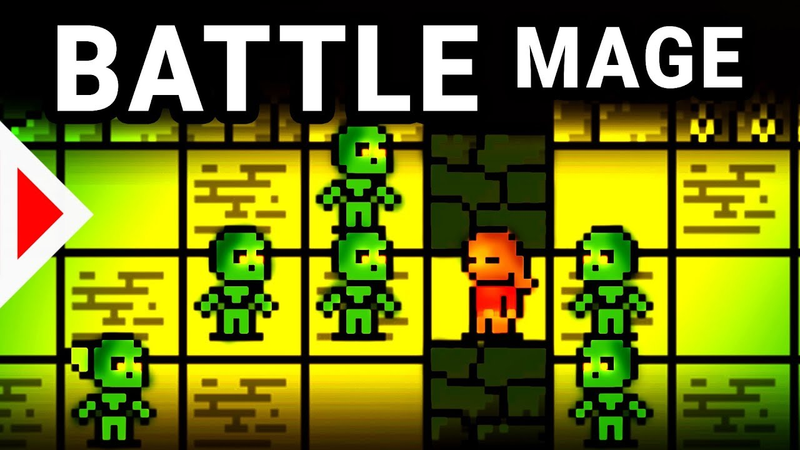
I Still Play Your Indie Games!... #009
The provided analysis examines the indie game Aldarix the Battlemage, focusing on game design principles, balancing, and player experience.
- Improve player onboarding by replacing the initial overwhelming spell selection with a gradual unlocking system to foster better progression and engagement.
- Enhance combat clarity by implementing more impactful damage animations and integrating mana costs directly into the user interface.
- Leverage a limited enemy pool to keep the game easy to learn, shifting the focus of complexity onto the player’s diverse spell kit rather than enemy behavior.
Math for Game Programmers: Parallel Random Number Generation
Parallel random number generation is a critical challenge in game development, particularly for multi-threaded CPU applications and GPU-based simulations.
- Traditional serial random number generators like Linear Congruential Generators (LCG) are unsuitable for parallel environments due to poor statistical quality, short periods, and an inability to maintain consistency across varying thread counts.
- Cryptographic hash functions, specifically the Tiny Encryption Algorithm (TEA), provide a superior alternative by treating random number generation as a stateless mapping problem rather than a sequential state-based process.
- Using TEA-based generation allows developers to map inputs like thread IDs or vertex data directly to random outputs, eliminating the need for shared state or inter-thread communication.
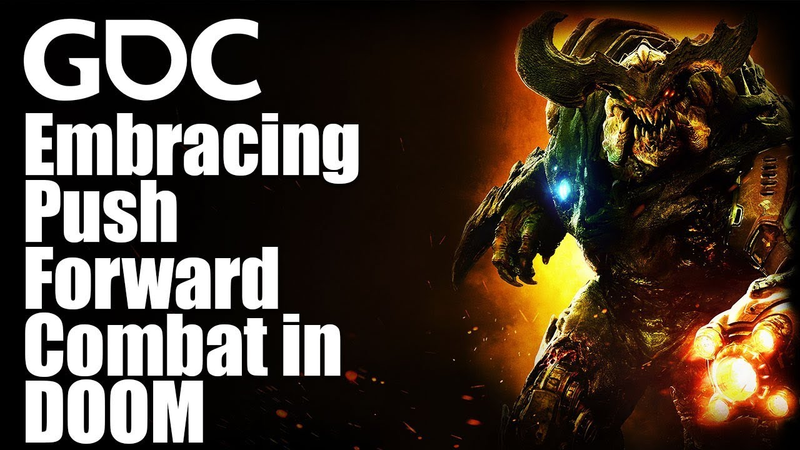
Embracing Push Forward Combat in DOOM
The design philosophy behind the modern DOOM series centers on the concept of push-forward combat, a paradigm shift that rejects the defensive, cover-based mechanics prevalent in contemporary shooters.
- The 'Push Forward Combat' philosophy mandates that players must remain aggressive and mobile to succeed, utilizing mechanics like glory kills to replenish resources rather than relying on traditional cover-shooter mechanics like reloading.
- To maintain high-intensity pacing, developers implemented a three-tier enemy control hierarchy—twitch, falter, and stagger—which allows players to interrupt AI behavior and create openings for finishing moves.
- AI accuracy is intentionally tuned to miss when the player is moving, creating a dynamic where players feel empowered by speed and threatened when standing still, rather than relying on purely random accuracy offsets.
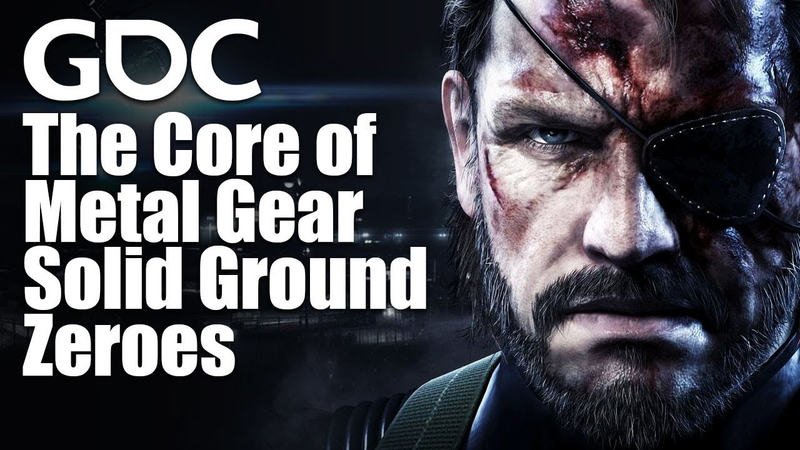
Photorealism Through the Eyes of a FOX: The Core of Metal Gear Solid Ground Zeroes (Sponsored)
Kojima Productions developed the proprietary Fox Engine to establish a new standard for photorealism in the Metal Gear Solid franchise, specifically targeting the transition to physically based rendering (PBR).
- Kojima Productions developed the proprietary Fox Engine to transition the Metal Gear Solid franchise to a physically based rendering (PBR) pipeline using a linear space workflow.
- The engine achieves photorealism by integrating raw photographic data and 3D scanning of physical sculptures and environmental objects to create accurate models.
- The deferred rendering pipeline utilizes a G-buffer to manage complex material properties, including subsurface scattering, anisotropic specular highlights, and view-dependent roughness.

Forging The River in The Flame in The Flood
The development of The Flame in the Flood centers on a sophisticated procedural generation framework designed to balance dynamic world-building with strict artistic oversight.
- To ensure reliable gameplay progression, the team replaced simple probability-based spawning with a scheduling approach that allows designers to define minimum, average, and maximum intervals for resource locations.
- The river generation system uses gradient descent to optimize island placement, where the state is defined by the X, Y, and rotation of each island and an error function penalizes constraint violations like river edge misalignment.
- To prevent the procedural generation from becoming stuck in local minima—which could cause catastrophic issues like river blockages—the team implemented optimization techniques to ensure the river remains navigable.

AAA Gaming While Blind
Blind gamers are successfully engaging with major AAA sports titles by utilizing 3D spatial audio, engine pitch, and haptic feedback to navigate complex digital environments.
- Developers are shifting from reactive accessibility patching to intentional, inclusive design by embedding features directly into the core development pipeline.
- Studios are utilizing 3D spatial audio, engine pitch, and haptic feedback to allow blind gamers to navigate complex AAA sports environments.
- A no-regression policy is becoming a critical industry standard to ensure accessibility features are maintained or improved through every subsequent game update.
Practical IP Law for Indie Developers 301: Plain Scary Edition
Intellectual property management serves as the foundational pillar for indie game developers, necessitating a proactive approach to securing creative assets.
- Formalize ownership of all creative assets by using explicit work-for-hire and assignment agreements with every contributor, as automatic copyright is insufficient for legal security.
- Prioritize early trademark registration for game titles as word marks to establish a priority date, as trademark rights are jurisdiction-specific and depend on active commercial use.
- Avoid relying on fair use as a legal defense due to its unpredictable, case-by-case nature, and instead use formal registration to maximize legal leverage.
Animation Bootcamp: Establishing an Ecology for NPCs
The primary objective of this presentation is to provide a structured, scalable methodology for establishing individual identities for non-player characters (NPCs) within large-scale game production environments.
- Establish an NPC 'ecology' by defining how characters interact with their environment and each other to avoid generic, disconnected design in large-scale productions.
- Utilize Maslow’s hierarchy of needs to define core character objectives, preventing a reliance on default, repetitive physiological behaviors.
- Create 'one-sheets' as a visual shorthand for multidisciplinary teams, replacing lengthy biographies with coordinate graphs that map binary personality traits like 'sly versus inept'.