Game Design reports and market data
Documents
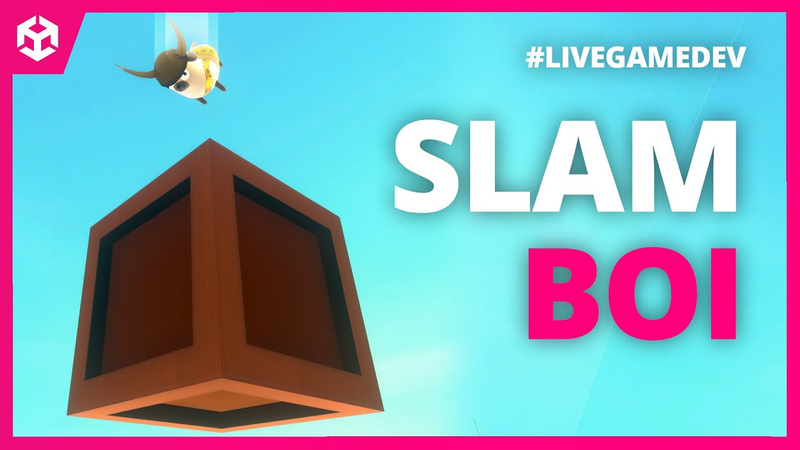
LIVE REPLAY: Adding BREAKABLES to our DOG game
The implementation of a robust breakable object system serves as a foundational mechanic for enhancing player interaction in 3D platformer environments.
- Implement a modular health-based damage system using Unity’s BoxColliders and C# to allow for the reuse of destructible objects across different game levels.
- Trigger environmental feedback—specifically audio cues and particle effects—immediately upon object destruction to reinforce player agency and impact.
- Design stylized debris effects by configuring particle systems with precise parameters for gravity, rotation, and lifespan, drawing aesthetic inspiration from titles like The Legend of Zelda: The Wind Waker.
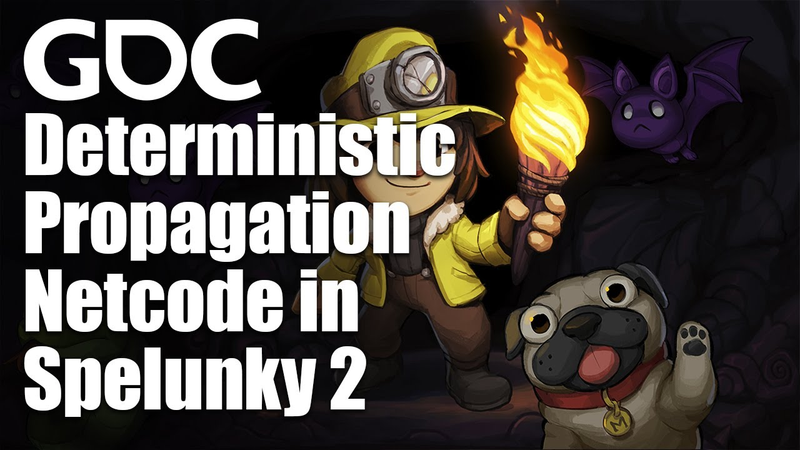
Breaking the Ankh: Deterministic Propagation Netcode in 'Spelunky 2'
The implementation of online multiplayer in Spelunky 2 centers on the challenge of maintaining a responsive, low-latency experience within a resource-constrained environment.
- The Spelunky 2 team pivoted from a deterministic propagation netcode to a refined rollback system that uses virtual memory to manage state swaps, avoiding the high computational cost of frequent data copying.
- To enable reliable rollback, the developers refactored the entire game simulation to eliminate side effects and shared data dependencies, ensuring the engine could handle deterministic state transitions.
- The implementation of replay technology allowed the team to transform unreproducible bugs into deterministic scenarios, significantly accelerating the debugging process and facilitating the scaling of global server infrastructure.

We remade Hollow Knight... but IT'S 3D!
This project demonstrates the technical and artistic process of reimagining the 2D title Hollow Knight as a 3D game.
- Translating 2D mechanics like melee combat and coin collection into a 3D environment is technically feasible while maintaining the original game's atmospheric integrity.
- Modular asset creation is essential for rapid prototyping, allowing 3D environments to be built and iterated upon like structured building blocks.
- Using 2D screenshots from the original title as direct references for proportions and textures ensures visual fidelity when adapting characters and enemies into 3D space.

The 2022 Game Developers Choice Awards (Full Video)
The 22nd annual Game Developers Choice Awards serves as a comprehensive recognition of excellence within the global interactive entertainment industry for the 2021 calendar year.
- Inscryption was named the Game of the Year at the 22nd annual Game Developers Choice Awards, which recognized excellence in the 2021 calendar year.
- Valheim achieved significant market impact by securing both the Best Debut and the Audience Award.
- Ratchet & Clank: Rift Apart demonstrated industry-leading technical and artistic standards by winning awards for both Best Visual Art and Best Technology.

The 2022 Independent Games Festival Awards (Full Video)
The 24th annual Independent Games Festival Awards served as a vital celebration of creative resilience, emphasizing the role of independent developers in fostering joy and human connection through interactive media.
- Daniel Mullins Games dominated the 24th annual Independent Games Festival (IGF) Awards, with their title 'Inscryption' winning four major categories: Excellence in Design, Excellence in Audio, Excellence in Narrative, and the Seumas McNally Grand Prize.
- The Nuovo Award, which recognizes innovative and experimental game design, was presented to 'Memory Card' by Lily Zone.
- The Audience Award, determined by public voting, was won by 'Mini Motorways' from developer Dinosaur Polo Club.
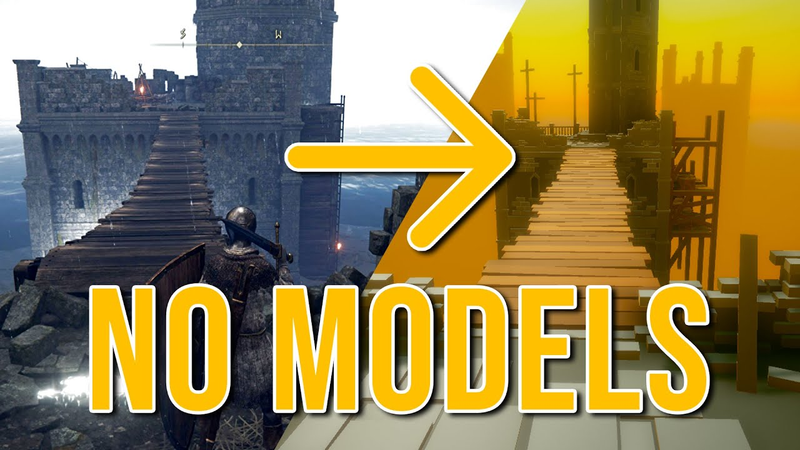
Remake an ELDEN RING scene with NO MODELS
Creating complex game environments without external 3D modeling software is achievable through the strategic use of Unity primitives and modular design principles.
- Complex game environments can be constructed using only Unity primitives by creating a modular library of basic prefabs like bricks, planks, and pillars.
- Visual variety is achieved by applying a strict color palette of three tonal variations per material and introducing subtle irregularities in the placement, rotation, and height of individual primitives.
- Structural realism is enhanced by using corner pillars to hide wall junctions and placing black cubes to simulate unlit interior spaces.
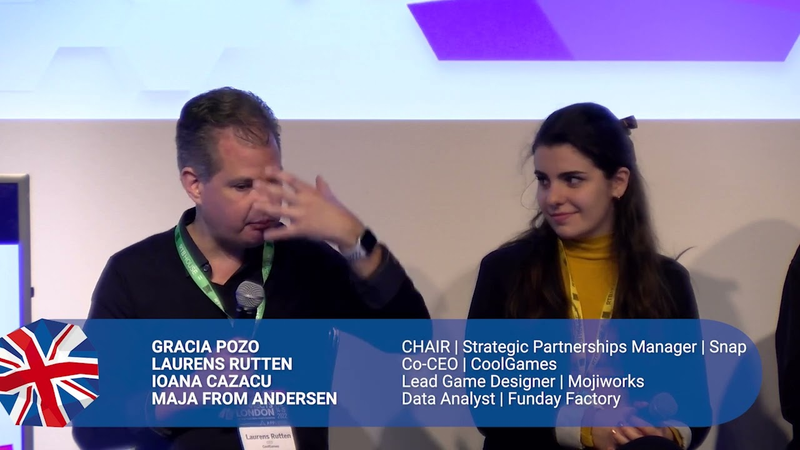
Panel: Snap Games, HTML5 & a New Generation of Hypersocial Games
Snap Games represents a shift toward hypersocial gaming, leveraging HTML5 architecture to eliminate traditional barriers like downloads and installations.
- Integrating friends directly into gameplay on the Snap Games platform increases day-one retention by 70 percent.
- The platform enables massive organic reach, with titles like Battleship and Ready Chef Go achieving 40 million and 100 million users respectively without traditional user acquisition spending.
- Snap Games utilizes HTML5 architecture to eliminate download and installation barriers, prioritizing instant access for Gen Z and millennial audiences.
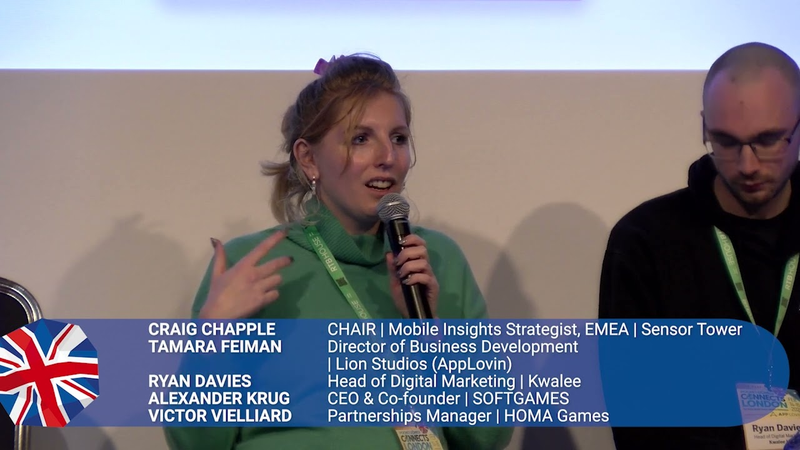
Panel: What is Giving Hypercasual its Longevity? The Recipe for a Successful Game
The hypercasual gaming sector has demonstrated remarkable resilience, maintaining its market position despite significant headwinds such as the deprecation of IDFA and rising acquisition costs.
- The hypercasual market has shifted from a primary focus on CPI (Cost Per Install) to a more holistic analysis of retention, playtime, and LTV (Lifetime Value) to justify higher acquisition costs.
- The deprecation of IDFA on iOS forced publishers to move beyond simple CPI-based decision-making and adopt more rigorous data-driven development cycles.
- Successful hypercasual games now require deeper engagement mechanics, such as clear progression paths and session planning, rather than the simplistic, short-level designs of the past.
Confessions of a Licensed Video Game Developer - Extra Credits
The development of licensed video games—often referred to as tie-in or transmedia games—presents a complex set of challenges that frequently result in products failing to meet fan expectations.
- The success of a licensed game depends on the developer's ability to identify and translate the core appeal of the original property into meaningful gameplay mechanics.
- Aggressive corporate timelines and short licensing windows frequently force developers to prioritize production speed over the creative nuance required to satisfy fans and license holders.
- Designers face significant friction when gameplay requirements conflict with established canon or the specific preferences of the intellectual property owners.

my game is at GDC and it's broken..
The development of the indie game Father serves as a case study in the practical realities of preparing a vertical slice for a major industry event like GDC.
- The development of the indie game Father relies on a hybrid asset strategy, combining Unity Asset Store environment packs with custom-modeled landmarks to balance production speed with visual identity.
- The demo currently suffers from significant performance degradation, including frame rate drops and inefficient asset loading, largely due to an over-reliance on post-processing effects like bloom and fog.
- The project's visual fidelity is partially 'faked' to mask simplistic underlying geometry, creating a tension between the need for a polished GDC-ready presentation and a performant, stable build.
Games that Care: Lessons from Teaching Grief-Based Game Design
This analysis examines the pedagogical shift toward integrating care-based methodologies into game design education to address the industry’s systemic instability and the burnout of creative talent.
- Game design education should shift from a focus on 'hireability' and labor-market integration—which often leads to student burnout and the sacrifice of personal well-being—toward fostering reflective, empathetic, and sustainable development practices.
- Participatory design, historically rooted in Scandinavian labor unions to include end-users in workplace development, can be adapted into game curricula to help students create games that address complex, stigmatized human experiences like grief and bereavement.
- When designing for sensitive topics, educators should use 'cultural probes'—activity packs like scrapbooks and postcards—to facilitate meaningful, non-quantifiable feedback loops between students and participants, rather than relying on traditional usability testing.

Keynote: Powering Real Economies: How Programmable Money Unlocks Monetisation & Activity in Games
The integration of programmable money into gaming environments represents a significant shift in how developers manage monetization, player engagement, and value transfer.
- Integrating Bitcoin and the Lightning Network into games enables near-zero fee, instant, and bi-directional value transfer, replacing traditional closed-loop credit systems with liquid, real-world economies.
- Early implementations of these payment rails have demonstrated a doubling of player retention rates through day 45.
- Partners utilizing programmable money infrastructure have reported return on ad spend (ROAS) improvements ranging from 20% to 125%.