Game Design reports and market data
Documents

Storytelling Siblings: The Kindred Connection between Games and Theme Parks
Theme parks and video games function as storytelling siblings, sharing fundamental principles of immersive design, world-building, and spatial navigation.
- Theme parks and video games share foundational design principles, such as using environmental cues for implicit navigation and creating 'promises'—like hidden rewards behind a waterfall—that the experience must fulfill to satisfy guest expectations.
- Modern theme parks are increasingly adopting RPG and tabletop mechanics, such as those seen at Evermore Park in Utah, where guests engage in persistent, character-based quests that allow for individual agency and long-term narrative progression.
- The themed entertainment industry is actively recruiting game developers to build interactive experiences using professional game engines like Unity and Unreal, as well as developing companion app layers for physical attractions.
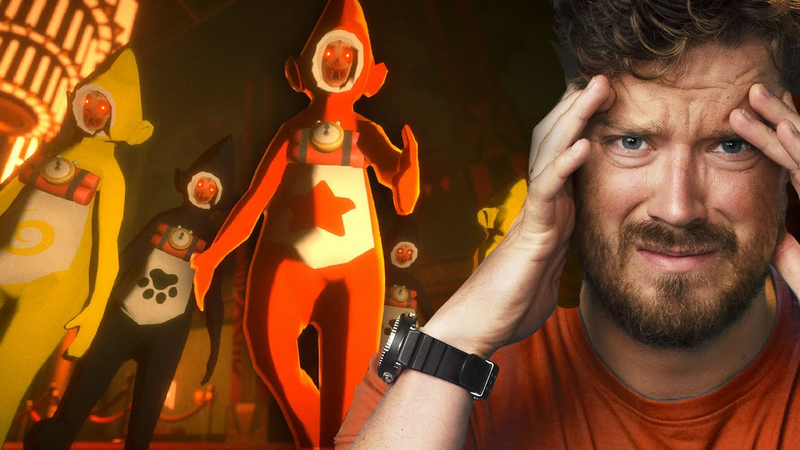
I Quit My Game Idea After 2 Years (Devlog #2)
The process of game development often requires the difficult decision to pivot away from established concepts when they fail to generate sufficient creative momentum.
- A game's theme must function as a generative engine that naturally produces a surplus of ideas, mechanics, and narrative questions rather than requiring forced invention.
- After two years of development on the FPS project 'Father,' the team abandoned the original cult-themed concept because it lacked the creative momentum necessary for expansion.
- The project was successfully revitalized by pivoting to a surreal, horror-themed 'happy hotel' setting that blends high-stakes game shows with psychological horror.
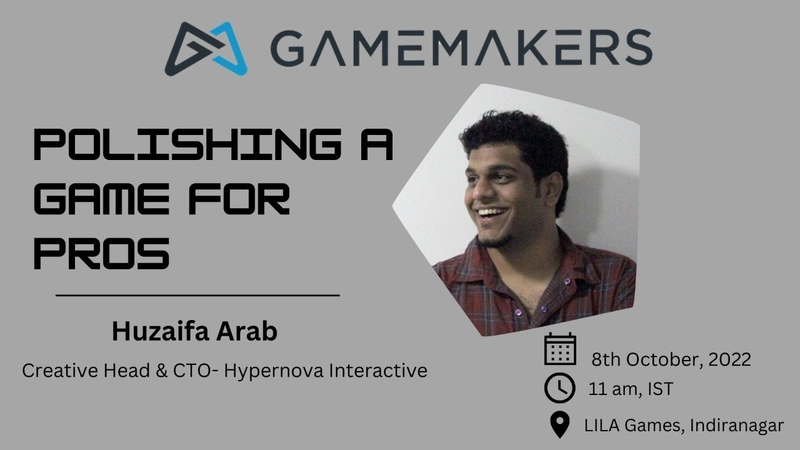
Polishing a Game for Pros- Huzaifa Arab
Polishing a game is a critical design phase that transforms functional prototypes into engaging, professional-grade experiences.
- Integrate polish incrementally throughout the development cycle rather than treating it as a post-production phase to avoid technical debt and increased QA complexity.
- Establish a 'baseline of quality' early in development to ensure consistent sensory satisfaction and visual fidelity across the project.
- Enhance gameplay responsiveness by utilizing advanced easing curves instead of linear motion and adding 'juice' through particle effects and reactive physical elements.

Why Everyone Wants To Make Games But Nobody Does (My Response to @Space Dodo)
The primary barrier preventing aspiring developers from releasing games is not a lack of technical skill or access to tools, but rather personal insecurity.
- The primary obstacle to releasing games is personal insecurity rather than a lack of technical skill or access to development tools.
- Developers should leverage external resources like the Unity Asset Store or TurboSquid to fill creative gaps rather than attempting to build every component from scratch.
- Comparing indie projects to AAA titles with massive funding is a flawed metric; success should instead be benchmarked against other indie games with similar budget constraints and scope.

How to Encourage Social and Emotional Learning In-Game in a Data and Research Driven Manner
The integration of social and emotional learning (SEL) into online gaming environments offers a transformative alternative to traditional punitive moderation.
- Star Stable Online implemented an AI-driven intervention system that reduced harmful in-game messages by 5% with 98% statistical confidence.
- The intervention replaced traditional punitive bans with real-time, non-judgmental prompts that encouraged self-reflection, empathy, and social awareness.
- To ensure accuracy, the team customized their AI model by training it on community-specific data, preventing misinterpretations of game-specific slang like horse breeds or levels.

We Made a Co-Op Barcode Scanner Game!
The development of a cooperative space-themed game using barcode scanners as the primary input device demonstrates the feasibility of rapid prototyping within a constrained 24-hour timeframe.
- Barcode scanners function as standard USB keyboard inputs, allowing developers to integrate physical, room-scale interactions into digital game engines without complex custom drivers.
- Rapid prototyping within a 24-hour window is sufficient to create a high-engagement cooperative experience when using unconventional, tactile input methods.
- The gameplay loop relies on translating physical barcode scans into text strings, which the engine interprets as specific commands for system management and resource collection.
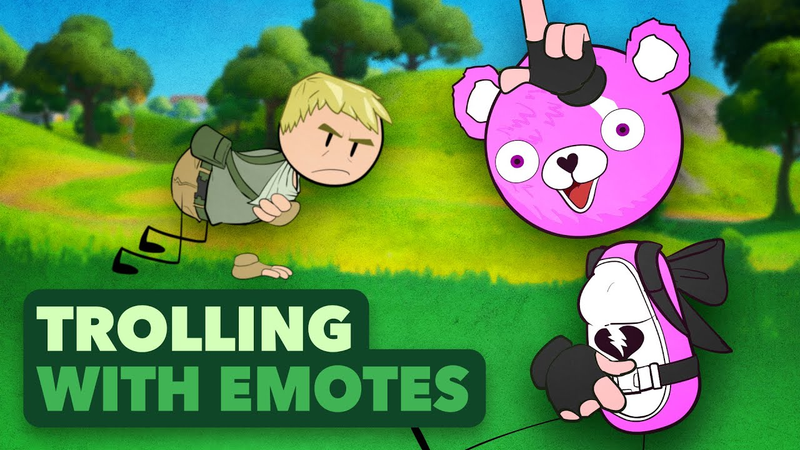
Do Emotes Make Us Worse People? - Extra Credits Gaming
Emotes in competitive multiplayer games frequently function as tools for harassment rather than communication, contributing significantly to toxic gaming environments.
- Internal analysis indicates that approximately 80 percent of emote usage in competitive multiplayer games is intended to grief or belittle opponents rather than facilitate positive communication.
- Developers inadvertently encourage toxic behavior by including emotes specifically designed for mockery, such as chicken or poop icons, which serve as a tacit endorsement of harassment.
- Even positive-intent emotes, such as a thumbs-up or 'well-played' gesture, are frequently weaponized through sarcasm to undermine sportsmanship in competitive environments.
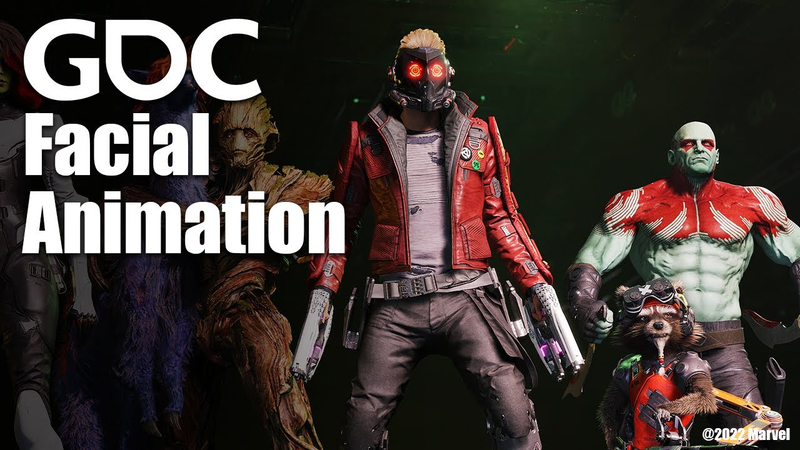
The Facial Animation Pipeline of 'Marvel's Guardians of the Galaxy'
The development of Marvel’s Guardians of the Galaxy relied on a performance-driven animation pipeline designed to deliver emotive, high-fidelity character interactions across both cinematic sequences and gameplay.
- The production team managed a massive narrative scope consisting of five hours of cinematic content and over 23,000 lines of dialogue.
- A tiered animation workflow was used to scale production, moving from machine-learning-generated 'bronze' baseline animations to 'silver' and 'gold' levels of artistic polish.
- Performance capture was conducted in-house, recording body, face, and voice data simultaneously to ensure natural chemistry between actors.

Full-Body Animation Generation for Expressive NPCs
This presentation outlines a deep learning-based framework designed to automate the generation of high-quality, expressive full-body animations for non-player characters (NPCs).
- The framework utilizes a U-Net architecture for full-body animation and CNNs for processing, enabling high-speed generation: 15-second facial sequences are produced in under 6 milliseconds, and 20-second body sequences in approximately 600 milliseconds.
- The system replaces traditional manual animation and motion capture by using neural networks to map speech and text inputs directly to synchronized physical behaviors.
- To ensure high-fidelity output, the methodology uses time-aligned phoneme sequences for lower facial animations to bypass audio-specific noise and word sequences for upper facial expressions.
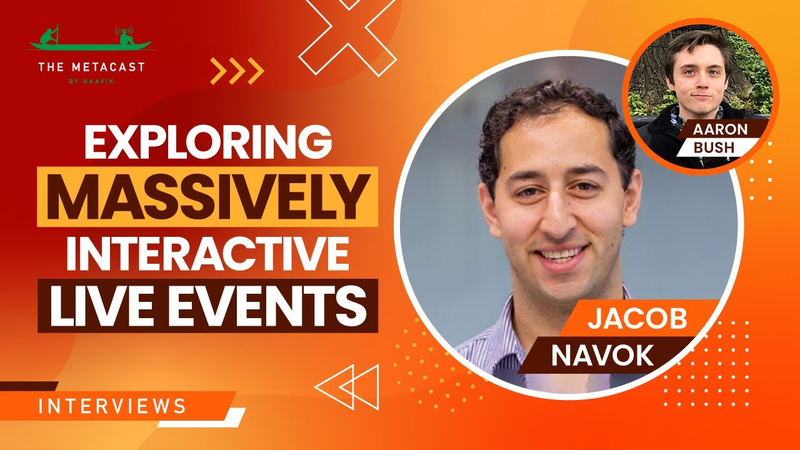
Jacob Navok: How MILEs Will Transform Entertainment
Massively Interactive Live Events, or MILEs, represent a fundamental shift in digital entertainment by merging the passive consumption of streaming media with the agency of interactive gaming.
- Massively Interactive Live Events (MILEs) merge passive streaming with interactive gaming, allowing millions of concurrent users to collectively influence narrative outcomes in real-time.
- MILEs bypass high-end hardware requirements by utilizing cloud-native technology to stream high-fidelity, persistent narratives directly to mobile devices.
- The format functions as a community-driven spectacle that leverages established intellectual properties, such as The Walking Dead, to capture non-traditional gaming audiences.

Avoid an Identity Crisis as a Technical Designer
Technical designers function as essential bridges between engineering and design, serving as force multipliers who prioritize the efficiency of content creators over direct player-facing features.
- The primary objective of a technical designer is to act as a force multiplier by building tools, workflows, and pipelines that increase the iteration speed and efficiency of the broader development team.
- Technical designers must prioritize knowledge distribution and documentation over individual problem-solving to prevent becoming a single point of failure within the project.
- Success in the role is measured by the ability to facilitate team-wide capability, effectively innovating oneself out of specific tasks to empower other designers to manage their own technical needs.
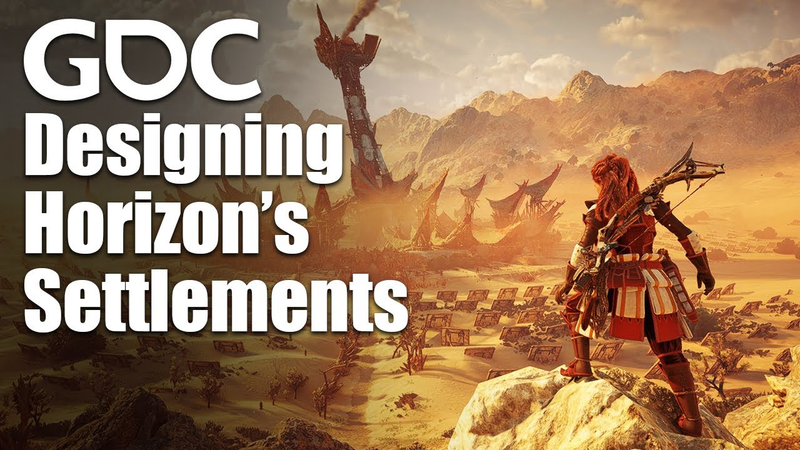
Designing the Settlements in the World of 'Horizon Forbidden West'
The design philosophy behind the settlements in Horizon Forbidden West centers on the integration of environmental storytelling with distinct cultural identities to create a cohesive, immersive world.
- Settlement design in Horizon Forbidden West prioritizes environmental storytelling by grounding architectural aesthetics in the specific histories and survival strategies of each tribe.
- The development team utilized early, iterative collaboration between artists and game designers to ensure settlements function as interactive gameplay spaces rather than static backdrops.
- The Utaru tribe’s aesthetic reflects their symbiotic relationship with nature through the use of organic materials like bamboo and weaving techniques that mimic natural growth.