1 free read left. Create a free account for unlimited reading + AI research.
Create free account
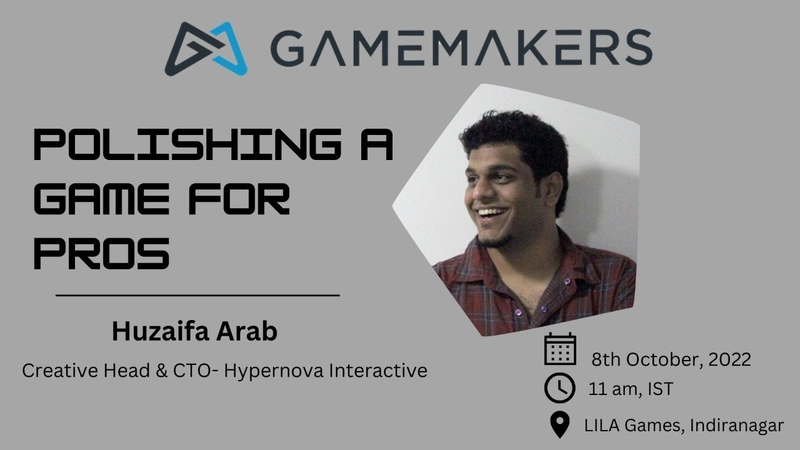
Polishing a Game for Pros- Huzaifa Arab
Key insights
7 takeaways- 01Establish a 'baseline of quality' early in development to ensure consistent sensory satisfaction and visual fidelity across the project.
- 02Enhance gameplay responsiveness by utilizing advanced easing curves instead of linear motion and adding 'juice' through particle effects and reactive physical elements.
- 03Balance sensory feedback tools like audio cues and screen shake to validate player actions without causing over-saturation or performance degradation.
- 04Enforce strict performance budgets for memory and frame rates during the polishing phase to ensure aesthetic enhancements do not compromise technical stability.
- 05Create reusable libraries for UI and particle effects to maintain visual consistency and improve development efficiency.
- 06Integrate polish incrementally throughout the development cycle rather than treating it as a post-production phase to avoid technical debt and increased QA complexity.
- 07Apply a diminishing-returns framework to polish, strategically limiting efforts based on project scope, budget, and target audience expectations.
Ask AI about this video
Transcript
foreign who's the creative director and co-founder of hypernova interactive so his journey started about 15 years ago when he wanted to pursue a master's degree in video game design from dsk Super info game in Pune um and then in 2015 he started his own studio and we have them in the building so thank you thank you so much thank you for having me here appreciate you all showing up so today's talk is going to be obviously about polishing a game I lied I was going to keep it you know for dummies but you know last minute uh I changed it to for pros so uh a little bit about me and the studio uh I've been making games for about 15 years now
currently I'm at uh hypernova interactive we are making India's first open world game uh Mayan agree but that's not what I'm here to talk about today I'm here to talk about well polish what is polished a lot of people actually have different ideas of Polish but I think I would like to ask the audience so what are your ideas about polish what do you think it is anyone um all right so you mean satisfaction played satisfaction anyone else feedback whenever a plus does any action there should be a feedback it feels natural great the findings you find refinement all right it's the flows and all the mechanics working as expected okay
so I guess uh the answer is all of it so polish is feedback polish exposure polishes how tightly your game mechanics feel uh how precise and responsive your controls are polished manifested and everything and um you know to be honest each and every one of these blocks could be its own dog um but what I'm going to talk about today is something that is less of a solved problem like you give a 10 year old 10 years experienced artist uh your 3D model to make and you'll pretty much clear it down but when it comes to something like feedbacks right um that's a much more great territory you may or may not get it right so uh the whole idea of today's talk is how do we teach polish through some visual examples some practical examples and
this is a problem that I had at our studio so back when we were doing some projects for some of our partners depending on the designer the quality of the game would turn out differently again it would require a lot more involvement towards the end of the project and it would take a lot more time so we were like okay why don't we come to the framework that uh you know makes it more predictable so instead of the first draft of the game feeling like a 30 out of 10 it should feel like a 70 out of 10. so this presentation is just a reflection of that framework and I'll walk you guys through it so hopefully the end result for me you guys will have some takeaways that you'll be able to apply to your own prototypes right so we've all seen prototypes game prototypes that uh kind of looked like this you know programmer colors they don't have any action in them nothing that is there like the mechanics are all there like it's all working but it feels
like this right so right off the bat I think the very first thing you could do to fix and make this feel better is just add better colors right now if you look at this uh I've used more face shades uh the game still does not have personality but at least it feels a lot better to look at there is some you know visual theming going on um one of the tools that I recommend people use is Adobe cooler or cooler whatever they call it uh it basically it's a website that allows you to get color palettes that work with each other there is it will give you color Harmony at the end of it so the other thing that I would like to do on top of colors is add some personality now obviously this is a Blog Crush game and I made this in two days so I I wouldn't want to go overboard with it but the simple idea was that one of these styles were Elemental blocks right so there's fire water electricity
all of that and add like a nice gradient background so when the user is playing it they get this feeling of calm and soothingness right uh it's the same game again but you know already it's looking and feeling a lot better um what about adding some motion every time you start the game you have some motion um but this motion still feels planned if you look at it the motion is just like one linear page coming down um one thing about human Minds is that we are really good at filtering out patterns so if we see a pattern we immediately ignore it you guys are probably seeing there's an AC vent over here and you probably cannot hear it right now because you're not paying attention to it because it's just a general harm then you're filtering it out something similar happens visually as well you're figuring out anything that is very predictable so what you want to do is
break out of that monotony this feels a lot more interesting right like what we did was we made a bunch of cascading effects and made them fall over each other at different times you could make this a lot more interesting by adding uh say a scale effects rotate effects add a little bit of a random DeLay So that would feel a little more chaotic but for the theme and the context of this game I thought it would be nice everything fell in one sequence but in a cascaded way right everyone's mileage varies uh your prototype might have different requirements right um this is another thing that I feel a lot of people don't uh do um most of the experienced developers know about it but the people who are just getting started um they need to start using easing curves and not just the basic ones something more interesting and advanced so over here if you can see there are
easing curves that basically use the same movement duration of one object going from zero to one will be the same it will be one second but does it go like this or does it go like this right that's the difference and that is what makes things look interesting again all of these are the small things that add up to your games polish the other thing that I would like to talk about is physicality now um it's very easy to make things disappear and not justify it but it's a lot better if I destroyed these blocks and they felt on top of each other as if they exist in in a latent space and that feels a lot more uh nice to look at right so that physicality wherever possible and this can apply to both your game elements and your UI so instead of having say a window that comes in what if the window pushes in whatever was coming in uh and
whatever's there that would feel a lot lot better so um physicality is a very very key thing to make sure that your um your game feels like it is it is mimicking the real world and that's that's very important then one more thing we can do is add chain reactions so instead of just making everything disappear you could make things go away one by one and again this this adds to the feel of things uh feeling grander obviously you don't want to just leave things like chain reactions you want to actually add some effects to the thing so if it's a fire uh tile that I'm destroying you get uh you know a bunch of fire particles or if it's a water particle um that's what happens same thing for electricity right or the green ones the
idea is that uh this again goes back to the personality bit where um you add to the theme of the game and you can see how slowly this thing that started off with just you know red green and yellow cubes is now something a lot more than that right right so particles is a very very cheap way of adding uh you know juice to your game it's you can't have enough particles let me be honest you can't get that wrong now obviously all of this feels dead if you don't have any physical reaction or sounds now the reason sounds are extremely extremely important in games is because that's your only way of the game uh taking over one entire sense right we have five senses out of that one entire sense uh
his sound so now if I destroy a bunch of blocks okay [Music] all right audio issues [Music] you can probably hear this I hope it's reflecting [Music] but just adding a few sounds gives you a lot more mileage out of the same action [Music] now adding sounds is not enough people want to know validation for whatever issues they are doing right the game kind of needs to hold their hand and congratulate them for any desirable uh actions they might make so here's some UI feedback like for example if I
if I'm just breaking like two or three blocks it's fine you just show me the score right but if I'm breaking like five or six of them say that oh this is amazing or it's great or something on those lines the whole idea is congratulate the players celebrate whatever he's doing that will really really make the player feel like you know what I want to play this game a little more because I feel good again these are small cheap tricks but they all add up on it right then obviously this is something that is uh very easy to overuse and that is called screen shape now uh like we talked about sound sound was taking over one sense screen Shake is something that uh that is your way of making the player feel like they did something really really huge and what I mean by screen
shape is something like this so as you can see every time there is a bunch of Destruction happening the entire screen shakes it's subtle but it's very easy to overdo it the whole idea is that every time the player has done something significant you can shake the screen proportionally and that will make the player feel as if they have affected the world a lot more than they should have and that again that goes back to feeling good um movie directors use this trick a lot even in movies like you could see like for example there's this really favorite famous movie called Pacific Rim uh what they did was every time a huge robot walks around uh they would shake the screen right you would have seen this in Jurassic Park or even Godzilla so that's just to show the enormity of what's happening around you and the same principle Lies over here nothing new
along so the screen check was the last thing and I think uh one more thing you can do is post processing now in a game like this you'd probably not want to use this but I have put this here anyway so that you guys get the principle the idea of post processing is quite simple um different games demand different kinds of art styles and in most engines uh post processing is literally a two-minute fix um so over here I've just given a simple Zoom effect so every time I do something uh nice or something elaborate you can see that it's glowing a lot more and just feels a lot more juicy and it just pops out more but normally you want to achieve this effect through artistic waves rather than a post processing effect but again your mileage when it varies if you are working on a triple a title you probably want to use a filter on top but when it comes to a small casual game like this
uh you're probably better off putting all of this stuff inside of the art assets itself so I think uh when you look at all of these effects right um you can look at personality you can look at Colors audio uh full screen effects all of these are your ways of shaking the player's apathy um none of this will matter if your game is running obviously this goes hand in hand with the rest of the pieces in your game like if your Tech is not good your game is not running at 60 FPS none of this will matter right so polish will again I'll go back to the fact that polish will go hand in hand with your art it will go hand in hand with your game mechanics and your Tech but when it comes to feedback this is really how you can get the most out of it and again these are just some of the points which made you know differ from Context context
and uh let's just do like a a b test so this is what it was before again pretty pretty simple but pretty boring and now let's enable everything all at once so I hope you guys can hear this [Music] so it took us literally less than 10 minutes to enable all of these things um took me one day to build all of this out but the whole idea is that instead of going ahead and showing your team a prototype like this you could be spending a couple of days more and you know showing them something like this and increasing your chance of selling your ideas because that's what is your job as a game designer right um again I believe polishing is something that can be done infinitely and it's very hard to you know
you you grow more critical something that looks fresh to you right now three months down the line uh you might feel like oh okay this is whatever I don't like it but you show it to a new person with fresh eyes they might appreciate it so it's very easy for a person uh who's been working on a game for months so and end up feeling like his game is not polished but never look at it from your own perspective always go out there and get feedback from others especially your target audience right see what they feel about it uh your industry industry peers are very a good very good place uh to actually ask them for feedback on how you can polish your game more but just like everything even financial investments polish is a dimensioning returns equation so the first 0 to 70 will take you a few days but uh 70 to 80 might take one entire month and then 80 to 90 might take you three months right you want to know where you're gonna draw
the line at it totally depends on how much budget you have uh there are some really good talks uh out there uh some really good books uh choose it'll use it it's a classic talk um people uh also who are game designers all over the world uh kind of refer to it as a Bible in fact I I have based some of my material on that out of screen shaped by blackmail again very good talk go watch it after this and there's a few more right so the whole idea is that uh your game every game demands a little different context right the way you would polish an FPS game is a lot more different than the way you would publish your puzzle game versus something which is more on the multiplayer side really depends on what you're trying to achieve so just don't fall into the Trap of feeling like oh I'm not gonna add you
know that extra one week to you know add 50 more juice to my game juice is really really important because ultimately games are toys and if people don't enjoy playing with toys they will not play again um that's all for now thank you so much what do you think about creating a library of your tools yes which allows you to you know move fast and will protect because one critical item about prototyping is you have to put a time constraint also have that number correct correct so um yeah that's actually a pretty good idea uh making a lot of these effects right they are pretty standard um so you could go ahead and at least in in our studio we have a small library for UI effects for uh particle systems
so it's much simpler for us to just go ahead and import a package like that and uh with one line of code I can make something look really Blinky right so that's that's totally something that every Studio I think should practice um because it's establishes a Baseline expectation of quality and the excuse for not doing it is pretty much not there like if this is showing up you could have instead added one more line of code and it would have looked so much better so yeah packages are very very good way of doing it another question yeah sure yes uh so one of the mistakes I have changed making is taking that prototype to production what are your thoughts like you know there are positive messages what are your thoughts on that okay so I think um it really depends on how um who's making the game so I've seen
prototypes developed by really good Engineers uh and those guys somehow have the habit of writing good code even if it's a prototype code right so I think it depends on how hygienic the project is if it's something that you think is a good solid foundation that you can build on top of I would say just go ahead and do it and uh you know you might end up saving one entire month but if you think this is going to be a long-term project uh something that you're gonna run for a couple of years and a lot of people are going to work on this during the life cycle of the whole game I think it's just better to go ahead and you know start from scratch planner very well and uh that way you give your artists an opportunity to plan how they can re-envision the whole thing right so that's something very important because normally what happens is game designers they
um they will have the entire vision of the game in their mind but they don't usually they don't have a very good ability to communicate to that to the artists or the programmers but if after a prototype everyone has some suddenly come on the same page so it's a good opportunity for a meeting of Mines at that point that an artist can start imagining what the game could be and a programmer can start imagining what the architecture should be and then they all come together and then they start with a solid foundation that allows everyone to flex their muscles advice on that I have a question yeah sure yeah so basically like as we go forward in polishing right so it's like more resource consumption so where do we draw the line why does it like polishing is a creative process and the more you polish the more resource consuming the game becomes the reflex and everything to correct so what
are your thoughts on it like how do we decide where is the line okay so by resource you mean time as a resource or like I I mean like the Technical Resources on the mobile product so that's a pretty good question so in our studio what we do uh is uh we set up budgets for everything so there would be a drop-off budget there would be a disc budget there would be a fund budget anything that is going into the game there has to be a budget and people have to justify it otherwise it will show up in the profiling so um obviously um the the line that has to be drawn is done has to be done by the CTO or who are the technical leadership of the company is because otherwise people just go wild and next thing you know it's not running on anything lesser than a PS5 right so uh having guidelines on what is
the amount of materials ponds post processing effects number of uh you know textures that you can use that is that is the way uh to prevent that from happening if it's not there in the project then you won't use it and as far as even let's just say something as simple as like you said particle systems right so at a production that that gets controlled at two levels one is when you're making the particle asset so normally again in most Studios uh you would say that okay I only need I need the sex uh fire effect but I don't want you to use more than 20 particles uh emitted at any given point of time so regardless of how big or small the effect has to be the artist will go ahead and uh make sure that it's achieved in that much it may not be the best but it will get the job done and it will stay in the budget
um I think um polishing is less of a process and more of a vision so I think you have to start from the very beginning itself like small small things that add up incrementally because if you say that hey I'm gonna make my team look like a prototype till the very end and then last minute I'm going to uh take out one month to polish it what you're really doing is you're accumulating design that uh and that will burn out your team or anyone who's trying to improve the overall uh you know experience of the game that will also in many cases blow up your uh QA Cycles big time because
something that was not a problem all along in the game and now like like uh the guy said that if you add more particles and suddenly you have frame rate drops and people don't know why that is happening uh till you know till your profile you will end up increasing problems unnecessary so it's better that you always add things incrementally as you go because that's the core rule of getting things done right if something can be done in less than 10 minutes just do it right away don't schedule it for much later right and and you'll get a lot of these ideas a lot of these ideas will not get captured in fact so it's just better that you capture them or even better Implement them so that they are there uh and make sure that they're in the limits anything else I have just one small
question yeah sure like what what is a good way to profile games good way to provide them in terms of like them memory consumptions for example profiling is also related to stealing right I mean you profile a game once on your a single system or whatever all right but um normally the best way to do it is after every feature uh every major beat that you add in the game uh it's a good good exercise to profile it uh the reason is it gives you a good opportunity to nail down the problem right before it becomes a problem and it starts hiding alongside other features and this has happened a lot of times where you will say some sort of a git or a focused kind of a Version Control two three people are working on different branches they are to emerge everything
goes to hell and you don't know where your problems are coming from right so what you want to do is profile it at individual Branch level and make sure that no no one is being the culprit because once you merge it gets really really difficult and sometimes your problems might arise due to interactions between multiple systems so at least you can be sure that there's nothing wrong with the system itself there might be something wrong with the architecture of how the systems are interacting with each other yes so you said that the profiling should be done on a branch level right yeah so are there any tools that do it automatically for branches on GitHub or someplace which anyone could just use and Define how they want to do it so that is the pull request itself or somewhere in this part of the feedback instead of depending on the developers doing it on their own PC first and then putting out
the result um yeah um I mean on GitHub you have some automations uh that you can plug in you can even have your own build system that uh you know every time you have a major comment that you you absorb into the main branch you make a build it will profile the whole thing automatically spit out the results and if the results are below a certain Benchmark you can reject that entire PR so you can go through a process of accepting or rejecting PRS but again that's more on the technical side rather than the the design and polish site anyone has any more questions if you have any questions online do you have any questions all right so that's a wrap thank you so much thank you everybody for joining us all right thanks everyone
Summary
Polishing a game is a critical design phase that transforms functional prototypes into engaging, professional-grade experiences. The primary thesis is that polish is not merely a final aesthetic layer but a fundamental component of game design that should be integrated incrementally throughout development. By focusing on feedback, responsiveness, and sensory satisfaction, developers can elevate a prototype’s perceived quality from a basic functional state to a compelling, high-fidelity experience.
Key elements of effective polish include visual consistency, motion design, and sensory feedback. Developers are encouraged to use color harmony tools to establish visual themes, implement advanced easing curves to avoid predictable, linear motion, and utilize particle effects to add "juice" to gameplay actions. Physicality—such as objects reacting to destruction or UI elements that mimic real-world movement—is essential for grounding the player in the game world. Furthermore, audio and screen shake serve as vital tools to validate player actions and communicate the scale of in-game events, though these must be balanced to avoid over-saturation or performance degradation.
Methodologically, the process relies on establishing a "baseline of quality" early in the development cycle. Rather than treating polish as a post-production task, which often leads to technical debt and increased QA complexity, developers should adopt a framework of incremental improvement. This includes creating reusable libraries of UI and particle effects to maintain consistency and efficiency. Technical leadership must enforce performance budgets—monitoring memory and frame rates—to ensure that aesthetic enhancements do not compromise the game's technical stability. Ultimately, polish is a diminishing-returns equation; developers must strategically decide where to draw the line based on project scope, budget, and target audience expectations, while consistently seeking external feedback to maintain an objective perspective.