1 free read left. Create a free account for unlimited reading + AI research.
Create free accountWe Made a Co-Op Barcode Scanner Game!
Key insights
6 takeaways- 01Rapid prototyping within a 24-hour window is sufficient to create a high-engagement cooperative experience when using unconventional, tactile input methods.
- 02Shifting from traditional controllers to physical scanning forces players to prioritize communication and spatial awareness, effectively fostering unique cooperative dynamics.
- 03Barcode scanners function as standard USB keyboard inputs, allowing developers to integrate physical, room-scale interactions into digital game engines without complex custom drivers.
- 04The gameplay loop relies on translating physical barcode scans into text strings, which the engine interprets as specific commands for system management and resource collection.
- 05Environmental lighting interference with scanner sensors and version control conflicts during multi-workstation asset merging represent the primary technical risks in this development model.
- 06Minimalist mechanical foundations can be significantly elevated through 'game juice' elements, such as custom sound effects and voice lines, to create an immersive escape-room atmosphere.
Ask AI about this video
Transcript
we challenged ourselves to make a game using nothing but barcode scanners as an input device it didn't take us long to come up with the perfect game idea for this challenge a Cooperative game about managing a spaceship together oh my God we wanted to make a game that makes the best possible use of the tools we have and one of the biggest advantages of the barcode scanners is that you can move around in the room you can run around you can take the barcode scanners with you if it all goes right it's gonna be a little bit like an escape room or like a VR game just without the escape room and without DVR we were quite confident in our idea but would we be able to make it work in just one day or do we just yeah [Laughter] I'm a magician after brainstorming it was very obvious Noah would just take care of the art side of things and I would mostly take care of the programming side of things here's some of Noah's first sketches and we're thinking something like that but
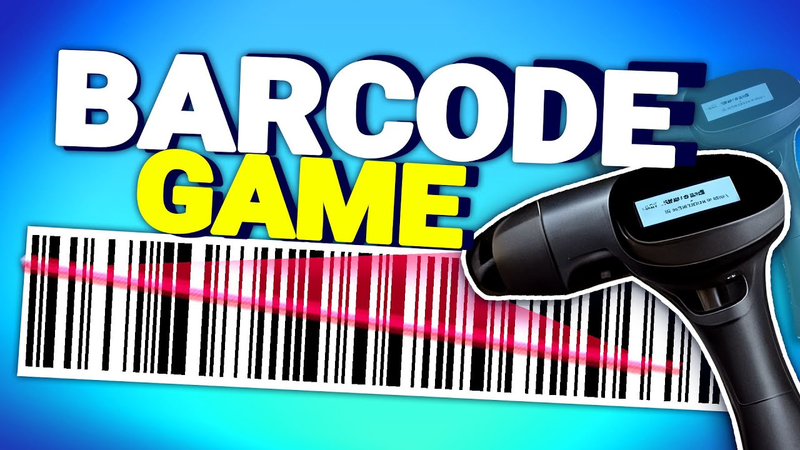
maybe in Canada we were going for a very weird mix between real life and digital game here and I guess we started with the real life part of it so Noah made some sketches I generated some barcodes to print out I love it I love the beep sound imagine both of us oh God it's gonna beep beep everywhere here's your coffee with barcodes we'll make it look cool nice this looks pretty nice so now if I try to scan these it it just doesn't work very confusing stuff but it's not for the reason I expect it's not turns out it's because of this light here if I turn this light off it works flawlessly that's kind of weird isn't it so how do the barcode scanners work the barcode scanners pretty much connect to the PC like a USB keyboard I mean literally the PC just thinks it's a keyboard so whenever you scan something with a barcode scanner it just types that like a keyboard all we had to do was putting a text input field into our game and
just seeing which words show up in there and then I ultimately just moved it out of the view so it's not even visible anymore it's like really all surprisingly simple give it a go it's fun come internally right yes excellent [Music] excellent Innovation for you my friends we can design your move them anywhere in the room and make them more or less hard about these cards here I like it a lot it looks really good yeah it's gonna be cool it's good foreign [Music] Noah in charge of sound creation Now Yep so when I would like drop a little list of the voice lines we'll need to
integrate to the players you know what might be going wrong with their ship for example engine broken engine broken once I finish voice lines I'm an actually complement those with cool sound effects so each action of the player performs you know it feels feels juicy oh I have finished sound effects they're all on the USB key meanwhile Jonas's programming away finishing up the game's main systems screen offline and it's back online oh no engine's broken find the correct one very good now let's move on to resources and then came a point where we had to make a tough call Noah was out of tasks he was all done but the unity project was not for a short one day project like this would it really make sense to set up a git repository or should we maybe just finish this working on one machine
yep no no this is pretty takes down some weird good issues unfortunately I'm not sure what goods problem is I cleared deleted everything what's your problem mean yes we finally got the unity project to this computer and yeah it's finally opening here as well yes anyway we figured it out and it was absolutely the correct call Noah with his magic hands instantly transformed the project into something that looked infinitely better and hit its own basically no time at all I don't know how he did it just 10 minutes went by and suddenly it all looked way way better oh my God the juice you can add in such a short amount of time it's gonna get better guys I'm amazed [Music]
in one of these QR codes on the backs of the other person which could add an extra element to you know an extra collaboration texture I'm giving you the fuel the energy okay you collect Energies okay we're full on energy let's rotate okay rotate rotate should the engine I can repair that no worries look at me wait where is it where is it it's there on the table behind you okay one one two three yeah oh rotate rotate okay
no it doesn't work quick turn deals this is as good as I imagined it really this is as good as I thought it would be you know this is really this is really great this is really great lots of enemies coming in what we don't need now is an engine broken okay one two three big shot oh we're getting good man we're getting used one two three holy hell the screen is annoying okay yeah let's repair the screen we're gonna go till we're out of help
engine broke your engine's broken oh no hey no it's on your side I scanned all of them uh that's right click here or in the description to watch the other parts of this little mini series there is a full playlist we made a board game turned ourselves into boss fights and even went into the forest to make games with nothing but Sticks and Stones if you enjoyed this video make sure to subscribe both to blackthornprod as well as me and I'll see you in the next one bye
Summary
The development of a cooperative space-themed game using barcode scanners as the primary input device demonstrates the feasibility of rapid prototyping within a constrained 24-hour timeframe. By utilizing barcode scanners that function as standard USB keyboard inputs, the developers created a physical, room-scale experience that mimics the high-pressure environment of an escape room. The project focused on integrating physical movement with digital gameplay, requiring players to scan specific codes placed throughout a room to manage ship systems, repair engines, and collect energy resources.
The technical implementation relied on the simplicity of the hardware, which translates scans into text strings that the game engine interprets as commands. Challenges during development included environmental lighting interference with scanner sensors and version control complications when merging assets between two workstations. Despite these hurdles, the project highlights how aesthetic polish and "game juice"—such as custom sound effects and voice lines—can significantly elevate a minimalist mechanical foundation in a very short period.
The final product successfully blended physical interaction with digital feedback, requiring players to coordinate their movements to address randomized ship failures. This experiment confirms that unconventional input methods can foster unique, high-engagement cooperative experiences. By shifting the focus from traditional controllers to physical scanning, the developers achieved a tactile gameplay loop that emphasizes communication and spatial awareness, proving that creative constraints can lead to innovative mechanics in indie game development.






Comments