Game Design reports and market data
Documents
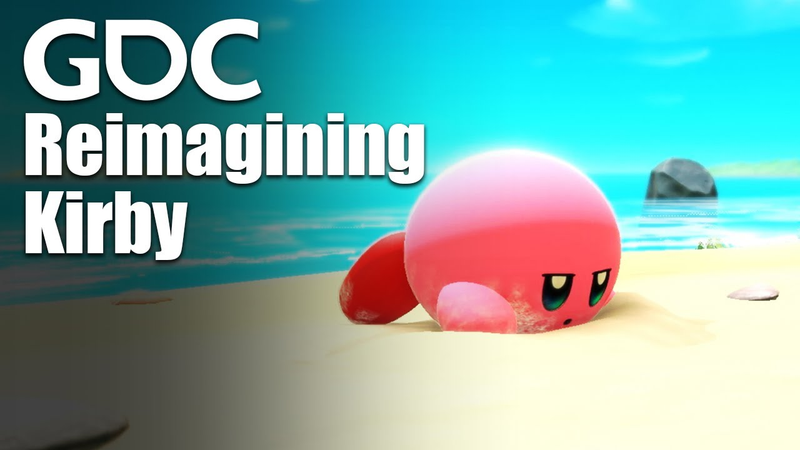
The Many Dimensions of Kirby
The Kirby franchise maintains its long-standing reputation for accessibility by meticulously bridging the gap between 2D precision and 3D exploration.
- To solve the difficulty of judging depth in 3D space, the developers implemented a 'hit-when-it-looks-like-it-should' system that registers damage even if a projectile technically misses, provided the visual alignment suggests a hit.
- The development team utilized a point-based homing system for attacks, which calculates target priority based on the character's facing direction to ensure combat remains fluid and intuitive for players.
- To maintain player focus in 3D environments, the team implemented controlled camera angles that automatically frame relevant objects and enemies within the player's field of view.
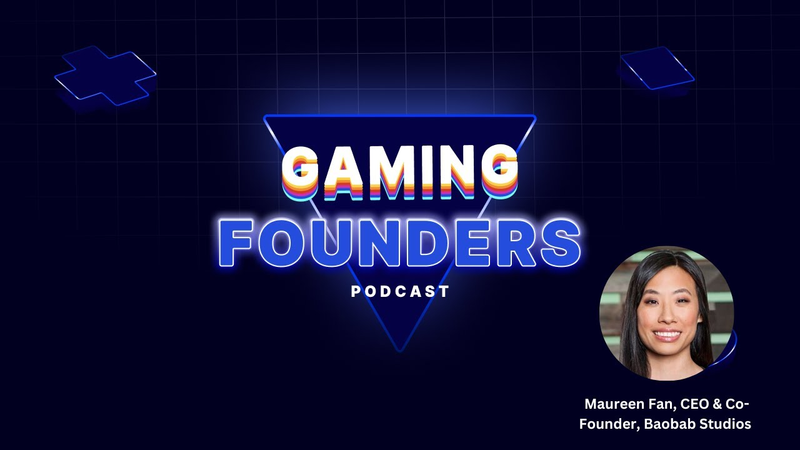
From Animation to Zynga to Baobab Studios - Maureen Fan on Building Interactive IP Across Platforms
The evolution of modern entertainment lies in the convergence of cinematic storytelling and interactive gaming.
- Successful interactive entertainment requires a hybrid leadership model that balances data-driven product management, such as A/B testing, with high-quality creative storytelling.
- Studios should prioritize long-term stability by securing strategic partnerships and investment from established industry entities like Comcast and Disney rather than chasing short-term financial gains.
- The core strategy for modern media production involves creating transmedia intellectual property that allows audiences to transition from passive viewers to active protagonists.
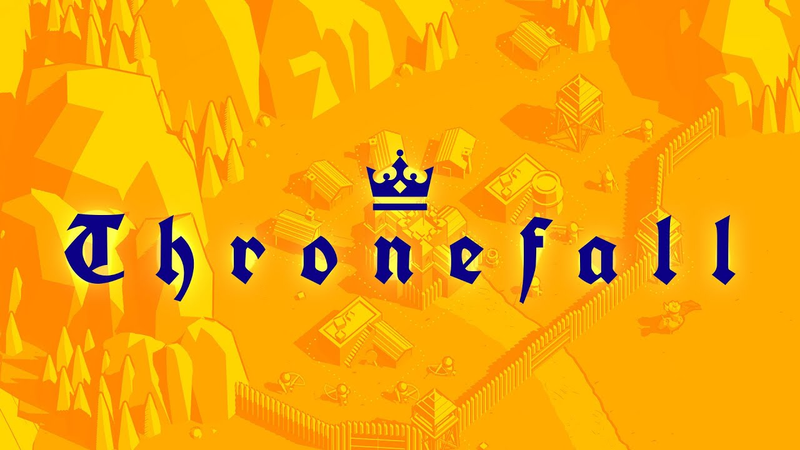
Our Minimalist Base Defense Game is Taking Shape! (Devlog)
Thronefall is a minimalist medieval base defense game currently in development, focusing on a cyclical gameplay loop where players manage castle construction and economic upgrades during the day and defend against enemy waves at night.
- Thronefall utilizes a cyclical gameplay loop where players manage economic and castle upgrades during the day and defend against enemy waves at night.
- The developers removed manual building repairs by implementing automatic respawn mechanics for structures and units to eliminate common genre frustrations.
- A custom mesh generator tool was developed within Unity to streamline level design, including path creation, river rendering, and boundary establishment.
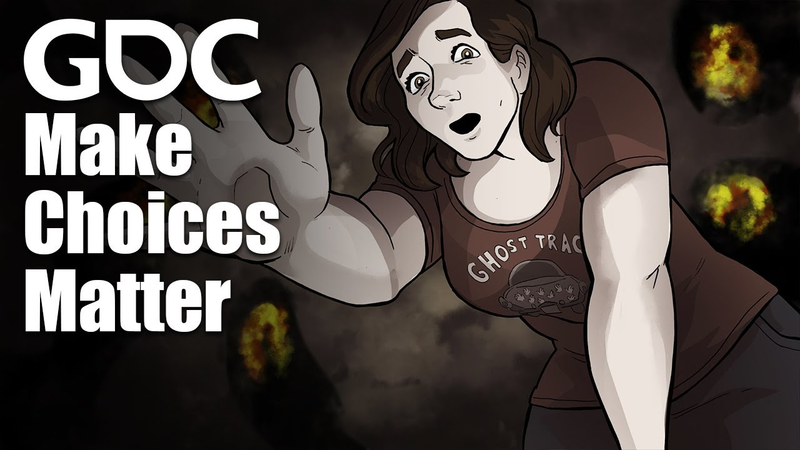
Making Player Choices Feel like They Matter in Your Narrative
Effective narrative design requires a delicate balance between providing players with meaningful agency and maintaining manageable production scopes.
- To make player choices feel impactful without infinite branching, use a 'modular' narrative structure that expands with new content after a decision and then contracts back to a common narrative point.
- Effective choice-driven design requires a high volume of small, tracked interactions; Scarlet Hollow utilizes between 500 and 1,000 distinct choices and callbacks across the first two episodes to maintain player engagement.
- Avoid simple, single-axis affection meters in favor of 'heuristic-based' relationship systems that track multiple personality traits, such as bravery or emotional vulnerability, to create more organic and complex character reactions.

2023 Independent Games Festival (IGF) Awards
The 25th annual Independent Games Festival Awards served as a pivotal platform for celebrating creative innovation and technical mastery within the global independent gaming sector.
- The 25th annual Independent Games Festival Awards prioritized titles demonstrating experimental mechanics and unconventional storytelling, exemplified by 'Betrayal at Club Low' winning both the Seumas McNally Grand Prize and the Nuovo Award.
- Industry leaders identified the elimination of exploitative labor practices, such as crunch and burnout, as a critical requirement for the long-term sustainability of the independent gaming sector.
- The event established a direct link between creative success and ethical workplace standards, advocating for industry-wide adoption of pay transparency and prioritized employee well-being.

Charisma's Guy Gadney On How AI Can Evolve Your Narrative Gameplay
Artificial intelligence is fundamentally transforming narrative gameplay by moving beyond rigid, prewritten dialogue trees toward dynamic, responsive non-player characters.
- AI is shifting narrative design from rigid, prewritten dialogue trees to dynamic, responsive NPC systems that remember player interactions and adapt in real time.
- The writer's role is evolving from a content creator to a system architect who builds frameworks that allow players to act as active participants rather than passive observers.
- Generative AI facilitates 'vertical binging,' a phenomenon where players spend significantly more time engaging with specific characters and environments due to personalized, emergent experiences.
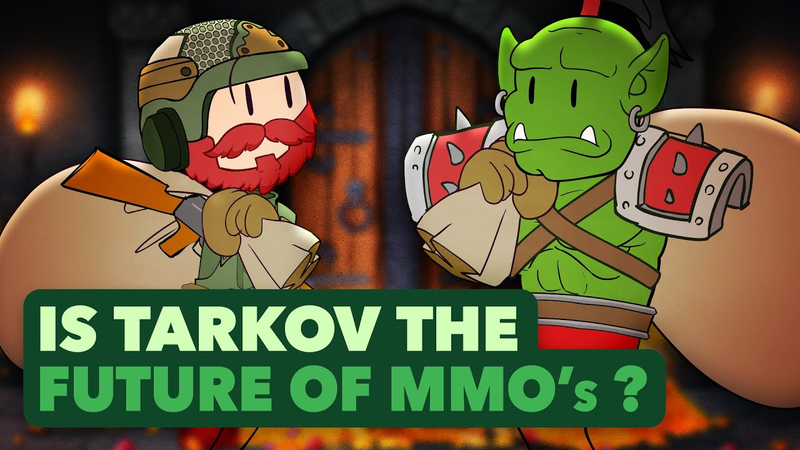
How Extraction Looters Could Save a Genre
The extraction looter genre, characterized by short-session gameplay, risk-based progression, and permadeath, represents a potential evolutionary path for the declining MMORPG market.
- Extraction looters offer a viable evolutionary path for the declining MMORPG market by replacing cumbersome, time-intensive persistent worlds with high-stakes, session-based gameplay.
- The genre successfully bridges the gap between the intensity of battle royales and the long-term character investment typical of survival games.
- To scale effectively, the genre must pivot away from military-themed, PvP-centric designs toward more diverse, imaginative world-building and complex PvE environments.
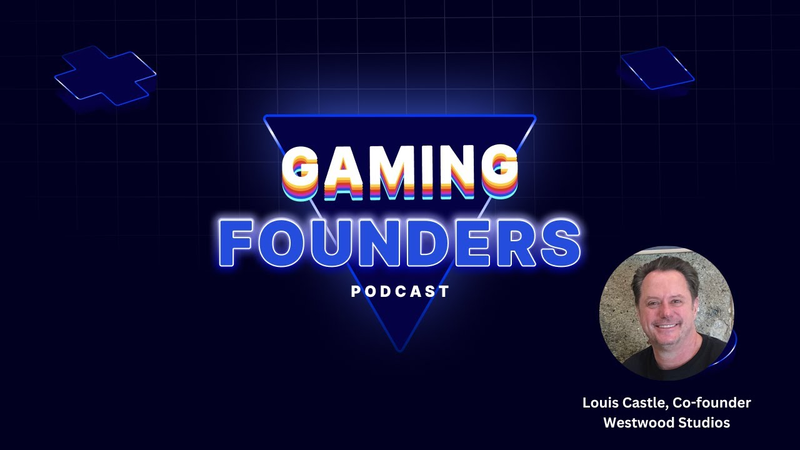
The Storied History of Gaming Veteran Louis Castle, Co-Founder of Westwood
The evolution of the real-time strategy genre and the professional trajectory of Louis Castle illustrate the transition of the gaming industry from a hobbyist pursuit to a sophisticated corporate enterprise.
- Westwood Studios scaled its operations by using contract porting work to self-fund original intellectual property, a pragmatic model that allowed for creative autonomy.
- The studio achieved peak growth between 1992 and 1998, reaching a workforce of 250 employees through the success of genre-defining titles like Command & Conquer and Blade Runner.
- Westwood maintained creative control during four major acquisitions by strictly dividing leadership responsibilities between design and operations.
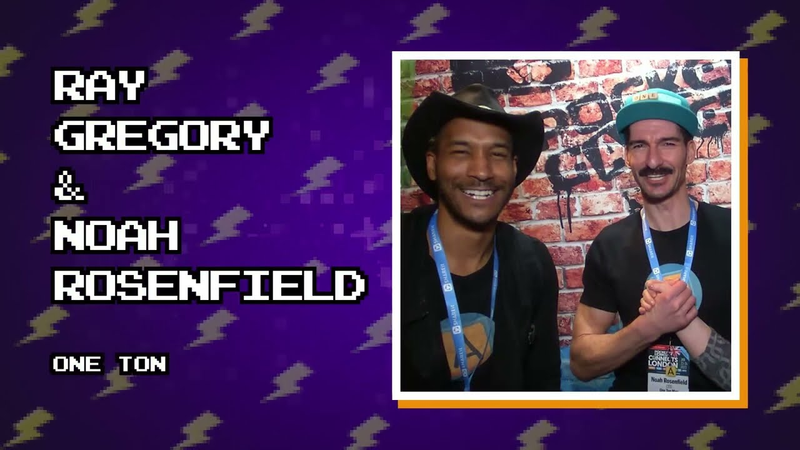
One Ton’s Ray Gregory & Noah Rosenfield On Addictive Gameplay, Community, and Fun
One Ton is transitioning from a solo-developer project into a professional studio, focusing on the development of innovative puzzle games that prioritize community engagement and player personality.
- One Ton is transitioning from a solo-developer project to a professional, self-funded studio focused on expanding its portfolio beyond its primary title, Addagrams.
- Addagrams differentiates itself from traditional word puzzles by allowing multiple valid solutions, enabling players to achieve identical scores through different linguistic approaches.
- The studio is currently in a soft-launch phase for Addagrams on iOS and Android in Australia, Canada, Brazil, Greece, Ireland, and South Africa.
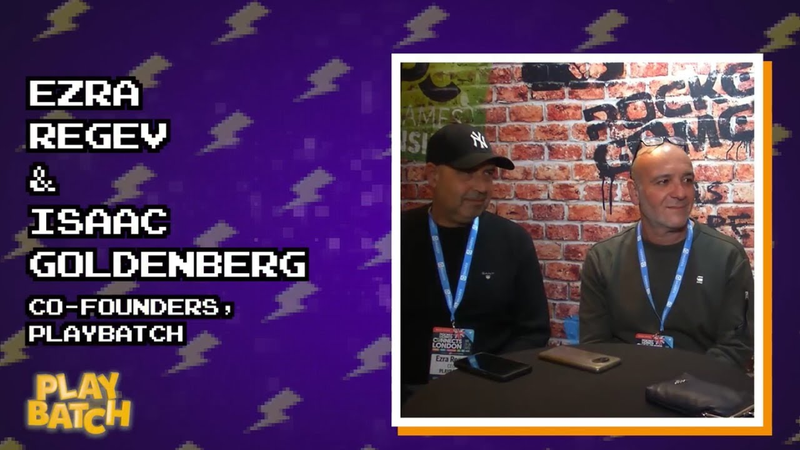
PlayBatch’s Ezra Regev & Isaac Goldenberg On Game Mechanics For An Attribution-Optimized Game
The mobile gaming industry faces significant challenges regarding user acquisition and attribution due to evolving privacy regulations.
- Studios must integrate marketing requirements directly into game architecture to overcome user acquisition and attribution challenges caused by evolving privacy regulations.
- The hybrid-casual model utilizes hyper-casual mini-games to secure low cost-per-install (CPI) metrics while employing casual merge mechanics to drive monetization and retention.
- Developers should use custom product pages and deep-linking for each mini-game to facilitate granular attribution and personalized player journeys.
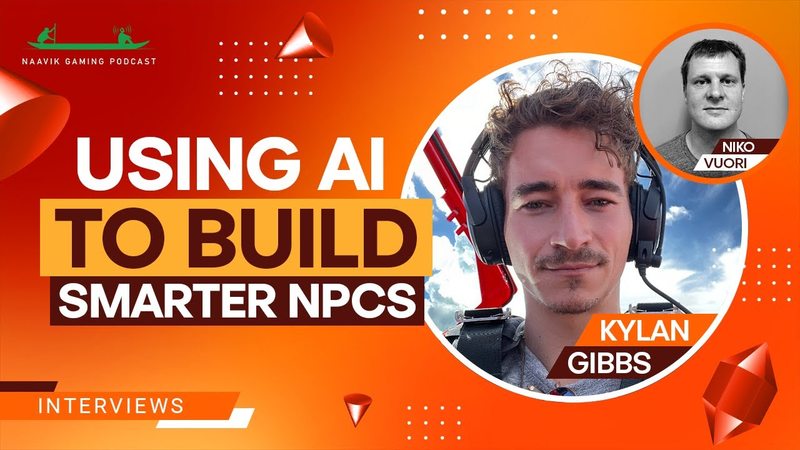
Kylan Gibbs: Using AI to Build Smarter NPCs
Traditional non-player characters in video games frequently suffer from repetitive dialogue and a lack of environmental awareness, which limits player immersion.
- Integrating AI-driven NPCs into games has been shown to increase day-one player retention by approximately 20%.
- 99% of gamers believe that transitioning from static, scripted NPCs to dynamic, personality-driven characters would significantly enhance their engagement.
- Intelligent NPCs utilize multimodal processing to ingest audio, visual, and environmental data, allowing for real-time, context-aware behaviors.
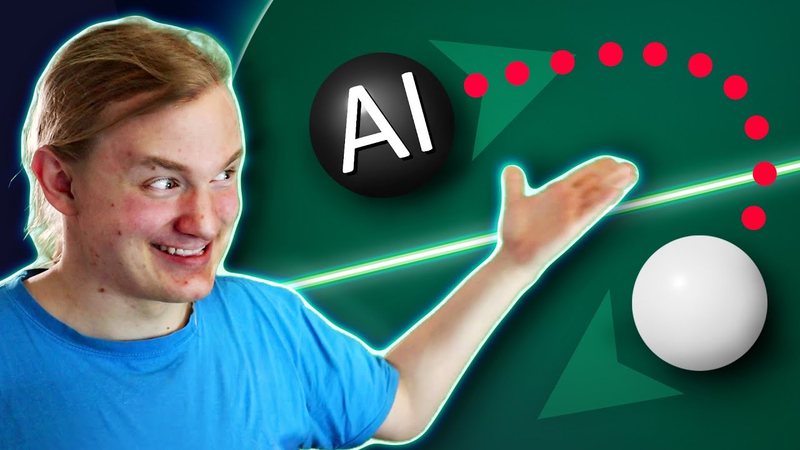
Unbeatable AI Ruins My Game
This analysis examines the development of a competitive, physics-based billiard-style game and the subsequent challenges of integrating artificial intelligence to serve as a sparring partner.
- An unbeatable AI can serve as a diagnostic tool to expose critical game design flaws, such as a lack of comeback potential or an over-reliance on opening-match performance.
- Hard-coded AI logic often outperforms neural evolution in simple physics-based games, as manual programming forces a deeper analysis of core mechanics.
- Neural evolution failed to produce a competent opponent in this project, likely because the game's complexity exceeded the capacity of the simple neural network employed.