1 free read left. Create a free account for unlimited reading + AI research.
Create free account
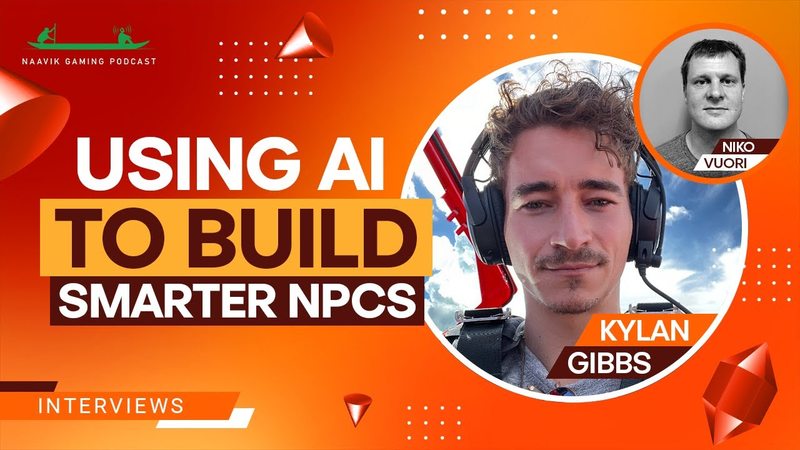
Kylan Gibbs: Using AI to Build Smarter NPCs
Key insights
6 takeaways- 01Intelligent NPCs utilize multimodal processing to ingest audio, visual, and environmental data, allowing for real-time, context-aware behaviors.
- 02Integrating AI-driven NPCs into games has been shown to increase day-one player retention by approximately 20%.
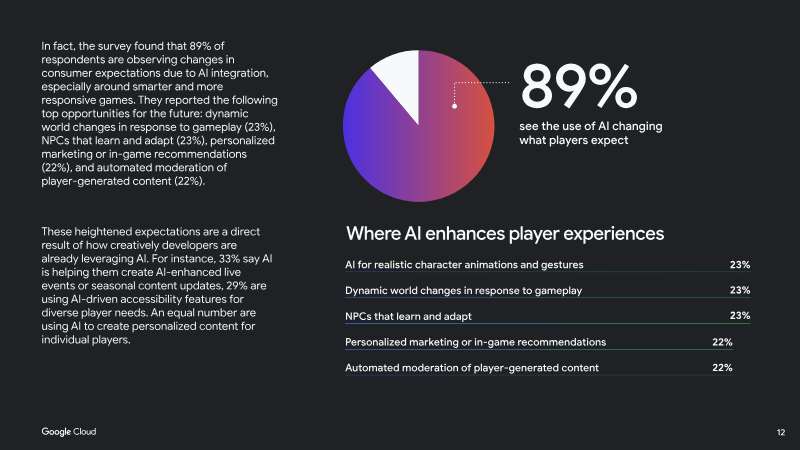
- 0399% of gamers believe that transitioning from static, scripted NPCs to dynamic, personality-driven characters would significantly enhance their engagement.
- 04Developers are addressing the high computational costs of generative AI by implementing optimized backend engines and flexible pricing models.
- 05AI-driven characters improve monetization and replayability by facilitating personalized interactions, such as shopkeeper experiences that adapt to a player's specific history.
- 06Gaming is currently serving as the primary testing ground for developing natural, anthropomorphic interfaces that will eventually expand into sectors like robotics, education, and smart appliances.
Ask AI about this video
Transcript
foreign [Music] gaming podcast where it is our mission to explore the business and future of video games we bring together the industry's brightest Builders investors and thinkers to keep a full sun current events dissect emerging Trends and games share Lessons Learned and have a great time this podcast is also part of novik's growing ecosystem which ranges from free and premium research to Consulting and advisory services for more information visit www.navic.com now let's jump into the episode hello and welcome to the navic gaming podcast I'm your host Nick ovori today we are talking about one of the hot topics of the moment and that is AI artificial intelligence seems to rule everything around us at this moment in time can avoid it Microsoft incorporating chat gbt into its Bing search open AI valued at 10 billion everything from text photos music and of course College
writing assignments are being disrupted by AI uh the latest y combinator batch um I've been told has no fewer than 130 startups that are leveraging AI in some way to perform and honestly I can be cynical sometimes on this pod but I really believe we may be at one of those moments in time where this technology AI is air quotes good enough to significantly improve a ride of use cases that we have up until this point relied on you know human brute force uh manual labor essentially to solve uh so the question is is Skynet finally here and are we welcome I mean our intelligent robot overlords uh into into our world into our lives in a more meaningful way so our guest today is going to help us and pack that question and answer some of these uh these concerns um he has had a frontal receipt to the AI Revolution for many many years now not just with his latest uh company um and he is tackling a problem that we
as Gamers have had for a very long time now which is stupid NPCs I'm oversimplifying here and I'm going to let our guests talk very much to to uh the Nuance here but for far too long we as Gamers have suffered uh NPCs that are walking into walls running around in circles uh getting out of cover when they really shouldn't when there's a gunfight going on and of course repeating the same dialogue over and over and over again with no personality whatsoever so our guest today is at least starting out by trying to solve this problem among other things uh Our Guest today is kylan Gibbs he's the co-founder and the chief product officer of a company called inworld.ai it is a company that is uh dedicated to solving this problem of stupid NPCs uh using AI in particular and they're not messing around they have raised 70 million dollars to do so in just the two years of of their existence including from some very interesting investors which we're going to be
talking about in a little bit so I just want to say a huge welcome to kylan Gibbs thank you for being on the pod yeah thank you so much Nico really excited to be here I'm uh you know I love I love engaging with Gamers and gaming audiences of developers and players so yeah really excited to dig in here I think that AI as you say is at the top of the real minds and I think it's trickling into the minds of Gamers as well as everybody's thinking how will this actually change the uh the world of gaming in Virtual Worlds more generally so yeah it's it's an exciting time absolutely absolutely and many many questions around that we're going to get into in a second um but first if our listeners will and you as well Kyle and will indulge me just for a moment longer uh the reason he's actually on the Pod today is uh I was watching for the second time with my kids uh the movie free guy which is the 2021 uh movie starring Ryan Reynolds who is playing an NPC in an open world game uh he achieves some kind of Consciousness and he leads what is essentially an NPC Uprising uh against
the evil developers of the game and putting it into the hands of the rightful good developers who originally created the the the algorithms that power his Consciousness and and by the way listeners if you haven't seen free guy it's a really fun movie it's highly relevant to this topic um it is remarkable how art sometimes imitates life life imitates art uh in a really remarkable way um I know the script existed in 2016 so I'm presuming uh in world.ai which I believe was founded in 2021 was necessarily directly inspired uh by a free guy but surely surely at this point in time you guys must have like running jokes is the is the uh is the movie playing on repeat at your offices like what role does free guy play for your team uh because it really is just almost too good to be true it's literally life imitating art yeah I I think that when you look around um
for you guys like the most recent example right of sort of this like very clear example of this AI sort of going from you know dumb NPC mode to Smart NPC mode so it's great you know we've you know we have actually engaged with some of the groups even who developed it and they're thinking about sort of Ip there so there's really excitement there but I think there's sort of such a precedent for these you know Virtual Worlds come to life like if you think about Westworld as another example right that one comes up a lot you know you even look back at getting movies like Tron and these kinds of things where you basically have this this you know the arousal of like artificial intelligence within some sort of digital space I think it really is sort of the president I mean of course there's a million and one robot movies as well but the exciting part I think about gaming and think about how that evolves is gaming is sort of like this natural it constantly sort of is like The Cutting Edge of all Virtual Worlds and digital Technologies and because it has such high creative leniency you know and it has like frankly a higher risk tolerance than you know you're a tutor living in your house or something like this and so I think that's why we see sort of gaming as such a kind of a
beachhead for a lot of this technology and you know free guys probably pretty on point there the reality is though we're kind of in designing them to be intelligent rather than them kind of just emerging out one day um but who knows exactly where we're going to be in a few years and I mean we already have users who are you know developing these these actually like these characters that are very realistic and they interact with for hours I think I saw someone you know to drag with one of their character for six hours so there's there is some real life there um and uh yeah I think it's I think it's really Gonna Change gaming um and also unlock like a whole new domain of gaming right there's a there's a very big difference between an NPC just kind of filling in a role versus being a very central part of the experience and facilitating that kind of firsthand yeah so this gets into I'm gonna I will ask you how you guys actually do what you do um but there's kind of an in-between question here which is why does it matter why does it matter that NPCs are more engaging why does it matter I mean in in free guy one of the the human the human player character the female human
player character falls in love with Ryan Reynolds who she then realizes oh he's actually just just their quotes just an NPC but so believable so relatable that she actually falls in love with him uh and they they share a kiss right um and so that to me is incredibly powerful as a gamer I'm like forming that connection forming that deep connection with a with a character in the game whether it be a main character or an NPC or it doesn't really matter I guess but tell me a little bit more about why does that matter why does it matter that these NPCs are smarter why does it matter that they have more you have more agency with the character or the character has more agency in the game they're not just filling in like you just said using your own your own words there um where does where does this go and why does it matter why is it important yeah so we actually recently I have some some data points for you here so we recently did a one of the first and largest studies on sort of like the like in the future of NPCs and really understanding sort of Gamers preferences towards NPCs and so like I can start with that and then go into my own
opinion so you know we we found first of all which was pretty wild is you know 99 of Gamers said that you know more intelligent NPCs would improve games in whatever sort right then that and that you could think about that across various things like first-person shooters to RPGs to you know farming Sims but really like there's a kind of a very clear sentiment that everybody believes that these could have a successful impact on games if they're done well um I think that sort of a lot of it is around the repetition I think that we've almost come to think of NPCs as this separate thing in the same way that you know when you interact with a human you have certain expectations of how they'll respond to you how they'll show awareness of the context around them and we got very used to if you go back to you know obviously like Mario or even like the early Zelda games you know we got very used to these NPCs there are very static objects they're they're more like objects than they are like characters really within the world and in the same way you can have an interesting story you can have an interesting NPC but when you think about sort of like what a person or an actor does within an actual scenario I don't know if anybody's you know recently gone
to the um the Star Wars ride in in the in Disneyland the new Galaxy's Edge where you have actually actors playing a role that are facilitating your experience through it that you really couldn't do with sort of like you know one of these static NPCs that was the first time I went to uh you know the Star Wars area and uh got to go to right now I was absolutely mind blown like it wasn't the wildest ride but it was the most engaging because they had those actors playing the role you had you were moving from area to area you weren't quite quite knowing what to expect the the actors were playing a role even when the guests were Behaving Badly so to speak tried to break them out of their their their mode so I 100 hear you like with very recent experience literally just last week experiencing that ride for the first time myself absolutely mind blown and that really is I think the future in many ways of like how entertainment is
going to evolve it's going to be that really experiential really deep really connected experience that isn't just about Thrills and and excitement and you know like the you know that's gonna have a part of it but it's gonna be the oh my God I got goosebumps I'm Chills by being in that experience and experiencing that first hand like that to me is quite exciting as you can probably tell yeah and I I think that like there's a there's a general Trend that we're picking up on here which is you know if you think about content for the last 2 000 years there's a very clear Creator consumer Dynamic where you have a a writer for example of a book you have you know a an actor on a stage and all the content that's produced by the Creator is ultimately consumed in a one-way fashion by the by the you know the viewer the audience the player where you create this Dynamic where as consumers we actually have an assumption that when we engage with content that it effectively is the static thing that we are consuming or engaging with in the same way you know that we like consume a sandwich or we do you know these things and I think that we're we're actually at like an
interesting Paradigm Tipping Point where I think it once we break through and realize that content doesn't need to be you know static you know games have done this for a while to a degree but there's a certain level of interactivity at least when it comes to humans that requires that social nature like the most dynamic interactions we will have will almost always be with another human because there's a sort of context awareness this shared understanding of each other this empathy and you know even like also in our in our in our study we found you know users there's like like four top dislikes that people had of current NPCs one was just you know clear repetitive dialogue the other was the inability to adapt to changes in games so you can think about if I you know if I'm a very powerful character that's you know leveled up as like you know 100 level 100 Mage and I recently like you know attacked a village and burned it you know the the next the next Bartender the next Village over should probably react to me somewhat differently than if I was you know a level one Knight who has you know been trying to save some villagers from some some uh you know surprise from
some Bandits and that inability to react you know it it immediately takes you out of the game but we've become so used to NPCs reacting that way the slight changes sort of really change it another one is like the awareness of the player themselves so no let's say I come in and I start breaking things on the wall and I do things the fact that I you know I remember like all the Fable games that I used to play I'd steal all the items and always be surprised the merger would never actually care right they're like oh yeah that's fine you just steal all my items I'm not going to react and that lack of awareness completely changed the experience as well and you're just kind of playing with these NPCs as objects and the last is of course just stupid responses where you know even if they're reacting to all these things if it's not really personality driven dialogue that you feel kind of like adds to the immersiveness of the world and actually paints that picture sure that's also something that's really missing um and so I think sort of if we think about how to you know bring this all together to that greater context awareness so that you know NPCs aren't really these things that look just in a vacuum you can think
about a game as basically an entire mesh of a narrative with each thing sort of adapting and that MVC sort of sits as a single node within that and is aware of where did you just come from you know what who who are you what role are you playing and how are they facilitating your kind of transition to the next part of the narrative and all of that requires like such a deeper level of intelligence than NBCS have today or really any elements of games have today that I think we're really kind of just at the like day one of what this actually looks like and I think in five years and ten years games are going to look completely different both because of all you know if you think about combining with this with the actual procedural generation of Worlds and everything it means that like players will no longer just be players by playing the game in the same way that you kind of create the World by interacting with it as a human you'll be creating the game as you interact with it real time and I think that's just such a dramatic paradigm shift that we still are kind of just scratching this surface of what that looks like yeah I mean you are preaching to the choir here um yeah I am completely uh sold on on
this Vision uh and I completely believe in it as well as a gamer as a you know consumer of entertainment um everything goes more and more towards that experiential and it goes more and more towards the Adaptive where it's you know you're there's an infinite number of paths essentially that you could end up on um so that brings me to my next question which is really uh kind of the nuts and bolts nitty-gritty uh the sausage gets made question which is what do you guys actually do how does in-world operate uh how are you using AI to uh make NPCs smarter um and what does it really entail in terms of actual like what is your product what do you mean what are you putting out there yeah so our product could really be thought of as like three main components so first of all we have this studio you know which I welcome everyone to try where you can go in and actually craft the personality of the character and that's really sort of where you kind of are think thinking about crafting the brain of the character and we're also then going to be introducing a bunch of
new features over this next month where it's not you know in the same way that I mentioned a character is an exist in a vacuum you got to think about that cult context the structure of scenes the world information you know relationships between characters and how you sort of compose all of those into the character themselves so we have a studio which is basically you can think of as the kind of main place where you can design all of that then sort of what you're actually doing is when you create that character you're saving down a brain that is then saved into our our back end and then what happens is we have these Integrations so you plug these into Unity unreal node react we have ROBLOX Integrations we're working on a Minecraft one now which means basically you can take that brain and like literally just you think about attaching it to any character in a specific you know game world and that then basically gives that brain access to assuming you have the skeleton everything set up you know animating the character bringing it to life with gestures and so what then happens in real time is you're you kind of think about accepting in a stream of events very similarly how we're talking here right now you know I'm seeing my computer screen I am you know like you know hearing the audio that you just
told me I'm seeing the context around me and that's all influencing it so we literally accept in sort of a run time so you plug that into the game engine and then you're streaming in a stream of information that includes audio visual text environment awareness uh you know any events that have happened in the game engine and then those get passed through in our engine through a series of machine learning models that sort of extracts out all the relevant information so emotionality what goals should be active any specific items that you mentioned let's say what intent the user had so if you know they wanted you to attack the other player or they wanted you to pick up an item for them you recognize that and then those all basically get fed out into what we call our orchestration layer where you kind of compose all that those machine learning outputs into a specific kind of format that then gets passed through to a series of large language models so similar to like chat GPT or gpt3 you know we we actually select from a variety of different models in real time you know we we actually for some use cases we use something very similar to chat gbt for other ones we
use ones that are more optimized for storytelling and question and answering um and so then basically that outputs you know what does the character say you know how do they behave you know how do they speak in terms of the style we then also pass out sort of what are the animations and gestures so you're actually triggering okay this character is happy and they're in a specific context so you know they're gonna put their hands up in the air you know in this case they're very angry and you know they're this they're gonna like swing their sword at you or whatever it is right and then we also then pass all of like that through to another protocol and we do text-to-speech and so basically what you end up getting out from that sort of stream of input in is very realistic behavior in real time and that real time is really important because you know we've set out this whole system so that you know it operates with around like a 500 millisecond latency where you think about sort of you know going through all those machine learning models passing through large language models getting it out and doing text-to-speech it's pretty amazing because even if you don't use chat GPT you're probably still waiting one to two seconds for every response um which is difficult in the you know a gaming scenario because you want that sort of realistic like real-time reactions and so those are sort of the
main three parts is that studio Integrations and engine um the engine is of course kind of like the main backbone of all of this and is kind of actually powering the intelligence of the character and when you're creating any brain basically each character can share a brand and it's important because the way that we've constructed the protocol is assuming you might have a world that has a million characters and a thousand Players let's say and of course you don't want all of them to be alive and moving all the time so we've set it up in a way that the characters will always be behaving when they're interacting with a character earlier there's even a character or sorry a player in the proximity but you sort of don't have to like as a developer you're not paying for every single character that's kind of living in that world because you're sort of only activating it when there's actually an interaction and so really yeah so it is kind of like this whole this mentality of you know where we are giving you the tools to craft these brains and the tools to integrate them into their worlds um and you know the consequence of that for developers is kind of this new paintbrush and the consequent that for players is of course this new step of kind of interactivity within their within their game worlds
so as far as I understand it from all the reporting on chat GPT and you know other AI stuff that's going on um my understanding is it it's very computationally expensive uh you just alluded to the fact that you know you you query chat DPT it takes a while sometimes for the response to come um not good enough for gaming and has to happen in real time it can't be sitting there for two seconds waiting for you know the brain to you know click into gear and then you know tell me whatever it's going to say from from the character's mouth um so uh that's also I believe financially very expensive you know computational expensive and financially expensive to to be running these large language models and um you know very complex calculations in real time um what do the economics look like and I'm not asking like you know cents and dollars I'm asking more like how how is that factoring into your product how is that factoring into what you're charging developers what is your Revenue model how are you thinking about the cost structure versus the uh expected
income that you can make um yeah so we we think really deeply on this kind of I think about you know if you think about a graph of like the cost and value curve you know over time the way that we're adding on new features we really kind of want to constantly be adding new value to both developers in terms of their expression as well as players in the end and so every week we're going through releases that are driving up features that are pushing that of course though you do have to consider that cost curve so I think in the last year our costs went down 10x already and that's just through to various optimizations better Hardware all these kinds of things and actually next week we're looking at dropping our prices by somewhere to from you know uh five to ten X's again so um you know we're seeing sort of dramatic and increases and sort of like that value to cost ratio and basically the way that it's working is sort of you know when you're having these interactions with characters there's a multiple ways that we can get charged in the way that you know as a developer you can pay so the first is you can pay like per interaction or a production minute so if let's say you're an Enterprise user at your Enterprise
use case and you don't really care about how long a person interacts let's say it's like you know brand representation because I just want like a one minute or two minute pitch to the person and I don't really care so you might want to pay per minute because you're not trying to like ramp up the amount of time that a user is actually spending interacting with this character so you can pay basically that's what I would call like usage-based pricing um the other option let's say you're a game and you're selling your title for 50 to 100 dollars and you know that you know you don't have in-app purchases so you're very interested in sort of just you know kind of minimizing the cost per user to interact integrate these interactive characters that's basically user-based pricing so we can basically charge you a cost for a new user that comes on you kind of bake that into your development cost and then you basically get you know unlimited usage of those characters for that user um as long as you paid that sort of per user basis and then the last option you can imagine of course because games have very different business models today right you go it kind of moved away from the standard you know single purchase title to more freemium or in-app purchases and
these kinds of things and so in that case we do also have like a revenue sharing option where let's say you know you you are you know mainly targeting sort of a lot of like in-game purchases in which case you know maybe your character can facilitate those in-game purchases as a vendor or just as kind of part of the experience or even as an add-on then we can sort of move into a revenue sharing model and we also do sort of think sort of around the flexibility to kind of move all of those so you could have some combination of small and you know usage-based pricing small user-based pricing and some Revenue sharing you could go for one or the other and the reason that we think that's super flexible is as a market gaming has very non-standard business models every game has a very different way of making money every player has a very different way of paying for their games um so that's sort of like the model that we we kind of go after um importantly though like you know mainly for like the developers who are listening is you know we recognize game development as a long process so you know those are those all make sense when you're thinking about production but as I mentioned you know our costs are going down so much that if you're a developer
starting to build a day and you're launching in two years or three years costs are probably going to be you know orders of magnitude lower than they are today and so what we've really started focusing on is also like development packages where you know we can actually help you start developing your game start integrating give you complete like unlimited usage of the platform and and characters um for you know an annual subscription and that basically gives you sort of that ability to one keep up to date with all the latest trends that we're working on get out early access to Features um also to actually work directly with us you know integrating and even thinking about how AI impacts games is kind of a new area so we want to kind of provide some some help and thought leadership in that space and so we really think about like you know business model and cost in two buckets which is like development stage which is you're developing the game and then run time or production stage where you're paying based on those user usage or um Revenue sharing models and that's sort of how it works for us and as long as you know you're you have users interacting you know we're we're getting a benefit of it you're getting benefit out of it so the business model We
Believe at least hopes kind of like is a very clear sort of win-win scenario for both parties uh you've alluded to something or not alluded to you you flat out stated it on lots of different business models for lots of you know different gaming companies you also mentioned Enterprise users which gets into we're going to get into that in a second just because you know again I have to believe that you're not just doing airports just it's a big problem to solve it's an exciting problem to solve but it's not you know just solving dumb NPC problems it's you know chat Bots and things like that I have to imagine you've got some pretty big ideas for where this can go beyond just just gaming um but where I'm going with this is what where what's your wedge been so far um you know what's the tip of the spear so to speak what kinds of developers is this present resonating with the most is it smaller devs that do in-app purchases and mobile is it you know big console you know two three or Cycles where they want to have incredibly smart characters that are like you know a big part of the storyline where where has this this really taken off like where has this
grown um early on yeah so we've seen like there's two main groups so when we when we look at our customer base or you know growing user base there's really two big paths there's one which is self-service and what I would one which I call like produce projects so on the self-service side it's sort of a predominant group of sort of game devs so people kind of creating you know we've seen some that are creating new versions of like an animal crossing style of game some that are creating RPGs some that are creating you know fighting games where you have you know uh you know you're shooting a plane and you know the character the anime characters yelling at you so there's sort of like a big chunk of a variety of Indie types of game experiences within that self-service side we've also had groups that are using for education so they're creating you know characters who can actually teach people and do tutoring we've had some who have created you know therapy styles of use cases which I know I don't think AI is quite ready for you but I think is really worthwhile to experiment with um and then we've of course got Enterprise users who are looking at for things like brand representation so you can imagine taking a famous celebrity or
musician and bringing them to life as part of a marketing campaign or sort of an add-on feature for a product and so those sort of break down into like the main two buckets we see are really like gaming and entertainment and then like Enterprise we tend to sort of be weighted more towards the gaming entertainment but of course Enterprises is growing and I think as the AI evolves the ability to use these things for realistic use cases will expand as well and we are ultimately a developer platform so you know there's tons of companies out there that have created great front end for creating these sort of you know virtual humans for Enterprise use cases and eventually we just you know we will power those um and then the sort of second bucket is what I call like the produced projects and that's working with large customers like Disney and AAA game studios where they're looking at a much longer development cycle and they're more interested okay we're gonna be launching a title in like three to five years how do we start working with you today to start integrating with that you know thinking about the possibilities um and so that's really kind of like a a whole secondary bucket where it really kind of break down into kind of like
large entertainment groups you know you can imagine the Disney's in of the world you can think about AAA game studios who are building either narrative oriented games or integrating these as ugc then there's sort of like a virtual worlds would you think about like a Roblox Minecraft a central end these types of experiences where you're exposing it as a tool for creators to actually integrate characters into their own games um and I think that's super exciting because ultimately we want this to be accessible to everyone and so you know the more that these platforms take it up the more it becomes accessible for all creators um then there is sort of um of course like the large customers we've got you know universities that are using it for Education use cases and all these kinds of things and so really it really runs the full gamut um we um yeah but of course I think that the reason that gaming sort of is our primary focus is because it has that highest expectation for creatives like they're the the Fidelity and the quality and the amount of modalities that you're supporting in a game are higher than anywhere else and so by building there we're making sure that we're building the highest quality bar but of course
you know if we're hitting the you know AAA gaming Quality Bar it very well translates into you know an Enterprise use case or anything else because you know a AAA um developer at Ubisoft probably has the highest bar for you know what they're expecting and so we believe by building towards those use cases and building those features we're also kind of unlocking everything for everyone else as well so I come from the world of you know live Ops Xing uh you know mobile in-app purchases uh you know an operating game as a live service for for a long period of time not the packaged Goods side of things you know where you know you spend two or three years building something and then ship it and kind of probably don't operate a lot of live Ops although that's more and more part of all game uh Studios approach um I'm very curious to hear at least from for me I'm like okay this sounds great it sounds really exciting I I'm you're pretty like I said pushing to the choir this is the future I buy it um but you know it's all about the numbers and the metrics ultimately um you know if you're going to incorporate something or integrate something as a
developer whether it's for gaming or anything else if you're planning on operating that as a live service for you know a long period of time you're only going to integrate something um if it's going to be driving metrics uh real real numbers so I'm very curious to hear I know you're still pretty early on and it's still you know growing your user base your customer base do you have examples of developers whether they be in gaming or otherwise um where they've integrated your technology and they've seen a boost to retention engagement monetization any other kind of core metrics that really drive the business forward yeah we so most of our because we're only roughly about a year and a half old and our studio went live last year games you know at least have like a six plus development cycle um month development cycle and so there aren't like at least publicly there's no metrics I can specifically show you would you have one group that integrated it last in the last couple weeks and I think saw roughly like a 20 bump in in retention um we've uh you know we're doing a bunch of studies now so that we can actually
publish a lot of these more publicly but we're definitely seeing sort of there's a definitely in terms of like retention and replayability we're seeing a big uptick um in terms of you know your ability just to kind of engage a player over time and kind of adapt to them of course then you can also replay and experience like infinite amount of times and actually have a completely different playthrough with different interactions um it also sort of extends so what we're seeing is if you think about a game even like a cyberpunk right you you let's say you complete the game but now you want to go back through and interact with the characters and ask them their opinions on the world and kind of Build That World building in the same way that you know you have these 100 completionists who are going through every game and getting every Easter egg now that sort of becomes like an infinite amount of interaction right you could go around the world and like because the AIS are generative oil they kind of like create the world for you as you interact with them and so for even like smaller experiences you now kind of increase the play time near infinitely right of course it might get boring after a while and so
that capacity is sort of you know increase the immersiveness increase the replayability increase day one retention is is really big so one specific scenario I'll give you is you know I don't know if people have jumped on to like for example meta's Horizon but the big thing and actually one of the things that inspired us to start the company is when you jump into a lot of these Virtual Worlds they're completely dead on day one so you know the same thing as like a Roblox game or a new Minecraft game or any of these where you have these kind of ugc style of experiences where if there's no one there on day one especially if it's a socially oriented experience you're gonna jump in and jump right back out so day one retention is extremely low and they all face this sort of cold start problem and so what we find is like one of the biggest benefits from day one at least of integrating these aimpcs is you basically have you know a native population that they're that's there waiting for the player and it means that when they jump in there it's already full of life and that day one retention goes up dramatically um and so that can be performed just by having characters who are playing roles you can actually integrate people are doing a lot of like onboarding
characters so you actually let's say you create a companion that as you enter the game World this companion is now with you and you kind of feel like you know ushered into that space and so those are a lot of kind of the the specific ones that we're seeing there's then also I think um depending on the style of game shopkeepers are of common um use case as well because shopkeepers are this you know canonical dumb NBC that you know is very we all interact with because if you're playing an RPG you've got to go buy your items and they're all the same scripted dialogue but now having that sort of interactivity also means that it increases the capacity for developers to integrate things like you know in-app purchases or even like intentionally sell a specific item or you know all these kinds of things and so though that that also I think we're seeing a potential um big benefit in terms of in-app purchases while coming through these AI power shopkeepers um yeah I think that kind of related to that day one retention onboarding into games has always kind of been this challenging thing right you create this sort of you know initial
Mission experience which is maybe easier than other ones you know it gives you sort of you know basic controls as you click through but having a character for example that you can actually ask questions about the world or the controls as you're entering that world also just means that you kind of increase the chance that any player sort of immediately sort of resonates with that experience and understands how to continue so you may not only it's not only about day one retention um but actually even for like you know console purchases or these kinds of things where you're buying a title you increase the chance that a player is actually going to kind of get over that initial hump get invested in that game and kind of play through to the end um which I would just all more General engagement metrics is are also seeing an uptick so yeah yeah I I can definitely see that I think that cold start problem is is one that all game developers or most not all but many game developers face where it's you know you're creating this incredibly immersive world but it's only immersive if you actually have people in there uh to actually engage with and it goes anywhere from you know I mean I was a gym of Zynga poker um you know poker
poker is a classic example of you need that Network effect um and I think a lot of games these days rely on that kind of social experience uh social proof and having those you know inter interactions with uh with others in the game now if you can do what you guys are doing and actually multiply that from Day Zero when you have that person coming in and actually have meaningful interactions that are different each time with each character that could be quite interesting um so that kind of brings me to my to my next question which is um you know your team has been working uh for a long time on AI related or AI adjacent uh companies that you were a deep mind I know your co-founder and earlier from from Islamic Google he sold a company called dialogflow and I think maybe even another company to Google um I think your third co-founder also has a has a pretty deep experience in AI um but I'm I don't know and I it sounds like you're all Gamers and you've obviously thought deeply about gaming but uh is it fair to say this is your
first foray into taking Ai and using it for for games and and if so what was the impetus for doing so why were you motivated to to take your experience working on presumably very hard problems I mean deepmind literally like trying to solve some of the hardest problems in the universe um and then only taking it again I'm a gamer myself I'm a game developer myself so I use it kind of self-deprecatingly um sure but you know solving some of the world's biggest problems and solving the problem of dumb NPCs I I hope you're not taking this the wrong way I'm just curious to hear what was your thought process heading into this space into this vertical uh and trying to solve this problem um yeah for sure so I've been working sort of on like natural language processing and generative AI for a while and you know when a lot of this stuff blew up it you know with gpt3 and that we had sort of responsive efforts at deepmind um you know I was kind of building a lot of models and then I was trying to help differentiate them from the Google products and one of the things that I
found is you know whether it's a consumer product like search or assistant or an Enterprise product like customer support or Cloud conversationally I Google you're constantly running into a lot of these issues where you know customers had very high expectations from day one we've seen a lot of these issues now look at how Bing has been received you know these issues that Google had with their Tri their attempted launch of Bard you know when you when you launch these things sort of with the the note of this is a hyper-intelligent you know AGI style of you know character user expectations are super high and you sort of remove a lot of the benefits that these models have which is they're like you know their creativity their you know their adaptiveness their flexibility because when you just want sort of you know a hyper intelligent character you're not really taking advantage of that and so I'm very interested in the question of you know how can we naturally integrate these things into interactions with humans and of course you could think about you know in the end State you know these things powering robots and all those kinds of areas but the challenge is like what is the starting point for all of that and gaming has always been sort of that that
testing ground for great Technologies right like we unreal and unity started as game engines and now used for like flight simulations and you know simulating physics scenarios and even like molecular simulation you know and the way that we tell stories as well I think it really kind of starts with gaming in a lot of cases where you know years ago it used to come out of books or movies and now you see like Last of Us and Arcane as kind of these things that have float out of you know uh The Last of Us and legal Legends and and so I think that there's two points there which is gaming is a great space because it has extremely high creative leniency in the sense that you can really do anything with very low risk worst case you're going to maybe have a bad scenario where like you know when NPC is going to do something done within the game but it's not going to hurt anyone it's not going to harm them in any way there's also then the you know the capacity for actual creative expression like you have really high-end creatives working on this stuff who have very high expectations a very clear sort of desires and what that means is the amount of control that they're able to
exert over the experience is much higher than it would be let's say for an Enterprise experience so that's why gaming as a domain is is so sort of promising uh as a place for the applications of this generative Ai and then the other angle is you know we were this kind of started before the whole metaverse craze and metadata's announcement and all those kinds of things and we saw that you know in these worlds there was this this cold star problem was everywhere you basically just had like lots of experiences and worlds of people were standing up that nobody was in um and so basically you can kind of think about those two Dynamics happening which is you know gaming or Virtual Worlds becoming sort of the predominant place where creatives and experiences are are initially built combined with sort of this question of you know we have this generative AI that can create text and images and animations and gestures and it's like okay so if that's true that you know Virtual Worlds and gaming is truly sort of that that spear point of a lot of innovation and it and it has that sort of creative leniency to allow for some of that risk tolerance and we have these Technologies
it seems like the natural place to build it and so that's sort of how we initially lined and we you know threw them out of her stuff and that we had like other questions of you know how that how that all comes together and I think where We've Ended up is is gaming really is that perfect place and I mean even from a you know a business model perspective you know you have game studios who are building this for millions of users we get interactions with those users we get feedback from those users meaning like our iteration cycle can dramatically speed up compared to if you know we're getting one-to-one chats with consumers who are using it for a variety of areas um and so yeah that's sort of really how it all came together is you know we were we had kind of had experience working consumer apps and customer support and all these kinds of things seeing the challenges that they had with trying to apply these things and then looking over at gaming and entertainment as the space where you had extremely high creative potential and the need for sort of this next level of immersion and so naturally like building a platform for interactive characters led us to gaming so where do you think we are in terms of
the adoption curve for AI uh and and the reason I bring this up I anybody who's known me for any length of time knows that uh you know VR people have been up and down on VR for decades now right VR has existed as a technology for a really long time everyone always said it would be great for gaming uh we you know we had big Acquisitions and huge amounts of money pumped into it you know most notably of course by you know Zuck over at meta um and it still really isn't hitting its potential um and and I've I've been and the reason I bring this up is I've kind of been negative on VR for for my entire life let's put it that way certainly my entire gaming career and and the reason being I've always maintained and I'm it doesn't make me right but this is this is my my thesis having this heavy chunky thing on your head you know the motion sickness associated with it you know even if it gets better it's still going to be a niche thing right um despite all the hype and and money that's been pumped into it um is AI different uh and if so how and
and if if so where are we in in the AI cycle in terms of you know it being yeah adopted for real consumer purposes not just you know not not just attracting a lot of hype not just attracting a lot of funding which which happens through lots of different technology Cycles but really being adopted by the consumer for real life use cases that actually makes our lives better more entertaining more fun whether it's in games or Enterprise yeah so I think AI is different so AI has been around for a long time I mean even if you go back to like Turing and the initial computers like that was really kind of an initial stab at like what we you know think of as AI now right and you know the the evolution of computers went from sort of this this area where you know encoding even a basic code using a bunch of Punch Cards was a big chore and then you got into sort of you know the ability to you know type in your code in a computer and you had you know more uh abstract programming languages like python on top of that that made it easier to react
with these things you needed to write compiler code and to me that is all towards like interacting with computers and information becoming easier the big gender the big jump that we made with AI and machine learning is the computers themselves were able to then process that information and actually output like even if even basic ml even if you're thinking about linear regression you're still outputting some sort of code or some sort of information that wasn't input by the user so we've kind of there was like a shift that probably happened you know 10 10 years ago which was you know computers from this input mechanism where humans are using them as a tool to computers actually being able to process and have inputs that they independently are coming up with albeit with algorithms that you know humans design and then with generative AI now the actual algorithms or internal states of the care of the models are themselves um kind of generated like they are they are emergent in the real time so depending on your action you're having that and so you know compared to a VR where you know
you're like okay you've got to First assume that people want to wear this chunky thing on their head right that's kind of a hard ask but saying that you know we all want to interact with information in some form whether that's through character interactions or images or code generation you know we all use computers every day so to say that that won't have some impact is is very difficult to kind of for me at least to grasp um and so where I think we're at right now is frankly I think in the last six months to a year even when we were talking to Studios a year ago it's a very different conversation today I think we've proven like you know through chat GPT and code generation and you know just general kind of generative AI with text to images we've seen that there is really value there and it's value that is accessible to everyone you know I have you know I have friends that you know generate birthday cards for their Grandma right you're using the tech image generation and you know I I've seen other groups Now using it for video generation and you know being able to reformat things from a you know a live movie to an anime and so you know the these this space in
which we're able to tackle it is much larger now and so I think we're kind of at this point where I see is like awareness is there people are thinking about Ai and now they're starting to think through you know how will this work for my specific vertical use case and so my view is that like with a lot of these Foundation models like gpt3 stability AI mid Journey you know whatever the domain is that you're working in you can hit basically something like a 70 Quality Bar by using those sort of core Technologies but of course if you want to be differentiated and cost effective and really deliver value you've got to move into that you know from that 70 to 90 or 100 quality range and in order to do that it requires going much deeper and verticals so for example you know you could take a basic generative model and try and hook it up to a character but you're going to get lower latency you're not going to get realistic personalities they're gonna be no coherence no environment awareness and so that's really why in-world exists and so what I see is we're at this point now where you know there's probably billions of maybe a billion or even more people in the world who are aware of what AI is and what the potential is
each of them is asking the question of how will that be specifically validated or integrated into their domain and then we have tool Builders like us who are building those specific verticalized solutions that move you from that 70 to that 100 Quality Bar and I think it's happening rapidly in the same way that you know you saw companies move from brick and mortar to websites in the 90s and early 2000s I think the same thing is going to happen with AI where every single group is start going to look at okay how will my business or my product be impacted by this new technology and I think it's going to happen in the next six to eight months frankly I think everybody is now thinking how will AI impact my industry I think you have the tool Builders who are building those verticalized Solutions and then I assume that you know we're going to slowly see every single domain sort of take this up and I'd say we're kind of in that you know in that sort of you know the innovators dilemma group you know you're kind of there's like always like the pit of despair which I think we were probably in you know a couple years ago which is like how does this stuff actually hit any value and now the general public is starting to take it up
and then as we see general adoption it's going to be as we see those verticalized Solutions coming into play so I'd say we're in a very exciting and kind of dramatic time with AI where it's going all of a sudden kind of hit everything but probably not exactly in the ways that we think because you know ultimately nobody wants to be thinking about their product using AI they just want to use a great product and so I think it's going to take a lot of people thinking deeply on how it fits to specific user groups and specific domains but I see this all kind of culminating in the next like one to three years and then after that we're gonna see you know in the same way that you had you know the move from brick and mortar companies to Amazon in the early 2000s the same thing is going to happen with internet companies or whatever companies moving to AI over the next two years and we're going to basically see who are the new Amazons and Googles of the world in in this new AI age um and that will also kind of then impact I think how each consumer takes it up but I think we're kind of at that stage now where it's proven but how that
looks for each specific product or domain is is still tpd yeah I you know I do buy that um I really do and I want to buy that because I think it makes life so much better uh for consumers and in so many ways at least in theory uh you know I think the in practice we'll just have to see uh you know I worked in voice along with with Ilya um and I 100 you know in in early 2018 I was 100 a thousand percent convinced that voice was going to revolutionize so many different aspects of our lives and and you know you could argue it has to a degree um but but I don't think it's really played out the way we perhaps expected it to and it certainly hasn't become as ubiquitous um you know to interact with our environment using our voices which of course is the most natural way to interact um does not disprove your thesis and I like I said I actually believe your thesis um I'm just curious to see how it plays
out and how fast it actually plays out because I do think we have some examples um from history where it hasn't actually played out quite exactly the way um we anticipated um now that brings me nicely on to my next question which is you guys have raised a lot of money um fairly early on in your existence in order to make this a reality so you know you're well capitalized So that obviously gives you guys a huge legs up um I believe you announced the 50 million series a April of last year um and I believe you raised 20 million in pre-seed and Seed funding prior to that and I believe you were founded in 2021 um give or take um now raising a lot of money obviously helps um but the question I actually have for you here is not so much the amount of money it's more who you've raised it from obviously you've got your traditional VCS or taking a bet on new technology that makes total sense but you also have a very in my mind unusual uh cap table in that you've taken money from uh Intel Intel capital I believe Ledger or co-ledger series a you've got Microsoft on there Micron LG NTT docomo
I think some others as well um these are kind of traditional corporate tech companies um I'm very curious to hear why you chose to go with these Partners what are they betting on and what are you betting on with them uh this this seems to me go beyond games um and I've kind of been teasing at this a little bit throughout this entire podcast but I'm very curious to hear what is the next where do you go after gaming and why these these corporate partners yeah so the corporate partners are super important because you know when as we're with a product like this where you're creating a new market you're still going to be ending up hitting on sort of like traditional user bases so at the same point like if you look at those investors that we have they kind of cover the basis of you know all different markets so whether that's you know nd2 docomo in Japan you know we've got LG um you know these different groups that are basically tackling different like um National markets or in terms of different sort of vertical markets as well and by bringing on sort of these
investors one it gives us access to you know they're all thinking about those AI stuff so you can think about like AI assistance you know a lot of these groups as well like meta and Microsoft obviously have you know gaming aspects of their own um and so they give us sort of first of all I guess access to any of their internal projects two they give us access to any of their external customers that they've been working with that may want to integrate this into one of their products they also offer sort of opportunities for synergies so let's say they wanted to offer local compute um like through one of their servers or their summer on their devices and we can integrate the characters in the engine into that that also unlocks it I think importantly though too it it gives us sort of um acts like if you think about sort of moving into like a market like Japan or Korea where you have a huge gaming Market but ultimately as an American company having worked in American tech for a long time we don't have the experience necessarily to understand you know how do those consumers think you know what are they interested in and so by working with these folks we can really kind of like adapt our product
and our pitch and our sort of value proposition to those different areas um so that's I think like the biggest thing and then over time you know we have we've had talked with some of these companies you know you can imagine every single Appliance or Electronics ending up having a personality or a character integrated into it you know into the future I think frankly robots are probably not that far away and naturally you know you think of as I mentioned gaming is that perfect test bed for building these things once we have characters that can both compose you know animations and gestures and movements as well as dialogue makes sense to start integrating those into you know intelligent appliances or even robots in the future um and so you know we ultimately do want to position ourselves as that character personality engine but the scope of where that goes is is truly unlimited um we just want to kind of focus on the areas first where kind of like they push us the furthest in terms of quality um but we already have groups that are looking at those and so yeah that's where I think you know I'd say you know a few years out definitely we're very interested in sort of you know the ability to just bring life to these
General Electronics as well as looking at things like education and therapy and training um as super important and so all of those partners are both sort of you know important from that that kind of Market understanding the distribution angle the integration or text energies of being able to for example serve on premise efficiently um and then also looking at sort of you know larger strategic initiatives to co-build products that might give us access to a specific National Market or kind of new area and so that's sort of why we why we engage with them and why we think that those strategic partners are really important to have on board so you're saying I'm going to be having uh conversations with my my coffee maker and my toast I mean I I keep like you know these these roombas right like how I keep thinking it would be hilarious if your Roomba had like this kind of quirky sarcastic personality where you're like can you please clean up the bedroom it's like well you know you just made a mess yesterday and you really mindset I I got I wasn't a Roomba but it was one of these Chinese knockoffs I'm sure it's it's tracking my
house and you know transmitting everything to the Chinese communist government but uh yeah we called we called it we called it Vicky and I got two kids uh they they write uh thank you notes to Vicky uh for cleaning our house uh during that pandemic when we had to kind of uh pause on on having in-person cleaners so so yeah you're not like it's not crazy to think that inanimate objects that we traditionally would think of as just being inanimate objects like NPCs mostly in games kind of brings it back full circle here um actually could have personalities and there's there's really nothing wrong with having a toaster or a Roomba or a coffee maker or my instant pot or whatever telling me jokes or being sarcastic or you know being grumpy you know because it's tired it's done too much cooking or whatever um I I love the idea of that Universe uh it's a little creepy I think depending on how far you take it but at the same time it's incredibly fascinating and interesting to to think that we could be interacting I mean I think if there's
one thing that the pandemic showed people is you know we went fully remote as a company like not no longer having in-person interactions or having way fewer in-person interactions than we perhaps used to is not good for Humanity humans are social creatures and whether you're dealing with a actual human being which of course is by far the best or having engagements interactions with NPCs or you know personalities that are embedded in in objects really can't be a bad thing I think that could only be a good thing for for society so anyway exactly right there right humans are social social creatures and you know I think that the way that we've learned to interact with Technologies and specifically computers is very inhuman right like yeah we're typing away on this black box where I always think if an alien was to like all of a sudden look at us doing what we're doing right now right we're either staring into these these like metal boxes or like typing on these things and we're basically just converting converting coffee and food into keyboard strokes
and I feel like there's a much more natural way that we can interact with technology through these sort of interactive AI um and I think that's that's sort of where I think a lot of this leads is you know what if what if we don't ever have to sit down and like type away on this black box we just go through either our real world and there's these integrated characters or AI that are kind of personified or anthropomorphic or you're in these Virtual Worlds and games where they exist it feels like at a certain point you know even in the way that code Generation all these things are working you could just ask your AI to complete certain tasks and all of a sudden we're back to where we were you know a few hundred years ago where technology is really just this kind of secondary thing that you don't sort of you know spend all your time independently interacting with you're just interacting with humans or in this case maybe human like or Ai and that fulfills basically your life and that feels sort of going back to like the way that naturally humans behave and want to behave and I think actually has like a huge benefit for just like human well-being overall yeah I 100 agree and by the way this is
the exact same rationale why I was so excited about voice and got into voice and started a voice you know Tech startup is because voice is one of the more natural ways to communicate like it's there's you know when you look at your kids you know I I have two kids and they they communicate much more naturally like I've found it really hard to adopt Siri on my phone because I'm just so used to like you know touching and tapping and typing and having a keyboard but they have they have naturally adopted voice as their primary interface um you know and I think AI is in a very similar class of technology where it just makes things much more natural like using chat gbt versus like the the way we've been trained by Google to do searches over the years right like it's just you know pecking at words whereas naturally that's not what you would do that's not how you talk to people that's not how you ask a query of a normal human being like it's far from it it's completely alien um so yeah it's going to be very interesting to see where we go here
um yeah like I said very lofty ending but that's that's the best kind of ending um for a show like this where we're talking about something that really has very major ramifications and transformative potential effects on not just gaming but you know all of society so I want to say a huge thank you um to Our Guest Helen Gibbs uh co-founder and uh Chief product officer of inworld.ai I am really excited genuinely really excited to see what you guys build I created my own avatar brain I don't know what you guys are calling them character um winter not Winter Soldier Winter something or other I'm from Finland so I use winter a lot um but uh yeah excited to to uh to play around with your technology and uh as a game developer excited to explore what we can do um with smarter NPCs and and more intelligent game design so thank you very much again for coming on the Pod yeah thank you so much Nico no super fun to be here and yeah really excited to see what everybody can build with these uh these new tools and specifically within world
yeah and I also want to say a huge thank you to all of our listeners um we will be back as always next week with more interviews more insights and more analysis uh weird and wonderful world of web3 and gaming now ai we're broadening our scope in terms of what we're covering um but I have to say I'm absolutely thrilled by all these tools and and uh what's becoming possible for game developers and game designers in ways that just wasn't even we couldn't even dream of a few years ago so until next time friends um feel free to send me questions guest recommendations comments my email is Nico navic dot Co and you can also find me on Twitter at nicothefin DMS are always open until next time thank you [Music] enjoyed today's episode whether on YouTube or your favorite podcast app make sure to like subscribe comment or give a five star review and if you want to reach out or provide feedback shoot us a note at podcast navic dot Co or find us on Twitter and Linkedin plus if
you want to learn more about what novik has to offer make sure to check out our website www.navik.com there you can sign up for the number one games industry newsletter navic digest level up your insights with our premium research platform novik Pro or contact us to learn about our wide-ranging Consulting and advisory Services again that is www.navic.com thanks for listening and we'll catch you in the next episode
Summary
Traditional non-player characters in video games frequently suffer from repetitive dialogue and a lack of environmental awareness, which limits player immersion. By transitioning from static, scripted entities to dynamic, personality-driven characters powered by generative AI, developers can foster a more responsive gaming experience. Research indicates that 99% of gamers believe such advancements would significantly enhance their engagement, signaling a shift toward a co-creative model where players influence narratives through context-aware interactions.
The technical infrastructure required to support these intelligent NPCs involves multimodal processing, where systems ingest audio, visual, and environmental data to generate real-time behaviors. While computational costs remain a concern, developers are mitigating these expenses through optimized backend engines and flexible pricing models. This technology is already demonstrating tangible business value, with early data suggesting that AI-driven characters can increase day-one player retention by approximately 20%. Beyond onboarding, these systems enhance replayability and monetization by facilitating personalized interactions, such as dynamic shopkeeper experiences that adapt to individual player histories.
The long-term vision for this technology extends well beyond the gaming industry. By prioritizing verticalized AI solutions that emphasize coherence and low latency, developers are creating a foundation for more natural, anthropomorphic interfaces. Strategic partnerships with major technology firms are facilitating the expansion of these character-based systems into sectors like robotics, education, and smart appliances. Ultimately, the goal is to replace rigid, inhuman computer interfaces with intuitive, conversational agents that improve human-computer interaction across global markets. Gaming serves as the primary testing ground for this evolution, providing the creative leniency and rapid iteration cycles necessary to refine these sophisticated, interactive experiences.

















Comments