Game Design reports and market data
Documents
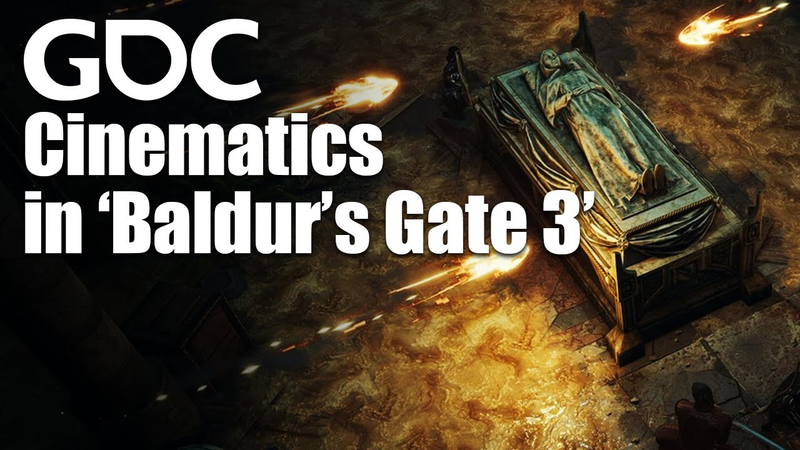
Larian Cinematics: A Top-Down Look at Our Bottom-Up Approach in 'Baldur's Gate 3'
The production of cinematics for Baldur’s Gate 3 represents a fundamental shift in RPG development, moving away from brittle, bespoke animation pipelines toward a flexible, template-based system.
- Larian Studios utilized 'inherited authorship' through scene templates, allowing cinematic artists to standardize camera setups and height variations, which ensured changes could be rippled across the entire game without breaking sequences.
- To manage the unpredictable nature of AI-driven NPC movement, the team implemented 'cinematic dummies'—timeline entities that replicated in-game counterparts while hiding the actual AI-controlled characters to maintain visual consistency.
- The cinematic team categorized their workflow into five pillars of expertise—analysis, ideation, strategy, execution, and revision—to transform the team identity from 'timeline jockeys' into developers who actively inform production processes.
"I Suck At Game Art... Should I Hire Someone?"
Independent game developers often face the dilemma of whether to utilize personal savings to hire professional help when their own artistic skills feel insufficient.
- Solo developers should complete their own prototype and polish it as much as possible before hiring external help to ensure they understand every aspect of the project's development.
- Managing a team is significantly more difficult and prone to financial waste if the developer does not first master the core systems, including coding, project management, and art design.
- Performing the work personally, even if the initial results are low-quality, provides the necessary expertise to accurately estimate costs and prevent contractors from being lazy or overcharging.
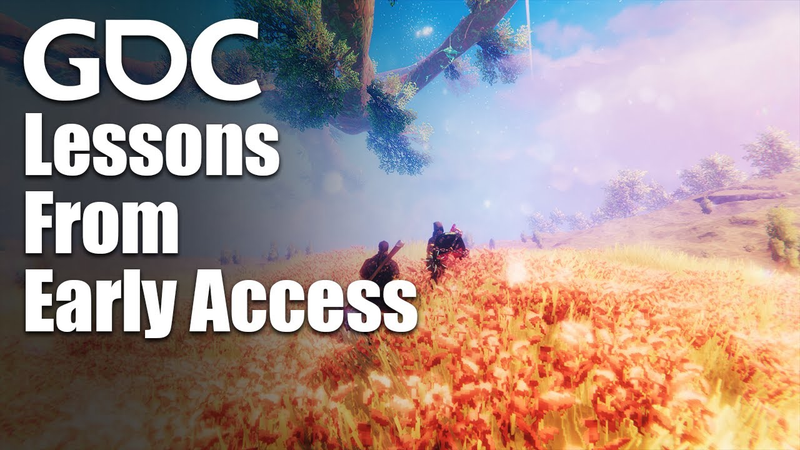
'Valheim': Vikings, Roadmaps & Buying a Horse During Early Access
Valheim represents a case study in the strategic application of Early Access, demonstrating how a lean, 13-person development team can achieve global commercial success by prioritizing core gameplay pillars over aggressive monetization.
- Early Access is a double-edged sword that requires a highly polished initial release, as developers only get one chance to make a first impression and must accept that the game effectively becomes the players' property upon purchase.
- Prioritizing accessibility for a debut title—such as maintaining a small download size (approximately 1GB at launch) and aggressive, player-friendly pricing—can be more effective for building word-of-mouth than higher price points.
- Maintaining feature parity across platforms, such as PC and Xbox, creates significant development overhead and requires careful synchronization of branches to support cross-platform multiplayer.
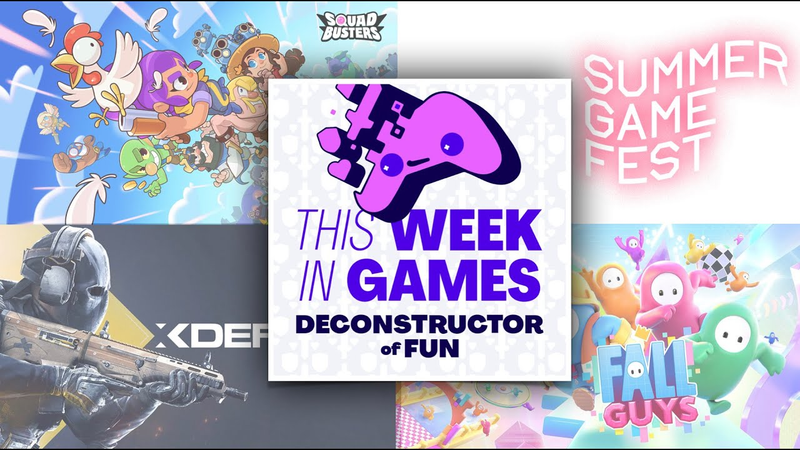
TWIG #284 Squad Busters launch talk / Stumble Guys vs. Fall Guys
The global gaming industry is currently defined by a tension between massive launch-day engagement and long-term structural instability.
- Mobile gaming remains the industry's primary revenue driver, accounting for 50% of total consumer spending in 2023 despite ongoing volatility.
- The gaming sector faces significant structural instability, evidenced by over 10,000 industry layoffs in 2024 and ongoing consolidation, such as Nintendo’s acquisition of Shiver Entertainment and Atari’s purchase of the Intellivision brand.
- High-profile launches continue to command massive reach, with Supercell’s Squad Busters securing 40 million pre-registrations and Ubisoft’s XDefiant attracting 8 million unique players in its first week.
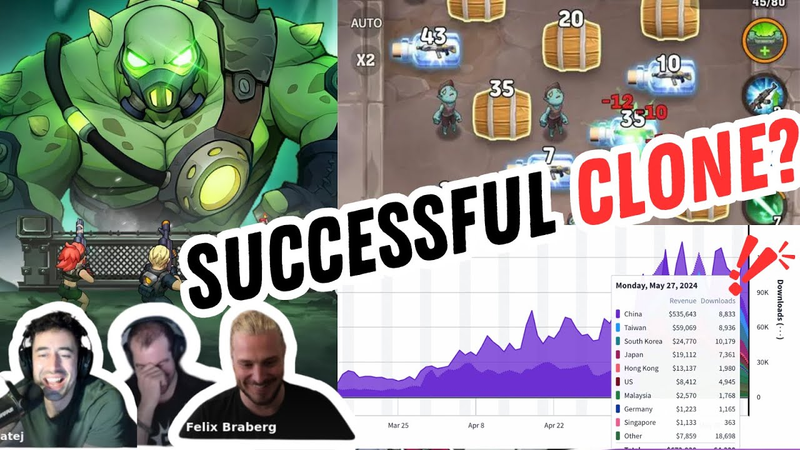
BangBang Survivor $600k/day revenue: One step closer to West or just a clone of Doodle Magic?
BangBang Survivor represents a significant case study in the mobile gaming industry, illustrating how derivative titles can achieve massive commercial success through superior packaging and aggressive monetization.
- BangBang Survivor generates approximately $700,000 in daily revenue, outperforming its predecessor, Doodle Magic, by a factor of ten.
- Over 90% of the game's total revenue is concentrated in China and other Asian markets, with only $2 million in monthly in-app purchase revenue coming from outside these regions.
- The developers are losing an estimated 30% to 40% of potential ad revenue in Western markets due to inefficient mediation setups and a lack of rewarded ad placements.

3D Generative AI with Atlas featuring Ben James | 348
Generative AI is fundamentally reshaping the landscape of 3D game development by transitioning the industry away from labor-intensive, asset-by-asset production toward a more agile, goal-oriented workflow.
- Generative AI shifts 3D development from labor-intensive, asset-by-asset production to an agile, goal-oriented workflow that automates technical tasks like UV mapping and texture generation.
- By training models on specific IP requirements and performance parameters, developers can maintain aesthetic consistency and technical fidelity while scaling production.
- Embedding functional constraints, such as line-of-sight logic and level design requirements, directly into the generative process allows for the creation of complex environments that bypass traditional production bottlenecks.
The Dark Place of 'Alan Wake 2': Crafting an Evolving Nightmare Dimension
The Dark Place in Alan Wake 2 functions as a subjective, looping mental construct that mirrors the protagonist’s fractured psyche.
- Remedy Entertainment utilized a 'stage gate' process to define strategic goals and manage the production pipeline for The Dark Place, ensuring narrative and gameplay integration through iterative prototyping.
- To maintain a realistic horror atmosphere, the team strictly avoided scaling assets, leading to the removal of fire escapes due to navigation, collision, and camera issues that could not be resolved without distorting scale.
- The team implemented seamless teleportation systems to create impossible, looping architectural spaces, allowing the game to transition between small exterior buildings and significantly larger underground interior layouts.
2.5 gamers x Live AM(F)A #3 - Ask Me Anything @ May 28 5:30 pm CET
The mobile gaming industry is currently defined by a shift toward hybrid-casual development, where success hinges on a robust core gameplay loop that accounts for at least 40% of the user experience.
- To improve D7 retention in idle games, focus on building robust progression systems such as character leveling, power scaling, and permanent value-add mechanics that translate across levels.
- Developing a game prototype or MVP can cost between $30,000 and $50,000 when outsourced over a five-month period, though costs vary significantly based on team seniority and location.
- D1 retention is primarily a reflection of core gameplay quality rather than meta-game features; if the core loop (e.g., puzzle design or combat mechanics) is not inherently fun, meta-game additions will not improve early retention.

Squad Busters is Pay to Win: True or False? LEAKED Global Launch strategy. Big game review! (#107)
Squad Busters represents a strategic pivot for Supercell, moving toward a live-ops-heavy model that leverages the company’s existing intellectual property to drive massive global scale.
- Squad Busters is scheduled for a global launch on May 29, following a soft launch period that utilized cross-game promotional rewards in titles like Clash Royale to drive nearly 5 million pre-registrations in three days.
- The game incorporates pay-to-win mechanics through consumable 'mega units' with high health stats (e.g., 11,000 HP) and a gacha-based chest system where players can spend currency to maintain win streaks and increase reward quality.
- The core gameplay loop prioritizes farming and survival to maintain win streaks, as the difference in rewards between first and second place is negligible compared to the benefits of staying in the top five.

Hybrid casual Twisted Tangle: 85% purchase revenue driven by iOS growth? Everything is possible!
The hybrid-casual title Twisted Tangle serves as a primary case study for the successful transition from ad-supported hyper-casual mechanics to a robust, in-app purchase (IAP) driven revenue model.
- Twisted Tangle generates approximately 85% of its revenue from iOS, challenging the narrative that iOS is a declining platform for mobile game monetization.
- The game's revenue is primarily driven by in-app purchases (IAPs) rather than ad revenue, with the United States accounting for the vast majority of both downloads and total revenue.
- Gameplay mechanics feature zero randomness, allowing players to utilize knowledge from previous failed attempts to solve puzzles, which creates a unique progression loop compared to traditional dynamic difficulty adjusters.

Brawl Stars to the Moon? A monetization deepdive! GameMakers x 2.5 gamers crossover
Brawl Stars has experienced a notable revenue resurgence, successfully reversing a period of decline between 2022 and 2023 to surpass the performance of Clash Royale.
- Brawl Stars experienced a significant revenue surge in December 2023, reaching $20 million compared to $12 million in November, effectively surpassing Clash Royale's $19 million performance.
- The game's recent growth is primarily driven by structural changes to the in-game economy, aggressive sales promotions, and the introduction of 'Hypercharges'—a new power progression layer at level 11 that costs 5,000 coins per unit.
- Supercell is shifting its operational model by increasing team sizes, with the Brawl Stars team expanding toward 45 members to support more intensive LiveOps and content production.

Pocket Champs live review: Exceptional growth, Clever game design, Ads playbook w/Arthur Michel (94)
Pocket Champs has established itself as a significant player in the mobile gaming market, generating over $40 million in lifetime revenue with daily in-app purchase earnings reaching approximately $100,000.
- Pocket Champs utilizes a hybrid gameplay model where strategic gear selection based on terrain (run, swim, climb, fly) dictates success, balancing automated racing with pre-race tactical player input.
- The game experienced significant growth spikes in March and June 2023, driven by a long-term product vision that emphasizes a unique, innovative player experience over short-term trends.
- Monetization is structured to provide distinct value across different player segments, with the battle pass and specific in-app purchase offers (notably the $9.99 and $19.99 tiers) serving as primary revenue drivers.