Transcript
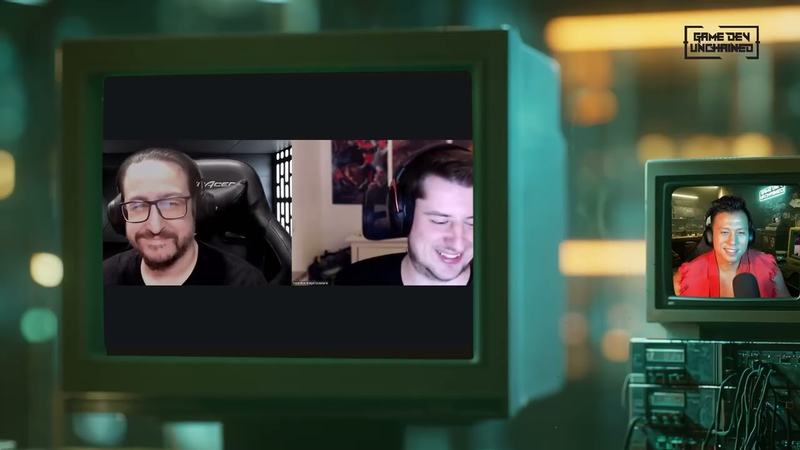
[Music] what's up everybody welcome to another episode of Game devil and chain the number one game development podcast about game development and the lifestyle thereof I am your host Brandon fam and with me a special guest Ben James how you doing Ben hey good cheers for having me all right so this is the part of the podcast where I actually let our guest which is yourself to introduce yourself to our listeners and viewers out there about who you are where you been where you at where you head just a little intro yeah thanks um yeah I'm uh I'm here calling in from Vienna uh where our company is is headquartered we started building 3D generative AI uh technology about three years ago with funding from the European Union and I personally am trained as an architect so I come from a a background that's the intersection of
design and technology and somehow ended up in in game development building virtual worlds for everyone from some large AAA game developers to small and medium Indie siiz guys awesome uh funny enough I think you're like my third architect that I've met in the game industry that somehow ended up in our industry but uh it's it's a welcome welcome uh welcomeing because you guys add so much to it um so let's go ahead and talk about about uh AI in general right um uh your company Atlas like how what is atlas's role in AI just kind of kick it off yeah so what Atlas what Atlas does is atlas looks at collections of images uh stereotypically this might be concept art from a particular game developer and tries to distill what are the underlying patterns relationships um anything that it really can out of those reference images to create generators that then create 3D
models and um texture those models in alignment with the style of those reference images so I think in in a large way what we try to do is offer an alternative to uh either manual modeling or or more commonly procedural workflows that's a bit more creative I think that is a little bit where we started um our journey was we looked at the the way that large open world games are created a couple of years ago and we saw that procedural tools which are very impressive are used but felt that in many ways procedural tools aren't that creative basically on a more technical level the solution spaces know you know in order to in order to have a really cool Gothic generator you really need to write all of those conditional statements or looping algorithms so you need to think in advance of all the different iterations and combinations of form and and texture that can create really nice Gothic pieces but AI is a little bit different gen AI in particular is a little bit different because the algorithms are goal oriented
so you basically say well this is this is the style that I want to embody with these concept images and this is the constraints that I want I want to generate a whole city for example and then the algorithms are evolving in order to in order to generate that and that basically means that your solution space is near infinite so you can do many more creative things and it becomes a little bit more just how creative the individual the artist or the Game Dev wants to be when they're creating their their worlds so we're we're definitely at a Crossroads in terms of transitioning part for for the industry as a whole you know AI I think is a lot more um welcome than most people would like to admit it is like a timesaver uh it does have a lot of uh it's an essential tool that's going to be a part of game development going forward um like it or not right but obviously there you know there are concerns with the ethical uh you know things around it about you
know with artist kind of concern about their own job safety and all this stuff so uh around these conversations you know your personal opinion your company stance uh just just what can you say to these artists that are are just worried about what I feel is g to happen right or is it makes sense right I mean also the the industry as a whole regardless from from AI is a really in a really tough position at the at the moment I think our stance has always been that you know AI should be something that that augments the the intuition of an artist so you know I think I take an an example from architecture um for example when when computer aided design came to architecture everybody said well all this means is you're going to be able to draw floor plans faster because you'll be able to to use the computer to do that they didn't imagine that there
would be new formal languages that arise for buildings for example or or a different example would be one of the ones that I like is that the the first television broadcasts were broadcasts of of people reading the radio uh program just because they didn't know where this technology could go and I think in many ways that's a little bit where we're at with AI so there's a lot of a lot of fear and it will be disruptive I think there's no there's no way around that but the way that I think about AI is it puts more emphasis on the artist creativity it puts more emphasis on things like narrative or intellectual property or you know game design uh holistic game design mechanics there because fundamentally what it does is it lowers the barrier to entry for a lot of other people to come in and also generate uh really interesting you know at least with our Tech really interesting Virtual Worlds environments and and assets but at the end of the day
you know you're not going to click in my opinion you're not going to click one button and the the job will be done it's more about how do you work with the tech in a meaningful way so in in our case what are the reference images you might give it what are the sort of iterations you might make with the AI in order to improve the generated results and then ultimately how do you take that um data that the AI has created ideally in a structured and and um you know proper way that you can go and make it your own with those little oneoff adjustments that no AI is ever going to be so detailed and granular to to build out so I think you know it's tough because it's it is going to be disruptive and I can imagine that a lot of people are skeptical of it but at the same time I think the artists who start to embrace it as a tool to maybe not necessarily even just be faster but be more creative because they used AI in the process I think those will be artists who who end up thriving uh and creating the next generation of really exciting games yeah I mean definitely uh I feel
under under representation of the amount of artists or developers that are using AI in their workflow I think there is definitely a vocal minority that are really uh speaking uh in in in the defense of the fear and the job loss and stuff like that but you know when you're in the mid Journey Discord Channel and you see these people just like endlessly prompting I was like come on like everyone's in here obviously using these tools to enhance uh their development right and I I uh often kind of related to there's a lot of been especially in games right I feel like games are always iterating on tools and Technology because development is so uh demanding right in terms of quality and speed right those are the two things that we're we're always kind of hitting our head against for for Milestone and shipping dates and uh you
know disruptive technology like mocaf for animators for photogrametry for environment artists character you know uh actor scanning for character art these are always uh I think in a small way have always been uh questioned or whether this will erase what essentially was someone's job to do that one thing uh but only we've only seen like those team uh growing larger uh because game developers tend to put more uh instead of like uh you know working with less um and I think from my perspective I've seen I've seen two sides of this so we've done postmortem with projects um where we've we've been able to quantify that you know that the technology we've built does lead to efficiency gains so that you know there we can you know we've done projects where we were able to generate a city of 20,000 unique
buildings in the time that that a team was able to create a hundred of them but when you look at that I think when we talk to game developers they see that in two very different lights so if you speak to a really large uh publisher for example they're usually looking at Team sizes that have that have maxed out basically they can't even if they onboard more members into their team they can't even manage them effectively because there there's so many hundreds of people in that right but what I like is when when we speak to maybe a small or mediumsized game developer they look at that and think okay well I can create I have I've had this idea for a huge open world game that I've never been able to build because it's too expensive it's too timec consuming but if I use the technology now all of a sudden I can make that world come to fruition or I can make a world that involves something like user generated content for example because now I'm able to have the the technical structures in place to do that and I think that's really cool if it if
the technology is enabling something new or enabling a game developer to build something they've always had in their mind then you know to your point all of a sudden the the teams are growing anyway because you really want to make that huge open world game and just being able to create all of the the assets and environments is only part of that now you need more people to help build out all the rest of it and the narrative around it yeah it's definitely an exciting time and I think people are uh more and more getting more receptive about it I I think the the ties are changed in in terms of like the company support you know we we seen like a couple years ago or maybe last year lizzard was probably the first major player that was like Hey we're going to use AI training yeah uh on our own content you know the you know our own concept we're not scraping the internet we're using our own to kind of train our model which is legally the most ethical way of doing it yeah but still there was still backlash about that I was like what are you talking about now it's like at this
point and uh I I guess yes the fear among things being done a certain way is changing uh it's legitimately there um but like talking to artists and you know you're interfacing with a lot of companies uh introducing your product I'm I wonder what is truly your your gauge in reception and uh in terms of like these different developers that you're talking to like what is it on the ground floor you're seeing versus kind of like what's the headlines right now against AI I think you know the the people that we talk to probably are are a bit more receptive to AI than the maybe the general uh class but the other thing I would say is that in our in our technology AI does a lot of the stuff that I don't think any artist is super excited about so yeah uh adding UV mappings to Geometry you know
uh the AI can handle that as part of its generative process so I think in many ways often times actually the artists tend to be the champions for us within an organization because what we're doing is giving them a tool that allows them to focus on the creative aspects of design without a lot of the banal boring mundane uh work that goes along with that and so actually in our experience the the artists are usually pretty pretty supportive of us and actually so usually is the the you know kind of the the sea Suite level where we find a little bit of a sticky point is that in between that kind of middle management layer that just wants everything to stay exactly the same and I think that's in part because you know change for them is very disruptive you know they've built out a pipeline in a particular way and they have a rule that that fits that very well and so you know our pitch all there is of course you know we we build Tech that that plugs into Unity plugs into unreal plugs into Houdini plugs into
blender you know that we want this to be also for the artists and for the team as seamless as possible but I do think that that there is something interesting that the the artists are really excited to use it the the the top of the studio is really excited to use it and sometimes it's this middle it's this middle part the that that really resists change um because they they maybe have uh carved out a portion of the role you know that uh that they like yeah I mean there's definitely a synonymous uh thing where we're it's been trending I think the last three four years when we start hearing the the term solo developer right quote unquote right people have like a very flexible uh a a definition for that but like essentially there's it's what used to take a bigger team is able you know you're able to do it with a smaller team now and uh that you know you talk about like the Vel opers are largely supported
the top ex acts love it of course and then uh the consumer level uh you know it's it's not even in my opinion that close in terms of the support on like yeah I love these AAA or double a quality games and I love the fact that it's like a a small team like there seems to be especially this year with power worlds uh recently Manor Lords you know all these like traditionally uh what would take a bigger team is being pushed by these smaller teams and it it's becoming a selling point uh about how look at what we can achieve with how little people we got like it's it's better than any marketing that uh bigger games are doing with like ads and billboards and stuff would love hear opinion yeah yeah I think those are examples though where they were great game Concepts they're they're incredibly creative and fun to play and that's not
AI you know that's the people who are developing these games and I think that's maybe what I'm what I'm trying to say in a in a sense is yes AI can help you build larger worlds it can help you ship games much faster it can help you iterate and work through multiple ideas almost simultaneously but what's gonna therefore if those if those barrier entry are coming down you know and if you're able to with a smaller team make a lot uh larger interesting AAA quality kind of games what's GNA really stand out is is the creative part of this process and I think that's what everybody's really excited about because then all of a sudden you know that's that's where that's where being a a an exceptional game developer means that you're just exceptionally creative and know your market and know the game that you want to create really well and it's not just that you're a great 3D modeler so we're in like a very critical time in the industry right just today at
least in terms of recording right Microsoft just talked about a slew of Studios uh from bethesa right um which is like a a trend that's been going on for a year and a half right but a lot of this too is just there does need unfortunately a rethinking about how we approach bigger budget games right yeah that model just doesn't work it's kind of backbreaking a lot of these games kind of make these bets for five plus years and and really wonder why it doesn't work uh because it's a big gambling move on on a lot of parts and at the same time we're starting to see these success from smaller teams but uh like kind of mid-range Studios really experimenting with this idea of Early Access like testing the game before before uh basically having these measures and Gates in place to to ensure
that this game being built is built towards their key audience right and instead of just trying to hypothesize that this is what our audience wants and then bang or bus right uh we love to kind of see you know with all this this happening with you guys being like in leading front with AI tools just enabling uh maybe as a solution to what we're going through like what what are your thoughts about what's happening right now coincidentally all at time it it's such an interesting time I think the way that we've seen it is I agree fully that this older model of years of development for hopefully a really large spike in engagement and then as long a tail as the as the game can sustain is a very risky and and probably kind of outdated model I think what is interesting I've heard it referred to as games becoming plat so it's games that are constantly engaging
attention releasing new content giving people a reason to to continue to to play those games I think from an AI perspective and specifically from the tech we've built at Atlas the way we see it is creativity is becoming part of the gameplay and I and I really like that sort of idea because it means things like users being able to generate their own content that's that's a way to help someone have attachment to those games to to to increase their their um you know attention and the the reason they would want to get back into those games being able to put out more updates to the map for example or or larger kind of narrative uh constructs there I think these are all areas that AI can actually add a lot of value and help that model of you don't need to you know close yourself off for several years and and work towards uh towards a one big release but rather think about a a game as a as an evolving and an ongoing
platform um and I think that's you know that probably wouldn't have been possible in some ways without without technology like ours a few years ago the community uh involvement is definitely uh I mean with ugc user generating content specific games it was kind of like the sub genre it's starting to blend in we're seeing like games like fortnite integrating as part of their like major pillar right um it's it's definitely a consideration ation uh now more than ever for for just I would say regular traditional games right yeah um in much the way that d DLC was was a thing and then I'm going to say microtransactions and loot boxes like was was hated at first but slowly embraced when when when people were spending the time to integrate it correctly right uh this idea of AI enabling an artist to communicate with the the community uh without having to sit there and make
things poly by poly right uh and having that speed like what what possibilities what potential does Atlas have or what thinking on a personal level goals that you think will kind of bridge that even better uh that it doesn't have to be a specific user generated game but let's say any other game that everyone's looking for to like uh I don't know I still got to watch it the what's that um this show Fallout right yeah yeah let's just say Fallout for example which is a traditional single player game doesn't have multiplayer support yeah has a huge Community there's like this blossoming idea of like I want to get involved can I get my name on that somehow or like can I put my face so what what what what potential do you see like with this this AI driven technology into something like so for us I mean this is such a a nice use case for us so so you could think about um when we build uh an AI model for a client the world that that AI model
knows are the references the stylistic references that were given to us from the client so this is the client's IP in this case so we get you know um so the the artists spend time to create mood boards and uh or reference images or maybe if it's a SQL it might be past game art but regardless this is the this is the aesthetic world that the uh that the AI knows and then the other side of this is technical so the other side are certain gameplay constraints should you know have certain you know lods or or mesh topology or or other uh other reasons to be optimized within a gameplay performance setting and so a game developer would go through would use our technology to iterate build open worlds quicker you know look through different ideas and options and refine the AI basically give feedback to the AI as it is generating and then that that feedback would be internalized and and go to building a more robust generator what's interesting then is if you want to give that AI access to that AI over to a user you can do so with a certain
level of confidence that no matter what the user let's say if the if the interface were text prompting for example no matter what the user takes prompts the results should aesthetically fit within the context of that world because that's the that's the formal language that that AI learned through its through its training process and no matter what that um what that structure what that weapon what that uh environment that was created by the user is should also be performant because that's again kind of the guard rails that were placed on this AI as it was being as it was being built so the the kind of interesting thing then is that this goes back maybe to that Original Point compared to a procedural system you're not going to get a lot of copies of copies you're not going to see that all the all the users are just building sort of some variant of the same thing actually everybody will be generating really very unique uh assets in in different different forms depending on how they're able to think about describing those assets or or having some of dialogue or user experience with
the AI but from the game developers perspective you know that you're you're still building within the same world you're still building within the same IP and you're still building within a set of performance constraints that works for your game so you're able to kind of let the user really just go a bit wild with this and I think that's really kind of a cool proposition and we have a couple games that are in development now that are that are working on that premise as well yeah I think the interesting point that you're bringing up that not a lot of people make connection to is that proceduralism has always been celebrated right it was this idea that it has infinite possibilities uh within constraint obviously uh but very handmade and tailored and uh time consuming right because these are possibilities I would say uh it's kind of like this this this this this uh what do you say very controlled amount of possibilities right has to be thought out it has to be planned it has to be produced right by
very traditional game development methods and this idea that proceduralism if you really look at it has always been laying the groundwork to what essentially is the ultimate idea which is AI generated content because you do want to be able to I mean I I I have this theory that all games are leading to The Matrix right good or bad um but like it's this idea of being able to walk in the world and having a a very unique experience uh compared to other players uh based on your own decisions I mean this is what dialogue trees have always been about in RPG this is the idea of making your own character you know people have always kind of lean in to wanting the personalize their character or player their Avatar right yeah um so like it's a very interesting connection that I don't think the community really talks about that much when we talk about AI like is this in your circle you know in
your AI huddles is this a common thing yeah well I think I I couldn't agree more with sort of proceduralism laying the foundation for AI I think to some extent it results from the specific technology that we've built at Atlas if I'm honest because we started building our Tech pre-chat GPT premid Journey pre- stable diffusion so we were looking at a world where we saw that exact problem with with procedural design you know if you if you created a Gothic Cathedral procedurally and somebody tested that game and said this would be really cool if it was more of like a futuristic Cathedral it would be very very difficult to make those changes you you would because the procedural code is so inflexible at a certain point it could do a lot of really cool variants of Gothic Cathedrals but it wouldn't be able to switch over to futurism because when you write procedural code you kind of need to know the answer before you start writing it you need to you need to direct the code down a certain path and so we we started looking and thinking
well what if AI could basically learn procedural rules and relationships out of these images and so somebody could generate that Gothic Cathedral with AI and then say you know what here's a couple of reference images of really futuristic buildings I would like that to now enter your your training data and your data set and try to learn those new new rules that can build that type of geometry and those types of relationships and so in the world that in the world that I operate in and the that that sort of we've built at Atlas our AI is very much an extension and sort of you know a new way of looking at at procedural content creation which is which is more generative in nature and more goal oriented towards you know more based around reference images from from clients and gameplay constraints but I do think that from that perspective that's why I also see AI as this great tool that that people can use to make really you know cool and creative experiences in the same way that you know when you have that perfect procedure procedural generator like like unreal has you know a lot of really nice
tools now around procedural content generation the PCG tools that you can do stuff that is that is really exciting really cool and you can do it really quickly one of the uh things that I think game developers or as a parent right that we're we're facing is like yeah this is all exciting but like there's so much changing uh the Outlook of what's ahead is like Uncharted Territory uh for the very first time because it's that disruptive uh what advice do you have like my son for example is like yeah you know not really asking this I'm kind of thinking this out for him like what should I be doing it's like I don't know being an astronaut learn to be a carpenter I mean those trade skills aren't going to go anywhere it's like I have no idea like we're talking about like Industries even uh as a lawyer which used to be like this glorified job for basically the anti artist right I was like Ah that's being replaced too
man at least the entry level stuff you don't need people reading your contract anymore um so like what what what what advice do you have for those that either in Creative fields or others like what should they kind of lean into if they're trying to build towards a career like you know what would be the most exciting profitable in terms of just a kid out of college that they should be looking at yeah interesting yeah I mean for me I think there's there's a couple things I mean one is that AI is in a hype cycle right now so there is we are we are in this kind of euphoria phase of it where we are all Imagining the millions of countless endless things that it can do but we should also keep in mind that like somebody just graduating college today there still are you know within for example game development like very uh traditional constraints about how meshes are are generated or or
created and how uh you know levels are designed and things like this and so you know looking five and 10 years out into the future there will be all sorts of I think uh wild um new models you know in in the way that not only we we create games but that we play and experience games but I think coming from a foundation that you understand how the world works today is really also very important and I think that's the same then carries on to creativity so if you're just you know if you look at really like what I I talk about it maybe from more of like an artist perspective than a game developer because that's a little bit more closely tied to my background but you know if you look at when I was training to become an architect you know the the really the core competence of an architect is understanding spatial and formal relationships you know there there's a ton of interesting tools and technologies that Architects can use
whether it's old school you know sketching those buildings out or using you know designing with with VR sculpting um but the the core competency there is is really about thinking through formal and spatial and creative relationships and I think in in Game Dev or other creative Fields you would have that too so I think it's twofold it's one like really learn those kind of core fundamental properties that would help you be creative that would help you you make really uh successful uh intellectual property or projects like that and then the second part of that is just Embrace every tool you can just learn tooling like crazy you know I think that you don't want to get left behind you want to be able to if everybody else is able to generate their games super quickly you should also be able to generate your games super quickly so that it's it's still sort of stands on the shoulders of your creativity as to what will make you know what will make your project successful yeah I think that's one of the main thing that um doesn't get emphasized
enough you know I I like using myself as an example right I I went to Art School uh game art school right uh for so I can create games my own games right and it was uh I went the traditionary route of going Triple A basically helping others make their games to get to the point to G gather enough experience to get to a point where I can start making my own games right and a lot of people don't really kind of equate the things that are available now are the tools being uh super resourceful uh enabling basically with anyone with an idea to go straight to steam right uh the the pathway has never been easier uh and it does require like a rethinking of how a traditional career and what that means and not a lot of people are uh I I think people are who are receptive to the AI tools
nowadays are are are more uh aware of that fact that it's like oh finally I don't have the barriers of needing to go down this route uh earn my stripes or whatever right I have an idea uh that I can present to to the masses essentially right and uh that that that creativity that that that that um that combats the idea of overemphasis on on on techniques right tools and techniques has kind of been like the main argument in my opinion of why this should not exist or or whatever like I would love to kind of hear your thoughts about that I I love this uh this kind of uh older like hacker culture where you just try to break stuff as well you know I mean I remember when I was yeah back to kind of that idea that as an architect you're focused on formal and spatial qualities you know I was I was playing around with you could find some brain scanning software online and then you could feed it renderings that you did and it was
coming out with weird new formations and they weren't great architecture to be honest but they were still something that you could play around with and just try to understand like how can you push Tech to be used in new situations how can you try to um yeah go beyond what everybody else is doing and I think especially when it comes to AI right now that's really interesting because these these tools are sophisticated there's no there's no doubt about that but they're also relatively new you know I mean at least our our technology that that we've built has only been around for for three years uh so there are plenty of games that take our Tech and all of a sudden they're you know they they've trained it on um classical European houses and then they're making giant skyscrapers out of it you know and for me that's incredibly interesting because that was not the intended way this technology would be used I thought it would you know would be used if they trained it on a particular asset class it would be very good for generating within that style
but in the misuse they were able to get things that were highly creative highly interesting things that you know at least we as a team internally hadn't seen other game developers using and so that uh that kind of stuff I think is really was is really cool and I think the industry is so right for that now I mean when when everything is moving this quickly when new tools and plugins and and Ai and procedural techniques are being released you know week after week I think it's a it's an ideal opportunity to find your Niche uh creativity creativity or aesthetically as well yeah I think at at the heart of um game development in general I is the uh is the iterative process I mean that's essentially what the problem and this the the the what what is celebrated at the end is like so there are games and budgets constraints and you know the artists or developers are overly spending on iterative and because there's not enough time or and
essentially not having enough time to kind of work off of uh these iteration Loops that that suffice to an end result right so I think AI really speeds that up and why people secretly or not still secretly are using these tools uh because they're able to kind of like pick and choose and see results faster and able to kind of make decisions faster and not have to uh essentially uh kind of compromise their their their Vision right I think I think it's such a valid point it's something that actually we have to like developers of the AI tools and specifically at Atlas we've had to put a lot of emphasis on it because we don't want the value proposition of somebody who's using our Tech to be uh you take it or leave it you know you describe that I'm looking for uh a medieval landscape where uh Cottages uh you know create an ominous feeling or something like that the the
value proposition should not be either yes or no and then just repr prompting it should be that everything comes back in a way that you can iterate over it okay I like this I like this part of the map I'm G to select this over here or the hero asset that it's created is cleanly modeled with discrete parts and segmentation information so if I want to go and and start to you know add cracks in the window or or instance certain pieces of geometry or change the material like you you want to facilitate that iterative process and and to your point you want to facilitate that you can do it quicker but I think that for us that's really important because if your if your value proposition to to an artist or game developer is describe what you want and then either take or leave the asset as is I think that's not a particularly fun nor creative value proposition but if you're if you're able to say you know play with this change it work with the AI to make it better let the AI learn your preferences a little bit so that the next time you're
generating another asset in this world it's it's more outt to what you're looking for I think that's a much more interesting and compelling value proposition for people to play around with and that's what we that's basically what we're we're building cool and uh would you mind elaborating like uh these use or misuse cases that when you're working with the clients like they kind of inspire like ideas that you guys didn't think about because a lot of it it's kind of like the Early Access it's like you put it out there you have an original vision and people play with it and then they start kind of sparking uh these these ways that they're using or misusing they're like oh you know what this kind of we should go back to the drawing board and integrate something like this have you uh I'm sure experienced some of that and you know uh just to kind of give some detail if you can yeah I mean uh Ian I can give sort of some general uh examples that we that we've had that have been pretty interesting I think um one of the one of the examples that I really liked was we were generating um a lot of we were generating a city where the you could
enter the buildings so we were generating the Interiors as well and one of the things that they wanted was to encourage close combat shooting uh like close combat in inside the buildings and so we we thought like At first we were kind of you know just using like a very simple if it if it met the criteria that they were looking for it was shown to the client and if not then it was thrown out as a generation and then one of the things they suggested to us was Hey what if we like we have this more holistically being generated with our Aesthetics so we actually built in a loss function that said okay consider the lines of sight when you're when you're generating an interior to a structure and the difference was then that man it had to balance the Aesthetics of the Interiors with a a very technical constraint in this case lines of sight but it led to results that were far more intrinsically interesting because you got close combat um environments but they were not they were not something structured or straightforward there were kind of weird
angles and parts of the building where this where this happened and then that was particularly interesting because then the game developer was able to sort of say okay let's save this you know let's save this configuration here in the building and let's let's regenerate the other parts of it and I thought that was really I thought that was really interesting because I wouldn't typically have thought before that about an an idea as abstract as close combat shooting as being part of something that the AI when is generating formal language should consider but I think that speaks to the fact that these are fairly complex systems and you're able to integrate you know even kind of abstract ideas if you can somehow put it into a um a quantifiable way that a that an AI system can understand yeah I I I I definitely can correlate to to that like this idea that I think initially when people are introduced and people forget like chat GPT for example was only like a year old right when it kind of came on and scene pretty strong and I think initially everyone kind of use it as kind of like a prompter like all right give me what you got right but like uh
recently you know in in terms of the technology evolving people uh who are using it are involving in terms of their technique like it's not just about like you know trying to get answers from a ready trained system it's about training the system now to kind of make it better for for your specific use cases uh your specific needs and and more treating it now like a like an assistant like being or or even a writing buddy you know and I think I'm like people are uh kind of collectively doing that at the same time like uh for example my son right he's 13 it's like I have no idea what his future is like right so that's why I'm asking all these questions but at the same time he has like a a creative writing class like yeah usually I would sit there with him and like I was watching him doing this and he was like kind of uh really really like struggling thinking about it and it was just I don't know where to start I don't know where to go uh because you know it's one of his first writing assignment like in kids these
days like I don't even know I'm impressed they can even write right but like I'm sitting there and I I'm introducing to this like this is a writing buddy and this is the things you want to kind of start with describe what you want and it presents you these different cases now you got to train it like hey I like this I don't like this what about this you know and we're adding subtracting and and changing his initial promps but at the same time like sitting there this is serving as kind of like a a starting off point the the most important thing is you know you got to maintain your Competitive Edge right if it takes you 5 Seconds it'll take someone else 5 Seconds to do this right what is your input What Makes You Different right and that is something I feel like a lot of developers that are really uh kind of um standing apart are doing like they're not just doing the basic thing they're really working with the AI model to kind of make sure that
their Competitive Edge is is still there right yeah because because your Competitive Edge is not going to be that you used AI or you didn't the Competitive Edge is going to be how were you able to use Ai and were the ideas that you put into the system or the way you used the technology furthering something that is unique and creative and and specific to the you know to your Competitive Edge and I think that's really I think that's really nice I mean you you see it a lot with the GPT models right you can you can have a generate text for you but that's probably not particularly interesting because it's somewhat generic text but if you're able to train it in your voice if you're able to then use that as a way to think about different uh ways to to write or to describe something and then you know ultimately make that your own that's very unique and very competitive yeah so
we we touched about this a bit where uh with new technology previous technology tools that have enable developers to create things faster before uh there were worries about you know uh teams uh being scaled down right but we saw the exact opposite you know to to this you know what's going on right now scales teams are bigger than ever right and uh the main thing uh is that uh ideas are not being tested faster I think essentially is the problem with it's not about the teams being bigger is just that because of management uh that's tough I think that's definitely not talked about enough just managing large team is hard uh but also the idea of just testing ideas being iterative uh would you mind kind of D digging into like your your thoughts with where do you see these teams are they going to stay at the size going
bigger smaller at first uh like what what what's what's your anticipation what's going to be happening now my anticipation is that these these teams that are huge will reduce in size so if if it's a if it's a 500 person team I think that it that's that's very difficult already in its current state to effectively manage or run efficiently even for these really big studios so I think there will be uh I think there will be instances there where those teams scale down in size and and you know tools like AI help to continue to be as efficient as they were before but that's a fairly small subset of the of the industry I think what we will see is we will see a lot more of the like small and mediumsized game developers coming online because they will be able to leverage the tools to to more rapidly create publish iterate Test games and I think then what we'll have
is a is ideally uh like a little bit of like a Cambrian explosion of new games new ideas that are really trying to ideally push the boundary of of maybe what's experimental in terms of Aesthetics in terms of narratives in terms of gameplay and we can see how the industry as a whole starts to shift and starts to move so is it you know people are really excited by the user generated content the ugc games people are really excited by games that Embrace um you know worlds Beyond scales we've ever we've ever played before um but but are filled with content right not just empty kind of uh worlds uh are we really focused on maybe maybe the proliferation of kind of AAA quality standards means that we're super focused on some of the other narrative um you know uh components of the game play which I think would be quite interesting so
that's my that's my guess is that you'll have a you'll have a a a bit of a growth in the small and mediumsized teams because we'll find that from a relatively small group of people you can make very interesting games but that the really really large scale teams will will come down in size of it I would love to kind of hear your thoughts about um I would say it's a phenomenon right these Day One releases and suddenly it's dominating the headlines uh I would say say yes balder Gates 3 is number three of the series but no one knew that was coming out at least in my opinion right it just came out and everybody was playing it the same way main Lords is playing pal worlds like this this uh there was there's interesting articles talking about how marketing and advertising and I know this is outside of AI but at the same time it might be tied to it right this this this the mark the idea of uh Journal uh articles coming out there's like this premeditate marketing uh campaign that happens
before a game release you know trailers you know these game award events that like tells people this is coming out you know look out for it is not as dominant as it used to be like the games that are being sold like crazy and making headlines are when it's released day one so what what what is your thoughts about this thing that's been happening the last year and a half I would say which I don't understand and it's completely not tradition to how I hear about games before it's released yeah I you know I'll be honest I think I I also don't understand it as as much I mean you know it's it's amazing to see because the the verality of some of these um games or or even experiences sometimes that that are also coming out it it's so exciting because I've also gotten caught up in the moment before and then you you know all of a sudden everybody you see is uh everybody you know is posting about it or are talking about it so that builds the momentum and the hype in and of
itself I think maybe the only the only you know semi-intelligent thing I could say here is that I think it's this idea that attention these days is our scarcest resource because everybody is pulling for for attention and so a lot of the games that I see that kind of have this this day one spike is or are games that that capture that attention really really well and you know it remains to be seen to some extent for how long uh they they capture it and and that's where I think you know things like creativity becoming part of gameplay can help extend the the life of that verality and and help games to move to that next Milestone but I think you know to me one of the things that I'm always thinking about when we talk with game developers because we get pitched a lot of really interesting games that's probably one of the really nice things actually about about our company is you know we we talk to people that are building a ton of interesting games they have they have cool ideas they have uh yeah and and I'm always sort of you know
focused on this idea that that attention is so scarce these days and uh if you can if you can build something that especially I think especially that's a bit unique then it it kind of can grab the attention and hopefully go a bit viral as well yeah it's definitely an exciting time to uh there's so many games coming out like all the time uh and uh it it's nice to hear that the games that stick are are are are just games that people generally enjoy like um yeah it's nice that they don't have to come from a huge budget either yes and in terms of sustainability because the the way these games are made with smaller team sign is like oh we only sold a million copies but there's three of you yeah we're fine yeah you are fine so it's it's a different mentality right I think a few years ago it was uh it was kind of scary at least for for me and I think for a lot of devs a lot of games I think from
Square enex it was kind of like disheartening to hear it's like well we only sold 8 million copies uh we might have to it's been a bad year it's was like what what else do you want it's like uh how bad is your planning you know uh for for where 8 million copies is like a disappointment right uh it was a bad Trend that that I I feel like uh because of the Indie Dev development or the smaller team is saving uh from us kind of going down that route and I felt like it happened a few times I I think you know before Tomb Raider there was uh I think at the end of PlayStation 3 era there was so many studio shutdowns um but like it's a little different from now even though there are Studio shutdown it's more like there seems to be a change of how we approach making games more so than uh just like games are not being popular which is the exact opposite is more popular than ever so there's there's a re really
interesting time in terms of like uh what's happening and people's different interpretations but I think everyone can agree is like people still love playing games uh people still love we have more people making games more than ever uh and uh there's just a and you pair it with technology and you pair it with technology and now all of a sudden sort of the barriers to entry make games are coming down yes so you have even sort of the possibility to make that Trend sort of exponentially more interesting right yeah there's a lot happening culminating to uh to a lot I think more success like this year alone like I would say at the end of last year and then this year every month it's like oh there's this guy or this group of small you never heard of and they're selling Baker it's it's the most consistent amount of successful game stories that I've ever witnessed um
you know usually things like this you only hear one big game a year and now it's like every month you know everyone's having their time to shine it's a shared stage but everyone is walking away a success you know so it's it's it's definitely underemphasized on how fortunate this this time is for the industry uh despite like the the things that are happening it's like hey it's this is the Class A you know yeah changing of times it's like something's happening here yeah uh yeah and like you say people are still really excited by these games like gaming is not going anywhere you know it's uh people are people are more than ever like looking for that that cool unique interesting game to to play so I think yeah it's it's a great time yeah and I I think the price point of these games is the key thing that $40 $30 is what people love um that actually uh means that we hit an hour
mark hopefully it's been as as as painless as it was for you as for me uh this is actually the part of the podcast where I shut up and hand a mic over to you to talk directly to the listeners and and viewers out there about whatever you want to talk about well thanks no it's been it's been really uh a pleasure I think what's been nice about this is we we do a lot of work with AA Studios we do a lot work with big game developers but I think a lot of times the games and the projects that we work on that I'm most excited by are a lot of the smaller medium indie siiz game developers we are we are as at Atlas we are for the first time kind of starting to open up our Tech to more plug-and-play approaches to try and try and take that technology that we've built and give that to Small and medium-sized game developers so we're we're doing a little bit of Alpha Testing at the moment if there's any listeners that are that are building a game that's that's interesting and cool and wants to participate in our Alpha Testing program get your hands on some
some cool new exciting 3D generative AI technology uh please reach out you know we are our website is atlas. design and and you can you can find all of our contact information there but I think that for me would be really the only call to action here I think we we're really excited to always talk to game developers talk to artists who are are building interesting things and if we can support that we would be really happy too fantastic man uh it's a it's a pleasure having you on I always Lo love talking about AI especially now so uh learned a lot so thank you uh to everyone else yeah see you guys all next week [Music] [Music]
Auto-generated captions from YouTube — names and numbers may be misheard.
Key insights
Distilling the key insights…
Ask AI about this video
Cite this video
Citation
Generating citation…
















Comments