VideoDeconstructor of Fun
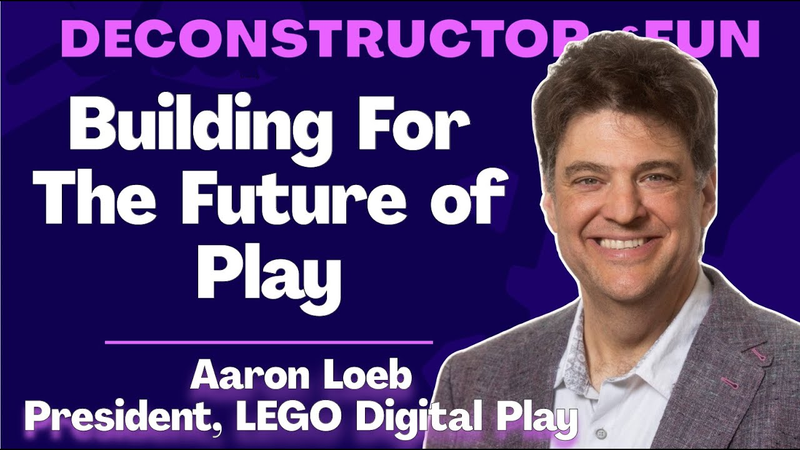
First-Ever Interview with Head of LEGO Digital Play – Aaron Loeb
18 Aug 202564 min video
Transcript
What great brands do is they build trust with their consumers when they talk about their sort of pillars as a company. They talk about them in terms of promises, right? Promises they make to their partners, promises they make to the other people, right? You know, like each of these things and these promises are core to the company. And the companies that have tried to just move fast and make as much money as they can as quickly as they can, they break those promises all the time. And in a world where trust is going to become more and more important, they are going to be in real trouble, I think. Hey, are you building a game, launching an app, or considering an acquisition? Well, in that case, Destructor Fund Consulting is here to help you out. We do everything from market research to go to market strategies to live ops optimization and due diligence. We're trusted by some of the most beloved game development companies, makers of tools and tech, as well as some of the most
renowned investors. Now, if you are building, launching, or buying, don't do it alone. Do it with us. Connect by emailing to consulting at deconstructorof.com. Game devs, here at Heroic Labs, we know that great gameplay is what players love. But integrating metagame features like challenges, progression, and rewards is crucial for retention and monetization. But coding them is a tedious and timeconuming process. That's why top studios have turned to Hero from Heroic Clouds. Hero provides a complete suite of battle tested metagame features that are quick to implement, letting you spend more time on the core gameplay experience. Ready to ship fully featured engaging games? Check out her today at heroiclabs.com.
Welcome to the Deconstructor Fund deep dive interview series. I'm Jen Dano. It's not often that we get a scoop, but we did in this case. Today, we're joined
by my friend and the founding president of LEGO Digital Play, Aaron Loe. He kindly offered to come here to do his first ever interview to introduce LEGO Digital Play. As many of you know, Aaron is a longtime force in the game industry. His winding career has taken him from theater, yes he is a playwright, to games journalism to Hollywood and of course to every corner of the video game industry. Aaron has helped to shape some of the most successful games in history. Massive titles such as Marvel Strikeforce, Marvel Contest of Champions, Monopoly Go, and The Simpsons Tapped Out. Aaron has worked on the biggest games in each of those IPs, driving billions of dollars in revenue. He's also played a central role in multiple high-profile M&A transactions, including the sale of Kabam to Net Marble, the spinout and sale of Aftershock to Fox, which became Fox Next Games, and then the subsequent sale of Fox Next by Disney to Scopi. He
later served as the chief business officer at Scopely up to the acquisition by Savvy Games Group. In addition to working with leading entertainment companies such as EA, Disney, and Scopi, Aaron was also an operating partner at Griffin Gaming Partners. Not even a year ago, Aaron was in a really different place. He was working on the next big game investment with Griffin while slightly dipping his toes into retirement. That all changed when Kirby, the family office that owns the LEGO brand, reached out to him. Today, Aaron is leading the newly formed LEGO digital play. Unveiled in February, Aaron is channeling all his previous experience into this biggest opportunity yet, pioneering the LEGO brand into groundbreaking game and digital experiences beyond what currently exists. And looking down the road, 20, 50, 100 years, that's a lot of digital play coming up, guys. Up until now, very
little has been shared about LEGO Digital Play. So, I'm honored that Aaron is here for his first official interview. He'll introduce LEGO Digital Play, his mission, growing his team, and even if he can't tell us exactly what they're building yet, I think we're going to get a good sense of what he is looking to do. Mainly, you're just going to get a chance to listen in on the equivalent of a dinner conversation as we deconstruct Forever Games and how to merge physical and digital play for everyone. Erin, I am so happy to chat with you today. Thanks for coming. I'm happy to reconnect after all of our Monopoly Time, Monopoly Millionaires.
Yes, that's I believe that's what it was called at Playfish back in, you know, at EA a decade ago. Yes.
Yeah. So before the Monopoly Go board game. So we're gonna go tell Scopely that you are actually [laughter] first to do that. I'm sure they'll love that.
I'm sure they will. I'm sure they will.
Okay. I want to do like a virtual word chart to understand how LEGO is set up
and how your new initiative fits into the picture because, you know, I absolutely love and adore all of the Telltale Lego games. They were the model for that family co-op. sit on the couch, play a game together from Lego, Batman, Star Wars, Harry Potter. I mean, I think I played all Indiana Jones even. I played all of them. So, those are like the third party and the licensed games. And then your new initiative over here is Lego Digital Play. And so, it's a little bit more like first party unlicensed. Is that right? Like, walk me through that.
Yeah, you've generally got the picture. It's a Traveler's Tale. Spin. You said tell you telltale, which is an easy like, you know, you know, these TT games. It makes it easier if you just say TT Games then you can remember it easily. So to understand the org, I'm going to back up just a little bit just to give a sense of like the greater org. So I think a lot of people may not realize that the Lego brand is actually familyowned. It's owned by the same family that created it, the Kirk Christensen family. Their ownership
comes through a company called Kirkby. And back in 2023, the fourth generation took over and did this work of thinking about how to set up the company for the long term. So it's in great shape for the fifth generation. Actually did a reorganization back in 2024. And what they created was a new entity called Lego Holding. So this didn't exist before. Lego Holding is like where all Lego everything exists, right? And then Lego group is the toy company we all know and love that you know manufactures the bricks and also oversees partnerships and licensing arrangements in the video game space. So TT Games, all the games that you know and love, everything that you've ever seen in the market, Lego Fortnite, all of it that is in the LEGO group and it remains in the LEGO group. So those relationships, third party relationships, etc. stay in LEGO Group. What they also did was under LEGO holding create this new entity called LEGO Digital Play. Only came into
existence this year. It was founded January 6th or something. I joined January 13th as the founding president and it's a completely new entity to invest and create in you know wholly new experiences that that are different than what already exists right creative joyful exciting new digital experiences that I can say most broadly are new expressions of the branded digital. It is a very different entity and it is not doing those licensing relationships and folks who want to license the Lego brand to make a video game should be talking to the folks at the LEGO Group.
Got it. Got it. Got it. And actually in board games as well, like physical games live in that world. And so what you're doing is kind of completely separate. Got it. Got it. Got it. Got it.
Yeah.
By the way, you've been doing this for a long time. You've been at this game for like over 30 years. You have probably, you know, worked on some of the most impressive game launches of all time,
studio acquisition. I mean, you even worked at at a VC back Griffin. Uh, so you have literally seen it and done it all. I think you may have one of the most coveted jobs in the entire game industry. I don't know. There's so many different people that would be like, "Oh my god, if they could just make Lego video games for a living, they would love to do that." Why? Why? And how did you get, you know, land here for this? This sounds fascinating.
Yeah. Well, you've already answered your question to some extent. Like, who wouldn't [laughter] who would not want to take this job? But yeah, you know, look, I was really enjoying my time advising companies, working with Griffin as an operating partner and I was reached out to by some folks from LEGO Holding to discuss should we do this thing? like it was actually early conceptual thinking and the reason why they were thinking about it is um as I just said you know we we shifted to the fourth generation ownership in 2023 and Thomas Kirk Christensen who's the
most active family member you know started thinking about like what is the future what do I need to do in my tenure so by the way I just want to pause on this takes over his first thing he's thinking about isn't what are the quarterly revenues the first thing is what is it going to look like when it gets to the fifth generation M
because this is a generational brand. It's a different way of thinking. You know, how will Lego still be relevant and amazing for kids 20 years from now, 30 years from now, 40 years from now, right? And when you ask yourself that question and you look at just where we are today, one of the most critical things is going to be digital, right? It just it has to be. Digital is now at the heart of human culture. You and I were talking about how we were getting there 10 years ago. I was say when I was a journalist 30 years ago like when I was covering video games you know I remember talking to young reporters like why are you doing this like cuz we're defining the entertainment form of the 21st century we wasn't even the 21st century yet but I was like we know this is what the next
hundred years are going to be they're going to be about video games right they're going to be about digital entertainment so how the brand is going to live in that new world that's not going to go backwards right where kids are in the digital is younger and younger and how is it going to happen in a way that's healthy and good and looks after the safety and well-being of those kids where it's actually a great thing that they're interacting with it because I think a lot of us probably feel like our kids aren't necessarily being looked after their safety and wellbeing is necessarily looked after by everybody who's out there in the space all the time maybe maybe that's not too controversial a statement right but Lego brand that's vital so h how do we bring that into the digital space so that was what I find myself summer last year being asked, "So, you think we should do that?" [laughter] Like, "Yeah, yeah, I think you should do that. I think that sounds like a really good idea." Like, "Huh, okay." We talked a lot about how you might structure it, what it might be. And ultimately towards the end of the year, we started talking about me coming and and building it for
them. And you know when I went to Billings where the the headquarters are where the company was founded and just learned more about the obviously I've been a fan my entire life but you know like really learning the details about the history of the company and how it operates today. You walk around the headquarters and it's like here's the schools that we build for children all over the world and here's the hospital we just built for children and here's our values and the values are like the word cloud is joy and laughter and children are our role models and it's you know it's like these people are the good guys right [laughter] this is and they mean it right they mean it deeply like this is an opportunity to do amazing things with people who have the capital and have achieved incredible success the Lego brand is bigger than it's ever been. So they're at this moment where the world is going through profound transition, profound change. It's chaos kind of everywhere. I think we all kind of feel that, right? And here is a company rooted in care and quality and craftsmanship and the good
of children and adults and everybody touches it, wanting to do something new in the space that I've spent my entire time working on. At that point, I actually I will confess I walked into those mis going, I don't know if I'm going to do this. know I thought like I would be the world's biggest idiot if I don't take this opportunity like I yes I have to do this I got home my wife who was like you should be retired like write your plays don't do any of this stuff my wife was like you have to take this job you have to do it [laughter] so that is how I came to be in this job
I think that's really amazing that like you said you're on the verge of retirement you're like I've done it all and then when you're presented with the passion and just the pure goodness that comes with, you know, these IPs that are about what's good and great about the world. And when you have a leadership team like the Kirkes who are just they live and breathe and embody this, I think there is something magical that in many cases doesn't exist in the
world. I mean, I've been around Lego for my entire career as well. In many cases they were the enemy for me which when I was at Hasbro and Mattel I mean I was making Star Wars toys and you know Star Wars Legos was eating into my entire business. So I have this whole like different view of Lego of like ah you know like you you guys but you know you think about what that brand means and how it can extend IPS into different ways. You know, one of the fascinating things when I was doing toys and action figures is I don't know if I could get a gold medal in something, it's like how to make toys for eight-year-old boys. It's very a very weird skill set to have.
I I want to see what that gold medal looks like. I mean, it's a gold medal that an 8-year-old boy would like. And so, you know, [laughter]
it's it is all the toys and stuff behind me. But, so basically, there's like five different like personality types or play patterns that you have with kids. And so for young boys, it's, you know, it's the action figure kid, it is the artist, it
is the the jokester, it is the vehicle kid, you know, the Hot Wheels kid, and then the final one is the construction kid. And this is the kid who's like the little engineer who just wants to build things and create and to have that completely open-ended play. I am not that kid. I am the action figure kid, which is why you see all the action figures behind me. But what this allows you to do and the ability to connect that with digital is I think the real opportunity that that other brand may have captured. I call Minecraft digital Legos that beat Lego to the punch a little bit. We'll get there in a second, but first I wanted to talk we we've been talking a lot about kids and I just earlier talked about how you know I think that you know you and I and others grew up with this brand and there is that kind of nostalgia. In fact, my stepson Zach and I played all of the TT games together and he played Ninjago and all of the different Lego. I think I can still find a Lego brick on this is used to be his bedroom actually and now it's
my office. He's got all of these Legos. He actually is now in adult Legos. There's a whole segment. I call it the black series cuz the box is all black and
Yep. Icons.
Yeah. Oh, icons. That's what it's called. He's even building the one with the flowers and I'm like Zack. He's like, "No, it's like more difficult. It's like more difficult." So, I know we talked a lot about kids, but how are you thinking about your target audience knowing in a sense that you do have
kind of everyone to work with?
It's a great question, Jen. And I and I think if you constrain your thinking to a single game or a single expression, it becomes important to be like this is exactly who we're going after. But when you been asked to think about, okay, how does this brand live in digital moving forward? It would be a mistake to think it's only it's just this one small group. But at its heart, let's recognize that we all have love for it because of our experience with it as kids. It is a kid first brand. I would guess, you
know, it would be a good way of saying it. But even if it isn't for everyone, it still is something that comes from that impulse that we all had as kids to just there's a thing on the floor. I'm going to go around and play with it. And we lose that, right? Like, right, what what was in our mind the the core expression of it? It's there. Somebody's got a bucket of bricks, they throw it on the ground, you just start playing with it. You see it in our office like those bowls of bricks and we're having meetings and of course everybody just starts doing it. That is like a childlike
just love of exploration and discovery that we've seen lots of movies about this, etc. We all lose that as we adults, you know. And I got to tell you, just even the 6 months I've been doing this, when I tell people I work at LEGO Digital Play or I work touching the LEGO brand, like people's faces light up.
Oh, absolutely.
And they immediately tell me the stories of the things that they've built both recently or things that they do with their kid, right? And so, yes, while I talk about kids because there's the expression that the brand has of
children are our role models. It's a it's a key kind of belief system. Children are our role models. So, it's impossible to talk about without talking about kids, but doesn't mean you're only making stuff for kids. You gave a great example of this. One of the most amazing expressions of the brand. Now, it's huge and very popular is botanicals. These are building plants and flowers. These are being bought and built by adults all over the world and adult women all over the world, which is a not necessarily a market that everybody was like, "Yeah, that's what that's what the Lego bricks are about is adult women, right?" It totally is. It's like it's one of the miraculous things about the brick and the system in play, which is the sort of underlying system of how they always fit together in the same way. No matter what different brick you pick, it can work for it can transform almost anything through your imagination. It can become almost anything through your imagination. It's truly a remarkable invention that continues to do cool things that can work for everybody. When you think about franchise management, I try to not say the T word, which is
trans media that I hate, but in franchise management, one of the things about this brand is that it can apply to every single age segment from Duplo to, you know, Lego bricks to the licensed games and products to now. I think the biggest thing that they unlocked was nostalgia and this older age target. And I think they saw that with the original TT games that you could actually have that intergenerational play and you saw it with the Lego movies and how that really brought everyone back to it. So I am both like
thrilled for you and terrified for you for for a couple of reasons. One is that one is like that opportunity that you have with the brand and the generations. The other is this idea that you're competing in a world of Matt Piscatella calls from Circon used to be called NPD which is the idea of black hole games. Yeah. So these live service IP driven games that suck the play time and the money just out of our gaming
environment. It is Minecraft. It is Fortnite. And now Roblox. Roblox is a game that is dominating across every single platform. They just hit 112 million DAOU on fire. So, how are you thinking about attacking and going up against all of these black hole games knowing you've got this like amazing C? I mean, if anyone has the right arrow in your quivers to attack these black hole games, I mean, I think it's you and what you have to play with. So, how are you thinking about that and how are you thinking about the black hole games?
Yeah. Yeah. It's not only a great question, it's obviously the question that's on anybody's mind who's in this industry right now. It's in probably the question that's core of what's caused so much turmoil in the last two years.
I'll first answer is as a general video game industry executive rather than particularly having anything to do with the LEGO digital play.
You know what we saw in the early days of freeto play at EA, but then what I really saw at Kabam was that loyalty turns out to be the most important part
of LTV. Right? We would talk about LTV and CAC, etc. We'd like, okay, we got all these deep data science models that tell predict who's going to spend, etc. And we'd slice it a bajillion different ways. But it turns out there is literally no predictor for LTV stronger than somebody plays your game every day, right? They play it seven days a week.
At Kabam, we created this term for this called regulars. So, we started talking about our regulars and our regular customers. Our regulars being people who played every day for seven days in a row. our regular customers being the people who played every day in the row and had ever spent money, right?
And what we learned like looking at the LTV of our games like a contest of champions was that actually there'd be these group of people who came in with a high LTV. They actually spent the most money but if you looked forward 6 months later that actually turnurned out because they didn't really like playing the game that much, right? They were spending money in order to seemingly in order to not play the game or they were spending money to sort of collect the characters, but they didn't really want to play the game. And so they'd spend a
lot, but then they'd be like, why am I doing this? And they they go and there was this other group of people who actually had a lower LTV, but we flash forward 6 months later, they actually came to be the highest LTV group because they just loved the game. They kept playing and playing and playing and even though they spent less, they just kept coming back and coming back, coming back. And the underlying characteristic was that they played every day. And in fact, their play time would deepen over time.
So you flash forward a decade, right? And you end up settling into a market where people have found their forever games, right? You're a brilliant marketer. You know, you've spent a lot of time in your career looking at install sources, right?
Let's look at install sources in the macro, right? Because that's our whole business in mobile free is built on install sources of the macro, which was new phones, right? New gamers. Every year there's like whatever 100 million, 200 million new people who've never had a cell phone before and they're like, "There's video games. Cool." They start playing something. And so you could take something that worked for somebody else. You could iterate on it a little bit.
You could add a brand to it, whatever. And now those 200 million people, they don't know about that other game cuz they're brand new.
Whereas they do know your brand. So they're like, "Okay, I'm going to install that one." And so now you got a fighting chance of becoming their forever game, right?
Okay. We're not seeing this whole new every year a whole bunch of people coming into the market who've never played a video game before. In fact, we've gone from an audience that's fairly new to a audience that's quite sophisticated. People have played a lot of games, right? And they have found the thing they love because generally the people in the video games industry are quite good at what they do. [laughter]
Oh, really? We're good.
Yes. We don't talk about this enough. People are very talented in this industry and they actually make great stuff and people like playing the stuff they make, right? And so you have an experience like Roblox, like Minecraft, whatever it is that you've like, Yeah. this is just my jam. My kid
is in university now still in their dorm
sits with their friends and plays Minecraft. Been playing Minecraft. Yeah. Yeah. And that like they jam out together. They they they vibe Minecraft together still. Like this is my kids been playing it since I don't know since they were six or something. 19 now. [laughter] Yeah. Still their thing, right? So,
it used to be your challenge. Your dominant challenge was get anybody to notice your game and then make a game that they'll love so much that they'll play every single day and then play it forever. Now, it's get a game that they'll hear about. Get them to stop doing the thing that they've already determined is their favorite thing ever [laughter]
and now make your thing their favorite thing ever. Right. Okay. So, that's quite daunting. And if I can interject on that, it's not only to get that one kid or person, it's to get that friend group
100%.
It is five times harder because typically when you're in a forever game or a live service game, whatever. I I like your forever game is you're in the forever game and you're staying because it is now your social hub and your
social experience and it is where you and your friends go to. In a sense, we used to go to the mall, they go to the screen, they go to Minecraft and Roblox, they go in Fortnite. Like, so quick story again with my kids, right? Zach was like
when he was like 12, he's playing Fortnite on his iPad or whenever Fortnite was still on mobile and it's back on mobile, but he was doing the claw thing, so he's all over the claw. And I'm listening to him and he's on with his friends. They're not talking about the game. They're talking about what happened at school that day. And this is when the moment clicked for me that this is a social hub. This is social networking for kids that they're going in and especially in the pandemic, they were in Roblox just hanging out with their friends. And so
I liked what you were saying and I just I was just trying to plus one that is it's the switching cost of getting somebody to leave the thing that they love and leave the thing that they love with their friends to go do something else. And so like when Marvel Rivals came out,
it was like a seessaw where all of those
friend groups left Overwatch. Let's go try Rivals. And now we're seeing it kind of come back into equilibrium as folks are like, well, I actually we we miss Overwatch. We're going to go back. As game makers, it is something that you have to think about
as you were going into that. And I'm going to I'm going to plus one your plus one there just one a little bit in that um it's more even than just the friend group. And this is what's so fascinating to me is that that identity formation
is happening younger through digital. So identity formation a lot we think about coming from your parents right you know so you have this period where by the time you're it's maybe when you're 12 you're starting to get identity formation from your friend group. Well, one of the impacts of PE kids being on digital earlier and it's happening younger kids are
wanting to be cool younger. They're wanting to do the thing that other people think is cool younger, right? And people can have a lot of opinions about that, but it's that is a that is a thing
that is happening, right? And so these digital spaces are also a place where identity formation is happening. So now it's not merely that you're trying to get the person to abandon their friend group. You're trying to get them to change their identity, right?
Oh, yeah.
Right. They might rec they might think of the like, I am a Minecraft gamer. Yeah. I play Minecraft. That is part of my identity. Right. And so all of that sounds desperately hard. However, I think we as an industry, we're very smart and we're very good at a lot of things, but we also tend to, as my friend Chris Charla once said to me, where there's a crack in the ceiling, everybody says the sky is falling, right? that that we can look at the patterns of human behavior for forever and no matter what you want to say about technology, the human heart will not move at the speed [laughter] of of the growth of AI, right? We're we're still the creatures that we are.
We demand novelty. We have always demanded novelty. We want newness. We
want change. We want to form our own identities. Our parents tell us the Beatles are the best band in the world and we go, "No, the Beatles aren't the best band in the world. is this band instead. Even though they're wrong, the Beatles are the best band in the world, but the kid still wants to believe [laughter] that and then maybe the kid eventually forms their own love of whatever the band is that their parents like. But but but my point is that
entertainment has shown over and over again that nobody's can build a moat that no one will ever cross.
That the consumer will demand new and exciting experiences. And what I think is the mistake of this moment is applying the playbook that got us here. Thinking about that's where it's going to get us next. What you've learned through the past 10, 15 years of freeto play is innovation is scary and dangerous. Like there's play patterns that work. Stick to them. Do minor iterations on the play patterns that work and maybe just add a brand and like maybe one new feature. Right? What we're seeing is that I believe that the consumer is going to demand revolutions, not little incremental changes in order
to move into new things, experiences that they haven't had before. By the way, lucky for us, we're in the middle of a gigantic technological transformation of the entire world in which new experiences are going to start showing up, right? that the way in which we will use this incredible AI revolutions happening and other you know technological advance advancements will enable us to unlock play patterns use cases that were just simply not possible 5 years ago the mistake people will make in the first period of course is the same one that we always make using yesterday's playbook we try to build yesterday's game they'll just like take so remember when smartphone first started happening what did we do we took console and PC games we stuck them on the smartphone and said this is what everybody Once when you were at RDA, we had 80% market share until we didn't, right? Because it was like, you know, games that were built for mobile came along and completely changed the market. People wanted completely new things.
How alien to those of us who were coming
from PC console was Clash of Clans. How insane was it? And by the way, remember when Clash was number one in the charts, we were like, well, it's got to be number one in the charts forever. That's it. It's over. They they've won right now. Clash of Clans, by the way, still doing great whether it's number one or not. Still doing great. So my point is the sky is not falling.
My point is that yes, there are these black hole games, whatever whatever terrifying name we want to give to them. Yes, people are pooling their attention in the top, but also we we are constantly seeing these like shoots and leaves of new exciting different play patterns emerging that kids, adults, everybody jumps to and gets really excited by. And that's not going to stop. That's never going to end. People will demand new things. Now is a great time to be trying to make really exciting new things. I love that you're saying that because many many times you and I working at public companies were
very pressured to deliver a new thing on a timeline to hit a quarterly goal or a revenue.
Yeah. And as I understand with LEGO being a private company, what I'm hoping is that they're going to give you the runway and the time and the budget and the, you know, all of that, you know, I guess rope to hang yourself. But I think I'm I think of it as as a blank canvas and a runway for you to do that because so much of what we do in gaming is the 80% iterate, 20% innovate. you're going to have the 80% innovate, 20% iterate. Is that right? Is that how you're thinking about it?
Uh, I think about it differently without going into too much detail about like where we are, exactly what we're working on. I would say I have the opportunity to think about that as a spectrum and a portfolio. Let's talk about other times, other experiences that you and I have had at other companies. company decides it
wants to do something new and says, "Okay, so we'll dip our toes in the water and do this one thing to try to try to see if that works. And if it doesn't, we we'll get out of games cuz games are scary, right?" That is absolutely not the approach here, right? This is not a go launch a video game and see if people like video games or [laughter] that is not the it is really come up with a systemic view of how this brand will live in the digital world. And yeah absolutely it is not with a perspective of you know 30% EBITDA by you know next week right that is not that's not the discussion that we're having that's not the the ways and that is why it's a new company right is a recognition that you have to build a new company from the ground up to decide on this very ambitious question and then you make a road map and figure out how you're going to get there and take put the right resource at the right time it's on me to be diligent ient about cost as any executive should be. It's right for me
to place the right it's on me to make the right bets, not the wrong bets as any executive is like is is responsible for doing. But it's not about prove to us as fast as possible that this is worth doing. Everybody knows this is worth doing. This is necessary for the future of the brand.
That's amazing that you have that runway and that freedom. I think so many of us, you know, even, you know, the folks that are at the big AAA games that are now getting their hundreds of millions of dollars of AAA budgets, they're not being given as much time as they were in the past because of all of these pressures. So, it's great that you've got in a sense a bit more of that freedom. That must feel kind of good,
you know? It does, but it's also it's a huge responsibility.
Oh, of course. [laughter] Yeah. You can't be out there like lighting cash on fire for 3 years.
Yeah. Yeah. There's no, you know, my my my uh favorite line at Zero Dark 30 where the guy shows up and says, "Did
you think there's another floor in this building where the team that's hunting Osama bin Laden is?" No, there isn't. You're it. This is the floor. Like there's nobody else who's going to come in and be like, "Yeah, you should spend this much." Like I and my team have to figure out what's the right right approach here and what's the right investment level and what are the right things to build and how. And it is great that what we don't have to do is figure out having just come from being in venture capital, we're not having to go pitch people for capital, right? We're not having to go prove that we know what we're talking about. Like all the things that a startup usually is spending an enormous amount of its energy on. We're not having to do that. Our energy is being spent on getting the right talent in the room and the right, you know, sort of frameworks in place to really think through this very big exciting problem. and measure twice, you know, and cut once rather than, you know, just start throwing money at the problem, which is just not my style.
No, that makes sense.
Guessing where your users come from.
That's so 2010. Absly is like having a cheat code for mobile marketing. Pinpoint attribution, real-time insights, and analytics that actually make sense. Stop flying blind and start flying smart. Apps flyer because your data is your best co-op partner. Web stores, you've seen what good looks like, but have you experienced great? Appch charge is the direct to consumer platform that powers over half a billion dollars in transactions each year for top studios. They're not just another vendor. They're backed by Supercell and built by monetization veterans from Moonactive, Plague Tikica, and other industry giants who understand the difference between merely functional and the truly exceptional. What sets them apart? Deeply personalized web stores with custom design offers, industry-leading monetization features, seamless in-game payment integration, and a robust SDK. While 70% of top
grossing games already have web stores, the ones scaling the fastest are doing it with AppCharge. Ready to transform good into great? Learn more at appcharge.com. Stay ahead of the competition with Sensor Tower, the trusted source for mobile marketing intelligence. Whether you're tracking trends, benchmarking performance, or scouting the next big hit, Sensor Tower delivers the data that drives strategy. Dominate the charts with Sensor Tower. Well, since you started to talk about your team, you know, what kind of team are you building and where do you want to be in the next kind of six, seven months? I imagine you're going to get to the point where you will be able to talk. I know this is the first time you're actually kind of talking publicly and I know that you can't reveal everything behind the curtain, Mr. Wizard of Oz, but what can you tell me about like maybe the next kind of six months? Yeah. So, what we've done so far
is assemble a reasonably small team. So, we're about 15ish people and growing and it's kind of top talent from the US and Europe and folks from, you know, major game companies, EA, Activision, Sci, but also folks from top entertainment companies, Disney, NBC, Universal, etc. And it's also some key people coming from the LEGO group itself and even from Kirkby. So you know f folks who know who know the brand really well and know the the organization really well and bring to right sort of strategic thinking there
and that team has formed around both deciding what will this company be when we can talk about it. you know, like when when we reveal what this company is, it will have been a question that will have been thought through thoroughly by some people who've done some some really big things in their career.
But then also thinking about what's the kind of company we want to be. How do
you marry the LEGO brands culture and vision and platform to what needs to be a digital company, right? And what needs to be inherently natively a digital company? And so that's also the kind of thing that we we spend a bunch of time working on. company is headquartered in London, but we also have folks in Billind actually sitting in LEGO headquarters, but mostly we're sitting in London. That's how we're approaching it. And so to answer your question now, moving forward to to 6 months from now, I think what you'd expect then you'd start seeing us bringing in a few more public facing folks who are talking to people who we are going to be working with to do the things [laughter]
to do the things that we're going to do. And you know, I will be I'm starting to have some of those conversations. You know, I'll be at Gamescom shortly. you know, we're still at this point where we're quite constrained about how much we're talking about publicly, but
got it
with a big ambitious goal. You know, I'm unlikely to do it by, you know, going from 15 people to 22 people. You know, it's going to we will think about how we're uh growing and we'll start talking
about that in the next 6 months or so.
Is there like Lego boot camp? Like do you put like uniforms on and like do they like run you through like Lego brand training and you got to like go through like an obstacle course? I think for LEGO group people, depending on their position, there is something like that. It is not at all a boot camp. It's actually quite lovely. One of the key parts is that you go to the customer service center and you shadow somebody who's answering calls because I still take calls from customers and and consumers asking about their set and they this group is beloved within like group is my understanding of because I'm not part of the Lego group. Like this is my understanding from interacting with with them and LEGO Group folks, but because they care deeply about like your kid is trying to put together this set and can't find the brick that's needed to finish this set and they call and there's got to be someone there who's understands the problem, understands how important that is to your kid and it's
going to make sure your kid gets that brick and they send a letter and they you're like it's a deep love for the customer. So I think a key part of LEGO group on boarding is going and seeing that and really feeling that understanding that deep connection with the customer. for me actually one of my most essential onboarding bits but was both you know meeting leaders all across the LEGO group but then it was a few months later taking my kid to the Miami Grand Prix to be in the crowd when the drivers of the Miami Grand Prix did the drivers parade in Lego F1 cars you so I I I knew that the team because I' I'd heard from some of the leaders I'd met with that they'd built these full-size Lego builds of each team's car. So there's, you know, 10 cars and so being there was just one incredible. So there was the the Lego garage where fans could come see the cars and people were taking pictures and it was it was exciting and people I think everyone assumed that was it. Cool cars that look like Lego that
are made out of Lego bricks. Neat. But then the driver's parade comes out and the car the drivers all are sitting in the cars. I'm in the crowd at that point watching people. People are like, "Ah, it's so great." You can see everybody's faces light up as their favorite driver is sitting in this car made of Lego bricks. But then everybody assumes that's it. It's just a photo op. And then I don't know who it was, Lewis Hamilton or one of who's being interviewed like, "Okay, well it's time for the parade." And then they all get behind the wheel and they start driving
driving users [laughter] and the drivers are all like laughing and really racing each other in these in these cars and just but the moment that car first moved, I heard everybody around me in the crowd going, "What?" And like like just this awe in their like that is the coolest onboarding exp like the best onboarding you could ever have. It's just like really seeing what this brand can do. It's not even just the brand, the the the
the brick. Like it's it's beyond the brand. It is a creative medium in and of itself. What that medium can unlock in people's brains and just excitement and childlike joy, including the drivers who like
were just having the time of their life.
Yeah, it was incredible.
Oh, that's so cute. I mean, this is a a weird analogy, but I think you worked on WWE when you were at Scopia at, you know, so I made WWE toys and also WWE Champions. And so I would talk to so many people that were like, "Gh, that's wrestling stuff is fake." And I'm like, "Come with me to one of the, you know, live events and just, you know, see what it's like." And so we would bring in like the buyers or, you know, different people. And this was like across 20 people. The first thing they would say is, "Oh my god, you're right. I didn't understand that a player's passion or a viewer's passion for this was so infectious. Like, I get it now." And then they were calling me like, "When can I go to the next one?" And and so I think part of what you have with this brand is you've got the ability to have this intrinsic like connection and brand love that everyone understands as soon as you engage with that product or that experience. And then having everyone
that working on the team understand and like truly figure out how do you take this and bring it to life in a digital format is the challenge and the gift I think that you're going to be given is like you're looking to have that emotional response from anyone that's going to engage with anything that you work on in this new medium. Like you have a digital paintbrush, you know, the physical paintbrush is what the LEGO group has. And so I think that's a great way of putting it. super super cool.
Like figuring out how to unlock that level of joy.
Yeah.
In a digital experience like Yeah. The cynic cuz you you and I've been doing this long enough to be a little bit cynical. You're like ah it's impossible and you don't even need it. You could do but like just as a person who who loves creating stuff like what could be a more exciting problem than that, right? There is a, you know, there's a graveyard of failed experiences in gaming, whether they were Lego or other brands. And I
think you're right to bring up the cynical like the thing you just said. We're going to look backwards and be like, well, this didn't work and that didn't work, therefore nothing else can work. And I think what you may have to do is throw a lot of that out and be like the world is different like you said with AI coming up with now we have touchscreen now we even have like ARV we have all these different ways to experience yes
digital play I think none of that matters and a lot of that didn't work because of the limitations of the tech of the software of the interfaces and I think for you that's I'm excited for you for that and but I think When you have to talk to the jaded industry, I think you're gonna have to do like, "Hey, yeah, yeah, fine. There's a graveyard. I get it." However, the world's different now. Shut up.
Yeah. [laughter]
So, call me. I'll I'll I'll I'll uh be your like your bulldozer on that.
Thank you. You'll tell everybody to shut up for me. Yeah. I That's not a very nice thing to do. I'm not I can't do
that as a Lego leader. But yes, uh
[laughter]
uh yeah, I hear you. And by the way, on your list of things, like one that blows my mind is is the cloud. Like we've actually barely fully experienced the way that the cloud has changed everything. It's been around for a decade and yet it's also changing everything. like our kids don't think of things in terms of platform anymore and our ability to just sort of recognize that as an industry that that it itself is inherently a dated idea that hasn't worked its whole way through the forget about AI like that that hasn't even made its whole path through what we do to you know I think to your point yes the jaded industry you know one of the advantages that we have in this context is we are not a public company and it's okay we're not playing to the jaded industry like that's not it's not our constituent. Our constituent are our game players and it's just really between it's whether we can deliver something bold enough, exciting enough, you know, creative and fun enough to live up to the dreams of
people who love the LEGO brand. Like that's all that matters. That's by the way unbelievably hard, but that's all that that's what matters. I don't need I don't need to convince the Jed industry a much.
What's great is the world in gaming and most of it is direct to consumer. So you don't have to go to the retailer and say, "Please carry this. I have to convince you, Mr. or Mrs. retailer. You can now go direct to consumer." And so you can do things in our industry that back in the day you might not have been able to do. Now to reach players is a little bit more of a challenge and expensive and all those different things. But I think one of the things that I always talk about is the reason why we have come back around. You know, it's cyclical in how we think about IP and franchise right now is that people are looking I think I saw a stat 68% of players say that they want are interested in playing a game based on a book, TV show or movie. And a lot of that is because it is expected. It's known. It reduces your acquisition cost. So this is a benefit that you have with
the brand is like I always preach the monopoly go like it is successful because the reason why Scoply pays a license fee is because it reduces the friction from somebody to basically understand what it is that you're going to be downloading and playing. Even with Monopoly, Monopoly Go is not Monopoly, but it is the spirit of Monopoly. And that's what, you know, Lego is going to be able to provide that, oh, I'm going to be able to be have open-end brickbased creativity. By the way, it might not even be brick based, but that's probably some of the insights you'll need to do is figure out like what is it that somebody expects from the brand in a digital space.
That that' be a great example of the work that we're doing right now. Yeah. Yeah. Exactly.
Yeah. Oh my god, I would love to see the consumer insight reports coming out of this.
They're pretty interesting. The testing has been quite fun. I think everything you said is absolutely right. I think that there's more to it and I think it's actually going to grow even more complicated. So let's imagine what our world looks like 5 years from now where there's we already have infinite
content, right? There's more content than any human could consume in 10 lifetimes, right? But now let's imagine people are just generating an endless amount. Anything that comes out is copied instantaneously 100,000 times. I saw today somebody's made a copy of uh Peak immediately, right? Two months later, right? So, we're just going to see more of that, a 100 copies of Peak instantaneously. What is somebody who's looking for an experience going to look for? They're going to look for something that they can trust. Look for something not just familiar, somebody that they can actually trust. And so, what great brands do is they they build trust with their consumers and with their audience. You know actually one of the things I also love about the company is when they talk about their sort of pillars as a company they talk about them in terms of promises right promises they make to their partners promises they make to the other people right you know like each of these things and these promises are core to the company like any great company is doing that they're thinking about okay
my we have unviable rules and the companies that have tried to just move fast and make as much money as they can as quickly as they can they break those promises all the And in a world where trust is going to become more and more important, they are going to be in real trouble, I think, right? Because what will the consumer look for? They will look for things that they know, you know, is he going to trick me? This is going to do all this stuff. Like that's going to be a really important part of this increasingly chaotic environment, I believe.
Oh, that makes sense. No, absolutely. So when you think about building this team, your 15-ish piece and I think you're in London. I think I should have called you for tea time, sir. And I should have come over for a spot of tea as you're in London.
Yes.
Which is not in Denmark where everyone else is. So talk to me about like why London, why not Denmark? And how are you going to bridge that gap?
So I moved to London 5 years ago. Scopely moved me. I immense gratitude to them for that. And the time by the way made the decision I'd moved to Europe
with them in February 2020 cuz we were going to really lean into uh [laughter] uh
yeah [gasps] you know obviously with the pandemic it I ended up being on Zoom calls to LA for 3 years but we moved to London because my wife's work she's both represented victims and their families of atrocity crimes and human rights violations for 20 years. So for years she went into court litigated some of these you know really big landmark cases first time anybody was ever held accountable for the genocide in Somalia for instance and then about 6 years ago she formed a new NGO with her law partner where they go into countries where the crimes were committed and help attorneys there go after the perpetrators in the home country where it happened rather than in international courts because it's so much more meaningful right you if this war crime or this atrocity was committed in this country rather than having to be prosecuted over at the H for it to be prosecuted where it was committed in the courts of the country where it was committed is incredibly powerful. And so they've they've been doing that for 5
years. Well, they started it while we were in Santa Monica and uh the Santa Monica to the Hague commute was killing my wife. So she's like, "If you're taking this new job, let's move to Europe." And so yeah, we we did it. So I'm here in London. I love London. London's my my home now. It's where a lot of the roots of the games industry are in the UK. And you know, it's getting better and better every year. There's a huge amount of talent in London. And it's also a great place where people like to live and relocate. It's kind of easy to get somebody to live in London because it is the greatest city on earth. Sorry, New York. [laughter] Please don't send me hate mail. I'm kidding. I'm kidding. I'm kidding. No, I I just I love London. I like because I'm a theater person. It's just it's an incredible That's true. Yeah. It's just it my heart is here.
So, are you 100% in office? Are you hybrid? How are you thinking about?
We're all in three days a week. Some of us come in the other two, but not all of us do. But because we're starting something new, that's the other. We're not doing the remote thing. It's such a,
as we've explored in this conversation, such a big and exciting but difficult challenge. Doing all of that remotely would be very, very hard. You'd have to spend a lot of your energy. I've I've talked to friends who successfully built remote first companies, and a huge portion of their energy is spent making it work to be remote. and they found that's worth the investment to get the talent, but because I'm still quite small, I'm able to bring the people here and so it's worth it to not be remote.
It makes sense. I think, you know, we talk a lot about this topic on deconstructor fund a lot and there's always debate remote versus not. I think for this stage and I think something we don't often talk about is you know physical proximity at certain stages of the formation of a company or a product you know that can be really impactful. So I think that that's kind of makes sense in this particular case. It's also impactful and I talked earlier about the the culture that you're trying to build and I'm going to sound like a hippie I
guess and I don't want to I don't want to sound like a hippie but what I'm building here is a a joy based culture right I think we have a tendency in our industry to believe that success looks like being grindy and hard and spiky and you know got to win and all that other stuff and yes that can work and it does but I've also seen the impact it has on people and we all have and one of the things that I think you can look at what Lego brand and comp the group has done over its years is they are not that way and they have achieved incredible success that it is possible to be a company centered on being
joyful and kind and very hardworking and and diligent and careful and like and you can have incredible success. And so to build a culture that's heavy on trust, heavy on play, heavy on joy, to do that all remotely, even harder, right? You want to build those bonds together as humans and then all of those humans who sort of built that culture
initially then will, you know, can continue to spread it as the organization grows.
No, I love that. I love that that's part of your vision for the culture at the very beginning and you're building that from the ground up. There are so many times and I'm in our industry where you know the cultures are very different than that and since I've known you a long time I know that you know you're kind of walking the talk which is what I like so that I know that that actually is what you intend unlike some other people that say the words and don't actually live the words. I know you actually mean the words which is awesome.
I appreciate that. Thank you.
Um as we start to wrap up here you're probably going on a game industry conference road show. What's kind of next up for you?
Yeah. Yeah. So, next is Gamescom where we'll be going taking some meetings, talking to some folks, catching up with old friends, which I'm really excited about about there's some folks I haven't seen in a while who are coming over to Gamescom. And then it will be DICE Europe in Edinburgh in September. And
then probably next time Leo Digital plays out in the wild meeting with folks is uh GDC. Um Okay, awesome.
Yeah. So, we will definitely be at GDC in San Francisco.
I demand a spot to say hi at GDC then.
It It will happen. It will happen. We
We must catch up.
We could talk about the old days of Monopoly Millionaires and how we we got there first.
Oh, and the Playfish. Didn't we do like Sims Free Play?
We did. Yeah. Though that that game, I don't remember. I think that game got up to something like 25 million MAU or DAU, excuse me, is huge. Even Yeah. much higher MAU. like that game was like at the tail end of Facebook's games being a thing, you know, unfortunately. But yeah, that was that was quite a quite a title that was made by the London studio at Playfish.
I know. I loved all of our Hasbro visits together going to that boardroom and sitting there and being grilled by the executives. Do you remember the Were you there the one where we went with Scrabble? It was, you know, early days of mobile and where we had to take
Scrabble free just because of the pressure and and introduce Scrabble as freeto play and ads and Brian Goldner was like the CEO at the time was like are you kidding me? [laughter]
That but that was everywhere at that time, right? Like the idea that going free meant a drastic loss of value or quality, right? Of course people but it's it's instructive for the people who weren't there. That's instructive of where we are today, right? Like when you go through these transitions, people want to bring the values from the old ways into the new thing and it's those who are willing to just embrace what's changed. That's just 100% necessary to succeed.
Absolutely. So going back to Dice Europe, are you presenting at any of these or are you just taking meetings?
Yeah. No, I'm I'm giving a talk at Dice Europe. I'll talk about the future of play. you'll get some of my spicier thoughts on where we're going with Jedi. I like I my preview will be just I think a lot of the ways we're talking about where we're going are we're like sort of
almost intentionally limiting the possibility space of what we're going to do with these new technologies and new opportunities. And so I'll talk a lot about that and to hope to have some good arguments with people over cocktails.
Oh, I love that. Okay. So cool. So, you sign up for your speaking gig to come see you speak at Dice Europe Edinburgh in September. Awesome. Is there anything else? Anything we want to talk about? Let's let's reminisce about Simpsons Tapped Out. Maybe our [laughter] RIP Simpsons tapped out.
What a lovely game that was, right? Our mutual friendship leg. just every time he'd be in a meeting and Homer Simpson as a push note would be would pipe up on his phone. He would just crack up like would sometimes the best part of it would be uh Homer Simpson push note would show up sometimes in meetings at exactly the right moment. So be [laughter] like like well this yeah this corner we're down 10% and somebody would go [laughter] exactly perfect. That happened like five times. It was great.
Yeah. Yeah. Actually, there's something you said earlier that really stuck with me just thinking about Monopoly Go when the when that team was in development. I think maybe it was one of your co-hosts consistently talks about that game as like well coin master plus Monopoly. I I assume Masimo's told this story enough that it's okay for me to also talk about it, but that like the degree to which capturing rolling and going around that board was so different than having a three real slot machine, like the idea that these two things are similar is so wrong. Like, it's not even funny how wrong that is. And the genius and hard work of that team to be able to get that to feel as good as it does. Like, I mean, of course, it gets the credit that it deserves. What do I talking about? They've had such great success, but still just like you would be very foolish to underestimate how hard that was for them to capture the joy of moving around that board as a mechanic, right? And that was so necessary for
that game. To your point, for it to truly feel like, yeah, it's not the executive of Monopoly, but you know, this is a Monopoly experience. If they hadn't done that, it wouldn't have been what it is. It's just like that simple thing that seems like, oh yeah, instead of a three slot machine, it's moving around a board. Like it's not simple at all, right? Respect. Mad respect for those guys.
Mad respect. Yeah. Uh Mossimo, you know, I Well, I don't know if you know this. I was on Monopoly Go version one when it was Clash
Clash Royale inspired versus, you know, Coin Master. I guess inspired would be the right thing. I think what we sometimes have to distill down into a podcast conversation, many times that's on the fly is that what felt like the idea of coin master plus monopoly, the idea is like, oh yeah, of course, like that's easy. The execution and how you actually do that,
yes,
is immensely immensely challenging and difficult. And I think what people don't understand is that when you're doing these inspirations and iterations, a lot
of the devil is in the details of how do you get it to feel that good and to feel that smooth? You know, sometimes I take that for granted as the marketer sitting next to that team. It's like, well, why can't you just do X, Y, and Z? And they're like, it's not that easy. And yes,
so I I love that you're you're reminding us that um it's not as easy as we think it is half the time. That's why being a podcaster is fun. We can just say [laughter]
and and God bless you and it's it works it works really well and it's a great podcast. But yeah, it is that that like taking something from product thesis like that high level it's Marvel plus fighting game. It's it's it's Monopoly plus coin master whatever the actual Yeah, it's exactly what you're saying execution. So to what you were asking about earlier in the point there like if anybody hears anything that I say like what is responsible for the the graveyard of games out there it's when you don't take seriously enough like actually
that experience delivering on the
fantasy that you just sold the person on. Right? Cuz when you say to me it's Monopoly plus coin or you say to me it's Marvel plus fighting, right? I now have a thing in my head. I'm now dreaming of a thing. And if you don't lovingly craft that thing that I'm dreaming of, I am done with you in five minutes. Right. And
which is why Monopoly Go took seven years.
Yeah,
we just talked about Monopoly Millionaires. I probably made 20 Monopoly games and none of them ever ever got to anywhere near what Monopoly Go did. It just shows you how difficult it is when people like, well, what's the next like Hasbro game they're going to do? It's like, well, guys, like this was a unicorn. like they found magic and if everyone could do it there would be these games all the time but there's just it's that's how difficult it is. It's like this alchemy of you know brand and IP and fantasy and UI and UX and love and experience and you know all of these different things that is lightning in a bottle. I don't know if my wish for
you is that you find the Lego lightning in a Lego bottle.
Thank [laughter] you. Thank you. I will take from from your lips to God's ears. Well, Erin, I will I can talk to you all day. In fact, I would, you know, offline I'm going to be like, "Oh my god, you did both Marvel games, Contested of Champions, and Strike Force, right?" Like, oh my god, so many stories. So many. Did [laughter] you do a Star Wars game? You were on Star Wars, right?
Yeah. I made one of probably the biggest flop Star Wars games ever. So, like, let's uh let's be proud also of our failures.
Oh, which one? Hunter.
It was No, [laughter] it was called Star Wars Uprising. It was a lovely game and it got great reviews. Not that those matter in mobile, but just it was the wrong product market fit. It just, you know, was was the wrong game for the market for a lot of reasons that I can't, you know, like we don't have time now to go into, but yes, there were drinks. [laughter] Happy to talk to talk about those. Uh, yeah, a friend of mine once pointed out that when I like when I do my bio, I talk about all these big hits and I I've
started trying to be clear when I'm introducing myself to people. I've also worked on some of the biggest flops. I [laughter] know. I know the that graveyard. Oh, let's do Yeah, we'll do we'll do a whole list of um all of our failures next. That's a good one.
We need to be proud of them, too. They That's We We didn't get to the successes without the failures. Like, it's important. It's important to have respect for them.
And like to our Monopoly Go point, they had to make the Clash Royale game to make the game that they made, you know, like that's how it is.
No, it's an iteration. It's It's a journey. And I again wish you success on your journey. Call me. Want to help? [laughter]
All right, my friend. I will see you soon.
Thank you so much.
You did it. You made [music] it to the end of the episode. As a fan of the show, it would help us out if you'd subscribe and leave us a review on the podcast service of your choice. [music] Those stars and likes, while a small action on your part, mean a lot to us and help to grow the show. More importantly, [music] are you a member of the Deconstructor of Fun Slack group? If
you have 5 years or more of gamesindustry experience, [music] go to deconstructorofund.com/slack and apply to join. Join the games industry best professional community filled with peers [music] always willing to lend a hand or subscribe to our newsletter to get all the latest insights [music] from the deconstructor of fun content creators. Thanks for listening.
Auto-generated captions from YouTube — names and numbers may be misheard.



















Comments