Game Design reports and market data
Documents

Ball X-Pit Review: The Most Innovative Game of 2025?
Ball X-Pit has established itself as a significant breakout success in the 2025 PC gaming market, achieving 367,000 unit sales and $4.4 million in gross revenue during its initial week on Steam.
- Ball X-Pit achieved 367,000 unit sales and $4.4 million in gross revenue during its first week on Steam in 2025.
- The game maintains a 95% positive review rating, driven by a hybrid design that combines Arkanoid-style physics with Vampire Survivors-inspired buildcraft.
- Core gameplay innovation centers on a fission, fusion, and evolution mechanic that allows players to consolidate abilities and optimize inventory management.

Shooter Monthly #2: Call of Duty Flops, Battlefield Hops, and Arc Raiders Pops
The shooter genre is currently undergoing a significant structural shift as established franchises face declining engagement while newer, innovative titles capture market share.
- Call of Duty: Black Ops 7 is underperforming significantly, with European sales dropping 63% compared to Battlefield 6 and falling over 50% below its predecessor.
- Arc Raiders has emerged as a market leader in the extraction shooter genre, generating over $300 million in gross revenue from 7.7 million units sold.
- Player fatigue with futuristic settings, ineffective marketing, and the lack of cosmetic carry-overs are identified as the primary drivers for the decline of established shooter franchises.

West Game II Review: Is cloning Kingshot enough?
West Game II represents a strategic shift in the 4X mobile gaming sector, where success is increasingly predicated on the precise replication of proven onboarding experiences rather than original core gameplay.
- West Game II generates between $30,000 and $40,000 in daily revenue within its first two months by utilizing a 1:1 clone of mechanics found in established titles like Kingshot and Whiteout Survival.
- The game's growth strategy relies on high-volume creative production that mimics the visual aesthetics of Red Dead Redemption and Sniper Elite to maintain market visibility.
- The studio prioritizes the first ten minutes of user onboarding as the primary engine for growth, reflecting a broader industry shift toward replicating proven engagement hooks over core gameplay innovation.
You (Probably) Can't Trust Game Dev Formulas
The modern game development landscape is defined by its inherent unpredictability, rendering rigid, universal formulas for success largely obsolete.
- Prioritize the core game idea over execution, as experienced developers often reach a point where technical execution is no longer the primary hurdle to creating a successful product.
- Develop a unique visual identity quickly by leveraging constraints; for example, the game Slots & Daggers established its final aesthetic in just two weeks by combining gestural iPad sketches with specific post-processing and lighting effects.
- Balance familiarity and novelty by ensuring a game is recognizable enough to not alienate players while offering a distinct hook, such as combining the established deck-builder rogue-like genre with a claw machine mechanic.
Why (AND HOW) You Should Make Games ALONE In 2026 (Workshop: Day 3)
Solo game development in 2026 requires a strategic shift away from expansive feature sets and high-fidelity graphics toward intentional, high-impact interactivity.
- Solo developers should prioritize high-impact interactivity and environmental responsiveness over expansive feature sets or high-fidelity graphics to differentiate their work from generic, AI-generated content.
- Achieve professional-grade immersion by utilizing 'surgical' design elements, such as sound-reactive objects, wind-affected shaders, and dynamic audio triggers, to simulate complexity without the overhead of large-scale production.
- Maintain technical efficiency by reusing assets and code, employing simple techniques like object rotation and script repurposing to ensure visual and functional consistency.

Want To Make Games? Here's 1 Hour Of Brutal Honesty From A Game Dev Legend (American McGee)
The production of high-end interactive media requires a delicate balance between artistic vision and rigid financial constraints.
- Large-scale game production, such as 'Alice: Madness Returns,' often relies on a core team of fewer than 10 stellar programmers to handle complex technical challenges like hair physics, while the remaining staff focuses on integration and cleanup.
- Production of 'Alice: Madness Returns' involved a total team of approximately 300 people, consisting of 100 internal studio staff and 200 external contractors dedicated to art asset production.
- Publishers may structure development deals to keep spending off their financial books by delaying the booking of costs until the moment a game is delivered and a bond is repaid, effectively making the development process invisible to shareholders during production.
Why (AND HOW) You Should Make Games ALONE In 2026 (Day 2 Webinar, Part 3)
Solo game development is increasingly viable through the strategic application of free assets combined with disciplined design principles.
- Solo developers can construct professional-grade, cohesive game environments in as little as two to three hours by utilizing existing asset libraries.
- Visual fidelity is achieved more effectively through intentional art direction—such as lighting and atmospheric effects—than through the complexity of individual assets.
- Prioritizing strong color theory and the economical use of textures allows independent creators to maintain a consistent, high-quality aesthetic.

Making Your Game 10X Better Is Easier Than You Think...
The primary thesis of this analysis is that game feel—often referred to as "juice"—is the most critical factor in elevating a game's quality, frequently outweighing the importance of core mechanics or complex programming.
- Game feel and 'juice' are primarily tools for emotional manipulation, designed to dictate how a player should feel at any given moment in the game loop.
- Using non-game software like Adobe Premiere allows developers to rapidly prototype and iterate on sound design and feedback loops without the time-consuming overhead of coding in engines like Unity or Unreal.
- Effective sound design for combat requires layering multiple audio elements, such as combining a quick impact sound with a longer 'tail' or 'fleshy' effect to provide clear player feedback.
Workshop: How To Make A 3D Game (With No Experience) Day 2
Creating an immersive 3D environment in Unity requires a disciplined balance between technical performance and cinematic design.
- Optimize 3D performance in Unity by replacing resource-heavy point lights with optimized spotlights and using occlusion scripts to manage real-time shadow casting.
- Achieve a professional, 'lived-in' aesthetic by manually adjusting UVs and using horizontal texture tiling, similar to the design standards seen in Half-Life.
- Enhance immersion by applying decals to break up repetitive textures and standardizing audio levels to a range between -12 and -6 dB.
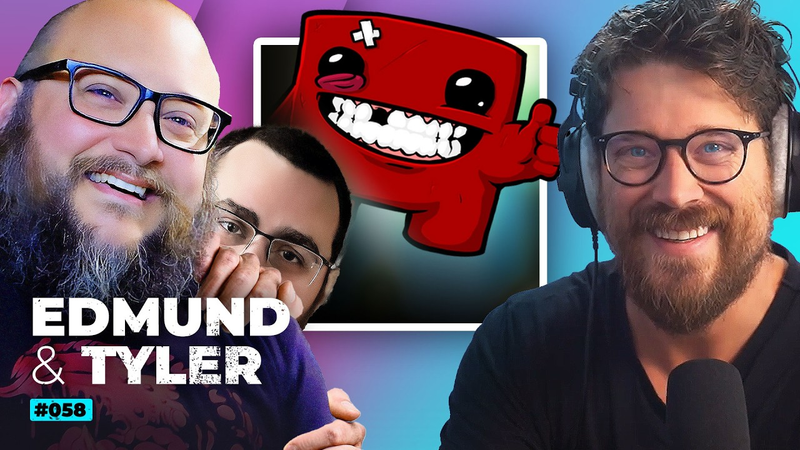
How To Make Games In 2026, 6 Years On 1 Game, Making Custom Engines (Edmund McMillen & Tyler Glaiel)
The modern independent game development landscape is defined by a tension between rapid, hyper-focused production cycles and the enduring viability of long-term, ambitious projects.
- Long-term projects like Mewgenics remain commercially viable by prioritizing unique, infinitely replayable gameplay over industry trends that favor shorter development cycles.
- Custom C++ engines can increase creative control by bypassing standard visual editors in favor of streamlined pipelines, such as integrating Adobe Animate for modular, vector-based character generation.
- Design philosophy should embrace intentional imbalance to drive player engagement rather than striving for perfect, sanitized equilibrium.

Which Games Should Be Olympic Esports? | Design Club
The integration of esports into the Olympic framework requires a strategic shift away from digital simulations of traditional physical sports toward titles that offer unique, high-skill competitive structures.
- Olympic esports should prioritize games with automated, objective scoring systems to eliminate the need for subjective human judging.
- Future selection criteria must favor titles that balance high technical skill ceilings with spectator accessibility, avoiding games that rely on excessive complexity or rote memorization.
- Rocket League, League of Legends, Counter-Strike, and Tekken are identified as ideal candidates due to their clear rulesets and established professional ecosystems.
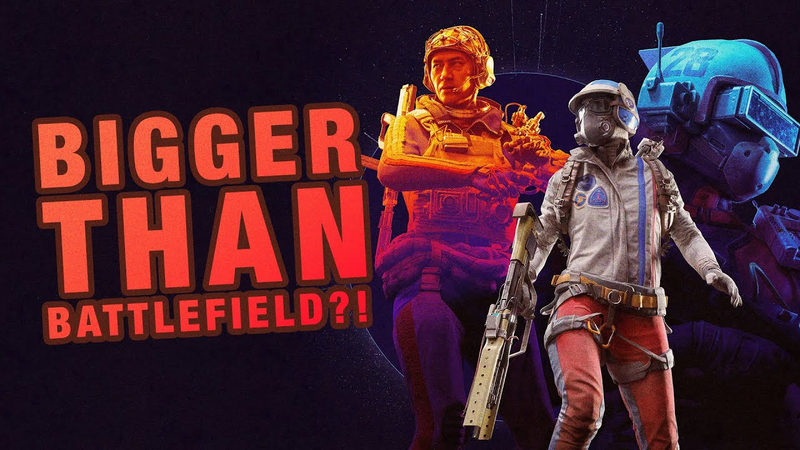
Extraction Shooters Go Mainstream? Arc Raiders Says Yes
The extraction shooter genre has reached a significant milestone with the commercial success of Arc Raiders, developed by Embark Studios and published by Nexon.
- Arc Raiders has achieved significant commercial success, generating over $100 million in revenue and selling more than 4 million copies.
- The game’s strong performance, highlighted by an 84 Metacritic score, positions it as a direct competitor to major franchises like Call of Duty and Battlefield.
- Nexon views the title as a critical win for its portfolio, particularly following the underwhelming market performance of Embark Studios' previous project, The Finals.