Game Design reports and market data
Documents
Getting Creative after World Changing Events with Dave Mervik | Game Dev Unchained Episode 255
The game development industry has undergone a fundamental transformation in response to the COVID-19 pandemic, shifting from traditional, office-centric models toward a flexible, output-based culture.
- The game development industry has transitioned from office-centric models to a flexible, output-based culture that prioritizes developer well-being and global talent acquisition over rigid nine-to-five schedules.
- Remote work has introduced the risk of 'self-crunching,' where the lack of physical separation between home and office leads to burnout and a narrowing of the personal experiences that fuel creative inspiration.
- Global crises, including the pandemic and social unrest, have shifted the industry's creative focus toward themes of social fragility, systemic failure, and the complexities of human experience under pressure.
The Four Types of Video Game Designers - Game Design Specializations - Extra Credits
The modern game development industry rarely requires a generalist designer; instead, it relies on specialized roles to manage the complex, multifaceted nature of game creation.
- Modern game development has shifted away from generalist roles toward four specialized design skill sets: content, level, systems, and experience design.
- Content designers specialize in narrative architecture, including lore, mission structure, and dialogue, requiring both creative writing and production-schedule discipline.
- Level designers manage the spatial and tactical aspects of a game, focusing on environmental flow, cover placement, and the strategic arrangement of hazards.
Behind the Audio of the Heroes of Star Wars Battlefront II
The audio design for Star Wars Battlefront II centers on the objective of creating an immersive, authentic soundscape that bridges multiple eras of the franchise.
- The audio team managed a roster more than twice the size of the previous game by implementing a modular sound patch configuration system.
- To prevent listener fatigue and maintain variety, designers created between five and twenty-five unique variations for individual sound effects.
- The development team utilized a data-driven approach that shared environmental assets, such as debris and reflections, to streamline production and optimize performance.
Don't Call Them Whales: F2P Spenders and Virtual Value
The free-to-play gaming industry is defined by a consistent revenue model where approximately 2% of the user base generates between 75% and 85% of total income.
- Approximately 2% of a free-to-play game's user base generates between 75% and 85% of total revenue.
- High-spending players are typically older, affluent professionals who view their in-game purchases as rational investments in a hobby rather than impulsive or compulsive behavior.
- Spending patterns among top users are consistent and long-term, mirroring the financial habits of enthusiasts in traditional hobbies like golf or music collecting.
Dialogue 101
Effective dialogue production in the gaming industry relies on rigorous pre-production data analysis and disciplined financial forecasting.
- Establish accurate dialogue budgets by conducting rigorous pre-production analysis that tracks character metrics, line counts, and the specific distinction between systemic and narrative dialogue.
- Ensure fiscal alignment by factoring union rates, studio fees, and session minimums into financial forecasts during the early development lifecycle.
- Prioritize specialized talent agencies over crowdsourced platforms to secure actors capable of delivering both emotional nuance and the physical intensity required for combat and death sequences.
Creating Interactive Film Scripts for 3D Adventures with Ink
The development of interactive narrative experiences requires a bridge between complex branching scripts and graphical game engines.
- Ink is an open-source narrative scripting language designed to allow writers to focus on prose while using lightweight markup to manage complex interactive logic and branching dialogue.
- The 'Inky' editor is a custom, open-source tool that enables writers to play through their scripts in real-time as they write, allowing for narrative development independent of the main game engine.
- Developers can integrate 3D game environments with Ink by using 'choices' as a mechanism to trigger specific game actions, such as character movement, object interaction, or camera transitions.
How has the industry changed with Jay Wilson | Game Dev Unchained Episode 254
The modern game industry is undergoing a fundamental transformation characterized by a permanent shift toward remote and hybrid work models.
- The game industry has permanently shifted toward remote and hybrid work models, which allow studios—particularly those with fewer than 45 employees—to access global talent pools and achieve higher productivity.
- Large-scale AAA projects frequently suffer from systemic inefficiencies, such as unrealistic scheduling and intense pressure, which often result in the release of unfinished products like Cyberpunk 2077.
- To combat the loss of institutional knowledge caused by high staff turnover and project-based team disbandment, successful studios are adopting long-term retention strategies like internal staff rotation.
Beyond Bots: Making Machine Learning Accessible and Useful
Machine learning is rapidly transitioning from a theoretical research discipline into a practical, scalable toolkit for modern game development.
- Machine learning is shifting from theoretical research to a practical toolkit for automating complex engineering tasks like character locomotion and physics-based behavioral modeling.
- Reinforcement learning, when implemented via iterative experimentation and defined reward functions, serves as a primary method for increasing development productivity and software reliability.
- Generative models—including grid search for neural network optimization, style transfer, and latent space interpolation—act as creative force multipliers for artists and designers.
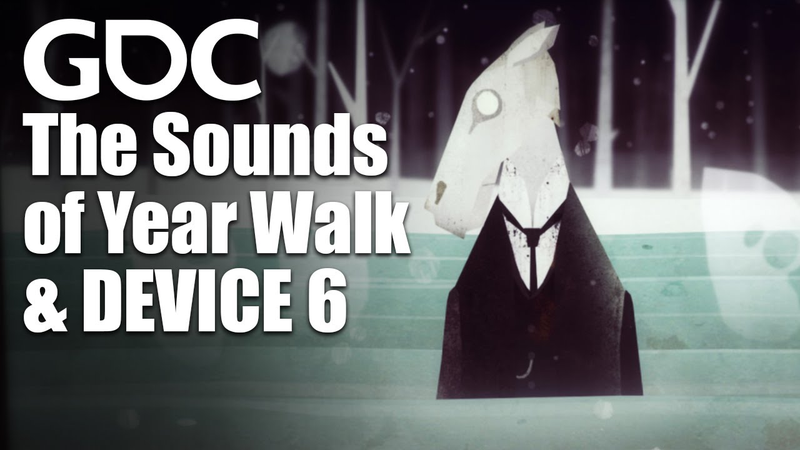
The Sounds of Year Walk and DEVICE 6
The audio design for the games Year Walk and Device 6, developed by Simogo, demonstrates how cohesive soundscapes can elevate interactive narrative experiences.
- To ensure music serves the game's atmosphere, avoid rigid metronomic timing; recording without a click track can create a more natural, organic flow that mimics environmental sounds like wind or breathing.
- Blur the lines between music and sound effects by sharing source audio assets with sound designers, who can then manipulate, pitch-shift, and layer them into transitions to create a cohesive sonic environment.
- Increase player emotional attachment to the soundtrack by creating moments where the game world acknowledges the music, similar to how characters in Nintendo's Zelda series interact with musical themes.
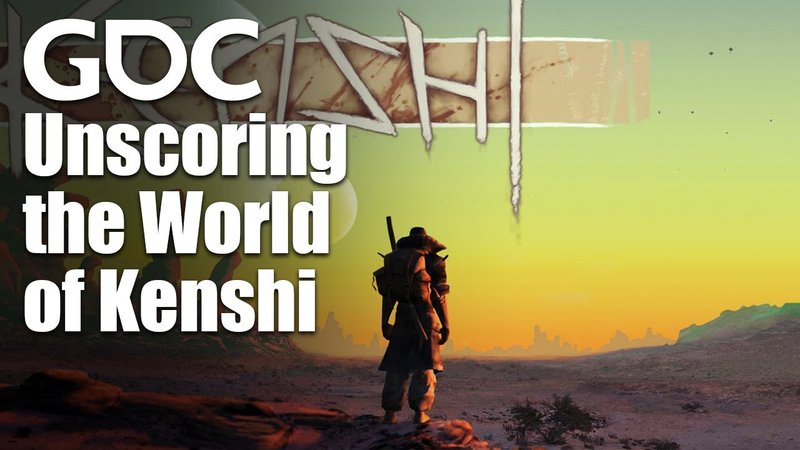
Unscoring the World of Kenshi
The development of the sandbox RPG Kenshi prioritized an audio landscape that reflects the game’s nihilistic, indifferent world rather than the player’s status as a hero.
- The Kenshi audio design philosophy prioritizes an indifferent world over the player, utilizing a self-generating music system that reacts only to environmental variables like biome and time of day rather than player actions.
- Players are given agency only through a music frequency slider, allowing them to define how often the engine triggers musical sequences, ranging from every minute to every hour.
- The soundtrack is composed of three distinct layers—drone, frame, and canopy—which are randomized and mixed to create an ambient soundscape that avoids the heroic, bombastic tropes of traditional RPGs.
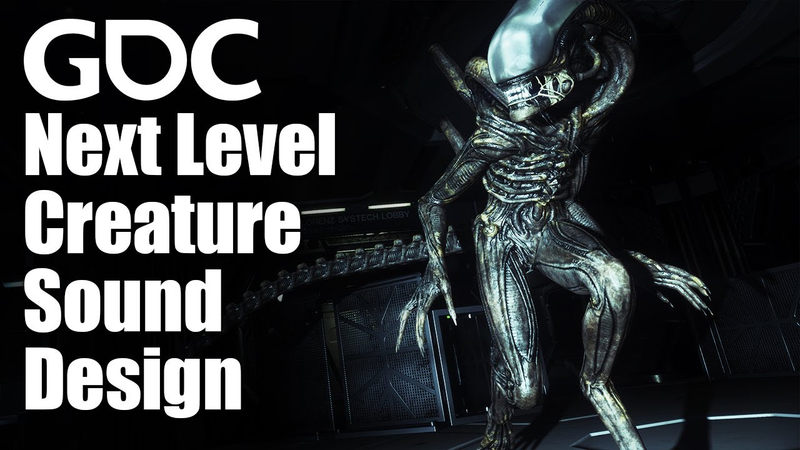
Next Level Creature Sound Design
Believable creature sound design hinges on the integration of character, variation, and perspective, requiring a rigorous pre-production phase that establishes a creature’s physical scale, origin, and vocal mechanics.
- Establish a consistent sonic identity by defining a creature’s physical scale, origin, and vocal mechanics during a rigorous pre-production phase.
- Create cohesive creature characters by layering diverse source materials, including human vocals, organic animal recordings, and non-literal textures like mechanical friction.
- Utilize high-frequency microphones to capture source audio that maintains clarity and fidelity after undergoing extreme pitch-shifting.
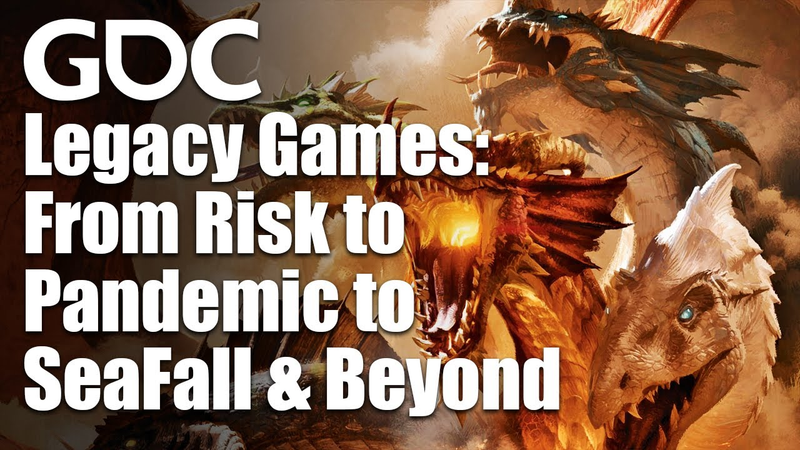
Legacy Games: From Risk to Pandemic to SeaFall & Beyond
The legacy board game genre represents a fundamental shift in tabletop design by challenging the industry’s traditional covenant that games must offer infinite, reset-based replayability.
- Legacy board games challenge the traditional industry assumption that infinite replayability is the primary value driver for consumers, proving that players are willing to engage with consumable, one-time experiences.
- The 'legacy' mechanic functions by breaking the covenant of board game permanence, allowing players to physically alter components—such as placing stickers or destroying cards—which creates a sense of freedom and narrative weight similar to coloring books or legacy-style digital games.
- Designing for 'legacy' play involves creating a sense of mystery and progression through sealed components, which incentivizes cooperative play as groups work together to unlock content rather than competing solely for victory.