Game Design reports and market data
Documents

Panel: What can Hypercasual Games Teach the World?
Hypercasual gaming operates as a highly competitive, data-centric sector that prioritizes rapid prototyping and ruthless execution over traditional long-term development cycles.
- Hypercasual game development requires a 'trial and error' mindset where developers must be willing to abandon prototypes quickly if data indicates a lack of market fit.
- Success in the hypercasual market is driven by creative iteration and testing, with publishers primarily focusing on Day 1 (D1) and Day 7 (D7) retention metrics rather than long-term D30 data.
- The industry is shifting toward a post-ATT (App Tracking Transparency) environment, necessitating a focus on user consent, accurate conversion mapping, and diversification of user acquisition channels beyond the traditional Facebook and Google duopoly.

Panel: What Does it Take to Create Real Social Games?
The modern social gaming landscape is undergoing a fundamental shift, moving away from a reliance on high-end visual fidelity toward a model centered on player agency, identity expression, and collaborative creation.
- Long-term engagement in modern social gaming is driven by player agency, identity expression, and collaborative creation tools rather than high-end visual fidelity.
- Developers must shift from a product-centric mindset to an ecosystem-based approach, treating community feedback and external platforms like Twitch and Discord as core gameplay components.
- The industry is moving away from a singular, monolithic metaverse model toward a diverse array of persistent, accessible digital spaces that function as social hangouts.

Superstar Session: Hypercasual Ideation - How #1 Hit Games Are Born
Hypercasual game development centers on the rapid identification and gamification of viral trends to capture immediate player interest.
- Hypercasual success relies on identifying viral trends and distilling them into a core mechanic that delivers immediate, intuitive satisfaction within a three-second video ad window.
- Development teams should maintain a high-velocity production cycle, aiming to prototype and launch new game concepts within a two-month window.
- Objective validation must take precedence over creative attachment, utilizing early-stage mock-ups to test and refine concepts based on data rather than personal preference.

Panel: Hybrid Monetisation, Subscriptions, Battle-pass - What is Best for You?
Modern game monetization relies on a nuanced balance between aggressive revenue generation and the preservation of long-term player engagement.
- Monetization strategies must be tailored to specific genres and audience expectations rather than relying on a universal model, ensuring paid content enhances the core gameplay loop.
- To mitigate negative perceptions of pay-to-win mechanics, studios should prioritize time-based progression and accessible rewards to foster sustainable community growth.
- Developers are shifting away from permanent A/B testing in favor of self-contained, limited-time live events to gather actionable data while minimizing the risk of public backlash.
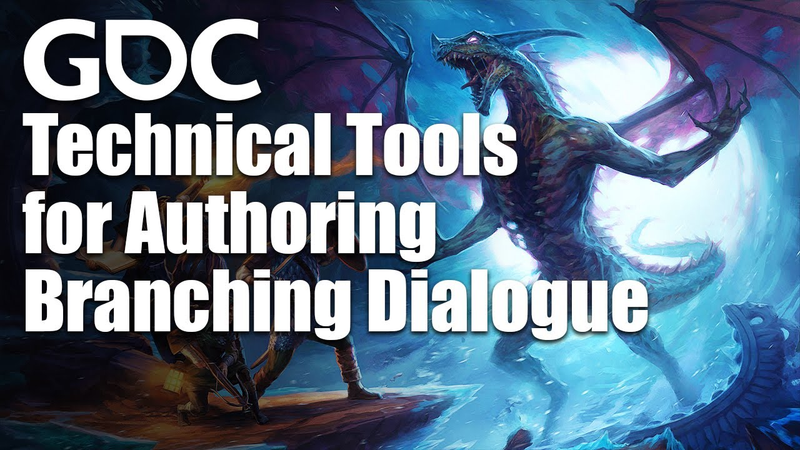
Technical Tools for Authoring Branching Dialogue
Effective narrative design in large-scale video games requires specialized, node-based authoring tools to manage the inherent complexity of reactive, branching dialogue.
- Obsidian Entertainment’s conversation editor utilizes a node-based visual tree structure that automatically spaces and organizes dialogue, replacing chaotic flowchart methods to manage projects with over 25,000 nodes.
- The tool integrates conditional scripting directly into the dialogue tree, allowing designers to regulate conversation flow based on player variables like skills, background, and quest status.
- A real-time conversation debugger connects to game engines via a UDP listener, enabling developers to monitor node states, test script conditions, and manipulate game variables during live play sessions.
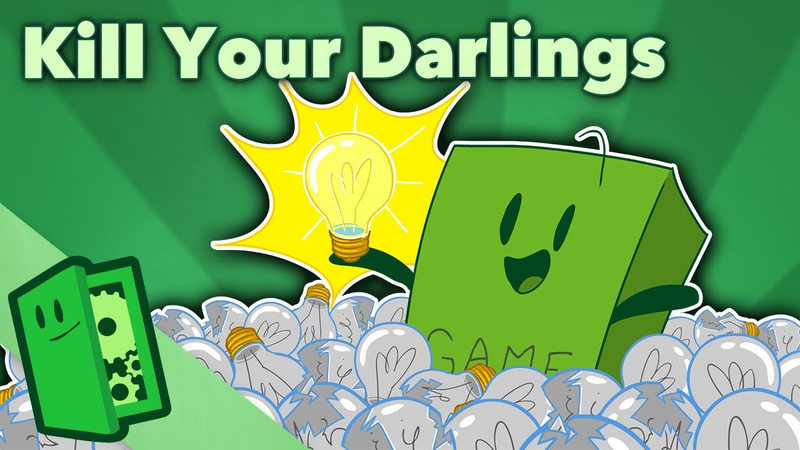
Kill Your Darlings - Iteration & Feedback - Extra Credits
Successful game design requires more than technical proficiency; it demands the ability to navigate the iterative process with emotional intelligence.
- High-level game design requires the ability to detach personal ego from the work to prioritize the overall health and success of the game.
- Designers should adopt a 'hold strong views weakly' mindset, where they advocate passionately for ideas but remain fully prepared to abandon them when evidence proves them ineffective.
- Objective assessment is essential for iteration; when a mechanic fails to function as intended, the designer must prioritize game balance over their initial vision.
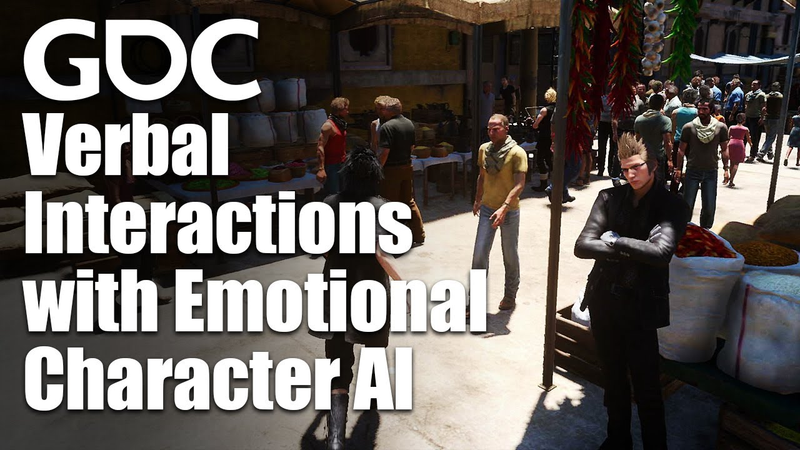
NPCs Have Feelings Too: Verbal Interactions with Emotional Character AI
The integration of advanced artificial intelligence into non-player characters (NPCs) marks a significant shift toward more immersive, language-independent interactions within virtual reality environments.
- NPCs utilize a conceptual mapping system that assigns 'semantic DNA' to objects and actions, enabling language-independent interpretation of player intent.
- Autonomous decision-making is driven by a utility-based scoring hierarchy that allows NPCs to evaluate their surroundings and respond without relying on scripted dialogue.
- Emotional states are generated using an OCC-inspired framework that assesses events based on valence and agency, while long-term mood and animation are maintained via a PAD (Pleasure, Arousal, and Dominance) model.

Loot Boxes: Legal Pitfalls and Loopholes
Global game monetization faces a fragmented regulatory landscape, necessitating a strategic approach to design and compliance.
- In the United States, there is no specific federal loot box regulation, but Apple requires games on the iOS App Store to disclose the odds of receiving items by category prior to purchase.
- China maintains the most stringent regulatory environment, requiring developers to disclose the specific odds for every individual item in a loot box and prohibiting 'compulsion loops' that encourage excessive spending.
- European regulations are currently fragmented by country, with Belgium and the Netherlands being the primary nations that have implemented specific restrictions on randomized, purchasable items.
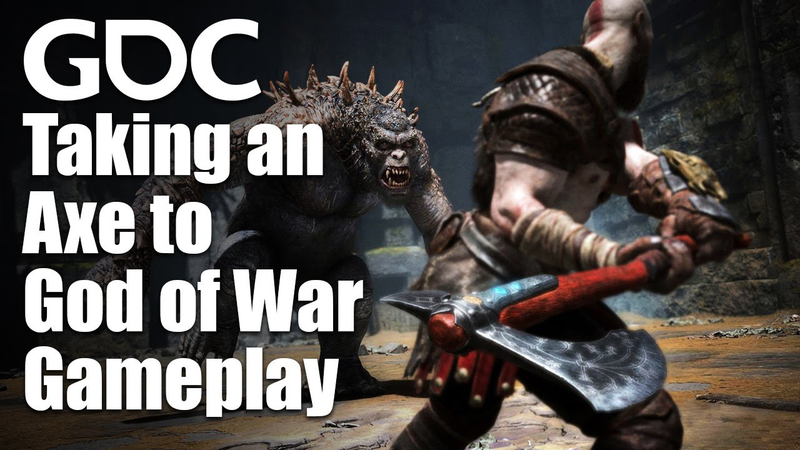
Taking an Axe to God of War Gameplay
The reinvention of the God of War combat system centers on transitioning from a wide-angle, crowd-clearing perspective to an intimate, third-person experience that emphasizes deliberate, tactical engagement.
- The combat system was redesigned from a wide-angle, crowd-clearing perspective to an intimate, third-person experience that prioritizes tactical, deliberate engagement.
- The transition from the Blades of Chaos to a recallable axe shifted the core gameplay loop toward precision, weight, and fluid, interruptible move sets.
- A new stun-based mechanic replaced traditional health-gated grabs, requiring players to manage targets strategically and utilize environmental interactions.
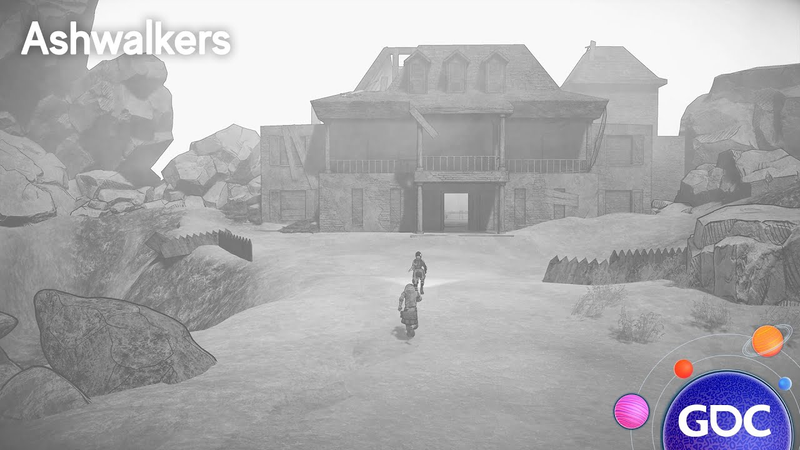
GDC Plays Ashwalkers with Herve Bonin and Matteo Gaulmier
Ashwalkers represents a strategic evolution from a student project at the École supérieure des métiers artistiques into a commercial narrative-driven survival game.
- Nameless13 developed Ashwalkers as a narrative-driven survival game that emphasizes player choice over mechanical skill, intentionally limiting the number of available options in critical moments to increase emotional tension.
- The studio maintained a lean development process by partnering with a publisher, Dear Villagers, to handle marketing and determine the optimal retail price point, which is set under $20.
- To ensure effective visual communication in a minimalist environment, the developers used a specific color palette—primarily red—to signify danger, blood, and critical points of interest.
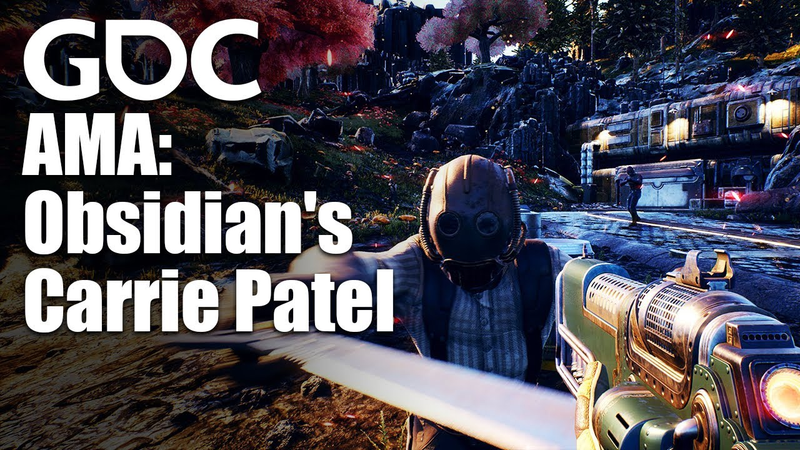
AMA: Q&A with Obsidian Entertainment's Carrie Patel
Carrie Patel, a game director and senior narrative designer at Obsidian Entertainment, outlines her approach to narrative design and game development, drawing on her experience with the Pillars of Eternity and The Outer Worlds franchises.
- Obsidian Entertainment integrates narrative design early in the development process, with writers and narrative designers serving as the same role to ensure world-building and systemic elements like item descriptions remain cohesive.
- When designing open-world RPGs, developers must account for diverse player psychographics—specifically those who prioritize combat, exploration, or deep character-driven storytelling—by providing multiple ways to engage with content.
- Narrative structure in open-world games cannot rely on a rigid three-act model because players may skip intended story beats; designers must instead focus on high-level narrative phases that remain engaging regardless of the order in which players encounter them.

The Art of FAITH: Horror at 192x160 Pixels
The development of the horror game FAITH serves as a case study in how strict aesthetic constraints and low-fidelity visuals can effectively generate dread and compete with high-budget, next-generation horror titles.
- The horror game FAITH achieves atmospheric dread by imposing strict technical constraints, including a 192x160 resolution, a limited color palette, and a 15 frames-per-second cap.
- The developer utilized rotoscoped animations—comprising 75 to 120 hand-traced drawings per sequence—to create an uncanny, lifelike contrast against the low-fidelity pixel environment.
- By leveraging the high level of abstraction inherent in early pixel art, the design successfully exploits the 'fear of the unknown' to compete with high-budget, next-generation horror titles.