1 free read left. Create a free account for unlimited reading + AI research.
Create free account
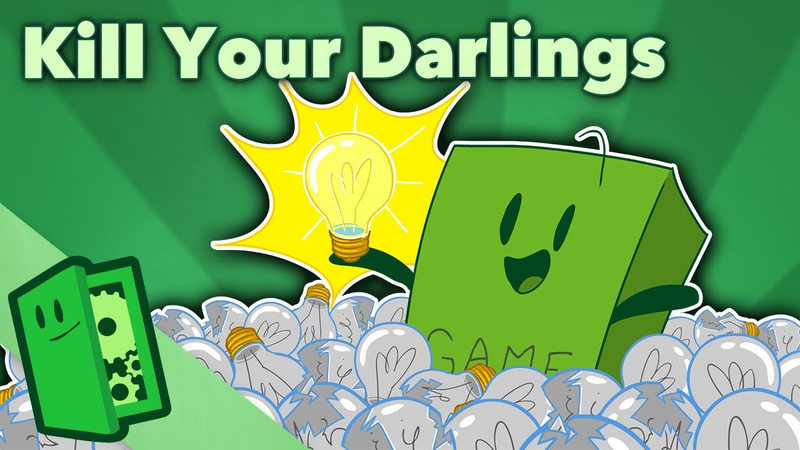
Kill Your Darlings - Iteration & Feedback - Extra Credits
Key insights
6 takeaways- 01Objective assessment is essential for iteration; when a mechanic fails to function as intended, the designer must prioritize game balance over their initial vision.
- 02Designers should adopt a 'hold strong views weakly' mindset, where they advocate passionately for ideas but remain fully prepared to abandon them when evidence proves them ineffective.
- 03Teams should frame collaborative design discussions as objective debates focused on finding the optimal solution rather than arguments centered on personal validation.
- 04High-level game design requires the ability to detach personal ego from the work to prioritize the overall health and success of the game.
- 05To maintain professional objectivity, designers should practice self-reflection by asking if a design would be considered successful if it had been proposed by a colleague.
- 06Viewing being wrong as an opportunity for improvement rather than a personal failure fosters a more efficient, honest, and collaborative development environment.
Ask AI about this video
Transcript
For aspiring game designers, it can often feel that in order to be successful in the industry, they should always have the perfect solution right at their fingertips for every design. That they need to nail every system, level, or piece of content right off the bat. In reality though, that's not really the case. Now of course, top-tier designers do need strong design skills honed by years of creating games and playing the games of others. But even the ideas of the most experienced designers need iteration or sometimes don't end up working at all, especially when considering the size and complexity of modern games. But when things don't work, you know what skill sets great designers apart from the rest? They've gotten really good at being wrong. Thanks so much to Brilliant for helping Extra Credits stay sharp. Real quick up top, please give the biggest EC welcome to this week's writer, former design lead on League of Legends and Valorant, Ryan Scott. Thanks so much, Ryan. Part of a game designer's job is to lay out the design of whatever
it is their team is working on. Be it a game system, piece of content, level, or narrative beat. However, even the best designers don't always get it right. And of course, this could be for a bunch of reasons. Playtesting might have revealed additional information, perhaps systems and content interacted with each other in an unexpected way, or maybe even a mechanic simply becomes impossible to balance. Because as the saying goes, even the best-laid plans often go awry. Also, I think there was a part about my site left out, but that's okay. And it's here where a designer's ability to be good at being wrong comes into play, both logically and emotionally. Now, how a designer logistically assesses when we're wrong and addresses that is a skill. And with practice, training, and intention, it's one we can all improve. For clarity's sake, let's call this side of the discussion the actionable element, meaning the practical steps designers can take to design more efficiently. It's almost scientific. One example Ryan has of this is from his time as the character team lead on Valorant. See, he had pitched Crusader, a frontline character with shield
abilities, a melee skill, the whole nine yards. But, after a ton of testing, iteration, and discussion, it just wasn't working. They just couldn't find a way to make these abilities feel right in a tactical shooter. So, eventually, he had to make the practical decision for the team to reimagine the character he had designed. Both to keep development moving and because it was the right decision for the game. Oh, and for you Valorant fans out there, Crusader eventually became the Swedish while ignoring powerhouse, Breach. Talk about some heavy lifting. Now, of course, we've discussed iteration before, like in our So You Want to Be a Game Designer and Fail Faster episodes. But, something we haven't talked about yet, and honestly, I haven't seen it discussed enough, is how to navigate the emotional challenge of being wrong. Because I would argue that is far more difficult. Moving your headspace from my ideas are special and precious to my design is shifting and I'm emotionally prepared for that can be really challenging. But, it's also super important because you simply can't fail faster if you internalize and take
things personally. And for a lot of us, it can be hard to accept that we'll never be as great at our craft as we could be unless we also spend some skill points leveling up that emotional intelligence. The emotional side of being good at being wrong is all about developing emotional resilience to critique after all, so that you can allow yourself to be curious rather than defensive, approachable instead of volatile. This is a cornerstone to the objective detachment that all professional developers need to do great work. Back in his Riot days, one mantra that Ryan tells me they used to use a lot was strong views, weakly held. And I just love that. It means that while it's important to be passionate and to push for the design that you think is right, it's also just as important to be prepared to change your mind a lot. Good designers should start their process by imagining that they're as likely to be wrong as they are to be right, so that they can be receptive to feedback and changes as they're needed. Because in development, those strong views will most certainly come to a head when you're trying to address an issue, likely with other strong views. And when
this happens, it's essential for your objective detachment that you frame these moments as a debate instead of an argument. And I know that difference might seem semantic, but it's really not. Because those words define why you're having the discussion and what the objective is. In a debate, the goal is for all involved to find the best solution. In an argument, however, the goal is to come out on top. In other words, debates try to focus on what is right, where arguments focus on I am right. So, it's important to remember that as a designer, your goal isn't to win arguments, it's to make the best possible game. Now, don't get discouraged if this seems difficult because, straight up, it is. Everyone does this, even people with a lot of practice. Because you're checking yourself, after all, and that's one of the hardest things to do in life. And remember, it's not about preventing the instinct, but rather recognizing it and then choosing to do something better. In the previous example with Crusader, Ryan really wanted to prove it could work. He was excited about expanding the possibility space and even had a bit of
a desire to make the character work because of the challenge. Plus, as the lead for the team, if he chose to, I mean, he did have the authority to push Crusader through, no matter what. But he remembers in that moment taking a look inward and asking the question, "Okay, if someone else had made this character and I saw all the feedback around it, would I feel like it was making the game better?" Which led him to checking his own biases and asking himself why it was he wanted this to work so badly and was it really to improve the game? Plus, if the character design was ever going to work, why hadn't it yet? After using these internal questions and training his brain to be in the right mindset, Ryan saw being wrong as an opportunity, not a failure. And by being open to being wrong, he could stay curious, keep his internal desires in check, and allow him to remain open to critique, all of which helps make the games he works on even better. Being wrong doesn't have to be a scary thing. It's something that great game designers know will happen and develop skills to address. In fact, I'd posit that it's an essential
component to fast, honest iteration. Plus, as you get better at it, you might even free yourself from the anxiety of being wrong, which is something I'm still working on, but I kind of see that as a whole 'nother level of mental freedom. So, embrace the fact that there are times when you'll be wrong. Prepare for it and if you do, you'll have a skill that's becoming more and more critical in our modern collaborative development environments. And dare I say, you may even be a happier person in your non-work life as well. And if you're looking to sharpen your other skills to complement your emotional resilience, then I think you're going to love today's sponsor, Brilliant. We know that many of you find folks who watch our channel are super passionate about leveling up your knowledge. And one thing we appreciate about Brilliant is that they're an interactive learning environment focusing on science, technology, engineering, and mathematics, you know, the whole STEM set, that can perfectly complement your YouTube learning. In fact, Brilliant is super effective because they know a great way to learn principles and have them stick is to actively engage with the topic you want to learn about. For instance, since the last time we told you about Brilliant,
Jeff's been so engaged that he expanded his initial goal of, you know, just brushing up on some Python into a more comprehensive one where now he's reviewing the fundamentals of computer science, which is probably why our meetings have been receiving patch notes the last few weeks. Whereas I have been really loving their daily challenges where they take complex topics like thermal conductivity and break it down into a puzzle that I can easily sink my teeth into. Like why is pizza cheese more likely to burn your mouth than the crust? But sad mouths aside, in today's tech-centric world, continuing your education is a vital part of staying at the top of your game. So, to learn more about how Brilliant can help you buff your brain while also helping out our channel in the process. Thanks for that. Go to brilliant.org/extracredits and sign up for link will also receive 20% off the annual premium subscription. I mean, if that's not a no-brainer, I don't know what is. A huge thanks to Ahmed Ziad Turk, Alicia Bramble, Casey Muscha, Dominic Valenciana, Joseph Blame, Kyle
Murgatroyd, and Oriels1 for being our legendary patrons.
Summary
Successful game design requires more than technical proficiency; it demands the ability to navigate the iterative process with emotional intelligence. While many aspiring designers feel pressured to produce perfect concepts immediately, the reality of modern game development is that even experienced professionals must frequently abandon or overhaul their ideas. The core competency that distinguishes high-level designers is the ability to be wrong, which involves both a logical, actionable approach to iteration and the emotional resilience to detach one’s ego from the work.
The actionable side of this process relies on objective assessment. When a design fails to function as intended—such as a character mechanic that disrupts the balance of a tactical shooter—designers must prioritize the health of the game over personal attachment to their initial vision. A practical framework for this is the mantra of holding strong views weakly. This mindset encourages designers to advocate passionately for their ideas while remaining fully prepared to abandon them when evidence suggests a better path exists. By framing collaborative discussions as debates rather than arguments, teams can focus on finding the optimal solution for the project rather than competing for personal validation.
Developing this level of emotional detachment is a critical, though difficult, skill. It requires constant self-reflection, such as asking whether a design would be considered successful if it had been proposed by someone else. By viewing being wrong as an opportunity for improvement rather than a personal failure, designers can maintain curiosity and openness to critique. Ultimately, cultivating this emotional resilience not only leads to more efficient and honest iteration but also fosters a healthier, more collaborative professional environment, allowing developers to focus on the primary goal: creating the best possible game.
























Comments