Game Design reports and market data
Documents
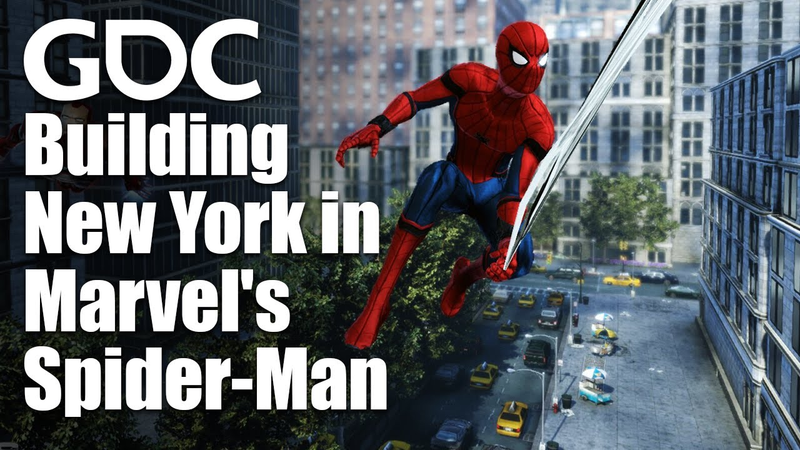
Building New York in Marvel's Spider-Man: It's Still Just Level Design
Creating a compelling open-world experience requires a rigorous, goal-oriented design framework that balances architectural realism with the demands of fluid player movement.
- Effective open-world design requires a rigorous hierarchy of objectives that balances architectural realism with the specific, fluid movement requirements of the player.
- Early-stage prototyping using scaled-down testbeds is essential to establish critical spatial metrics, such as building heights, street widths, and block sizes, before full-scale production.
- Strategic adjustment of environmental boundaries and traffic systems is necessary to resolve conflicts between realistic city layouts and the high-speed traversal mechanics required by the game.
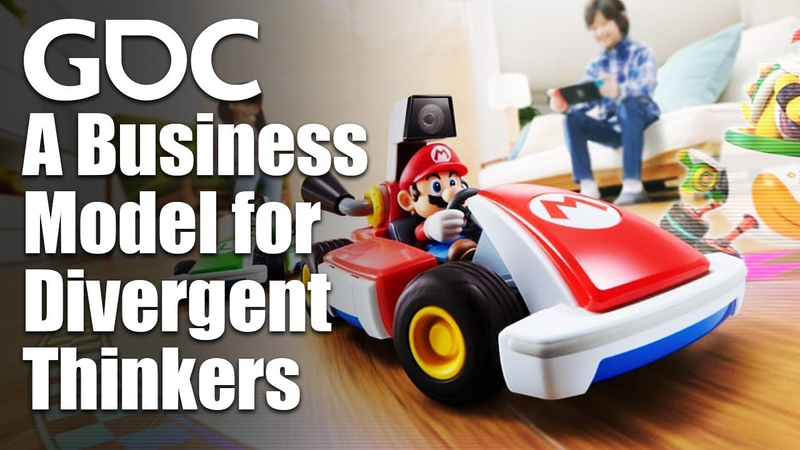
Making Magic: A Business Model for Divergent Thinkers
Velan Studios, founded in 2016 by Guha and Karthik Bala, operates on a business model centered on divergent thinking to create unique, breakthrough gaming experiences.
- Velan Studios, founded in 2016 by Guha and Karthik Bala, prioritizes divergent thinking and rapid prototyping to discover an 'atomic core of fun' before committing to full-scale production.
- The studio decouples R&D from traditional financing, favoring iterative experimentation over market studies or pitch decks to ensure projects possess a defensible 'secret sauce.'
- Projects must meet three core criteria: simplicity, technical defensibility that is difficult for competitors to replicate, and the potential for long-term player engagement.

Easy Modes Aren't Easy - Designing Dynamic Difficulty - Extra Credits
The design of difficulty settings in AAA action-adventure games is evolving from simple health and damage adjustments toward nuanced, accessible, and customizable experiences.
- The industry is shifting from binary difficulty tiers to granular, customizable gameplay settings that allow a broader audience—including casual players and those with disabilities—to engage with AAA action-adventure titles.
- The Last of Us Part II serves as the current industry benchmark by offering a comprehensive suite of accessibility features, including combat modifiers, motor-skill assistance, and puzzle-bypass options.
- Modern design strategies prioritize adjusting mechanics like enemy aggressiveness and reaction windows rather than relying solely on traditional health and damage scaling.
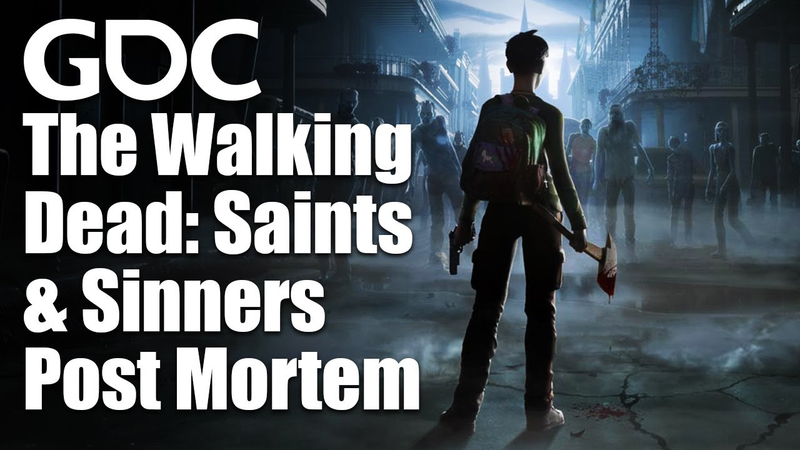
Making Great VR Games: A Postmortem on Skydance Interactive's The Walking Dead: Saints & Sinners
The Walking Dead: Saints & Sinners demonstrates that the path to successful virtual reality development lies in prioritizing player agency and physical immersion over scripted narrative sequences.
- Successful VR development requires prioritizing player agency and physical immersion through systemic gameplay loops rather than relying on scripted narrative sequences.
- Implementing a tension engine centered on resource scarcity, weapon degradation, and tactile inventory management forces players into high-stress survival cycles that enhance the game's realism.
- VR production timelines and iterative playtesting requirements significantly exceed those of traditional 2D game development due to the need for hardware-specific optimization.

Ask Me Anything: Q&A with Yacht Club Games' David D'Angelo
Yacht Club Games operates on a philosophy that prioritizes precise, mathematically defined mechanics to ensure player movement and combat feel intentional.
- Yacht Club Games maintains a team of 24 employees and manages project workflows by holding regular meetings every one to two weeks to track task progress and team capacity.
- The studio designs gameplay mechanics using strict numerical metrics, such as jump height and tile coverage, to ensure consistent level design and satisfying player movement.
- When developing DLC like Plague Knight or Specter Knight, the studio focuses on high-level concepts—such as 'feeling cool' or solving context-sensitive button prompts—to dictate character movement and ability constraints.
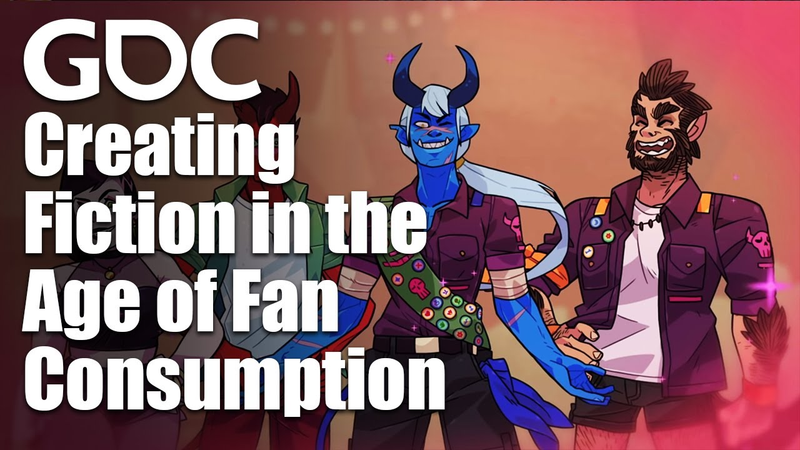
Fandom-Ready: Creating Fiction in the Age of Fan Consumption
Modern game development thrives by transitioning casual users into deeply invested participants through the creation of multi-layered, identity-driven fiction.
- The primary objective for modern game development is to convert casual users into long-term, invested participants by fostering a sense of belonging and identity-driven engagement.
- The 'first big choice' marketing technique uses identity-based decisions—such as elemental or zodiac-inspired archetypes—to allow players to project their personal identities onto the game immediately.
- Grounding complex or fantastic narratives in mundane, relatable environments like schools or workplaces reduces initial consumer apathy and increases emotional investment.

AMA: Q&A with Demon's Souls Creative Director Gavin Moore
The Demon’s Souls remake serves as a case study in balancing the preservation of a cult classic with the technical demands of a next-generation console launch.
- The Demon’s Souls remake preserved the original game's core identity by using the original code as a foundational framework to maintain specific AI behaviors, combat timing, and atmospheric design.
- Technical modernization for the PlayStation 5 launch focused on performance enhancements, specifically transitioning the game to 60 frames per second and integrating haptic feedback to deepen player immersion.
- The development strategy prioritized a disciplined creative vision that balanced the rigid constraints of a console launch-title deadline with the preservation of the source material's legacy.
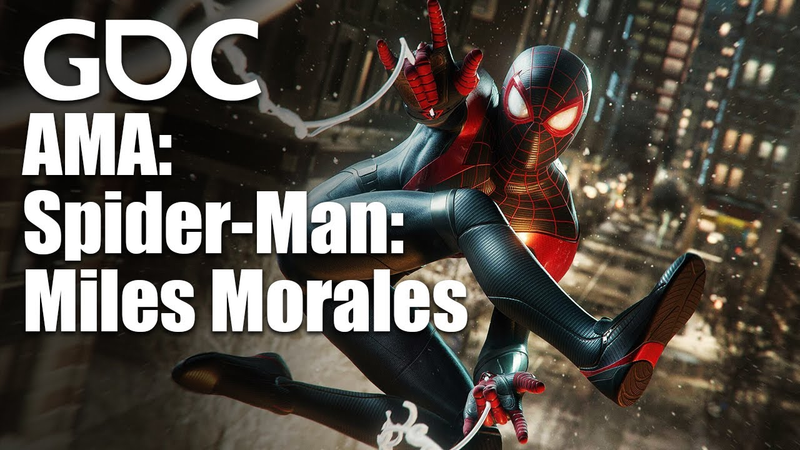
AMA: Brian Horton, Creative Director on Insomniac Games’ Marvel’s Spider-Man: Miles Morales
Marvel’s Spider-Man: Miles Morales serves as a focused character study that establishes Miles as a distinct hero through unique bioelectric powers and a narrative deeply rooted in the protection of his Harlem community.
- Insomniac Games utilized a focused, intimate narrative scope to establish Miles Morales as a distinct hero while maintaining high production quality during the logistical constraints of the global pandemic.
- The development team differentiated Miles from Peter Parker by creating unique combat styles and traversal animations, supported by specialized motion capture techniques.
- Authenticity in the Harlem setting was achieved through direct collaboration with local residents and story consultants, alongside the integration of American Sign Language via professional ASL actors.

AMA: Sucker Punch Productions Co-founder Brian Fleming talks Ghost of Tsushima
The development of Ghost of Tsushima represents a masterclass in iterative design and disciplined scope management within the AAA gaming landscape.
- Sucker Punch’s development of Ghost of Tsushima was a six-year project that required a significant shift in technical infrastructure, including increasing the game's map tiles from 100 to 1,200 and quadrupling their size, which caused major instability for 18 to 24 months.
- To maintain cultural authenticity, the development team partnered with Japanese experts to ensure every kanji character used in the game existed in the 13th century.
- The studio’s primary lesson on game design is that excessive complexity in individual systems can overwhelm the player; developers should prioritize simplicity in each component to ensure the overall experience remains cohesive.

The Passion Project: Catalyst to Creativity and Cure for the Stagnate
This presentation explores the role of personal passion projects as a vital tool for professional development, creative growth, and career longevity for artists in the entertainment and game industries.
- Treating personal art as a structured project rather than a sporadic hobby builds a portfolio that emphasizes genuine passion, which is often more compelling to employers than technical proficiency alone.
- Observational sketching, such as plein air or urban sketching, functions as 'muscle building' for the mind, improving an artist's fundamental understanding of structure, lighting, and composition.
- Prioritizing the strength of a core idea over technical polish by leaving sketches intentionally rough encourages viewer engagement, as the audience projects their own imagination into the undefined areas.

A.I., Creativity & Gamestorming | PocketGamer.Biz RoundTable
Artificial intelligence is fundamentally reshaping the game development lifecycle, transitioning the industry from manual, rule-based programming toward data-driven, real-time creative processes.
- AI is shifting game development from manual, rule-based programming to data-driven, real-time creative processes, significantly reducing development costs and time-to-market.
- Generative AI tools are democratizing production by allowing smaller teams to create high-quality content previously restricted to large-scale, well-funded studios.
- The industry is transitioning toward viewing AI as a job enhancer that offloads repetitive technical burdens, such as 3D asset generation and NPC behavior simulation, to prioritize high-level innovation.
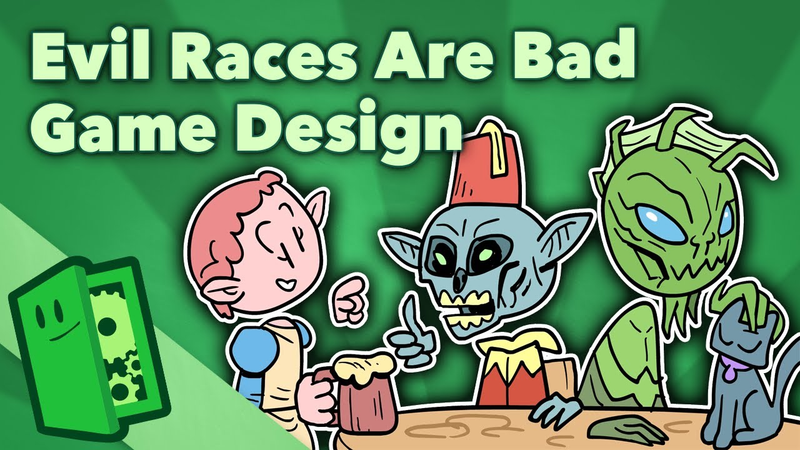
Evil Races are Bad Game Design - Bioessentialism & Worldbuilding - Extra Credits
The practice of assigning inherent moral traits to entire species in game design, often referred to as biological essentialism, is fundamentally flawed and limits the potential for compelling storytelling.
- Assigning inherent moral traits to entire species, known as biological essentialism, limits narrative depth by reducing complex characters to static environmental hazards.
- Treating entire races as universally evil removes player agency by pre-determining the morality of opposition before any in-game interaction occurs.
- Designers should shift from species-based morality to individual choice, where evil is defined by an actor's decisions rather than their biological birth.