1 free read left. Create a free account for unlimited reading + AI research.
Create free accountWhitepaper Journal of Games, Game Art, and Gamification
1 free read left. Create a free account for unlimited reading + AI research.
Create free accountWhitepaperJournal of Games, Game Art, and Gamification
Children aged 9-12 are increasingly reliant on digital technology and sedentary entertainment.
This project addresses the decline of traditional Indonesian games among Generation Z, specifically children aged 9–12, who are increasingly reliant on digital technology and sedentary entertainment. The primary objective is to preserve cultural heritage by reintroducing the traditional game Gobak Sodor through a modern, interactive multiplayer arcade table. By blending physical movement with digital gameplay, the project seeks to dispel the misconception that traditional games are obsolete or unengaging, while simultaneously promoting social interaction and physical activity.
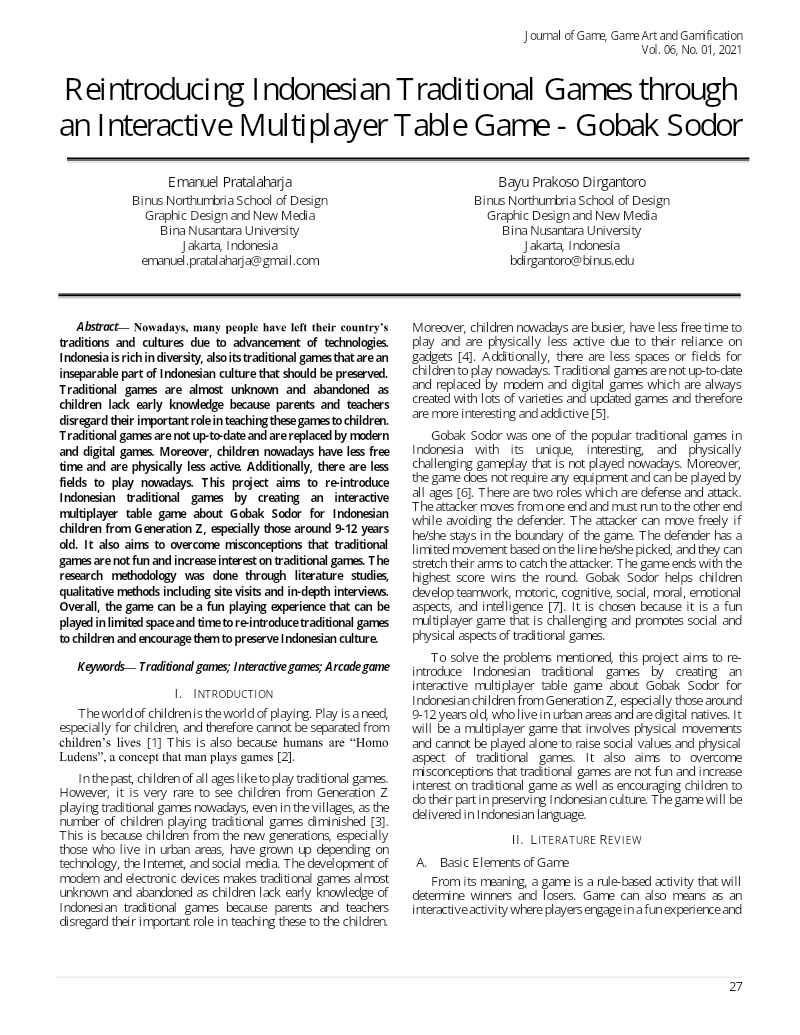
The research methodology employed a qualitative approach, utilizing literature reviews, site visits to cultural institutions, and in-depth interviews with traditional game experts and target users. Interviews with children revealed that while many are aware of traditional games, participation is inconsistent and often limited by a lack of available space or early exposure. Experts emphasized that for such games to remain relevant, they must retain their original social and physical dynamics while utilizing modern design principles, such as simple controls and engaging visual aesthetics, to capture the interest of digital natives.
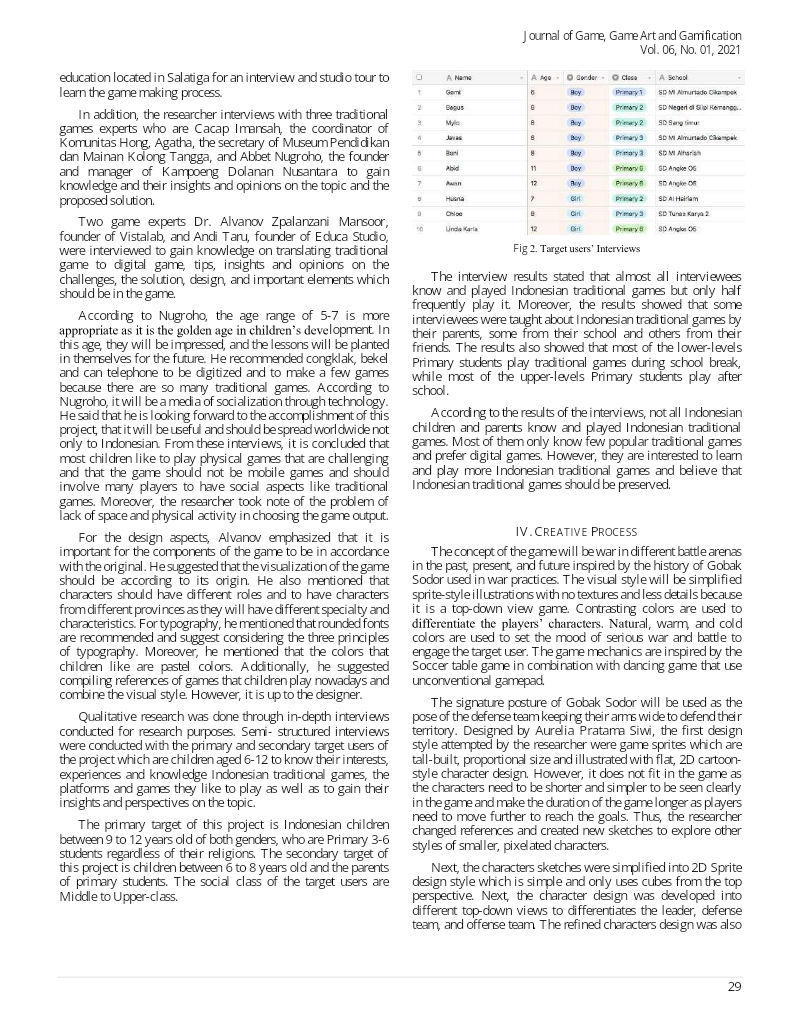
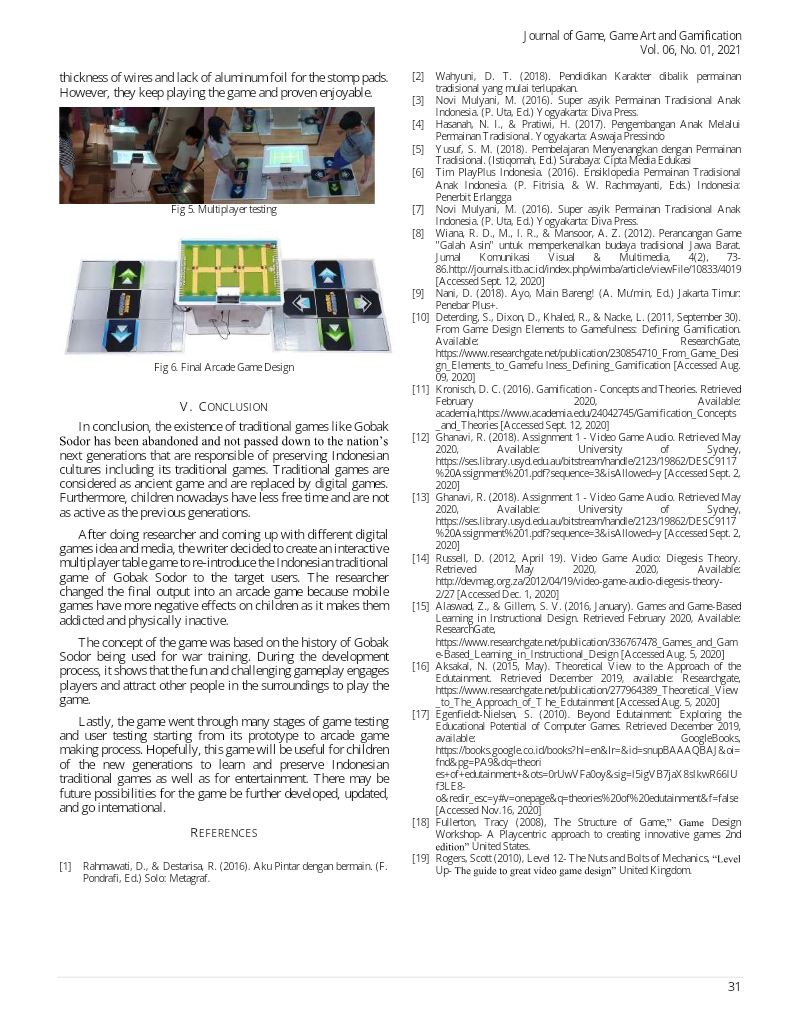
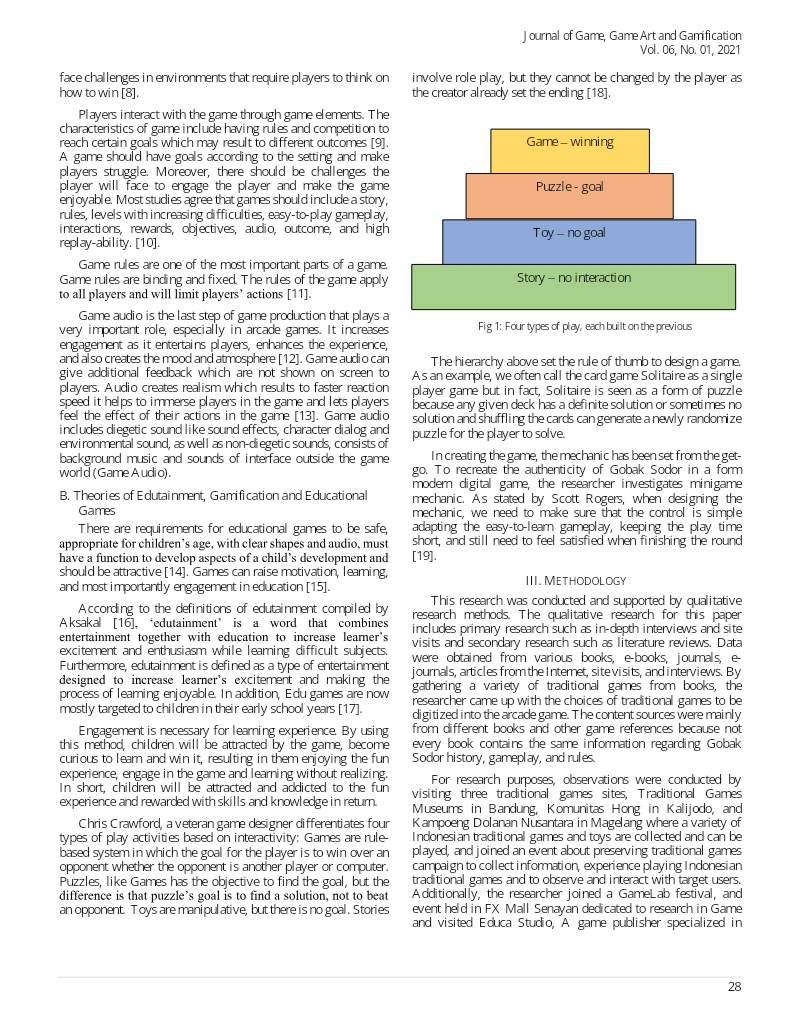
The development process involved iterative prototyping, testing, and refinement of game mechanics, character design, and physical hardware. The final arcade design utilizes a top-down, sprite-based visual style with contrasting colors to differentiate roles, inspired by the historical use of Gobak Sodor in war training. User testing confirmed that the interactive table format successfully engages children, providing a fun, competitive experience that encourages teamwork. The project concludes that by transforming traditional games into accessible, interactive arcade experiences, it is possible to foster a renewed interest in Indonesian culture among younger generations, with potential for further expansion and international application.
Journal of Games, Game Art, and Gamification · 2026
Bina Nusantara University · 2026
Journal of Games, Game Art, and Gamification · 2026
Bina Nusantara University · 2025
Journal of Games, Game Art, and Gamification · 2025
Journal of Games, Game Art, and Gamification · 2025
Journal of Games, Game Art, and Gamification · 2025
Journal of Games, Game Art, and Gamification · 2025
Journal of Games, Game Art, and Gamification · 2025
Journal of Games, Game Art, and Gamification · 2025
Journal of Games, Game Art, and Gamification · 2025
Journal of Games, Game Art, and Gamification · 2025
Journal of Games, Game Art, and Gamification · 2022