Funding reports and market data
Documents
Scaling a Games Studio: How to Win?
Early-stage game studios face significant risks when founders become overly attached to initial concepts, often leading to excessive capital expenditure on unproven ideas.
- Mitigate early-stage financial risk by prioritizing rapid prototyping and market validation through ad testing before committing to full-scale development.
- Scale by adopting a decentralized, horizontal organizational structure that treats individual teams as independent startups to preserve speed and agility.
- Embed core values into hiring and performance review processes from the outset to ensure cultural alignment, as culture is defined by the trade-offs made during development.

Panel: How to use UA Funding Effectively
Effective user acquisition in the modern gaming landscape requires a departure from simple spending volume in favor of agility, fundamental optimization, and strategic alignment.
- Successful user acquisition now requires prioritizing core fundamentals like app store optimization, retention mechanics, and monetization strategies before scaling any advertising budgets.
- To counter the loss of granular user data due to privacy shifts, studios must transition to predictive lifetime value models, creative-led strategies, and media mix modeling.
- Developers can mitigate post-IDFA constraints by using Android performance data as a proxy and investing in unified SDKs to improve data synthesis.
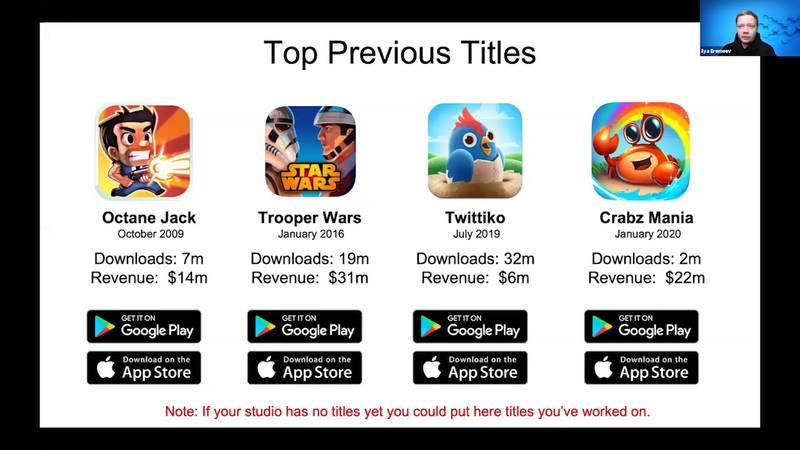
The Perfect Funding Pitch Deck PG Connects Digital #2
Securing venture capital in the gaming industry requires a disciplined, ten-slide framework that prioritizes transparency, team pedigree, and data-backed business logic.
- Investors prioritize the founding team as the primary asset, evaluating candidates based on previous industry experience and their ability to articulate a clear company mission.
- A successful pitch deck requires a disciplined ten-slide framework that balances technical game mechanics with professional maturity and operational strategy.
- Financial rigor is mandatory, requiring detailed profit and loss statements, burn rate analyses, and precise capital requirements to establish credibility.

Panel: 2020 M&A and Investment Overview, Expectations & Consequences PG Connects Digital #2
The global gaming industry demonstrated remarkable resilience throughout 2020, maintaining robust investment and merger and acquisition activity despite the logistical disruptions caused by the COVID-19 pandemic.
- The gaming industry maintained robust M&A and investment activity throughout 2020, driven by increased player engagement and revenue growth despite pandemic-related logistical disruptions.
- Investors are shifting focus toward studios that demonstrate operational sophistication, prioritizing those with proven long-term financial viability over purely creative projects.
- To secure funding, developers must master the 'value pyramid,' which requires integrating live operations, sophisticated monetization strategies, and effective user discovery.
Starting a New Game Studio | 3 CEOs Talk Funding!
The current landscape for launching a game studio is exceptionally favorable, driven by a rapidly expanding global market, the democratization of development tools, and a surge in venture capital interest.
- Founders must align their long-term business strategy with their chosen funding model early, choosing between bootstrapping for creative independence or seeking venture capital for mass-market scaling.
- Financial planning for new studios requires a 50 percent capital buffer to effectively mitigate risks associated with development delays.
- Investors prioritize teams that demonstrate concrete progress through playable prototypes, making the fundraising process a relationship-driven and time-intensive endeavor.

Investing in Game Startups | Venture Capital ft. London Venture Partners, Konvoy, and Transcend
Investment strategies in the gaming sector have shifted toward prioritizing experienced founding teams and sustainable community-building over speculative trends like the metaverse.
- Investment strategies have shifted away from speculative trends like the metaverse toward prioritizing experienced founding teams and sustainable community-building.
- Seed and Series A valuations in the gaming sector have declined by approximately 20% as founders prioritize deal certainty over aggressive growth.
- Industry success is now defined by long-term player retention and the creation of persistent, economy-driven digital spaces rather than traditional hits-driven models.

Prepare to Pitch - PocketGamer.biz RoundTable
The current indie game market is defined by intense competition and a low barrier to entry, necessitating that developers master the art of pitching to secure essential resources.
- A successful pitch must clearly articulate a game's unique selling point, genre, target platform, and monetization strategy while providing a playable build or high-quality gameplay footage.
- Developers should prioritize identifying publishers whose specific portfolios and business goals align with their project to bridge the gap between creative production and user acquisition.
- The primary objective of a pitch is to demonstrate a clear value proposition rather than simply requesting capital, as publishers provide essential risk mitigation, marketing expertise, and funding.

What COVID19 Closing all Game Dev Events Means for Indie Dev with Renee Gittins | Game Dev Unchained
The cancellation of major industry gatherings like GDC and E3 during the COVID-19 pandemic forced a rapid, structural transformation within the global game development sector.
- The cancellation of major physical events like GDC and E3 forced a permanent transition to remote-work models, which expanded the global talent pool while exposing infrastructure vulnerabilities in AAA studios.
- Independent developers are increasingly mitigating financial instability by prioritizing self-reliance, digital marketing, and the cultivation of strong personal brands to maintain project visibility.
- The industry is shifting away from unsustainable crunch culture toward talent-focused practices, with studios now competing for professionals by offering improved compensation and work-life balance.
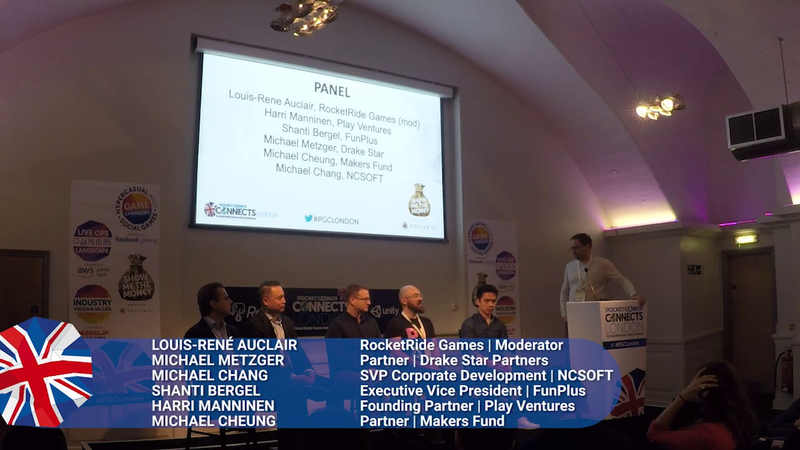
Panel: Pitch Perfect: How to Raise Funding from Investors
This panel discussion from the 2020 Pocket Gamer Connects London event features a group of venture capitalists, corporate investors, and investment bankers analyzing the current state of the gaming industry and the mechanics of successful fundraising.
- The gaming industry is currently in a 'golden age' defined by high capital availability, a massive global addressable market, and a commoditized technology stack that facilitates multi-platform development.
- Mobile game development and marketing now require significant capital, with competitive budgets often reaching $10 million to $15 million per title.
- Investors prioritize the 'Holy Trinity' of criteria: a management team capable of pivoting, a presence in a high-growth market segment, and a sustainable competitive advantage or barrier to entry.

Panel: VC in Games
Venture capital investment in the gaming sector is currently defined by a rigorous focus on scalable business models and leadership capability rather than individual creative concepts.
- Venture capital investment in gaming is currently prioritizing scalable business models and leadership capability over individual creative concepts, with a target of achieving 10x returns.
- The primary investment sweet spot for gaming firms currently sits in funding rounds ranging from $1 million to $7 million.
- Investors are shifting their focus away from content-heavy studio models toward platform technologies, cloud-based infrastructure, and data-driven monetization tools.
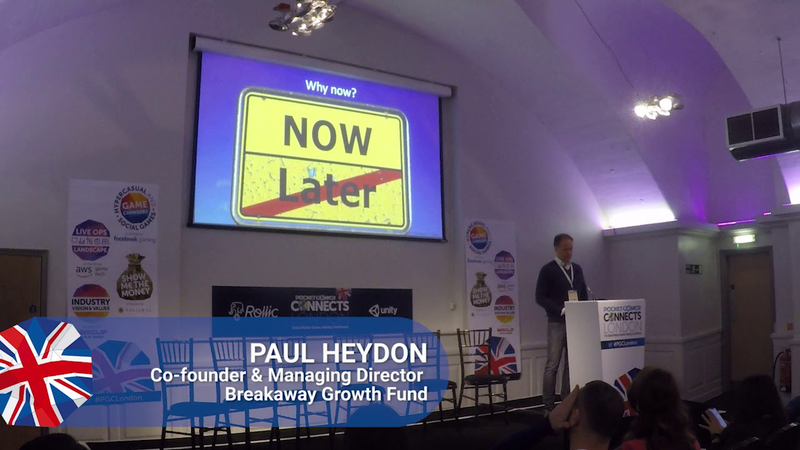
Fundraising 101
Fundraising for game industry startups requires a strategic, high-level approach that prioritizes narrative, vision, and relationship-building over mere technical presentation skills.
- Fundraising success depends on a founder's ability to articulate a compelling personal narrative and a vision that demonstrates how their business will materially change the game industry.
- Founders must prioritize building relationships with specific, high-value individual investors rather than utilizing broad, impersonal outreach strategies.
- Securing investment should be treated as a long-term, strategic game of chess rather than a transactional sprint, focusing on building rapport through unique industry insights and milestone updates.

Investing in Esports – The Current Meta
The current esports investment landscape is characterized by significant growth potential tempered by structural immaturity and a lack of standardized valuation metrics.
- The esports sector currently lacks a proven, replicable business model, leading to consistent profitability struggles for most entities outside of game publishers.
- Institutional investment is hindered by a lack of standardized valuation metrics and a scarcity of companies prepared for Series A funding, despite a robust early-stage seed ecosystem.
- Market valuations are frequently inflated by speculative investments in franchise slots and team ownership rather than being driven by sustainable technology or platform growth.