Funding reports and market data
Documents
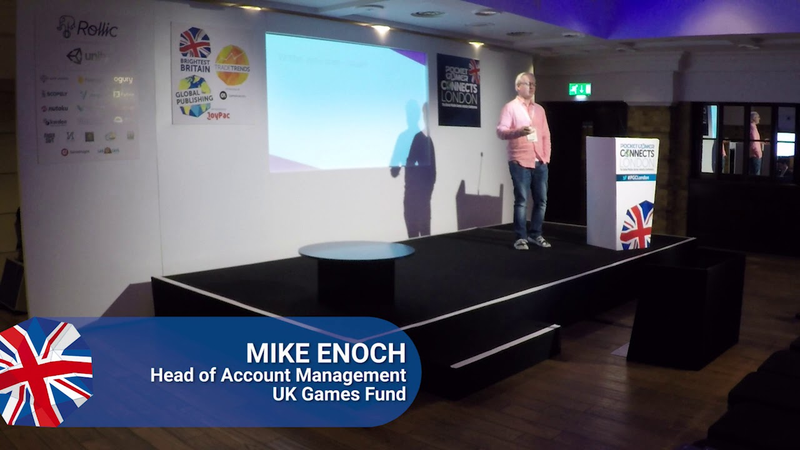
UK Games Fund – 2020 Opportunities
The UK Games Fund, a not-for-profit organization operating under UK Games Talent and Finance CIC, provides critical financial and developmental support to early-stage game developers across the United Kingdom.
- The UK Games Fund provides early-stage developers with up to £25,000 in total grant funding, consisting of an initial £5,000 grant followed by a potential £20,000 award.
- The program targets small studios with fewer than 10 employees, specifically aiming to bridge the gap between initial concept development and market readiness.
- The 2020 funding cycle follows a structured timeline: initial video pitches and online applications lead to March interviews, a summer development phase, and an autumn showcase at events like EGX.
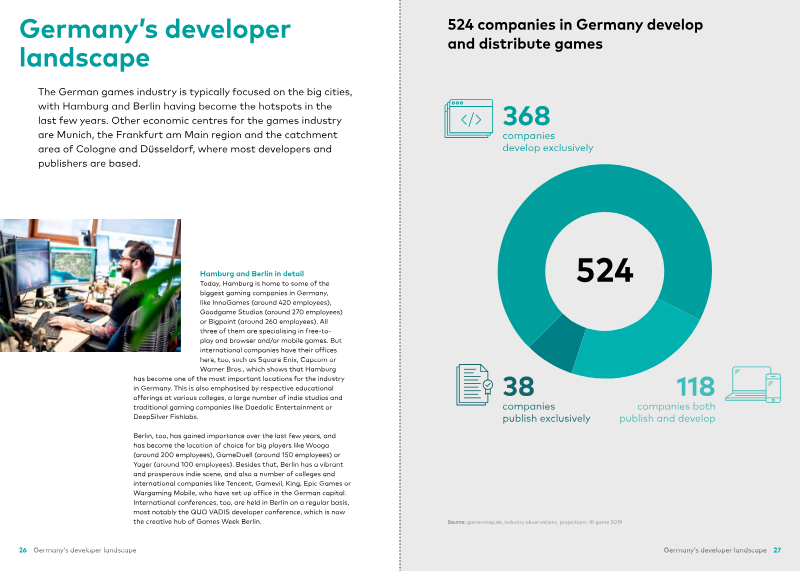
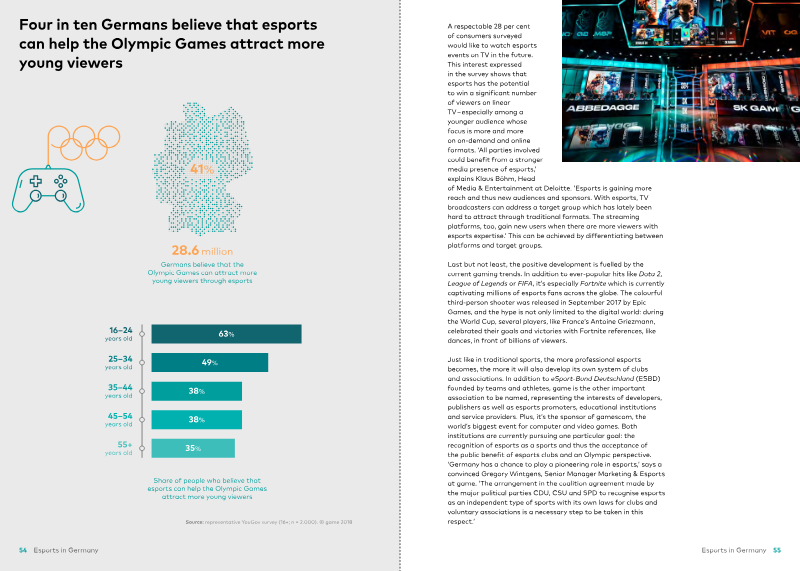
The German Games Industry 2019
Germany stands as a premier global games market, characterized by a robust economic ecosystem and a strategic commitment to long-term growth.
- The German games market reached record revenues of 4.4 billion euros in 2019, driven by a domestic player base of 34 million people.
- Revenue growth is increasingly fueled by in-game purchases and subscription models, which have successfully offset declines in hardware sales.
- The federal government launched a 50-million-euro funding program to transition the country from a consumer-focused market into a hub for domestic game development.
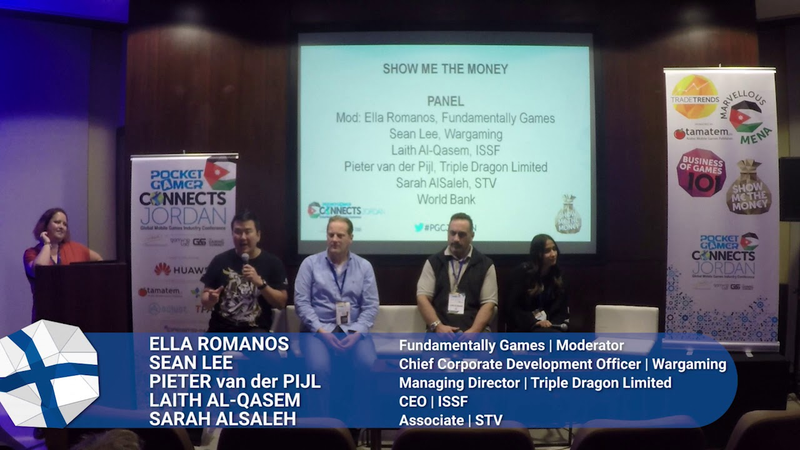
Panel: Inside the Dragons Den - How to Talk to Investors
Securing investment in the gaming industry requires a fundamental shift in perspective, moving away from a singular focus on game design toward the development of a scalable, institutionally managed business.
- Investors prioritize the founding team's management capability, cohesion, and commercial foresight over the specific merits of a single game design.
- To secure institutional funding, studios must transition from project-based entities into scalable, professionally managed businesses with robust organizational structures.
- Fundraising is a multi-month process that requires early engagement with investors well before capital reserves are depleted to ensure sufficient runway for prototyping.
Workshop: Pitch Perfect
Securing investment in the gaming industry requires a strategic shift in focus depending on the company’s maturity and the specific funding model pursued.
- Investors prioritize the management team’s execution capability and character over the specific game concept, looking for evidence of organizational tenacity and the ability to manage a title's full lifecycle.
- Fundraising must be treated as an iterative, multi-stage process where developers transition from project-based financing for early development to a long-term business vision for venture capital scaling.
- A successful pitch must balance creative vision with data-backed market viability, demonstrating a clear and sustainable path to generating significant financial returns.
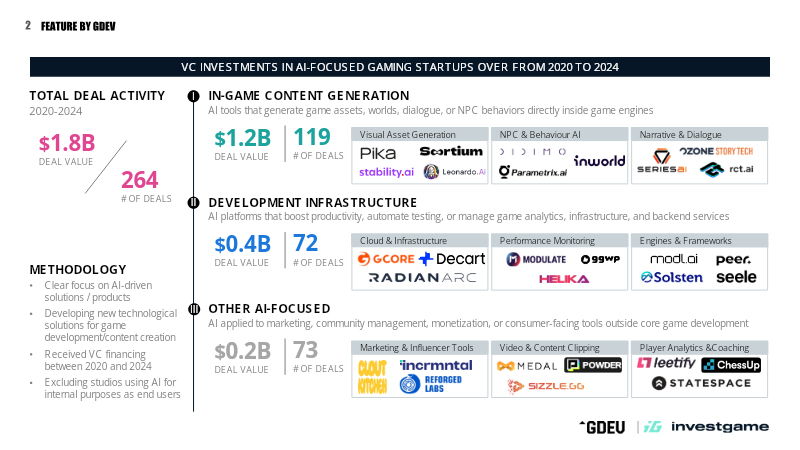
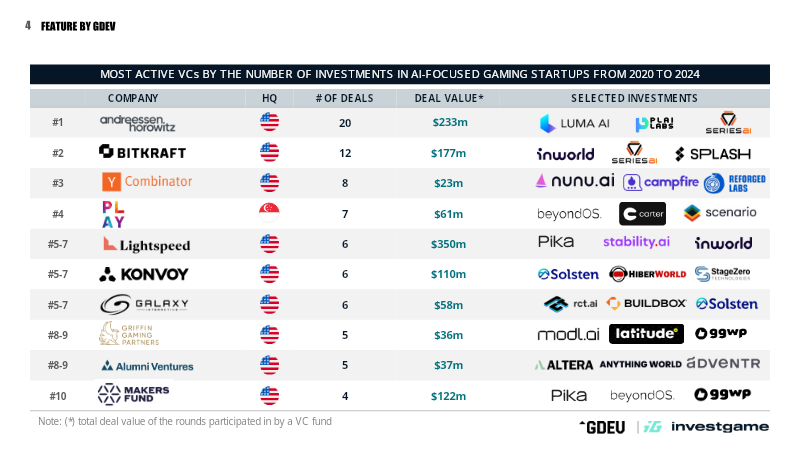
AI's Ever-Growing Presence in Gaming: $1.8B in VC Investments
Venture capital investment in AI-focused gaming startups has experienced significant growth, totaling $1.8 billion between 2020 and 2024.
- Venture capital investment in AI-focused gaming startups reached $1.8 billion between 2020 and 2024, with deal value growing at a 35% compound annual rate from 2022 to 2024.
- AI-focused startups now account for approximately 65% of all gaming infrastructure deal activity, reflecting a strategic pivot toward specialized verticalized tooling over general platform investments.
- In-game content generation tools lead the market with $1.2 billion in funding across 119 deals, followed by $0.4 billion for development infrastructure and $0.2 billion for marketing and analytics.


Investment Activity Report Q1–Q3 2020
The report documents investment activity in the global gaming industry from January to September 2020, covering mobile, PC & console, multiplatform, VR/AR, cloud-native and esports segments.
- The global gaming industry saw $27.5 billion in total deal value across 1,000 transactions during the first nine months of 2020, with gaming-specific deals accounting for $15.3 billion.
- M&A activity was defined by large-scale consolidation, led by Microsoft’s $7.5 billion acquisition of ZeniMax and Zynga’s $2 billion purchase of Peak Games, with Tencent, Zynga, and Microsoft collectively exceeding $11 billion in deal value.
- Public offerings were the primary driver of capital, generating $9.2 billion from 51 IPOs and PIPEs, while private venture investments contributed $4.7 billion across 254 rounds.
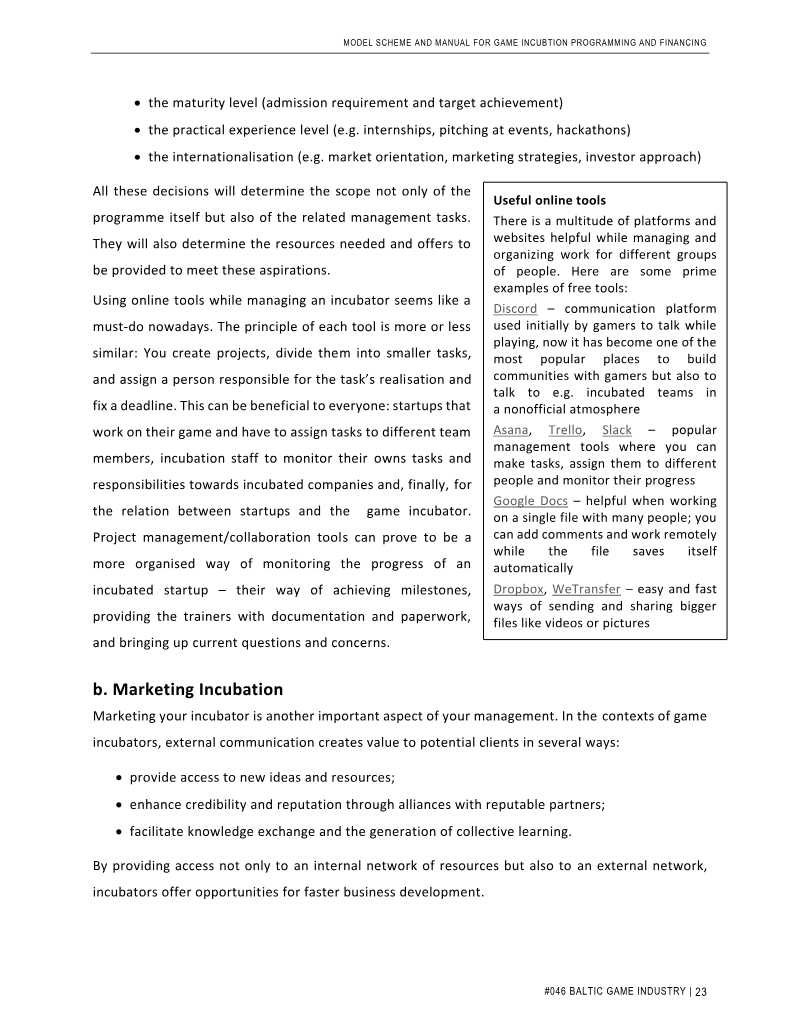
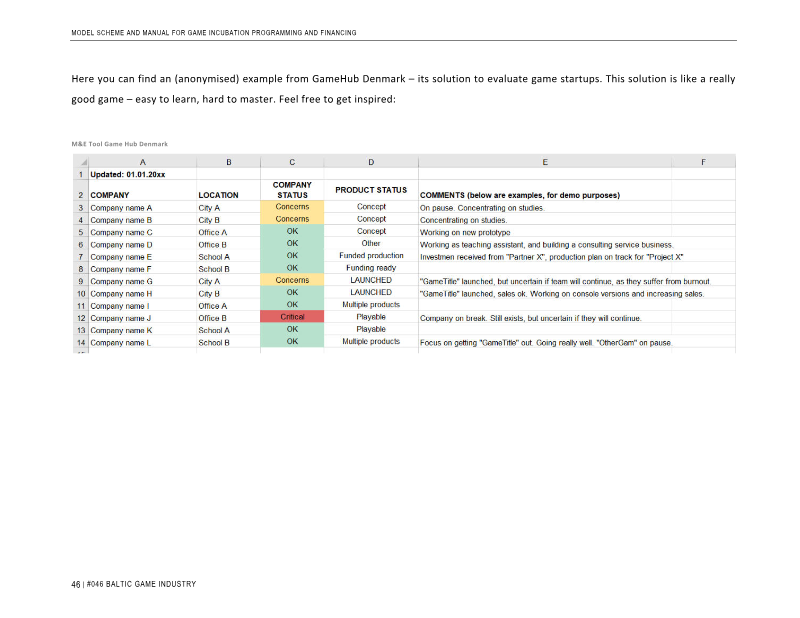
Model Scheme and Manual for Game Incubation Programming and Financing: Baltic Games Industry
The Baltic Sea region is currently undergoing a strategic transformation aimed at establishing itself as a globally competitive hub for game development.
- Most game incubators in Europe, especially those for game creators, are primarily funded by public sources, with private initiatives being a minority.
- Establishing a sustainable game incubator often takes over 5 years to break even, with only 40.8% of business incubators aiming to break even as part of their business plan.
- Game incubation programs can be structured in various ways, including long-term incubation (1 year+ for medium-maturity startups) and short-term acceleration (3-4 months for high-maturity startups, often involving equity exchange for funding).
White Paper on Spanish Video Game Development 2020
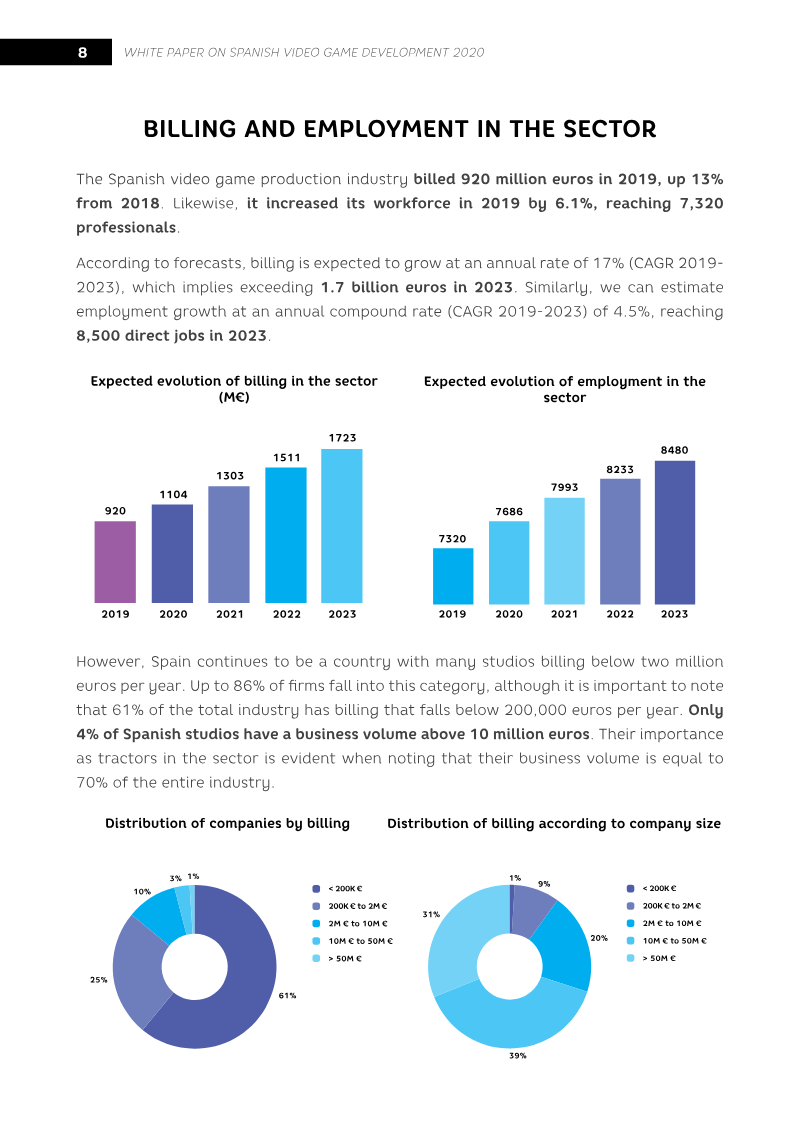
The Spanish video game industry represents a robust and expanding economic sector, generating 920 million euros in revenue and employing 7,320 professionals as of 2019.
- The Spanish video game industry billed 920 million euros in 2019, a 13% increase from 2018, and is projected to exceed 1.7 billion euros by 2023 with an annual growth rate of 17%.
- Employment in the sector grew by 6.1% in 2019, reaching 7,320 professionals, and is estimated to reach 8,500 direct jobs by 2023.
- Despite being the fifth European and tenth global market, 86% of Spanish studios bill below 2 million euros annually, with 61% billing under 200,000 euros, indicating a prevalence of small companies.
Investment Panel from Pocket Gamer Connects Hong Kong
The gaming investment landscape is defined by a diverse array of mandates, ranging from project-specific financing for PC and console titles to strategic capital allocations focused on blockchain infrastructure and corporate synergy.
- Investors prioritize startups that demonstrate a clear alignment between their funding search and the firm’s specific investment thesis, rather than using indiscriminate pitching strategies.
- Founders are evaluated on their resilience, energy, and capacity to pivot quickly, as these traits are critical for navigating the high failure rates and volatility inherent in the free-to-play and blockchain sectors.
- Blockchain and token economy projects must provide genuine value to the user experience to attract capital, as investors are increasingly wary of trend-driven gimmicks.
Game Discoverability Day: Crowdfunding Your Video Game in 2019
Crowdfunding serves as a specialized but enduring financial mechanism for independent game development, maintaining a steady cadence of approximately one successful project per day on Kickstarter.
- Success on Kickstarter is driven by a pre-existing community rather than platform organic reach, with the platform maintaining a steady rate of approximately one successful project per day.
- Achieving 20% of a total funding goal within the first 48 hours is a critical milestone required to maintain the momentum necessary for a successful campaign.
- While total annual funding has declined from 2015 peaks to roughly $15 million, the platform remains viable for projects ranging from small indie titles to those seeking over $500,000.
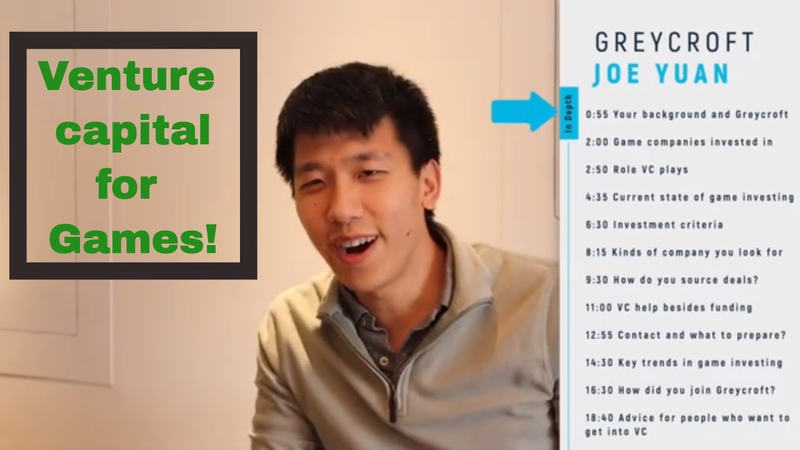
Greycroft | Venture Capital Funding of Game Companies
Venture capital has become a foundational element in the growth of the modern gaming ecosystem, supporting major industry players ranging from mobile studios like Supercell and Rovio to infrastructure companies like Twitch and Discord.
- Venture capital firms like Greycroft, through its GC Tracker fund, focus on seed-stage investments in gaming, esports, and VR/AR, prioritizing teams with scalable visions.
- The investment landscape has matured from speculative social and mobile gaming funding to a model driven by rigorous metrics, specifically customer lifetime value (LTV) and acquisition costs.
- PC and console development remain difficult to fund via venture capital because their unpredictable revenue cycles conflict with the steady-state revenue models preferred by most firms.
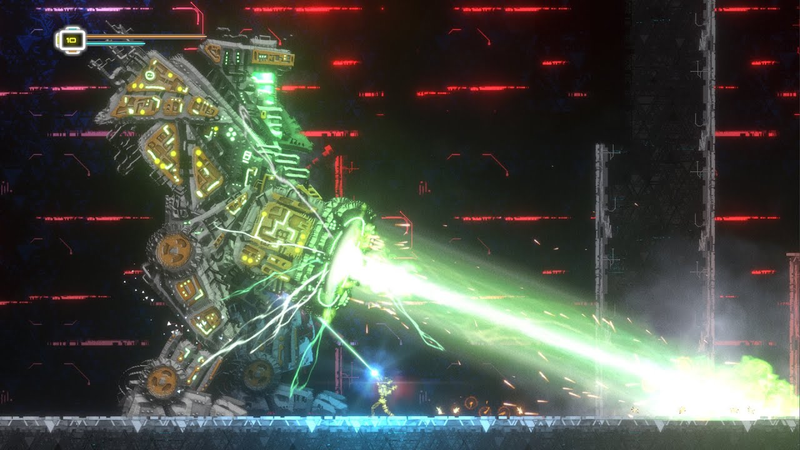
Full Indie: Taking the Leap of Faith with Jeff Spoonhower | GduX.me
Transitioning from a stable career in AAA game development to the independent sector requires a fundamental shift in mindset, moving from a specialized creative role to an entrepreneurial one.
- Independent game development requires a shift from a specialized AAA creative role to an entrepreneurial mindset focused on disciplined execution and commercial viability.
- To mitigate financial risk, developers must secure at least one year of financial runway before transitioning to independent production.
- Maintaining a strictly limited project scope is essential for completion, as it helps manage the unforeseen technical and creative challenges inherent in small-team development.