Funding reports and market data
Documents

TWIG #278 The AAA Studio Model is Dead??? And who are the BIG Gaming VC Funds good for?
The modern gaming industry is currently navigating a period of structural tension between traditional AAA development and the evolving demands of venture capital and transmedia integration.
- Despite industry speculation, high-budget AAA titles remain the primary drivers of revenue and player engagement according to data from Newzoo and Circana.
- The pursuit of Hollywood-style transmedia adaptations often fails to yield significant incremental revenue relative to high production costs, indicating a lack of strategic alignment for long-term growth.
- Venture capital firms like a16z and Bitkraft are creating market instability by pressuring portfolio studios to pursue high-risk, unicorn-style returns that conflict with sustainable development.
Exporting the Istanbul’s Gaming Magic with Görkem Türk
Laton Ventures operates as a 35-million-dollar venture capital fund based in Istanbul, dedicated to fostering pre-seed and seed-stage gaming startups.
- Laton Ventures is a $35 million Istanbul-based venture capital fund focused on pre-seed and seed-stage gaming startups.
- The fund prioritizes investment in teams with a proven history of working together over individual credentials to de-risk the startup lifecycle.
- Investment strategy targets a balance between creative vision and commercial viability, with specific interest in mobile titles with social integration, PC gaming, and consumer applications.
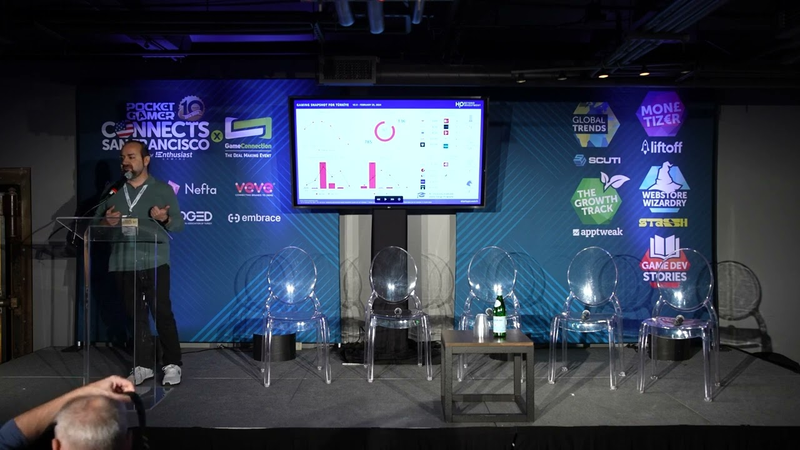
Zero Tax + Incentives: Turkiye's Bold Leap Into Game Development. Tuğbek Ölek, Games, Turkiye.
Turkey has established a highly competitive environment for game development by implementing a robust framework of tax exemptions and government-backed financial incentives.
- Turkey offers a near-zero tax environment for game development studios, including exemptions on income taxes for developers and designers, and the absence of capital gains tax on successful exits.
- To qualify for tax and incentive benefits, companies must generally operate within one of Turkey's designated technoparks, though remote work is now permitted for studios following policy changes during the COVID-19 pandemic.
- The government provides significant financial incentives, including 50% coverage of software license costs (up to 50k per game), 50% of staff social security contributions, and up to 100k in reimbursement for platform commissions and distribution costs.

What Makes an Investable Founding Team with Maria Kochmola & Dara Leung & Phylicia Koh
Successful venture capital investment in the gaming industry hinges on a founder’s ability to balance visionary product development with disciplined business execution.
- Investor priorities shift from team composition and market conviction at the pre-seed stage to proven product-market fit, board governance, and financial metrics like burn rates at the growth stage.
- Founders must maintain transparency during fundraising, as the venture capital community shares information and will detect fabricated competition or inconsistent terms.
- Effective pitching requires a fluid, interactive communication style that is considered as critical to securing investment as the underlying product itself.

Crafting an Unbeatable Game Thesis with Phillip Black
A game thesis serves as a strategic, logical argument for a game’s existence, moving beyond personal preference to provide a persuasive case for investors, publishers, and internal development teams.
- A game thesis functions as a strategic business proposition that justifies a project's existence to stakeholders by proving market viability and resource alignment.
- The framework requires answering five core questions: market size, specific opportunity, balance of innovation versus standards, content retention pipelines, and monetization hooks.
- Developers should hedge risk by adopting proven mechanics from successful industry titles while innovating in areas where competitors are limited by legacy constraints.
The Intricacies of Venture Capital Investments with Joakim Achren, F4 Fund
The venture capital landscape for gaming and consumer software is undergoing a significant correction, moving away from the high-burn, vanity-metric growth models that characterized the zero-interest-rate era.
- Venture capital investment in gaming has shifted from high-burn, vanity-metric growth models to a focus on early-stage, thesis-driven sustainability and profitability.
- Traditional mobile studio models are increasingly viewed as unfavorable by investors due to market saturation and prohibitively high user acquisition costs.
- Founders must now integrate marketing expertise directly into their core teams to prioritize organic distribution over reliance on paid user acquisition.

Gaming Market Insights with Goldman Sachs & Lightspeed Venture Partners
The global gaming industry is currently navigating a period of structural rebasing, transitioning from the unsustainable demand spikes of the pandemic era toward a more disciplined, efficiency-focused market.
- The gaming industry is undergoing a structural correction to move away from pandemic-era demand spikes, shifting toward operational efficiency and disciplined balance sheet management in response to high interest rates.
- Venture capital investment is currently prioritizing well-capitalized studios capable of developing multi-billion-dollar, platform-oriented franchises rather than broad, speculative consumption.
- Artificial intelligence is identified as the primary long-term growth catalyst, with potential to significantly improve development efficiency and enable advanced gameplay through intelligent non-player characters.

Finding a publisher: Live Q&A
Securing a publishing deal for premium PC and console titles requires a fundamental shift from creative-led development to a rigorous, business-oriented strategy.
- Publishers prioritize risk mitigation, requiring developers to present a comprehensive business case that includes realistic budgets, detailed timelines, and clear revenue projections.
- Success in securing a deal depends on demonstrating market demand through tangible metrics such as Steam wishlists, community engagement, and social proof.
- Developers should pitch a singular, confident vision supported by a functional vertical slice that highlights core mechanics and unique selling points, rather than offering multiple design concepts.

Decoding Success: From Operator to Venture Capitalist
The gaming industry is defined by constant platform shifts, where long-term success depends on a leader’s ability to recognize emerging trends and maintain operational resilience during periods of market uncertainty.
- Long-term industry success is driven by prioritizing deep audience research and cultural nuance over standardized, global distribution models.
- Modern venture capital strategy focuses on the demographic expansion of Gen Z and Gen Alpha as gaming culture continues to mainstream.
- Investors prioritize founders who build scalable platforms rather than isolated products, leveraging subject matter expertise to achieve top-decile performance.
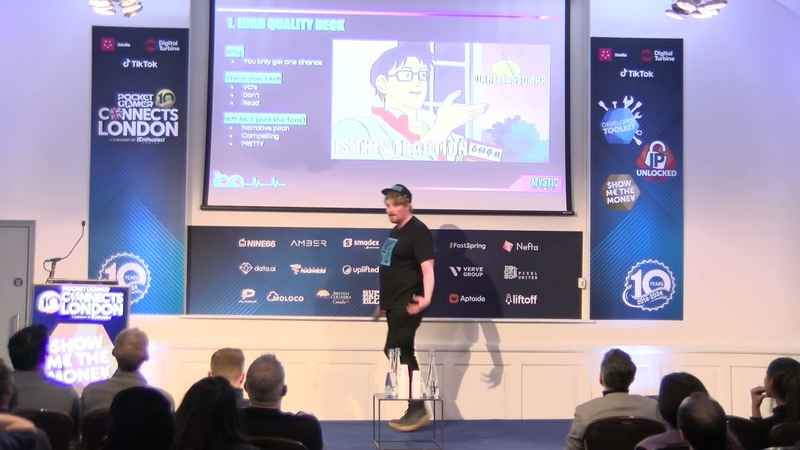
Beat the Bear: Raising Funds in a Challenging Landscape - Matthew Buxton, MYSTiC Games.
Raising venture capital in the current gaming industry landscape requires a strategic, disciplined approach that acknowledges the inherent risks and power dynamics of the investor-founder relationship.
- Fundraising is governed by power laws rather than pure meritocracy, with investors heavily favoring teams that possess proven track records or affiliations with major entities like Riot Games.
- Approximately 90% of startups fail, leading venture capitalists to act as risk-averse portfolio managers who prioritize social proof and peer validation to mitigate their exposure.
- Founders should employ a tiered pitch strategy, starting with lower-priority investors to refine their narrative and gather feedback before approaching top-tier targets.
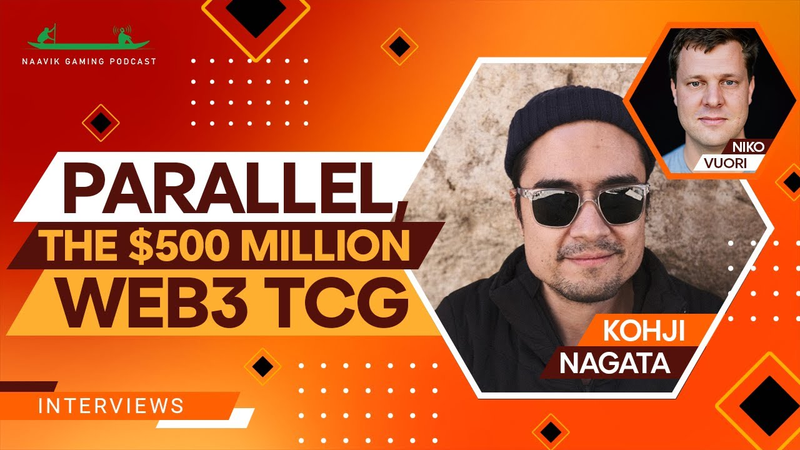
Parallel, the $500 Million Web3 TCG
Parallel represents a significant evolution in the trading card game genre, securing a $500 million valuation through a $50 million funding round.
- Parallel achieved a $500 million valuation following a $50 million funding round, positioning it as a major player in the Web3 trading card game market.
- The game differentiates its mechanics through a unique banking system where cards function as energy, a design choice that has attracted professional players from established titles like Hearthstone.
- The studio employs a hybrid revenue model that combines traditional card pack sales and cosmetic microtransactions with a 10% royalty fee on all secondary market NFT transactions.
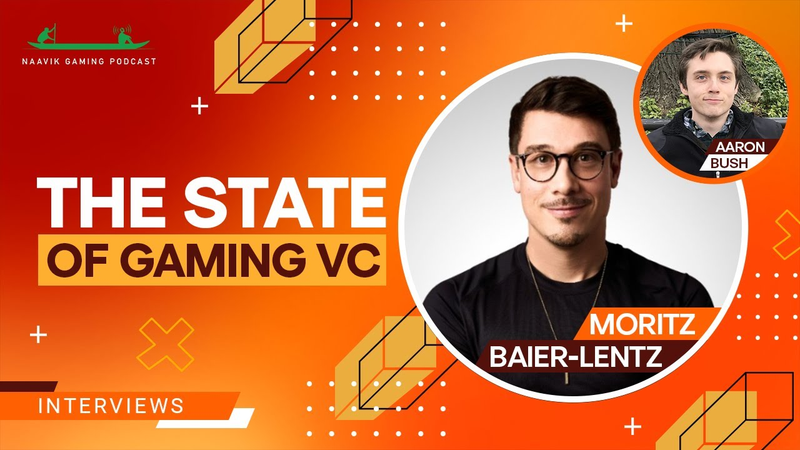
The State of Gaming VC in 2024
The gaming venture capital landscape in 2024 is undergoing a significant recalibration, moving away from the speculative excesses of 2021 toward a more disciplined, value-driven investment model.
- The 2024 gaming VC landscape has shifted from the speculative excesses of 2021 to a disciplined model that prioritizes 'forever games' and platform-level technologies with multi-billion dollar potential.
- Venture capital is increasingly moving away from the oversaturated early-stage studio market, favoring gaming-adjacent platforms, interactive technology, and AI-native applications.
- Generative AI is considered a transformative platform shift that allows agile startups to gain a competitive advantage over established incumbents.