Cross-Platform reports and market data
Documents
From mobile to consoles and back to mobile
The transition from mobile to console development offers significant strategic advantages for small independent studios, primarily through increased visibility and more direct relationships with platform holders.
- Console development offers higher visibility and more direct platform-holder relationships compared to the saturated mobile market, which is plagued by extreme device fragmentation and opaque store algorithms.
- Transitioning to console development requires a shift to longer production cycles of one to two years, driven by the need for rigorous certification and higher consumer expectations for technical polish.
- Targeting a single hardware configuration on consoles significantly simplifies testing and optimization compared to the thousands of device variations found in the Android ecosystem.
Future games platforms – Exploiting the possibilities
Extended reality technologies are currently navigating a foundational growth phase rather than a period of decline.
- Social integration is the primary driver for future platform growth, as virtual and augmented reality technologies uniquely facilitate remote collaboration and shared physical experiences.
- Extended reality is in a foundational growth phase, with momentum currently sustained by enterprise applications and location-based entertainment rather than mass consumer adoption.
- High user acquisition costs in saturated gaming markets are stifling innovation, shifting the industry's focus toward improving content discoverability through machine learning and personalization.
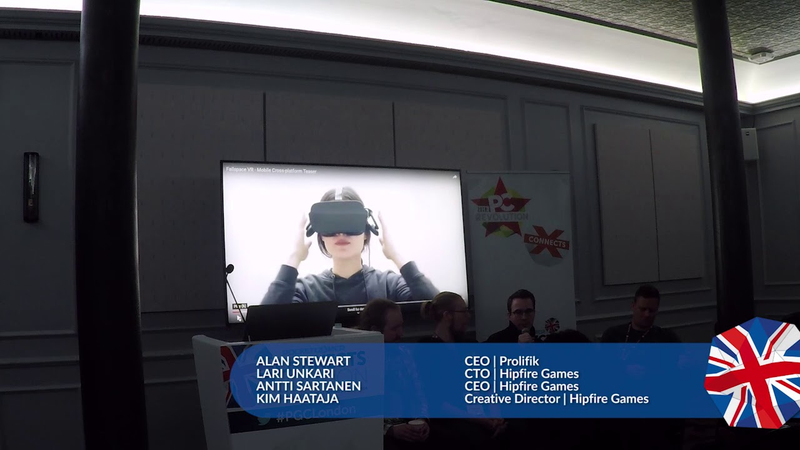
Exploring cross-platform play between virtual reality and mobile
The integration of virtual reality (VR) and mobile platforms represents a strategic solution to the persistent challenges of low VR user adoption and the isolation inherent in current VR multiplayer experiences.
- Cross-platform integration between VR and mobile addresses the industry's primary challenges of low VR adoption rates and the social isolation of current VR multiplayer experiences.
- Developers can overcome limited VR install bases by creating shared, persistent game worlds where mobile and VR users interact through device-appropriate interfaces.
- Technical implementation requires custom tools to bridge the performance gap between 3D VR environments and 2D mobile displays while maintaining parity.
Halo Wars 2: A UX Postmortem
The development of Halo Wars 2 required a complex user experience (UX) strategy to bridge the gap between a legacy console-based real-time strategy (RTS) franchise and the demands of a modern, cross-platform audience.
- The development of Halo Wars 2 required a collaborative partnership between 343 Industries and Creative Assembly to adapt the legacy RTS franchise for a modern, cross-platform audience.
- To lower the barrier to entry, the team introduced Blitz mode, which successfully integrated card-based strategy with RTS mechanics.
- Iterative design testing for Blitz mode revealed that initial interfaces were too cluttered for console play, leading the team to adopt a simplified 12-card deck system with a streamlined horizontal interface.
Developing the Art of Fortnite
Fortnite originated as a gritty, realistic survival horror title before undergoing a fundamental artistic pivot toward a vibrant, stylized aesthetic.
- The Fortnite art team transitioned from a realistic, high-fidelity aesthetic to a stylized approach to better support long-term, live-service, free-to-play requirements.
- To maintain gameplay clarity, the team prioritized exaggerated, expressive shape language over realism, ensuring that character silhouettes and weapon designs remained readable during third-person combat.
- The team utilized a modular, grid-based building system but integrated gestural, stylized forms into individual assets to maintain a cohesive visual identity despite the rigid structural constraints.
How to successfully adapt board games to digital
The digital adaptation of board games represents a specialized sector within the broader gaming industry, characterized by a symbiotic relationship between physical and digital products.
- Digital board game adaptations act as a growth engine for physical sales, with data showing a 40% increase in physical product revenue following the launch of a corresponding digital title.
- Digital versions should be managed as part of a multi-channel ecosystem rather than as standalone products or competitors to the physical game.
- Successful development requires prioritizing high-fidelity adherence to the original design and technical execution, specifically robust AI and UI optimization, rather than traditional video game content production.
Build smarter, grow faster and monetise better
Facebook aims to solidify its position as a central hub for the global gaming community by providing end-to-end solutions for discovery, engagement, and monetization.
- Facebook leverages a social graph of 800 million monthly active users to integrate gaming directly into social contexts like Messenger, groups, and feeds to improve retention and re-engagement.
- The platform's video strategy targets a monthly audience of 665 million gaming content viewers by integrating live streaming and eSports content into the dedicated Watch tab.
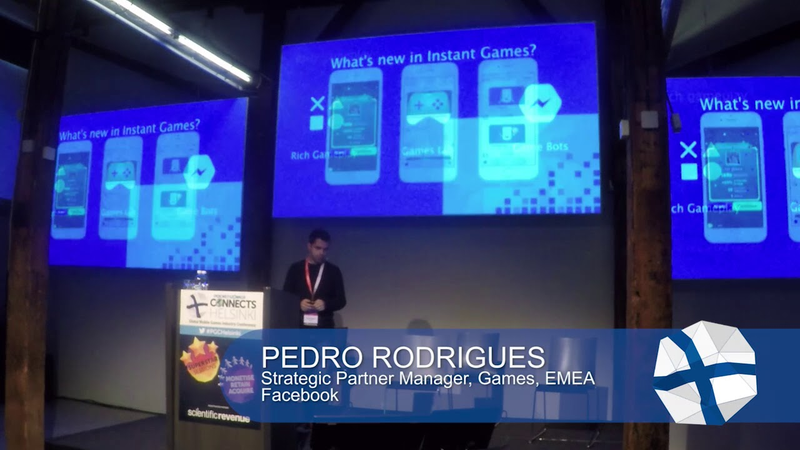
- The Instant Games platform utilizes HTML5 technology to facilitate frictionless, social-first mobile gaming experiences driven by leaderboards, messenger bots, and turn-based notifications.
Data binding architectures for rapid UI creation in Unity
Modern mobile game development often suffers from inefficient, siloed workflows where artists and developers work in isolation, leading to redundant tasks and late-stage errors.
- Implementing MVC and MVVM architectures in Unity decouples UI views from game logic, enabling parallel workflows where artists and developers work independently.
- Data binding allows the UI to automatically update based on game state changes, while startup-time caching eliminates the runtime performance overhead typically associated with C# reflection.
- Mocking capabilities within the Unity editor allow artists to test UI components in isolation, removing the need for full-game builds and significantly accelerating iteration cycles.
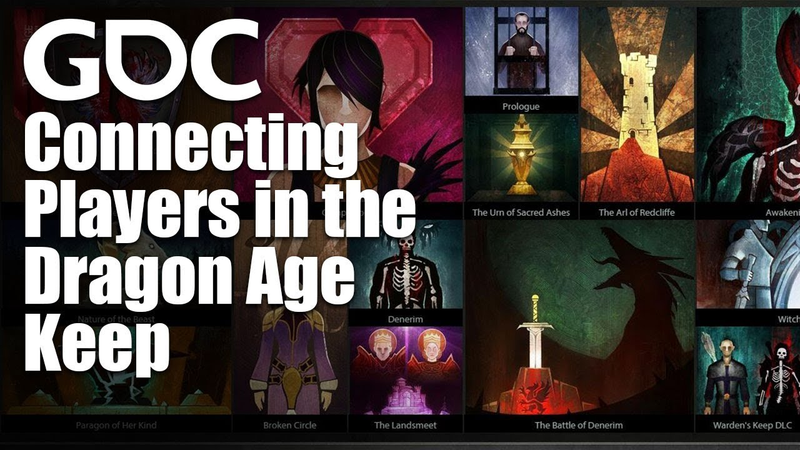
Connecting Players and Franchise Across Console Generations in the Dragon Age Keep
The Dragon Age Keep serves as a strategic solution to the technical limitations inherent in traditional save-game imports, effectively decoupling narrative logic from specific game clients.
- BioWare developed the Dragon Age Keep as a web-based 'World Vault' to solve the technical failures of traditional save-game imports, which were prone to errors and difficult to patch across console generations.
- The system uses a centralized web service called 'Orbit' to abstract plot logic and player choices from the game client, allowing developers to update story states and fix bugs without requiring client-side patches.
- By moving the world state management to the web, the team enabled players to maintain continuity and emotional investment across multiple games, novels, and comics within the franchise ecosystem.
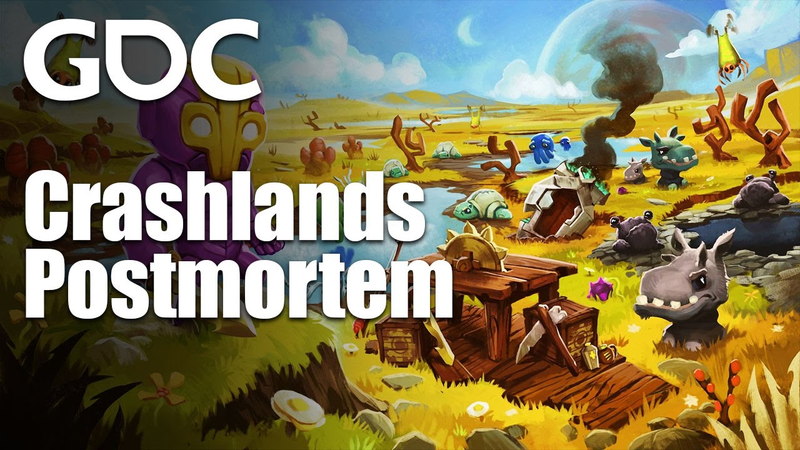
The Last Game I Make Before I Die: The Crashlands Postmortem
The development of the crafting RPG Crashlands emerged from a profound personal crisis, serving as a creative anchor for lead developer Samuel Coster following a stage 4B Non-Hodgkin's Lymphoma diagnosis.
- To ensure long-term studio sustainability, developers must prioritize building infrastructure like email lists and marketing tools rather than focusing solely on individual game development cycles.
- Differentiating a game from existing genre competitors requires moving beyond incremental improvements to create a unique value proposition, such as integrating a strong narrative into a crafting RPG to distinguish it from titles like Terraria or Don't Starve.
- Building direct relationships with platform holders at Steam, iTunes, and Google Play through consistent updates and press coverage is essential for securing critical launch-day featuring.
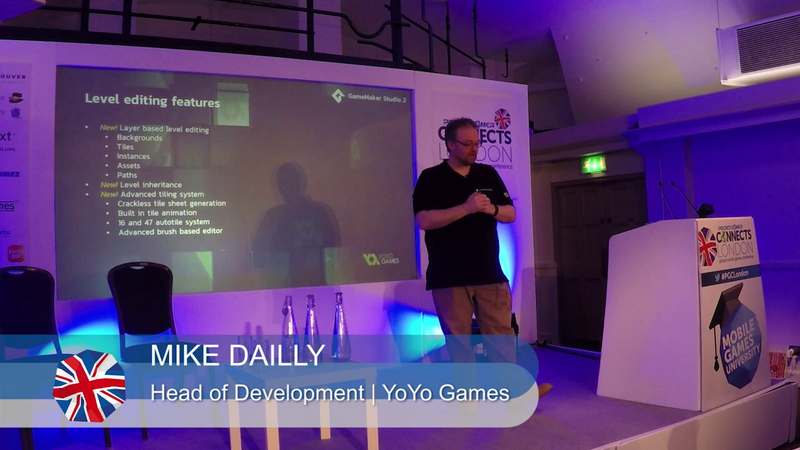
Fast, cross-platform development with GameMaker Studio 2
GameMaker Studio 2 serves as a comprehensive, cross-platform development environment optimized specifically for 2D game creation.
- GameMaker Studio 2 is a specialized 2D development environment designed to accelerate production cycles through a unified, streamlined workflow.
- The platform supports a broad range of export targets including Windows, Mac, Linux, iOS, Android, HTML5, UWP, Xbox One, and PlayStation 4.
- Development efficiency is improved through advanced level-editing tools, including level inheritance for global setting management and a tiling engine featuring auto-tiling and animated tiles.
How World of Tanks and World of Warcraft went mobile
The transition of established PC gaming titles to the mobile platform requires a strategic balance between leveraging existing brand equity and adapting to the unique constraints of mobile consumption.
- Brand equity alone cannot compensate for poor synergy between game design and monetization; success requires tailoring both mechanics and revenue models specifically for mobile constraints.
- Successful mobile adaptations like Hearthstone expand reach by refining mechanics to attract both existing fans and new demographics simultaneously.
- World of Tanks Blitz demonstrates that maintaining core PC gameplay is viable on mobile if developers successfully optimize control schemes for touchscreen interfaces.