1 free read left. Create a free account for unlimited reading + AI research.
Create free account
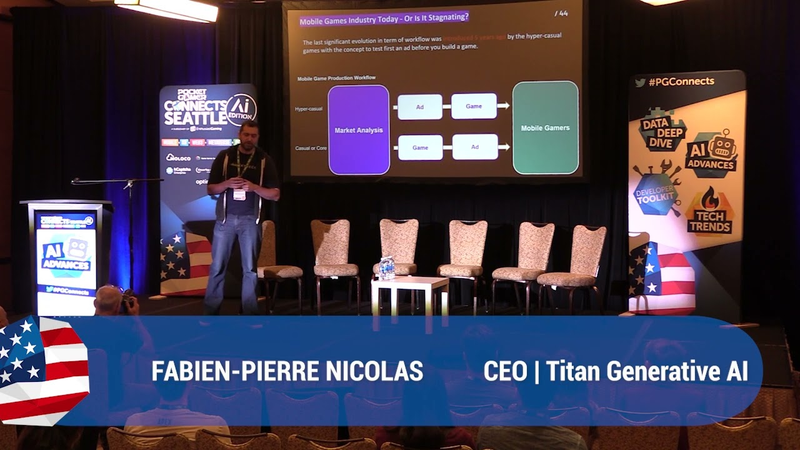
Session: From Handcrafted To AI Generated Mobile Games, Fabien Pier, Titan Generative AI
Key insights
6 takeaways- 01Generative AI can compress production cycles significantly, enabling smaller teams to develop functional game prototypes in as little as one to three days.
- 02Current AI capabilities are best suited for 2D assets, textures, basic client-side code, and core loops, limiting immediate adoption to the hyper-casual and puzzle segments which comprise 10% to 15% of the market.
- 03High-fidelity 3D production assets and long-term creative consistency remain beyond current AI capabilities, requiring significant human intervention to maintain quality.
- 04Mobile gaming accounts for approximately 62% of global gaming revenue, yet the sector faces stagnation due to a reliance on low-risk licensed IP and repetitive mechanics.
- 05The industry is shifting toward an AI-augmented model where automation of repetitive tasks allows human developers to focus on creative direction and localized content for underserved audiences.
- 06Future advancements in reinforcement learning and user-generated content interfaces are expected to improve the alignment between AI outputs and specific designer intent.
Ask AI about this video
Transcript
[Music] thank you [Music] it's gonna start with a really interesting talk from Fabian Pierre Nicolai and I hope I didn't butcher his name from Titan generative AI talking about how games went from handcraft to fully AI generated so please welcome fabiampia yeah so well thanks everyone for coming today I know we have you know an overall morning that's so backed with interesting topics from fundraising Ai and the rest so I'm here to discuss a bit about how this industry could move from handcrafted you know mobile games
to games that are built leveraging generative Ai and you know we are a relatively new company so our name is Titan Ai and we've literally I think Incorporated about two months ago so bear with me on the fact that that we're new and we just were accepted into Berkeley Sky Deck which is I recommend as an accelerator uh they essentially gave you 200 000 in exchange of seven percent equity so very similar to YC and other incubator you know and they are present both in Europe very recently as well as in the US but they are open to projects from all over so we have colleagues from Jordan we have colleagues from Singapore and and all over the world coming to join us in Berkeley for a few months until we reach demo day and Pitch to a lot of investors so this industry is one that was born right late 2010 the App Store shipped and a few months later I was I was publishing my first game on the platform
and I oops yep so you know I've been part of of the the history I guess when I joined Ubisoft back in 2005 and we were all focused on building APS and selling well at the time it was like 50 to 60 dollars console games in physical copy everything was designed by the creative team and the game studios in Montreal and other places in the world and mostly right we were focused on single player experience and of course when I joined you know a Japanese mobile game company called DNA they were like you could forget all of that we don't monetize by selling any of this you're gonna have to learn that it's all about creating an intense user engagement a desire to monetize in our games and our games everybody could play them for free um so that was you know first change right in the industry and I remember for the longest time and if anybody worked at Apple here you could quote me on that
because I've been pretty public about that Apple keep pushing premium games even though the free to play business model was clearly winning the hearts and minds of people they were like no no no please purchase those games for 999 or 4.99 I think recently they've been a bit better probably pivoted to Apple arcade instead but you know this is a business model that clearly is here to stay and mobile as a platform went from less than one percent right in the 2011 was the first year with some data about that of the overall gaming industry Revenue to a huge amount of what this industry is and so that's here to stay as well I think what we're here to discuss today is really the fact that now you have the capability to supplement what's built by developers and what's built by your Audience by what's built by AI right so as discussed up small delay I've discussed a bit about the experience so beyond games most recently I spent five
years trying to scale a news app and we went from being very small in the US it was a Japanese news app that was Market Trader smart news to be bigger than CNN Fox news on New York Times so I'd pick smart news at like 12 million monthly active users for the last election and you know that was great to see ultimately our goal was to provide quality information and if I look at the mobile game industry right I have someone who kept advising mobile game Studio even though when I wasn't in gaming full time we're now an industry that is at 60 or it's like 62 last year of the total Gaming revenue right software I'm excluding the hardware selling console is coming from mobile games which is quite impressive but I still don't think we are you know all the way in terms of the evolution of this industry we figure out the business model which is key right that allow 2.6 billion people to play games last year
on their mobile phone uh I think the tech stack have matured right at this point you could see clear winners in term of client technology uh you could see clear winners in terms of the mmps in terms of market share again adjust apps flyer from my perspective of those sure bets and there is a lot of other elements that are maturing in time of mobile engagement and so on and you could see as well the size of the deals with witness that's an industry that is maturing but I don't think we are we have been necessarily super Innovative in the last four or five years so up so if you consider or you know spend a few years at that penny so it still look a lot at mobile market data right if you take a look at the the game patterns and if you like take a look at the you know some elements of the business model monetization and so on the the one last big change I've seen right essentially hyper casual which started you know
Circa 2018 2019 depending on who you ask if you ask Voodoo if you ask other players in this market and they essentially reverse the usual I used to soft launch games in you know cheaper Market test the kpis and then expand and they were like well we could push that further right and essentially we just build ads without having the full game build a very short uh video uh showcasing a specific level for example by five or six of them with different pattern and then finally if the IPM the install per thousand is good enough we'll build the game and this was a change but this would change us a few years old so it's harder to see even in the peak mobile games during covet you know what other Innovation were were done by the industry so the problem um you know having spoken recently at least some uh you know Angel Investors and and the problem especially traditional investors have seen but it's
true as well for a lot of mobile game executive right from larger companies they're looking at small mobile game studio and they're like what is great um you have a hit now you're going to try to make a second game a third game and of course you will need to expand the team nothing tell us that you will be capable of hitting uh the spot again and again and again right so the scalability is is a question once you have a development team the other aspect is if you look at entertainment Trends Tick Tock Trends and the rest even when you build a game in a few weeks and you add a lot of CopyCat of the squid game when the next show came out right it's a few weeks after the pig viewership for the show and you are having the same around a lot of this so even hyper casually will tend to be a bit too slow versus the entertainment trains and the last part is ultimately and that's mostly traditional VCS they
were like oh man you know games is such a hit driven industry so I don't know Innovation is risky and so a lot of the industry end up defaulting to things they know and have been good at right whether it's acquisition or in building new products or licenses I've published a Marvel game I've published a Transformer game NFL game don't don't ask me anything about the NFL I don't know the rules but I published an NFL game and at the end of the day um it's it's not necessarily what's best for the gamers right it's just what's less risky so taking a look now at generative Ai and yes so our thesis and and why I'm excited to build with my CTO of this company is that we could try to fix some of those issues right the first aspect is you know scalability um the notion is with AI tooling when it comes to the coding side when it comes
to 2D assets we'll see a bit more in details you have the capability for a small team to produce a lot more games right to increase their output so it will help the risk some of this transition from one team to two teams when you need to make two games or three games the other aspect is we've been you know and again it's a lot of prototyping for now we've been though accelerating and going faster and faster in in time of like building those prototypes as we get more and more familiar with the tooling we're building so the vision will be at some point to build games in two three days and then why not build games in a single day which means you will have a turnaround that then matches the entertainment Trends right so you will be able to capture this very strong demand as it occurs almost in real time and the last part is cost we have seen mobile games that were built by one and a half you know well two percent
team frankly make half a million a million two million a month and more when I was publishing them at DNA and I've seen games by an army of of developers this one FPS that was uh the drowning I think costed us 20 million dollars it made no money right so obviously for an investor it wasn't great and so the core Vision there is to say well if you're capable of compressing the cost you will be able to make a greater diversity of bets right you will be able to try new game templates that before you were like I don't know if this segment is big enough and up so sorry I guess the export to PowerPoint makes the logo move around creatively over the slide but the whole point is we're not um at least you know it's not the vision we're pitching that you could make everything within the mobile games um through generative AI right there is things to generative AI in the current
state of the technology is good at or even great at uh namely like 2D assets and textures so my co-founder built the tool so we apply you know those textures to 3D models for example um core Loops right if you're capable of describing and understand how to to prompt uh you could have some solid code when it comes to client-side and then NPC dialogues as well but there is many things that for now at least maybe some people in the audience have been capable of cracking the code where generate tvi is not necessarily at least giving you 3D Graphics really to production right there is still some assembly and automation to be built around it um at least and again that could be our own limitation but for most of the you know my co-founder built for two years scenario which is a generative AI you know asset company like the world game design element is something that's still really
hard and last but not least the Creative Vision right it could give you some things to check and sources but the the overall consistency of a Creative Vision is not something that we've been yet capable of of uh generating leveraging generating ai4 so one two three so when it comes to um the market size right and sorry it's a little bit my upanish side coming back slash data AI they rebranded so I should probably leave my with my attempt when we look at the mobile games Market our take is that there is many game genre where there is heavy server-side code and an opera you know operations and so on in which we don't feel like gen AI uh driven games will necessarily go so our Tech is that hyper casual and especially um you know different games like driving
Runners and so on will probably be the type of games that Jenny I could really help you uh build you know essentially faster games and better games puzzle match 3. thank you okay and so ultimately right we're talking about something that's between 10 to 15 percent of the overall market so if you don't like gen AI there is a good news there's a lot of game genre that are likely to be disrupted much later in terms of mobile games and I've obviously a few friends uh were not very thrilled and they're like ah you know 1080bi why are you building a gaming company leveraging this type of tech and so on you should come back to the real side that build games by hand and I was like well you know the way I see it is a little bit like in the in the old days early 20th century right you had those people are taking care of
horses everywhere in in Europe um some of them hated you know automobile that was taking away their jobs less and less horses others and actually many of the garages if you tour around Europe that you will find in small villages are the descendant of those people who choose to become mechanics and embrace change rather than just push against it right and so my cortec is like we're not going to take away the fun of the gaming industry by adding this technology um we gonna be able to expand and make more games for more people that are currently underserved and this is the truth when you look at you know the mobile games there's 100 000 plus of them made every year but so many of them feel and look alike and so if you think about there is so many communities who are not able to play with the heroes of their childhood if you take Latin America how many of the mobile games that are leveraging folks heroes from
Colombia or Argentina or all those places it's the same thing in Europe it's the same thing in in many parts of the world right we tend to play with Greek and Roman Heroes and we take that as a given right that it's normal but actually if you take a look at China they are making a lot of great game space on the Chinese history and mythology so some of the jobs will change right and we'll see a transition but this is uh will be again a lot about helping remove some of the most repetitive elements from the jobs right and and it will more creativity within mobile game studio so we we're seeing it as ultimately something that is more positive and it's not going to be like uh massively removing the need for human beings right within the mobile game Studio and finally I think one thing that
when we're building original tooling right we're thinking about is how do you have a human in the loop that adds value and so we've created for now just described it as game master uh and it's not this game master from the 80s hiding behind his screen and you know sometimes trying to kill you as a player it's really horrible experience if you ever play a role-playing game Sorry I'm old but for other people were coming from the communities we're going to build game four enabled by generative AI right we'll be able to guide where what the game is and we think that is one thing that we're thriving for that's going to be unique is having essentially people coming from those communities who could be either long tail influencer or not right will help us guide the direction of the game and so again I've mentioned you know I'm of a certain age so I use I remember one of
the first great gaming memory was Diablo right and um it was in the pre semi-pre-internet age at least in Europe but there was still a lot of like online forums and and offline discussions about procedural generation right people were like oh is it like real worth playing it was a lot of fun they were not the first one to use procedural generation I think it's a game from 1980s so I wasn't born at that time and ultimately it set the stage for Revival of the entire genre as well as Minecraft and a lot of other games using this deck and it made the job of the level designer uh and and a lot of the people working on the project relatively different but ultimately it was for the better so I guess the message is like yes technology could be a real plus and enable creativity instead of kill it so so that's it and then we'll have a little bit of time for questions I think before
the next presentation thank you [Applause] does anyone have questions there run hi do you think AI is at the point where it can create assets like in a game like homescapes and gardenscapes or do you think it's more on the hyper casual side or AI will have the ability to influence production today well I think uh to your point you know if you take those games they became more and more complex with a lot of multi-game settlement rights so if if are we at the point where for example AI could create a 2d background behind the match 3 puzzle yes are we at the point where at least from a gameplay perspective and again this is based on our prototype AI could create some of the most complex puzzle when you go past level 50 100 probably not right you'll still not need to have a human game
designer um I think in terms of adding those emerging gameplay and and you know special levels and so on this is something where yeah at least in our experience could probably help right you craft some of those novel IDs and or or um that you could introduce in the game and test quickly so you know I guess the question is like in the current state at least it can't craft a gun escape and and the rest and of course it can't build the know-how they have in in terms of level optimization and then puzzle management um but you know there is hope down the line gotcha thanks cool thanks everyone oh sorry hi I want to ask about how how reinforcement learning is now currently involved in gaming sorry do you mind repeating that how reinforcement learning is involved in in the gaming industry
oh yeah um so that's that's a good question I wish my CTO was around I think he will have a deeper perspective than me on that uh yeah so I I don't know if I have a very rich perspective so maybe someone from the audience as a better one than me yeah guys did you want to answer the question you had another question yeah yeah so go for it so I think in this generative AI space reinforcement learning uh is going to be used more on the design side and in the ugc side it's a common pattern being used to steer things like uh prompt selection uh prompt engineering so that the results that come out of the generative AI more closely match the designer's intent I think the problem
right now is that it requires a very large amount of data like chat gbt has access to so we're unlikely to see really big outcomes until these tools are in direct to user use ugc interfaces cool one more answer to the question we're actually exploding in time so you're the last one okay I I got a question so uh when you were talking about core game loops that could be generated by by AI yeah so uh I mean are you talking about pretty pretty much like cloning what's already there like for example A Match 3 game or things that are or or is that actually AI can come with a core game loop I mean already with the whole system working a I think so far what we have experimented with is mostly recombination right and and um and description of like existing uh core game look but as well like sort
of you know adding some um Innovation and twists right to again hyper casual games right I'm not talking about every uh core game loops and um yeah we've been able to at least see some some interesting uh feedback at least for runners uh driving and a few others um you know things we did not necessarily expect or haven't necessarily uh seen in the market right but again this is for now and relatively simple core game or it's really simple you should not say that they're not so simple but on those type of core game Loops so I can't speak to like every single core game loops thank you very much thank you [Applause] [Music]
[Applause] foreign
Summary
The mobile gaming industry is currently undergoing a significant transition from traditional, handcrafted development to a model increasingly augmented by generative artificial intelligence. While the mobile sector has matured into a dominant force—accounting for approximately 62% of total global gaming revenue—it has faced stagnation in innovation and challenges regarding scalability. The industry remains highly hit-driven, often forcing studios to rely on low-risk, licensed intellectual property or repetitive hyper-casual mechanics to maintain profitability. Generative AI offers a pathway to address these inefficiencies by compressing production costs, accelerating prototyping cycles, and enabling smaller teams to increase their output, potentially allowing for the development of games in as little as one to three days.
Current technological capabilities allow generative AI to excel in producing 2D assets, textures, and basic client-side code, as well as assisting in the design of core loops for simpler genres like runners or driving games. However, the technology is not yet capable of producing high-fidelity 3D production assets or maintaining a consistent, long-term creative vision without significant human intervention. Consequently, the immediate impact of AI is expected to be concentrated in the hyper-casual and puzzle segments, which represent roughly 10% to 15% of the market, rather than complex, narrative-driven titles.
The integration of AI is framed not as a replacement for human developers, but as a tool to empower them, similar to the historical shift from horse-drawn transport to automobiles. By automating repetitive tasks, studios can focus on creative direction and cultural representation, potentially serving underserved global audiences with localized content. Future advancements, including the use of reinforcement learning to refine prompt engineering and user-generated content interfaces, are expected to further align AI outputs with specific designer intent, ultimately fostering a more diverse and responsive gaming ecosystem.

















Comments