Advertising reports and market data
Documents
Taking a Stand on Social: How Brands Can Tackle Racism in Sport
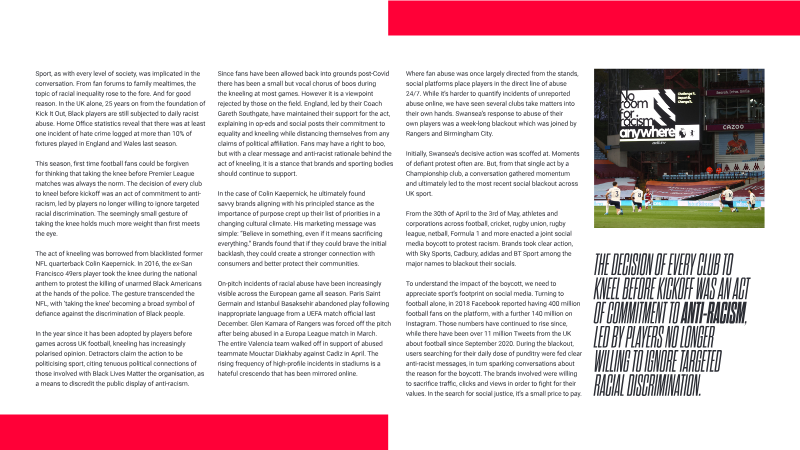
The primary purpose of this analysis is to provide a strategic framework for sports brands to address and combat systemic racism within their digital communities.
- Sports brands must adopt proactive, anti-racist stances in digital communities, as silence is increasingly viewed as insufficient and brands are expected to prioritize human rights over avoiding public backlash.
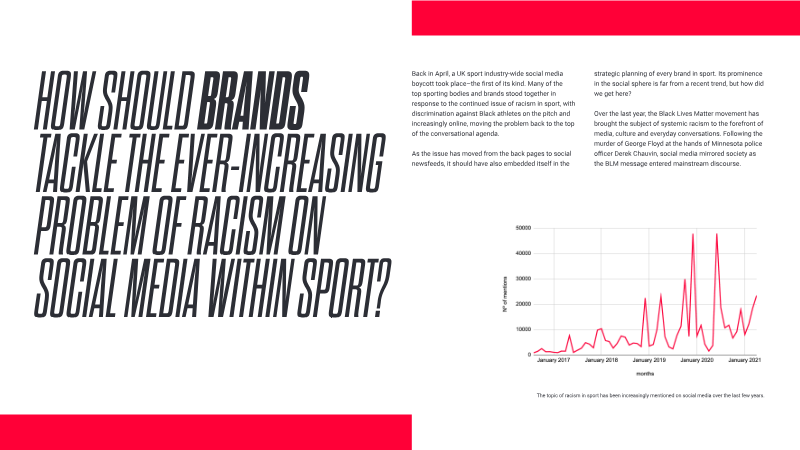
- Hate crimes at UK football fixtures reached over 10% of matches in the previous season, reflecting a broader trend of rising racial abuse that has migrated into high-traffic digital spaces.
- The industry-wide social media boycott from April 30 to May 3, 2021, serves as a benchmark for brands willing to sacrifice traffic and engagement to demonstrate a unified commitment to anti-racism.

15 Minutes on 15 Seconds: Breaking Down a Hit Hypercasual Ad
Successful hypercasual advertising relies on a strategic, gameplay-first approach that captures user attention within the first few seconds.
- Successful hypercasual ads must establish the game's objective within one second and demonstrate the core gameplay loop by the two-second mark.
- Creative assets should prioritize authentic gameplay footage over non-gameplay or deceptive content to ensure marketing remains representative of the actual user experience.
- Ads should feature a mix of perfect, satisfying play alongside moments of intentional frustration to psychologically motivate viewers to install the game.

Fireside Chat: Beyond IDFA - The Publisher Viewpoint
The mobile gaming industry is currently navigating a significant shift in user acquisition and monetization strategies following the deprecation of the Identifier for Advertisers (IDFA) and the implementation of Apple’s App Tracking Transparency (ATT) framework.
- The deprecation of IDFA and the implementation of Apple’s App Tracking Transparency (ATT) framework have shifted the mobile gaming industry from granular, user-level tracking to a landscape defined by aggregate data and probabilistic modeling.
- Long-term commercial success is increasingly dependent on core product quality and retention, as marketing can no longer compensate for poor engagement through precise, individual-level targeting.
- Developers are pivoting toward creative, brand-focused marketing strategies, including influencer partnerships and traditional media, to reduce reliance on automated, data-heavy bidding systems.
Superstar Session: Liftoff's Preparation for ATT
Apple’s App Tracking Transparency (ATT) framework necessitates a fundamental shift in mobile advertising, requiring developers to move away from traditional user-level tracking toward the SKAdNetwork (SKAN) ecosystem.
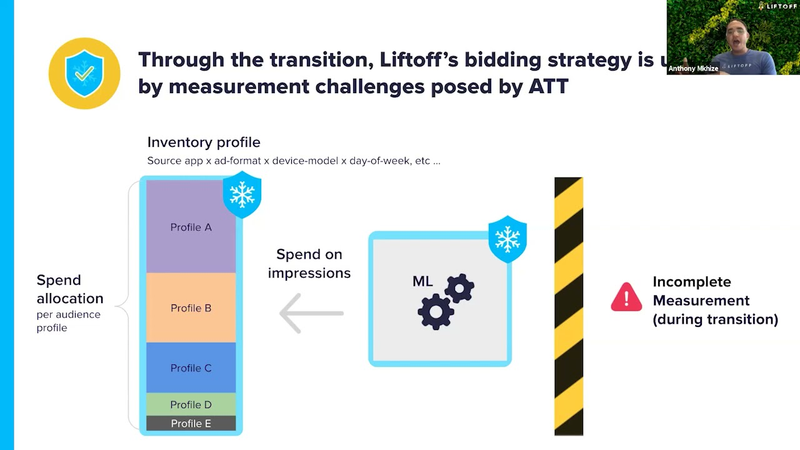
- Maintain a dual-campaign structure by separating pre-ATT traffic measured by mobile measurement partners from post-ATT traffic measured via SKAdNetwork (SKAN).
- Keep parallel infrastructure running for three to five months to allow for background training of SKAN-based models and bidding optimization before fully shifting spend.
- Freeze existing machine learning bidding models during the initial post-launch period to protect campaigns from volatility caused by measurement breakages and non-measurable inventory.

Superstar Panel: How the Industry is Preparing for Post-IDFA
The mobile gaming industry is undergoing a fundamental structural transformation following Apple’s deprecation of the Identifier for Advertisers (IDFA).
- The mobile gaming industry must transition from granular, user-level tracking to privacy-compliant frameworks like Apple’s SKAdNetwork following the deprecation of IDFA.
- Developers should shift focus toward high-quality creative assets and sophisticated data science models that operate without personally identifiable information (PII).
- To mitigate the loss of external tracking, marketing efficiency must be sustained through internal levers such as live-ops, push notifications, and rewarded ad models.

IDFA / iOS14: How Contextual Advertising Can Save Game Studios Millions
The mobile gaming industry faces significant revenue challenges following the implementation of Apple’s iOS 14 and the subsequent restriction of the Identifier for Advertisers (IDFA).
- The implementation of Apple’s iOS 14 and the restriction of the Identifier for Advertisers (IDFA) has reduced attribution accuracy and eCPMs, particularly for mid-core games reliant on granular user-level data.
- Contextual advertising serves as a privacy-compliant alternative to personalized tracking by utilizing environmental signals like game genre, app ID, and audio intent rather than individual user identifiers.
- Brand advertisers are willing to pay higher eCPMs for contextually relevant ad placements compared to traditional banner ads, providing a viable path to recover lost revenue.

Fireside Chat: Exploring the Potential of InGamePlay Brand Ads
In-game native advertising represents a strategic shift toward non-intrusive monetization, prioritizing player immersion over the disruptive nature of traditional interstitial ads.
- Approximately 68% of players prefer seamless, non-clickable in-game ads over traditional interstitial formats because they maintain immersion.
- Native in-game advertising is a resilient alternative to tracking-based models, as it relies on contextual relevance rather than invasive user data like the deprecated Apple IDFA.
- Integrating branded content into 3D environments, such as digital billboards, enhances atmospheric realism and supports higher player retention rates.
Panel: Choosing the Best Ad Format for Your Game
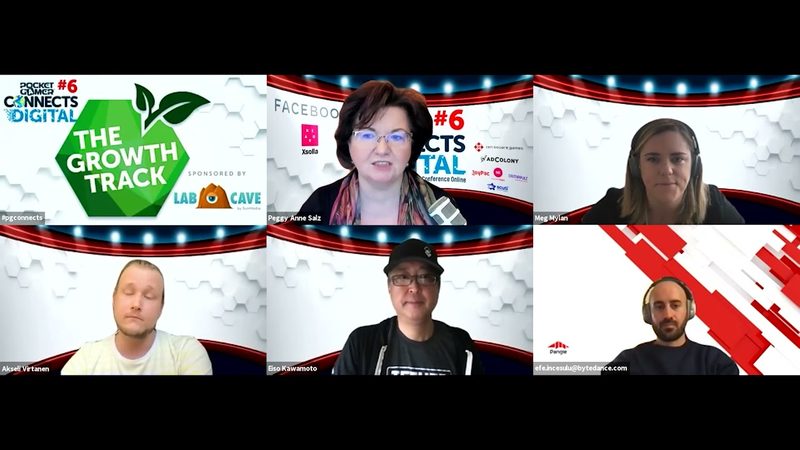
Mobile game monetization strategies currently center on balancing cost-effective ad formats with sophisticated user segmentation to navigate a shifting landscape of privacy regulations and user tracking limitations.
- Monetization strategy must shift from blanket approaches to granular A/B testing and data-driven user segmentation to compensate for the decline of traditional tracking and privacy-focused regulations.
- Video ads remain the industry standard for cost-efficiency and accessibility, while playable ads are largely reserved for established titles due to their high production costs.
- Developers are increasingly adopting contextual targeting and non-intrusive formats like offer walls to maintain revenue from non-paying users in a privacy-restricted environment.

How to Optimise Game Success & Monetisation With the Right Brand Partners
The gaming industry is undergoing a fundamental transition toward G-commerce, a model that integrates brand partnerships, e-commerce, and digital assets directly into the gaming experience.
- The G-commerce model integrates e-commerce and brand partnerships directly into game lobbies to monetize the entire player base, including non-paying users, without relying on disruptive advertisements.
- By rewarding players with in-game currency or exclusive items for completing external retail purchases, developers can increase player lifetime value and retention.
- Plug-and-play software development kits now enable developers to integrate complex e-commerce and marketplace features into their games in as little as one hour.
The Big Catch – Unlock New Audiences with Motivational-led Creative
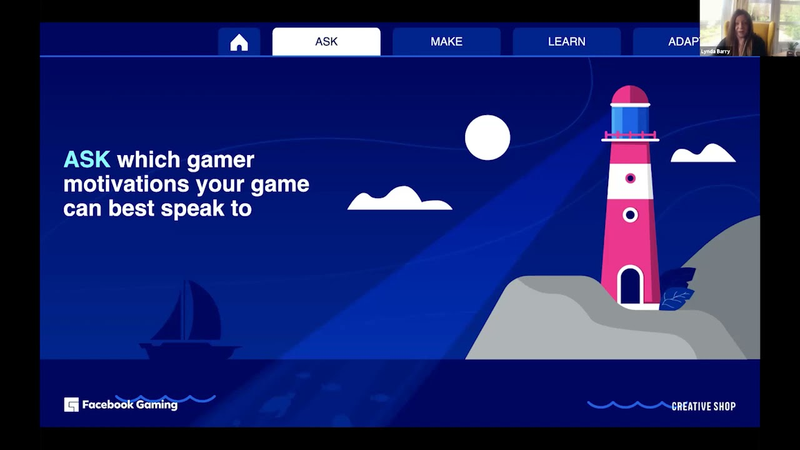
The gaming industry often suffers from short-termism, where developers target narrow, saturated audiences with repetitive gameplay-focused advertisements.
- Developers should shift from gameplay-focused ads to a motivation-led strategy, targeting eight core psychological drivers: self-expression, social connection, progression, expertise, discovery, power, escapism, and relaxation.
- The gaming audience is broader than traditional stereotypes, with 86% of internet users playing mobile games and 50% of the mobile gaming demographic being women.
- Women demonstrate higher engagement levels than men, with mobile gaming sessions that are 25% longer on average.

2Q FY2021 Presentation Material: January to March 2021
CyberAgent experienced exceptional financial growth during the second quarter of fiscal year 2021, characterized by a 26.6% year-over-year increase in consolidated sales to 163.4 billion yen and a doubling of operating profit to 25.8 billion yen.
- CyberAgent’s consolidated sales grew 26.6% year-over-year to 163.4 billion yen in 2Q FY2021, with operating profit doubling to 25.8 billion yen.
- The Game business reached record quarterly sales of 63.9 billion yen, driven primarily by the launch of 'Uma Musume Pretty Derby,' which surpassed five million downloads in 45 days.
- Due to strong gaming performance, CyberAgent raised its full-year sales forecast to 600 billion yen and nearly doubled its projected operating profit range.
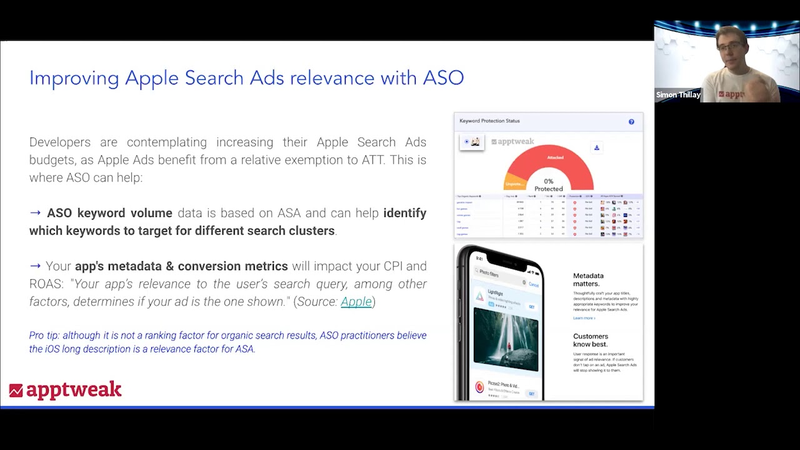
How Mobile Games Can Leverage ASO for Post IDFA User Acquisition
The shift toward privacy-centric mobile ecosystems, specifically following the implementation of Apple’s App Tracking Transparency policy, has necessitated a strategic pivot in user acquisition.
- Apple's App Tracking Transparency policy is expected to cause most ad networks to lose IDFA-based tracking data for over 50% of their mobile traffic, necessitating a shift toward privacy-friendly user acquisition strategies.
- App Store Optimization (ASO) teams can mitigate post-IDFA data loss by using Apple Search Ads keyword volume data to identify high-intent search clusters and optimize targeting strategies.
- Marketers should use A/B testing on store pages—specifically leveraging Google Play Experiments—to test creative messaging and conversion rates before committing to large-scale user acquisition campaigns.