ReportFacebook Gaming
Genre and Great Games: Understanding Audiences and Designing Better Mobile Games
202588 pages~140 min full read
Key insights
7 slides
Market context
Genre is the primary factor influencing mobile game adoption.
Puzzle and matching titles dominate in North America and East Asia. Card-casino games lead elsewhere.
Key number
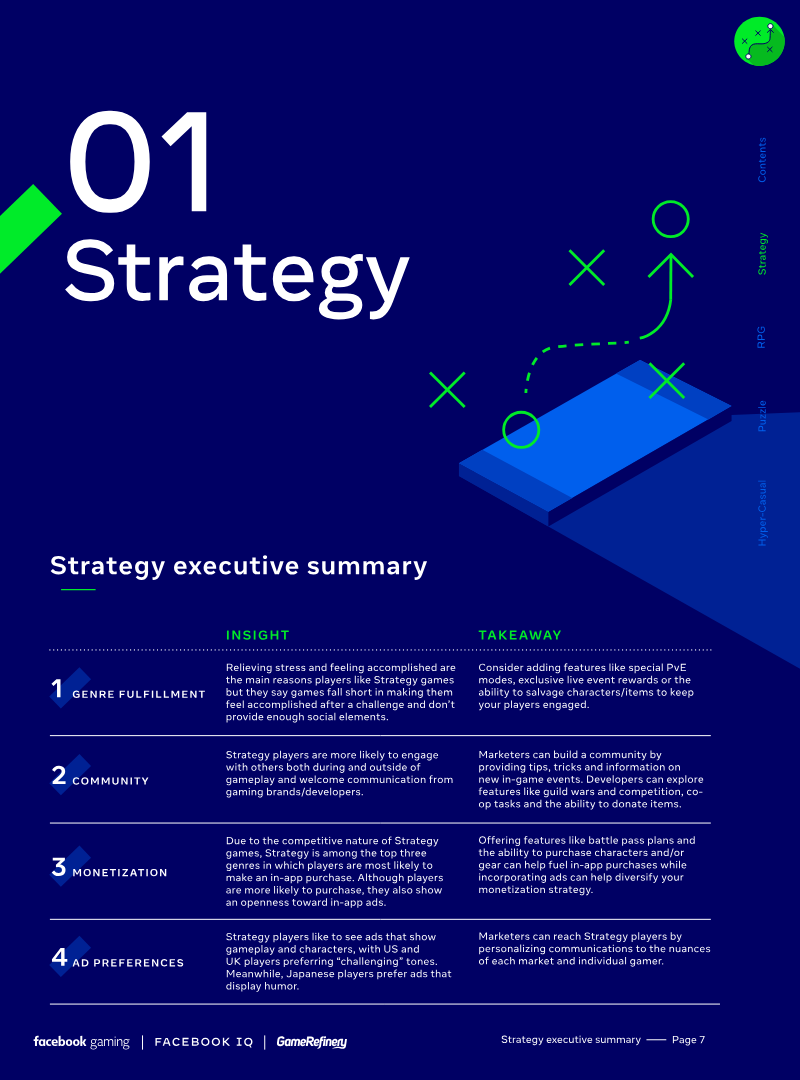
Strategy games deliver the highest lifetime value in mobile gaming.
Battle passes are present in 92% of top-performing titles. Character or gear upgrades also drive lifetime value.
Page 21 of the reportInner Ring21
Outer Ring49
Player base
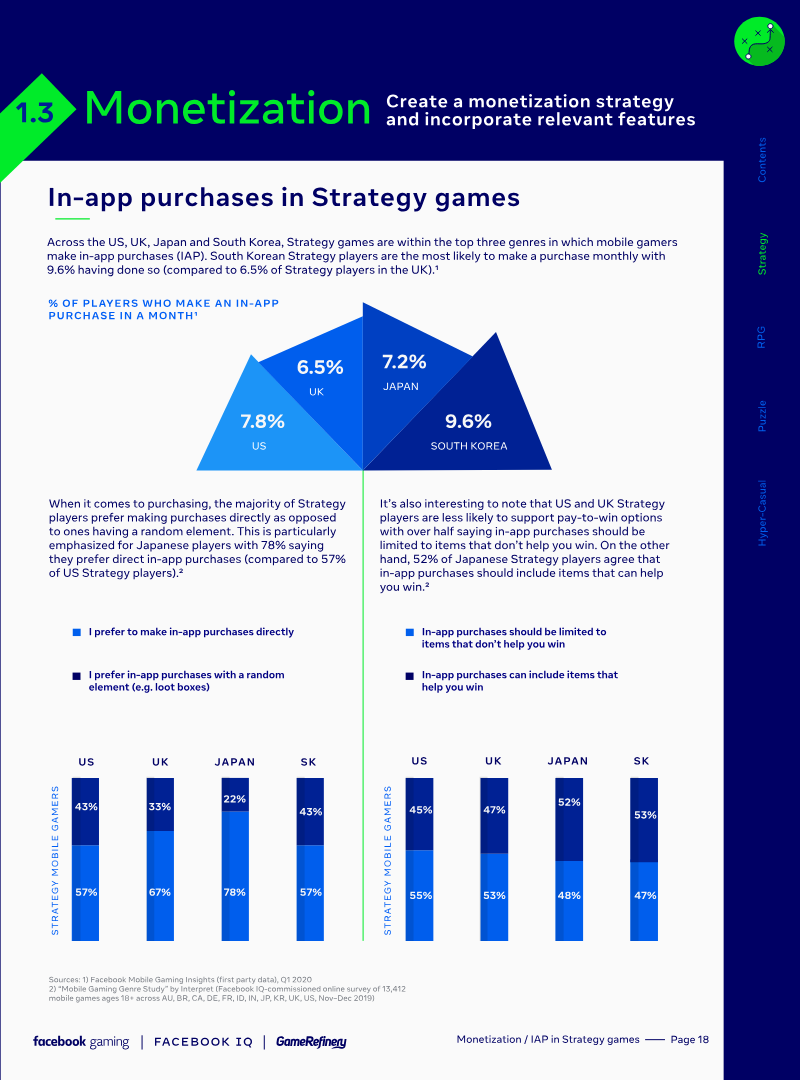
Strategy players make up 12–26% of the mobile base.
They prefer direct purchases over loot boxes. High retention appears when games feature live events, achievements, and daily rewards.
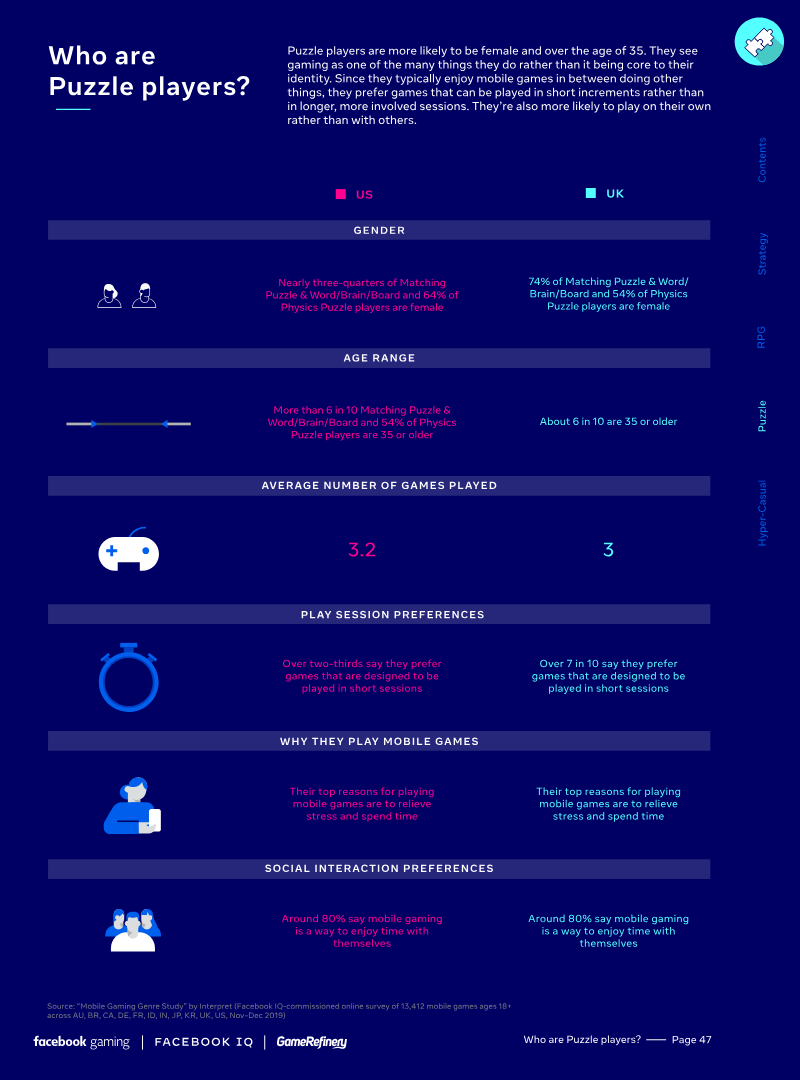
Puzzle audience
Puzzle players are approximately 70% female and 60% aged 35 or older.
They favor short sessions for stress relief. Retention gaps stem from boredom and slow progress.
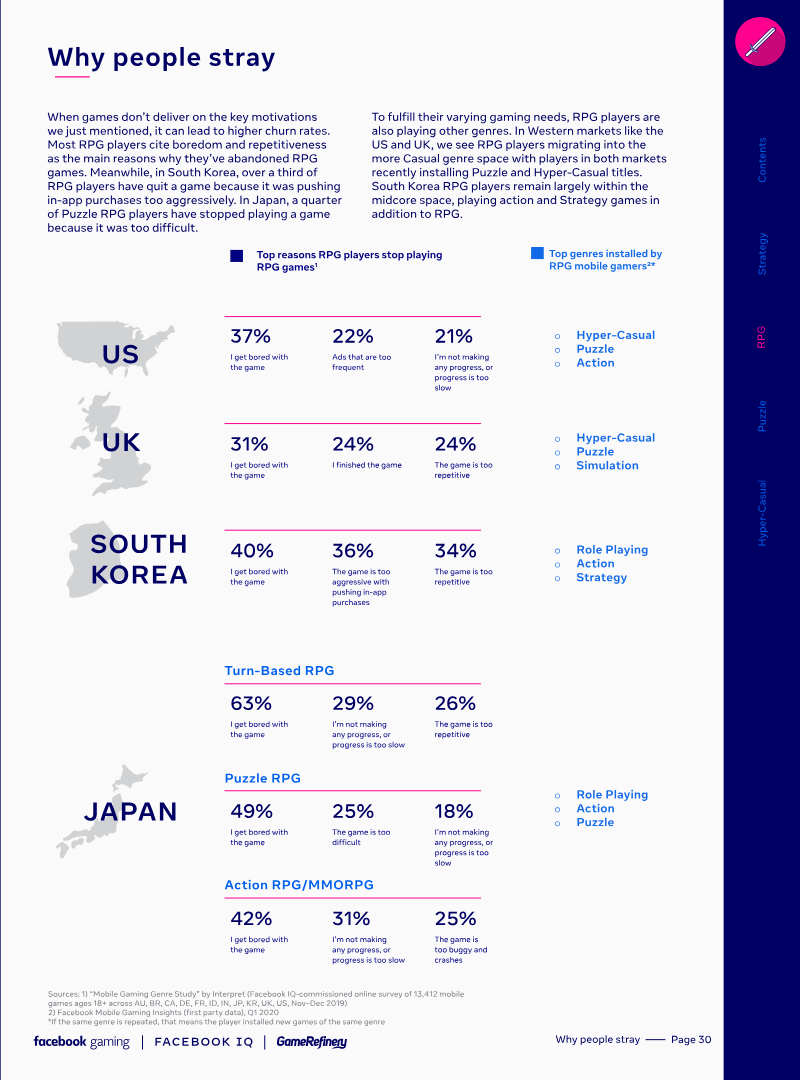
RPG churn
RPG player churn is primarily driven by repetitive gameplay and aggressive monetization.
Successful titles mitigate this through multiple leveling paths, guild systems, and a mix of loot boxes and bulk-discount options.
Regional ads
Monetization sensitivity varies by region for rewarded videos.
U.S. players prefer rewarded videos with tangible benefits. Japanese and Korean audiences show higher tolerance for longer, character-centric advertisements.
Recurring revenue
Recurring revenue and retention are maximized by integrating five mechanics.
The mechanics are battle passes, VIP tiers, guilds, live-event currencies, and ladder systems. They apply across all genres.
Page 85 of the report- 01Battle passesIntegrate battle passes.
- 02VIP tiersIntegrate VIP tiers.
- 03GuildsIntegrate guilds.
- 04Live-event currenciesIntegrate live-event currencies.
1 / 7
Ask AI about this report