Valheim
Documents about Valheim
Analyzing the Top‑Grossing Steam Games of 2021
This analysis examines Steam’s top-grossing titles of 2021 to identify the underlying economic trends and product characteristics driving success on the platform.
- The 'Games as a Service' (GaaS) model is the primary driver of top-tier financial success, with 92% of the top 24 Platinum and Gold Steam titles utilizing in-app purchases or DLC.
- Steam revenue tiers are highly stratified, with Platinum status representing gross revenue exceeding $100 million, while the Bronze tier encompasses games earning between $20 million and $30 million.
- Market entrenchment is significant, as over 50% of the top 24 titles in 2021 were released prior to that year, demonstrating that established hits with consistent updates outperform new releases.
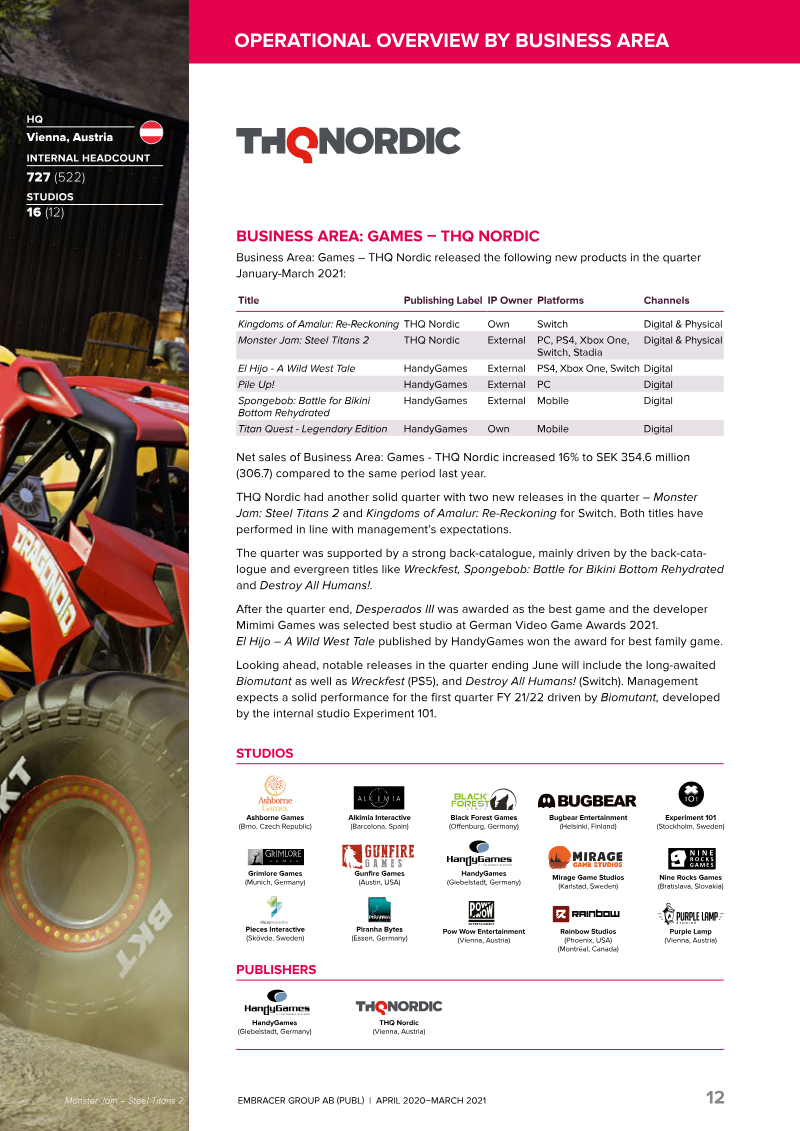
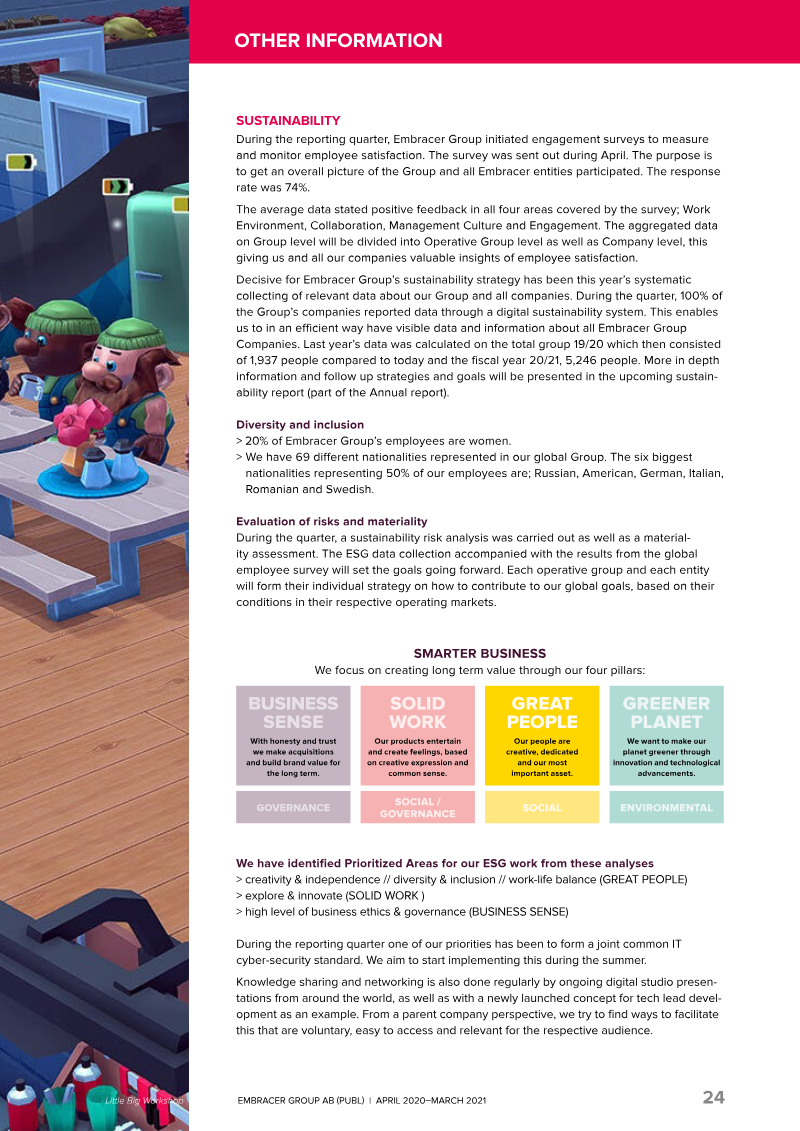
Full Year Report 20/21: April 2020–March 2021
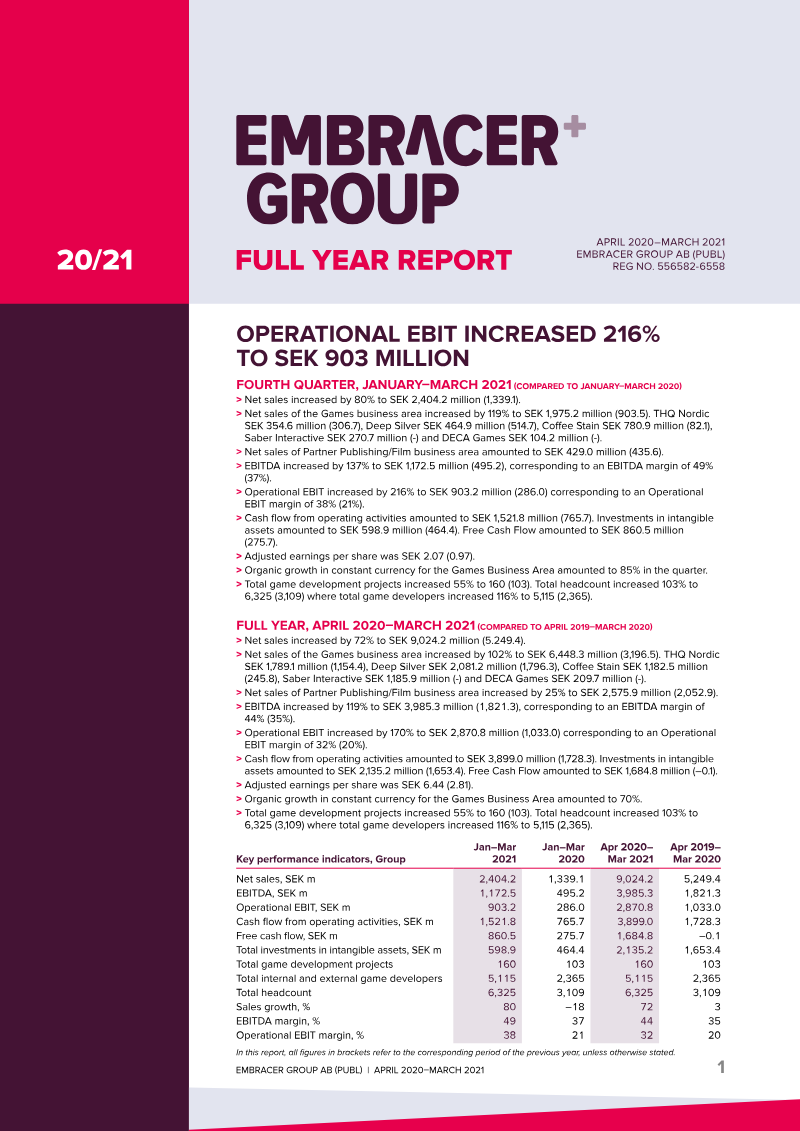
Embracer Group achieved record financial performance during the 2020/2021 fiscal year, characterized by a 72% increase in net sales to SEK 9,024 million and a 170% rise in operational EBIT to SEK 2,871 million.
Embracer Group Q4 FY20/21 Interim Report
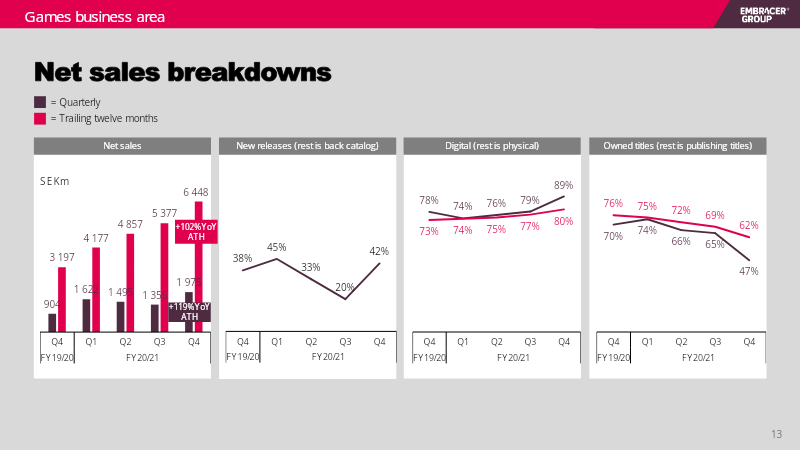
Embracer Group achieved substantial financial expansion during the fourth quarter of the 2020/2021 fiscal year, characterized by an 80 percent year-over-year increase in net sales to SEK 2,404 million and a 216 percent surge in operational EBIT to SEK 903 million.
- Embracer Group reported significant Q4 FY20/21 growth with net sales rising 80% year-over-year to SEK 2,404 million and operational EBIT surging 216% to SEK 903 million.
- The company maintains a strong liquidity position of over SEK 17 billion, supported by a successful SEK 7.6 billion share issue to fund its pipeline of more than 160 active projects.
- Financial performance was driven by the commercial success of Valheim and the continued resilience of back-catalogue titles like the Metro and SnowRunner franchises.
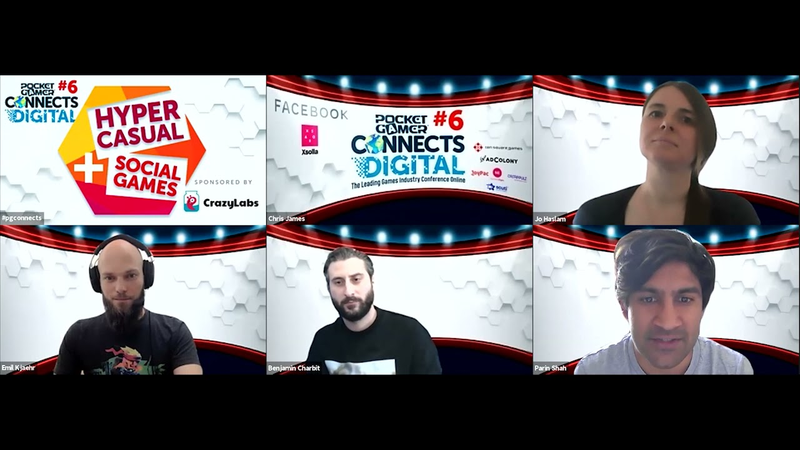
Panel: What Does it Take to Create Real Social Games?
The modern social gaming landscape is undergoing a fundamental shift, moving away from a reliance on high-end visual fidelity toward a model centered on player agency, identity expression, and collaborative creation.
- Long-term engagement in modern social gaming is driven by player agency, identity expression, and collaborative creation tools rather than high-end visual fidelity.
- Developers must shift from a product-centric mindset to an ecosystem-based approach, treating community feedback and external platforms like Twitch and Discord as core gameplay components.
- The industry is moving away from a singular, monolithic metaverse model toward a diverse array of persistent, accessible digital spaces that function as social hangouts.
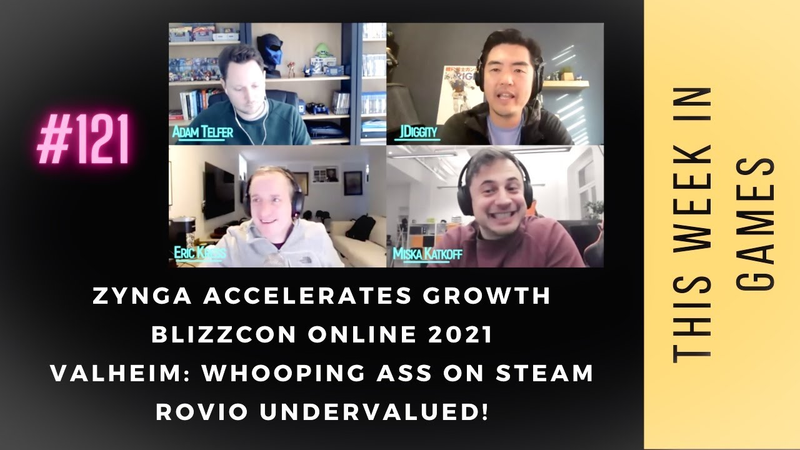
TWIG 121: BlizzCon 2021, Valheim Built By 5 Devs, Zynga Accelerates Growth, Rovio M&A Target
The gaming industry is currently defined by a tension between massive corporate consolidation and the surprising agility of small-scale development teams.
- Major industry players like EA are driving consolidation through large-scale acquisitions, exemplified by the $1.2 billion purchase of Codemasters.
- Large publishers face significant growth headwinds due to the post-IDFA environment and the technical challenges of scaling new titles while managing third-party data sharing risks.
- Blizzard Entertainment is experiencing internal development delays for major titles like Overwatch 2 and Diablo IV, forcing a reliance on legacy franchises such as the Diablo II remaster.
Valheim: 7 Marketing Lessons From Their Amazing Launch
The primary purpose of this analysis is to deconstruct the marketing strategy behind the successful Early Access launch of the survival game Valheim.
- Genre selection is the primary driver of success; Valheim succeeded by targeting high-demand Steam genres like survival, building, and procedurally generated fantasy.
- Massive launch success cannot be manufactured, as it relies on a 'firework' effect where a high-quality product meets a perfect set of external circumstances.
- Building a substantial wishlist count early is critical; Valheim entered Early Access in February 2021 with approximately 105,000 to 150,000 wishlists accumulated since 2018.
Ficsit Coffee FY 2026/27: Q1 Earnings Release
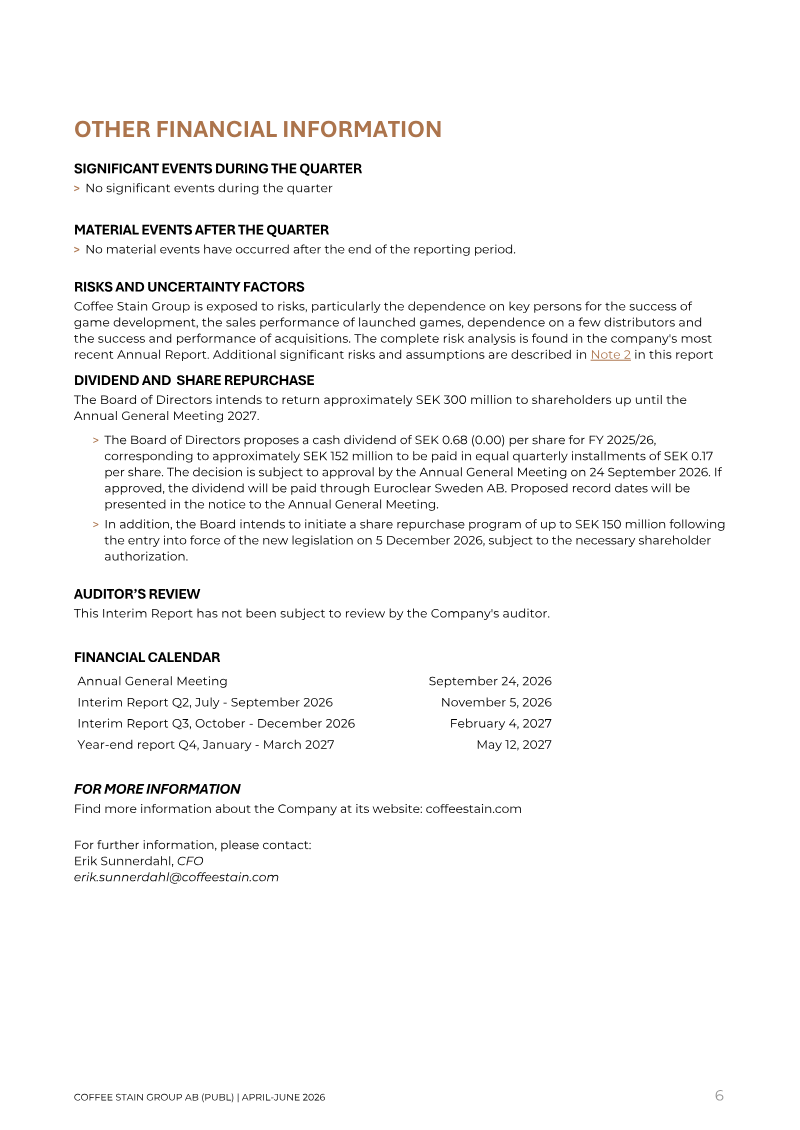
Ficsit Coffee’s interim report for the first quarter of fiscal year 2026/27, covering April through June 2026, details a period of strong financial performance driven by core portfolio resilience and successful new game launches.
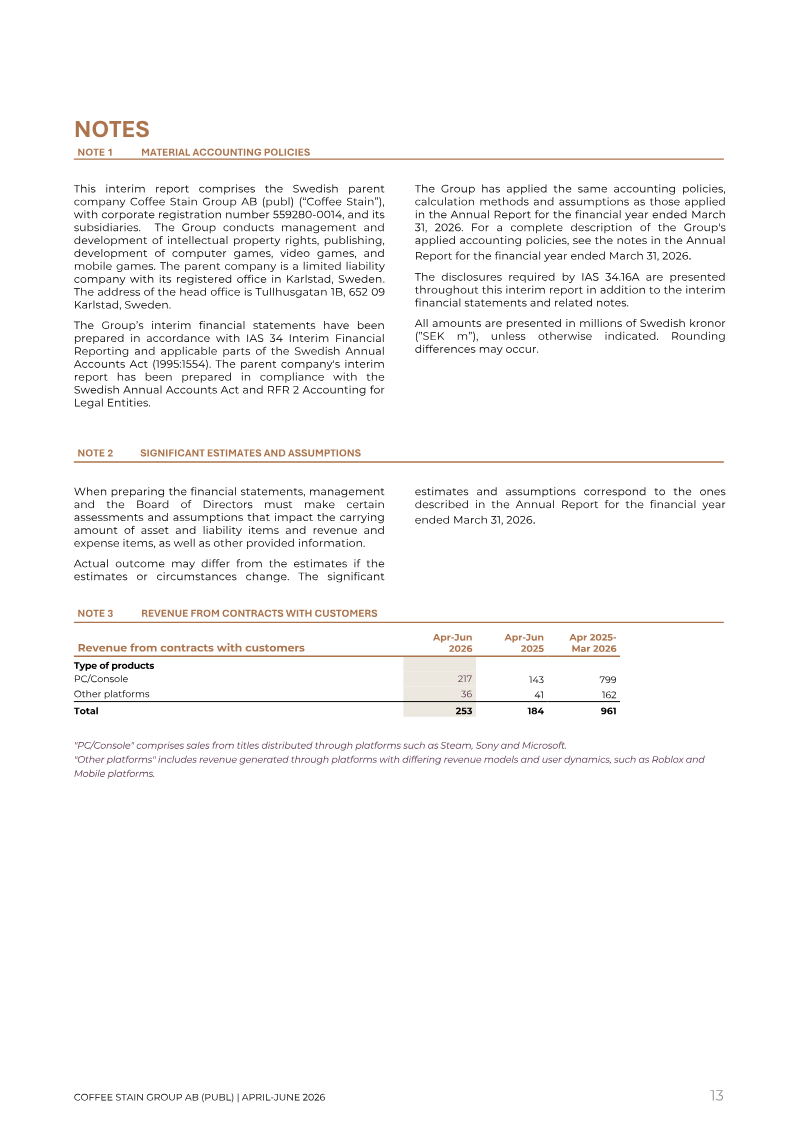
- Ficsit Coffee reported Q1 2026/27 net sales of SEK 253 million, a 37% year-over-year increase, with Cash EBIT rising to SEK 95 million and a 38% margin.
- The company maintains a strong liquidity position with SEK 722 million in cash, supporting a proposed dividend of SEK 0.68 per share and a SEK 150 million share repurchase program.
- Growth was driven by the Early Access launch of Deep Rock Galactic: Rogue Core, which generated SEK 48 million, and the continued performance of Satisfactory following its console release.
Capital Markets Event 2025: Coffee Stain Group
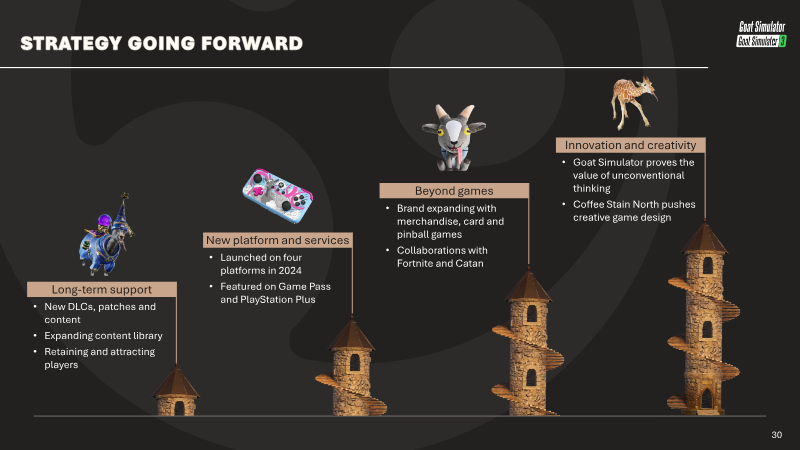
Capital Markets Event 2025 showcases the Coffee Stain Group’s strategy of building a portfolio around small, autonomous teams that prioritize gameplay quality and community engagement.
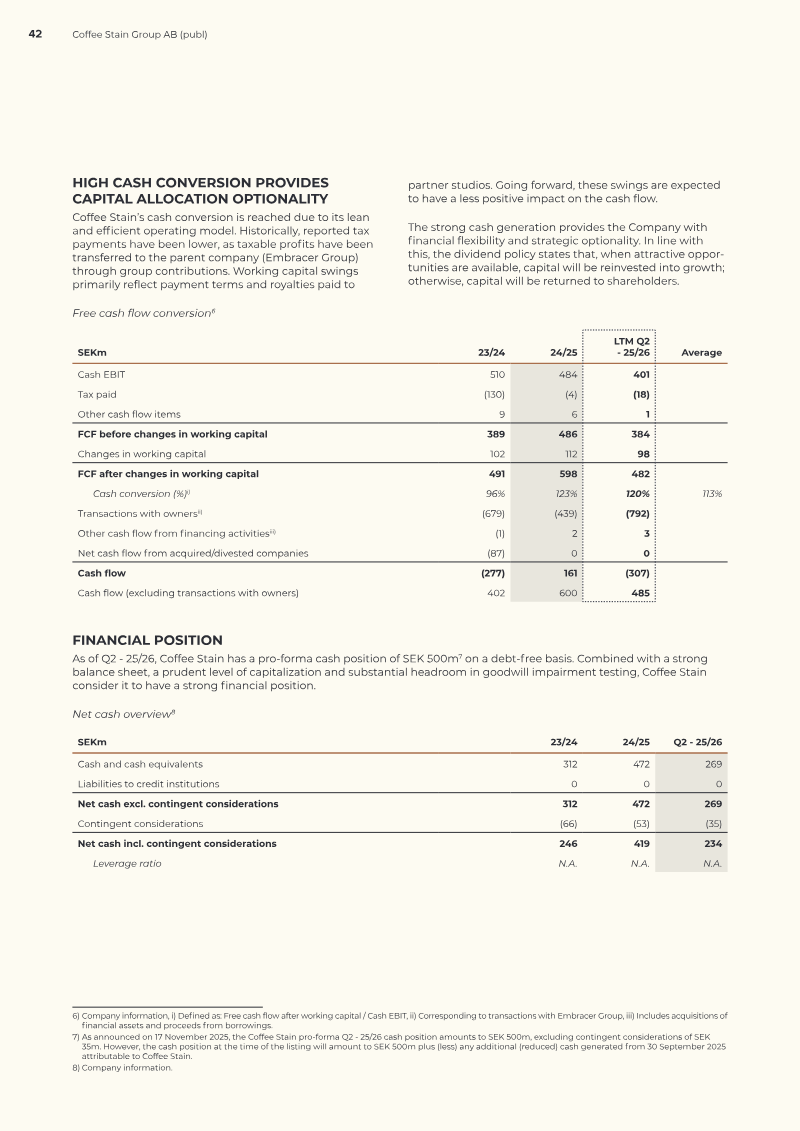
- Coffee Stain Group maintains strong financial health with a 34% net-sales CAGR to SEK 1.2 bn, a 44% cash EBIT margin, and 120% cash conversion.
- The company holds SEK 472 m in cash reserves with zero external debt, providing significant flexibility for future M&A and capital allocation.
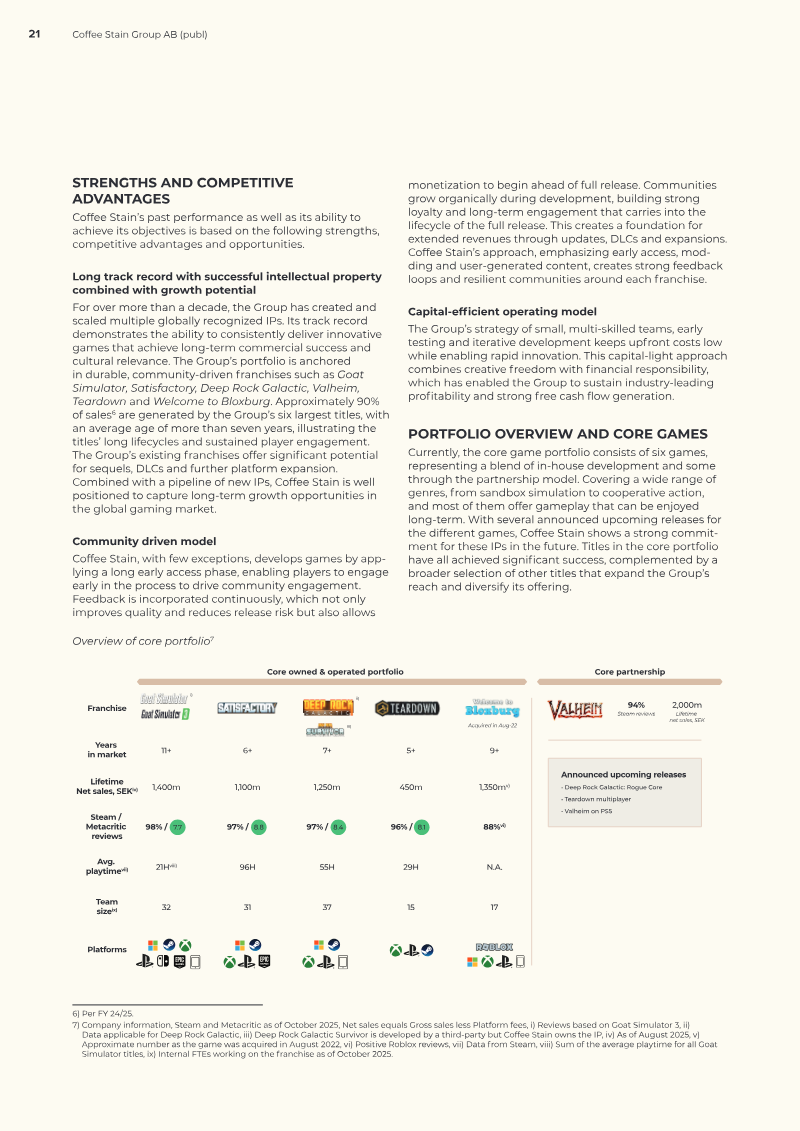
- Ninety percent of net sales are generated by a core portfolio of flagship titles—Goat Simulator, Deep Rock Galactic, and Satisfactory—which consistently maintain review scores above 96%.

Company Description for Admission to Trading: Coffee Stain Group AB
Coffee Stain Group AB is preparing to list its class B shares on Nasdaq First North Premier following the distribution of Embracer Group holdings to Embracer shareholders.
- Coffee Stain Group AB will list its class B shares on Nasdaq First North Premier on 11 December 2025, following a distribution of Embracer Group holdings.
- Revenue is highly concentrated, with approximately 90% of sales generated by six flagship titles including Goat Simulator, Satisfactory, and Valheim.
- Financial performance declined in FY 2024/25, with adjusted EBIT falling to SEK 126 million from SEK 240 million and margins contracting from 50% to 31%.