
Titanfall
GameBy Respawn Entertainment · Released Mar 11, 2014
Documents about Titanfall

Interview: Highguard developers on dealing with the hostile reception to its ambitious shooter
Wildlight, an independent studio founded by industry veterans from the Apex Legends and Titanfall development teams, recently launched its debut title, Highguard.
- Wildlight, a 100-person studio founded by Apex Legends and Titanfall veterans, is positioning its debut title 'Highguard' as a 'raid shooter' that blends base-raiding, open-world exploration, and tactical combat.
- To mitigate the risks of the saturated live-service market, the studio launched with a full year of content already in development and a pre-planned roadmap.
- The studio utilized a surprise reveal at The Game Awards followed by a six-week quiet period to manage community anticipation and finalize development.
12 Game Industry Predictions: The Numbers Don't Lie!
The global gaming industry faces a transformative period leading into 2026, characterized by a structural shift toward high-fidelity, cross-platform experiences and a challenging environment for traditional mobile and PC sectors.
- The global player base is projected to grow by 5% annually, reaching 1.7 billion players by 2026, supported by the rising popularity of cost-effective PC handhelds.
- Western mobile gaming firms are losing market share to Chinese publishers, who currently occupy six of the top twenty global market positions.
- Venture capital investment in gaming is expected to hit record lows as exit multiples compress, shifting investor focus toward user acquisition financing rather than traditional project funding.
Shooter Monthly #2: Call of Duty Flops, Battlefield Hops, and Arc Raiders Pops
The shooter genre is currently undergoing a significant structural shift as established franchises face declining engagement while newer, innovative titles capture market share.
- Call of Duty: Black Ops 7 is underperforming significantly, with European sales dropping 63% compared to Battlefield 6 and falling over 50% below its predecessor.
- Arc Raiders has emerged as a market leader in the extraction shooter genre, generating over $300 million in gross revenue from 7.7 million units sold.
- Player fatigue with futuristic settings, ineffective marketing, and the lack of cosmetic carry-overs are identified as the primary drivers for the decline of established shooter franchises.
Habby's Wittle Defender vs Disney Solitaire: One of them is a Future Hit!
The mobile gaming landscape is currently defined by two distinct strategies: the aggressive application of legacy intellectual property (IP) to saturated genres and the iterative refinement of hybrid-casual mechanics.
- Habby is scaling revenue by applying a standardized meta-layer—featuring roguelike abilities, stat-based power scores, and squad RPG elements—across diverse core gameplay loops.
- The soft-launch title 'Wittle Defender' utilizes idle tower defense mechanics to target 'dead time' consumption, intentionally reducing the high-cognitive-load requirements of active-input mobile games.
- Major publishers are leveraging legacy IP like Disney and Candy Crush to secure a cost-per-install (CPI) advantage in the saturated solitaire market, currently dominated by titles like Grand Harvest.
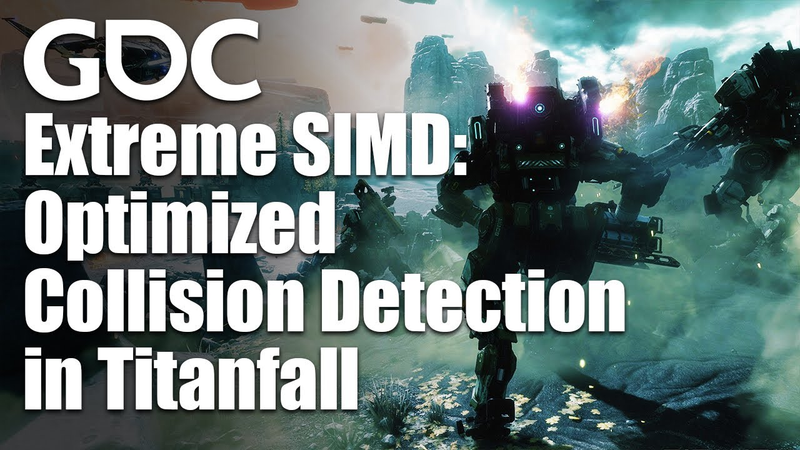
Extreme SIMD: Optimized Collision Detection in Titanfall
Optimizing collision detection for Titanfall requires a fundamental shift toward data-oriented design, specifically through the implementation of a four-way Axis-Aligned Bounding Box tree structure.
- Titanfall's collision detection was optimized by implementing a four-way Axis-Aligned Bounding Box (AABB) tree structure, which replaced traditional binary trees to improve traversal efficiency.
- The team utilized SSE3 SIMD instructions to perform four-way collision tests in parallel, significantly reducing the computational overhead of ray-box intersection checks.
- By leveraging IEEE 754 floating-point properties, the engine treats plus/minus zero and infinity as limits, allowing the collision code to naturally handle edge cases without explicit branching.
Apex Update | Games ReCAP Episode 018
The modern gaming landscape is defined by the transition toward games-as-a-service models, where titles like Apex Legends and Fortnite utilize persistent, evolving maps to sustain long-term player engagement.
- The transition to games-as-a-service models, exemplified by Apex Legends and Fortnite, requires persistent map updates to sustain engagement but risks employee burnout and competitive imbalance.
- Developers can mitigate the pressures of constant content cycles by implementing multi-team rotation models and establishing satellite studios in major industry hubs to improve talent retention.
- Marketing strategies have shifted from traditional media to influencer-led promotion, though this approach carries risks of unsustainable development and deceptive industry practices if not balanced with stable, player-focused builds.
Efficient Texture Streaming in Titanfall 2
Optimizing texture streaming in Titanfall 2 centers on a sophisticated prioritization system that moves beyond simple distance-based metrics to ensure high-fidelity visuals within strict hardware constraints.
- Titanfall 2 optimizes texture streaming by using a cost-benefit metric that divides pixel coverage by texel count, allowing for dynamic mip level management beyond simple distance-based metrics.
- The engine utilizes a dynamic memory buffer that achieves a 9:1 compression ratio to manage high-fidelity assets within strict console hardware memory constraints.
- Runtime performance is maintained through asynchronous I/O and a dedicated texture creation thread, which effectively minimizes driver-related hitches.
Designing Unforgettable Titanfall Single Player Levels with Action Blocks
The development of the single-player campaign for Titanfall 2 relied on the implementation of action blocks, which are rapid, low-fidelity gameplay prototypes designed to test specific mechanics in isolation.
- Respawn Entertainment utilized a rapid-prototyping technique called 'action blocks' to develop the single-player campaign for Titanfall 2, resulting in approximately 45 distinct gameplay prototypes over a six-week period.
- Action blocks are defined as short, focused design experiments—typically taking no more than one to two weeks to complete—that prioritize testing specific gameplay mechanics like platforming, combat, or puzzles over high-fidelity art or animation.
- The action block process allowed designers to solve complex technical challenges, such as interacting with moving geometry or time-travel mechanics, before committing to full-scale production, thereby preventing costly rework of assets and rigging.
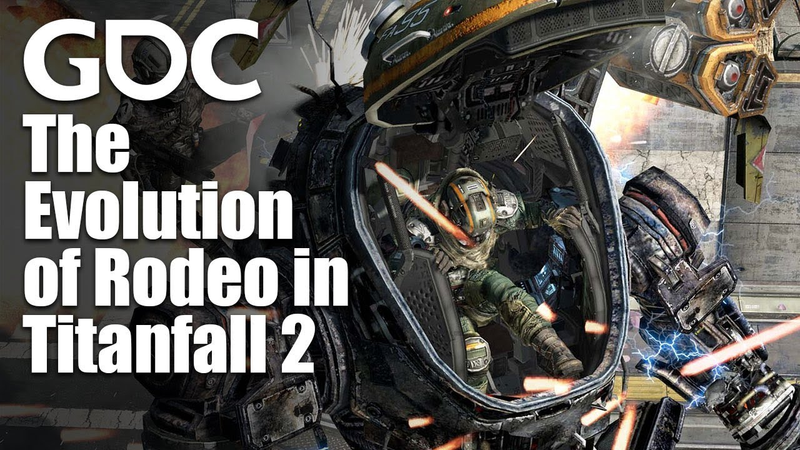
The Evolution of Rodeo in Titanfall 2
The rodeo mechanic in the Titanfall series serves as a critical design bridge between agile pilot movement and armored Titan combat, aiming to capture a cinematic David versus Goliath dynamic.
- The 'rodeo' mechanic in Titanfall 2 was fundamentally redesigned from a long-duration damage-over-time process into a short-duration event centered on stealing and delivering batteries to create a dynamic 'cat-and-mouse' gameplay loop.
- In Titanfall 1, the rodeo sequence lasted 15 to 20 seconds to provide a cinematic experience, but this was shortened in the sequel to prevent the mechanic from feeling like a disconnected minigame.
- The introduction of the 'battery' system in Titanfall 2 allowed for increased team coordination, as pilots could insert stolen batteries into friendly Titans to restore health or shields.
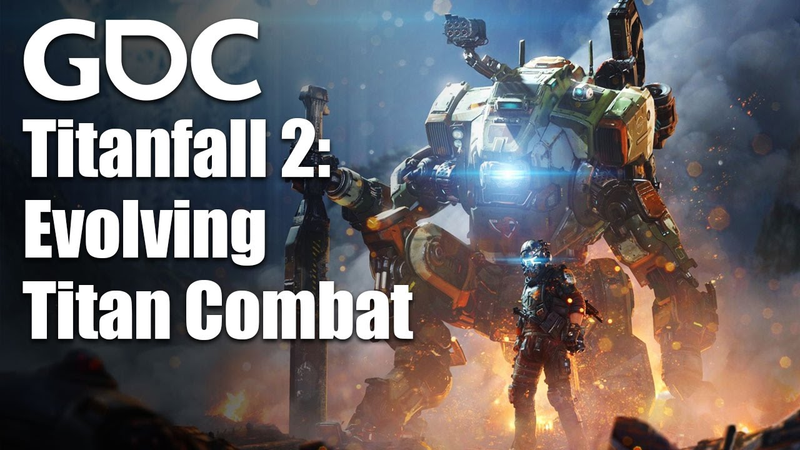
Solving Titan-Sized Problems: Evolving Titan Combat in Titanfall 2
The evolution of Titan combat in Titanfall 2 centers on transforming high time-to-kill (TTK) gameplay from a repetitive, bullet-sponge experience into a dynamic, skill-based system.
- Titanfall 2 transitioned from generic, customizable loadouts to distinct, role-based Titan classes inspired by fighting games and MOBAs to foster complex ability synergies.
- The combat model shifted to a high time-to-kill (TTK) system by replacing hit-scan weapons with low-frequency, high-impact projectiles to reward mechanical precision and positioning.
- Developers mitigated the risk of stagnant, unkillable team compositions by removing automatic health regeneration and enforcing unique, character-specific loadouts.
Companies behind it


As the documents state it.