VideoThe Game Business
Interview: Highguard developers on dealing with the hostile reception to its ambitious shooter
27 Jan 202627 min video
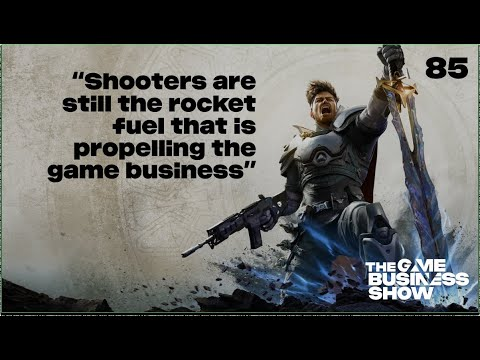
60 plus people on this team were the launch team of Apex and Titanfall. Wow. And it was a crowded genre then. Also, when we launched Apex, we were like the 50th battle royale game to come out.
Shooters are still the rocket fuel that is propelling the games business.
Yeah.
Both in monthly active users, in play time, and in revenue.
Hello and welcome to the game business show with me, Christopher Dream. If you turn back to the Game Awards in December, you may recall the events one last thing was a little bit unusual. Rather than a big established mega franchise, it was a new IP, a live service fantasy shooter game called Highguard. It was made by an independent studio as well called Wildlife, and they're [clears throat] even self-publishing it now. Wild Light isn't a complete team of newbies. They're mainly made up of developers from Apex Legends. They know what they're doing. But ever since the reveal, there's been a bit of hostility towards the game. There's been a bit of fatigue around live service titles and people were expecting perhaps something different to
end the game awards. But I actually thought the game looked super interesting. I thought it looked fun. The game just dropped as of this week and just before its release, I had a chance to speak with the founder and CEO of Wildlife, Dusty Welch, and the founder, studio head, and game director, Chad Grineer. Check out this interview. So, hello, welcome to the show. for people who are listening in on this podcast, can you and they want to recognize who is who. Please introduce yourselves and what it is you do at Wildlife.
Sure. Thank you very much. Excited to be here. I'm Dusty Welch. I'm the co-founder and CEO of Wildlife Entertainment.
Yeah, thanks for having us. I'm Chad Grineer, also co-founder and studio head and game director of Highgard.
Well, let's let's start with Highgard. I've not played it. I've not seen it yet. Tell me about this game.
Yeah, Highguard is a is a combination of things really. Um, so we're we've taken our 20 plus years of shooter experience and created this passion project that combines different aspects and genres of of shooters. And the best way to describe it is probably as a raid
shooter, which we've we've come up with that term um mainly because it doesn't fit into an existing category in today's market. And so in trying to describe this game to others, we kind of came up with that term raid shooter. And what that means is it's a game that's about raiding bases. So, a match starts two teams of three. You start by picking your warden. Each warden has special abilities and traits, things like that. It's primarily a shooting game, so you can also customize what your loadout is and which first uh primary secondary gun that you have. And um and then you pick a base. So, instead of just immediately going out and fighting, you actually choose a base. Each team is presented with four options randomly and your team votes on which base you would like to be spawning in and that's the base that you're going to defend for the game. After that, the map opens up. It's it's sort of set in an open world. And so each team then rides out into this open world and it's a gear up phase. So you're looking for better guns, um upgrades to your armor, different sorts of items that you can get that help you
throughout the game. And then this shieldbreaker spawns somewhere in the in the map and it's this big giant glowing sword and it's marked under a storm. And so both teams are now going to fight for the possession of this shield breaker which is the key to the enemy's team's base. And so it's a bit of a reverse capture the flag in a sense that you're fighting over this item in the map, but instead of returning [snorts] the shieldbreaker back to your base like a capture the flag game, you're actually pushing to the enemy base with it
and trying to use the shield breaker to break the dome protecting the enemy team's base. And if you can do that, you spawn a big giant siege tower that comes in. And the game mode shifts into an attack defend kind of a game. So now the one team is on defense, protect their base, and the other team is spawning at that uh siege tower. And you've got sort of an attack defend game where one team's trying to plant bombs and destroy the base and the other team's trying to defend. And so sometimes that ends in a winner if you actually destroy their
base, but more often than not, it ends in partial damage of the base. And uh the raid ends and then the loop resets. The gear and AR uh guns in the map get upgraded. So now you might be able to find purple or gold guns in armor and sort of everything escalates and it's a back and forth until one base reaches zero. So it's kind of a lot of familiar elements but in a new mashup and a new game loop. And so we're calling it a raid shooter.
The live shooter sector is so challenging. For every Hell Divers 2 Arc Raiders, there's numerous Concords and things like that. What do you think about is about your game that's going to resonate and and be one of the former rather than the latter?
Yeah, I think our game is new and unique. Um, you know, we're seeing people who who have actually played the game and they just can't stop talking about how it's fresh and new and unique, right? There's familiar elements. People that play shooters will understand bomb plant, bomb diffusal, and shield breaker, uh, trying to rush it to the base and all this, but our game has
elements that are nowhere out there, and it's a game loop that doesn't exist, right? That's why we kind of had to come up with a new way to describe it in in the raid shooter term. But look, we love making shooters. It's our expertise.
We're doing our best to just put all of our passion in this and we have a track record of making really great shooters. And most of us come from Apex. We, you know, 60 plus people on this team were the launch team of Apex and Titanfall.
Wow.
And it was a crowded genre then also. Um, when we launched Apex, we were like the 50th battle royale game to come out. and uh you could have said the same thing there, but you know, we're doing our best to make a great game and I think that a lot of players will appreciate what we're doing and uh really love our game.
There's a a really core PvP element to this that makes the game competitive, which as you know uh is extremely popular in the shooter space right now, and that's what keeps kind of that sticky stickiness to the game. but it's also infused with personality and characters and some light narrative and
backstory which can appeal to a different segment of the shooter audience much like an Apex did. So there's a slice of this that is different, unique, but also familiar and also kind of for everyone in the shooter space.
You mentioned Apex there and obviously uh I was really fascinated by the reveal strategy because I'm a business journalist. I instantly go, "Oh, how they revealed this is interesting." Um, you drop a big trailer at the Game Awards, go quiet for 6 weeks and suddenly go big with the launch. Was that Apex inspired because I guess you didn't pre-announce Apex, but it was you had that big moment where he suddenly made a big noise at the launch.
Yes, very much so. You know, Chad and I were working together on Apex and he was the game director. So, that worked, as you know, extremely well to surprise and delight that launch. That was always our plan when forming the studios. We knew we'd make a shooter. We didn't know what type or what it was going to be, but we wanted to to do that surprise drop. Again, we're an independent studio without the big backdrop and support of a big organization. So, you know, our
money and funding goes right into the development of the game. So, a surprise drop always made a lot of sense for us. We we kind of put everything into the game, let it speak for itself. The deviation for us for TGA's was interesting. Jeff is a friend of the studio. We've known him for a long time back in the Titanfall days. And Jeff came in and played the game and he was blown away. He asked us to be a part of the TGAs and do something, you know, kind of special by putting this kind of game there in an indie studio. And quite frankly, we were honored to you, we've got big franchises in our past, but nobody knows who Wild Light is. So to be on the stage in the in the biggest show with so many other known games and devs felt like an honor. And so, uh, we revealed a trailer there and and ultimately we went back to our game plan, which is let's stay focused, let's stay quiet for the next six weeks. And really kind of nothing speaks better to players than hands on the sticks. And so, you know, today as you're as you're
watching this at home, the game is available and you can now play.
Yeah. Jeff [clears throat] is my business partner. He he co-founded the game business. And I asked him, I said, "So, is is the game really good?" And he went nodded enthusiastically. It was a I could tell he was a I could tell he's a he's a fan. Um, you talked about the fact you're independent. You are self-publishing this game, right? That's you're doing this yourself.
We are. We are self-publishing as well. Yes,
that's quite an undertaking. It is. Why go down that route?
Well, uh, to be honest, when we started the studio, we didn't have the intention of self-publishing, but you know, the the landscape, I think, has changed positively for for indie development. um allowing us to fulfill that type of of capability. Um but I think it would be foolish to think we could kind of just do it on our own with no expertise. Uh certainly I have a deep background in in business and publishing throughout my career and our experience together on on Apex gave us a lot of uh encouragement that we could pull it off. But just like
building a game, you got to it all starts with the team and you have to have a great team like we do at Wildlight. Um, but we onboarded hires that we were familiar with, that were successful both at EA and directly on Apex and other franchises that they had done in their past to build our publishing capability out internally. So, we actually have a team internally that has launched multiple live service games. So, that gave us a lot of confidence.
So, over four years, you didn't just build out a development studio to make a big live service game with live ops and all the things that come with it. You built a publishing team as well. Yes, that that is that is right. Chad and I learned a lot on Apex. That was our first live service game. Um, tons of lessons on that, both on the business, the publishing side, obviously on the game development, and then importantly for live service. And so, we started this organization with a lot of those learnings in mind. So, for example, on live service, Apex launched very successfully, as you know, and and so many it was the fastest game to 30
million players in history at its time. Um but but really we treated the launch as the end point when that is really as you know just the starting point in engagement with your audience and so we were dark for about 9 months while we took time to build more content. Um this is not the case with Highguard. Highguard we already have a year's worth of content either finished or in deep latestage development. We have a full road map that is being released the day we launch the game as well today that all players can see that that kind of outlines what they can expect from us.
The thing with road maps though is that you you think you know what what your fans will want reaction will be and then they sort of uh have a different reaction to stuff and you might have to scrap I remember when Sea of Thieves came out I spoke to Rare and and they just had to scrap their entire road map and start again. [laughter]
It's almost guaranteed that things will change once we launch. Um, it's an exciting endeavor. We're excited for it. Um, one of the things in addition to what Dusty mentioned, we learned how to
communicate with our players on Apex, right? Um, we had a few missteps there and we're taking those learnings and applying them here and having an open dialogue with our players. Um, excited to see what they gravitate towards and what they care about and yeah, make sure that we're fulfilling the needs of the player base and putting them first. But, you know, we still wanted to start with something. So, we've got a year's worth of content we think they're going to love that's uh you know in in deep development and and ready to launch, but also internally things that aren't really playerf facing. It's just the way that we're making the content, the partnerships um to make the content, the way that we're just developing internally. We're set up for success for this live service. You know, we were already practicing rolling out hot fixes and patches and and um deep into, you know, we're testing season 2, season 3, and all those builds already. So, I feel like from a development perspective, we're just much better equipped for success this time.
It's really interesting because the speed in which these games get updated from sort of the big Asian companies, super fast, right? Remarkable sometimes.
And I spoke to Patrick Sodland last year at Embark about how they dealt with that being a smaller studio trying to compete with these Goliaths. I mean, I don't know actually how big you are, but is that how you've approached the problem sort of getting there in advance? Well, we're we're about a hundred people right now, so we're a pretty small team relative to some others out there.
Yeah.
Um, we just have to focus on the things that matter most and, you know, at launch it's going to be stability and and making sure that the game is running well and couple weeks in, we've got season 2 coming out, which we're adding a lot more content plus a ranked mode. But we are a smaller team, so it's it's about focusing on on the things that matter, engaging with our player base, letting them know what's happening, acknowledging that we hear them uh you know, if there's an issue or acknowledging that they're excited about something and change our development plans to support what the players needs are. So, you know, it comes down to having good communication really with the player base, I think, is most important. Have you had to develop new processes and when you've come out of, you know, Respawn and and now you're a
smaller team trying to do something equally as ambitious, have you had to rethink how you approach development generally?
Yeah, I mean a lot of us have worked together for 10 plus years, some of us 22 years. So there's a lot of just working well together over the years and and solving a lot of these problems. You know, that's one of the benefits of Wildlife is that because there's so much history there, we were able to hit the ground running in the first year, really focusing on game and how we're how we're building the game, and we sort of had a a built-in process that we knew worked from all of our years working together. And it's it's been really great. It's allowed us to spend the last four years really just finding the fun instead of learning how to work together. Also, you know, we stumbled a lot on previous projects and, you know, you always try to apply those
going forward. We'll stumble in new ways now, I'm sure, but we won't fall into the the old traps.
Don't read that, that you're a remote studio.
We are. We're primarily remote.
Is that from your previous life or is was that new for you?
Well, think back to four plus years ago
when Chad and I left. And it it sounds so far away now, but that was still the COVID world, right? Almost almost the postcoid world, but we were already all uh desperate working from, you know, home locations. And so we were already really familiar with operating uh franchises and games and live service from a remote perspective and building that that muscle memory and how to operate with each other. So when we formed the studio, it only seemed more natural to continue on with that uh that similar approach of being more remote.
How do you keep that? I guess cuz you've known each other so long, maybe it wasn't so important, but obviously when you have new people bringing in, how do you keep the connection and that sort of important thing that you do when you're creating to to have people just understand each other and and and that kind of thing.
It's definitely a challenge, but um we're probably not perfect, but we've found found some ways that we can help there, right? So,
we've um tried to get the team together in person um throughout development. So
sometimes it's to celebrate um something sort of more work workrelated, a milestone for instance, an internal milestone, but also, you know, just getting together in the summer and doing some fun events as a team and
um getting together and you know, going and having drinks and driving go-karts or whatever, you know, the the the day wants to be has been really great. And sort of trying to do that when we've brought in a handful of new folks so that we can get to know them. you know, Dusty and I have traveled and and also just visited people in different parts of the country. So, we're trying to make an effort to see actual faces as much as possible um as much as we can. And it's been working pretty well. We also utilize different tools uh within the studio. For instance, we have a private Discord channel that most of us hang out in all day and it sort of simulates uh you know sitting in an office with people and there might be a handful of people in a Discord channel that aren't talking but we're there and you feel like you're not alone. And so we have
lots of little ways of of bonding I guess and getting to know each other. I think a combination of all of those things has has worked pretty well. If you if you think back to uh business principle or jargon from quite some time ago, it was management by walking around. If you remember that and uh you know in this world we kind it's like management by flying around and and visiting in person. And I think you can't underestimate the impact of that of a leadership team going out and visiting with you know different departments and groups and and teams. we have, you know, we have people all over the country, actually in multiple countries. And so we try to endeavor to make sure that we're putting, you know, our faces out there and listening and bringing that bond back in. I think importantly also we have a really good group of uh leaders in this company that that that Chad and team have worked with for a very long time and a lot of that responsibility of culture and how we work and how we operate that is is
memory to the team for a decade plus now it's their responsibility and their opportunity to infuse that down into new hires as well. So that decentralization a bit of of management is super important for us to build down in.
So you sort of launched this at 2022 I guess and so just as the industry was about to head into this downturn that we've all had to endure. Has that affected you much?
We're out a little bit before and ahead of that that curve. So uh you know financially no it hasn't impact us. I think from a positive standpoint, if there is one, the ability to identify and attract and retain great talent to the team has improved. And so that has been a benefit. I would believe.
There's a bit of apathy towards live service games at the moment. I think people announce something and they're just like sometimes you even get hostility, which I don't quite understand. Does that surprise you? Is that something you've had to come to terms with as you've sort of gone from
when you launched to to where you are uh when you open the studio, sorry, to where you are now?
You're right. I think that there's
there's been a bit of a shift, right, in the online mentality and and this sentiment.
Um I I don't know that we really let it affect us. We at the end of the day we're we've been successful in building big franchises that that stand the test of time by continually surprising our audience and dialoguing with them and that's the intention here as well. Um but ultimately when you look you know kind of top down 30,000 foot view in the shooter space I mean shooters are still the rocket fuel that is propelling the games business both
yeah ma monthly active users in play time and in revenue. Um, the Kaggers are really positive and strong and continuing to grow. Five of the top 10 games on on PC are shooters by MAU. And so we can go on and on with stats.
Oh yeah.
But still, there's an undercurrent of sentiment and and and some disregard.
Um, I think what's important and what we focus on as a studio is what we can control, which is making a great game that we love to play internally, believing in that, and then releasing it and being malleable to have that open conversation with the audience and being able to adjust. Obviously, there's these established giants, but they all I think about October, November time when you had Battlefield and you had I know your game's different to these Battlefield and then Arc Raiders and then the Fortnite with the Simpsons and it was just such great stuff and there was so much excitement and buzz around it. Okay, some of those Fortnites are you know been there around for a while but you go back a year and I go back to August and September when Hell Divers 2 came to Xbox and you think these are all different things happening and people were getting very excited for them. I just think perhaps there's probably a little bit skepticism in advance. But if the game can excite people and is fun, that's the most important thing, like it's fun to play, then you can you've seen it countless times of it just breaking through and doing well, which I guess is what you're hoping for um today.
Yes, we are.
And I Yeah, our game is fun. Uh a good sign, the first good sign of a of that you're you're on to something is that the dev team loves to play it. And so we went from uh three play tests a week to five to now two days a week and then now the team can't get enough. So we're actually playing on Saturdays and Sundays just not you know not workrelated just we just need to play high guard and so you know come launch we'll be able to play it as you know all day if we want. So it's great the team's really excited uh for launch and and when you have your dev team trying to play the game all night with each other that's a good first sign.
And you had the event the other day as well. Was it I guess how did that go?
Yeah, exceptionally well. Uh it was so rewarding for Chad and I and for all of our team to finally be able to one show the game, but to talk about it. Um, and as great as that was to see the faces, you know, after about a 20, 30 minutes of playing
when people start to really understand and see how unique this game is, um, to see their faces and then to have them jump out of their chairs and come talk to individual developers about how unique it is and I, oh, I didn't know it was going to be this and I see a part of this game in here and part of this and you've done something unique in a different way. Congratulations to you guys. That's you rarely, we've done a lot of these events in our lives, watch a lot of games. You rarely get that kind of reception from a stoic crowd. And so that was really encouraging and exciting for us to see. We've always believed in it, but you never know until you put it in people's hands what it's going to do. So that was exciting.
You must have been having to bite your lip or your tongue, you know, over the last six weeks as people start making assumptions on that trailer and and all that kind of thing.
You do. That's a great point. That's challenging, right, for anybody. Uh, and in our position, you know, we're we're we're kind, you know, parents of the studio, if you will, the the the guardians of it, and it's hard to not
want to say something and protect your team. But ultimately, this team is resilient. Um, they were unfased by that type of feedback. They have been there, done that. They've built great franchises. But that said, we also didn't put our heads in the sand. We listened, we read, we took it to heart, and in some respects, we retoled a little bit here and there, probably messaging and positioning and how we release and talk about this game. Um, and on Monday, you know, the day the game is being released here, there is so much content to explain this game and to show it and give you a very deep dive into the uniqueness and the mechanics of Highguard. So, that's super exciting. But yeah, it it was hard to stay quiet. We wanted to just release it all right. Then
must require I mean just not just this game in particular but any doing any live game must require a certain level of mental resilience, emotional resilience cuz that idea of putting something out there to gamers and getting feedback and having them just
talk to you and you you've I don't know. I don't know how I I don't think I'd cope with that and I'm I'm online all the time.
It's it's definitely a challenge. It takes a couple projects probably to get used to it and develop that thick skin cuz I I go back to my early days and working on Call of Duty 1 and 2 and same thing, right? You always get mixed feedback even even games that are, you know, top, you know, top tier games there there's always critics, right? And so over the years, you you get you get thicker skin and honestly what um all it takes is a couple really great comments and it makes up for everything, right? So when when if I wear a t-shirt from an old game I worked on and I'm out in public, you know, it when the game is fresh, it might be every week, but I'll wear an old shirt and it, you know, maybe once a year somebody comes up to me and they say, "Did you work on that game?" You know, and they tell me this wonderful story about how they met their husband or their wife or their best friend or how it got them through cancer or this or that. And honestly, all it takes is one of those and it just makes you not care as much about all the all
the negative, right? you still listen and you still you still, you know, value their opinion, but it um it puts everything into perspective for you.
And I think ultimately the feedback, the noise, the volume is really showing that that there's an interest and that somewhere inside them, people do care and they're they're hopefully begging for more. And that's what the launch of the game is. It's the more it's your chance to hands on sticks and play and form your opinion.
I wasn't sure if I was going to mention this cuz it's a bit of a a sad topic now, but I saw Vince Zampella at the Game Awards and you had a Titanfall t-shirt on.
Yeah. Yeah.
And the amount of people that was pointing at him. I love your t-shirt was um I saw that the JW
Yeah, that I saw him too. That was that was a great experience to see him there as well. I'm glad you got to see him.
Yeah. I'll ask one more question because I'm wary of the time. I tend to end on a question like this which is what does success look like to you? What would be a successful launch for High Guard?
Look, we put a lot of passion into this. It's a passion project for us. Success to us is um similar to what I mentioned earlier, right? Other people playing the game, loving the game, building a community, and uh just hearing that hearing that praise from our from our fan base would be all I personally need, right? Is other people to love this game. When we started the company four years ago, it wasn't to reach certain financial goals or anything like that. it was to create great games and let this talented team do their best work. So for me, it's more about uh just being recognized as a game that did some cool things, was innovative, and people love it. Um whether it's a big audience, a small audience, you know, I just want people to love it and see what we see in it and uh get that get that validation.
Wow. Excellent. Well, good luck with it. I appreciate you must be nervous on the eve of launch and it's um the amount of work that you've got ahead of you now. It's all about to begin.
It's all about to start, Chris.
It really is. This is only the beginning. But good luck with it. I
really hope it does very well. And if Jeff is any judge, then I'm sure it will. So, thank you for joining us.
Appreciate it. You take care. Thank you.
That's it for today's episode of the Game Business Show. We'll be back with more news, analysis, data, insight, and interviews in the days and weeks ahead. As usual, do sign up to the game.com if you haven't already. That way, you won't miss an episode. You won't miss a newsletter. Until next time, thank you for tuning in.
Auto-generated captions from YouTube — names and numbers may be misheard.
Wildlight, an independent studio founded by industry veterans from the Apex Legends and Titanfall development teams, recently launched its debut title, Highguard. The studio, led by CEO Dusty Welch and Studio Head Chad Grineer, describes the game as a "raid shooter," a hybrid genre that combines base-raiding mechanics, open-world exploration, and tactical team-based combat. The game features a unique loop where teams compete to secure a "shieldbreaker" to breach enemy defenses, shifting the gameplay into an attack-and-defend scenario.
The studio’s launch strategy involved a surprise reveal at The Game Awards, followed by a six-week quiet period to focus on final development and community anticipation. Despite facing initial hostility and skepticism regarding the saturated live-service market, the team maintains that shooters remain the primary driver of industry revenue, playtime, and monthly active users. The developers emphasize that their experience with Apex Legends provided critical lessons in live-service management, enabling them to launch with a full year of content already in development and a robust roadmap.
Operating as a primarily remote, 100-person team, Wildlight has prioritized internal culture and direct communication with players to navigate the challenges of the current industry climate. By self-publishing, the studio retains full control over its development processes and player engagement strategies. The leadership team views success not merely through financial metrics, but through the creation of a sustainable, innovative community that resonates with players. Ultimately, the studio aims to leverage its deep expertise to deliver a fresh, high-quality experience that distinguishes itself from other live-service titles through its unique mechanics and responsive development cycle.

The Game Business · 2026

The Game Business · 2026

The Game Business · 2026

The Game Business · 2026

The Game Business · 2026

The Game Business · 2026

The Game Business · 2026

The Game Business · 2026

The Game Business · 2026

The Game Business · 2026

The Game Business · 2026

The Game Business · 2026

The Game Business · 2026

Deconstructor of Fun · 2026
Deconstructor of Fun · 2026
Deconstructor of Fun · 2025

GungHo Online Entertainment
The Game Business · 2026

The Game Business · 2026

Deconstructor of Fun · 2026

The Game Business · 2026

Deconstructor of Fun · 2026

CD Projekt · 2026

CD Projekt · 2026
Comments