Tennis
Game
Documents about Tennis
Whitepaper10 pages
Utilizing Displayless Space in Collocated Games
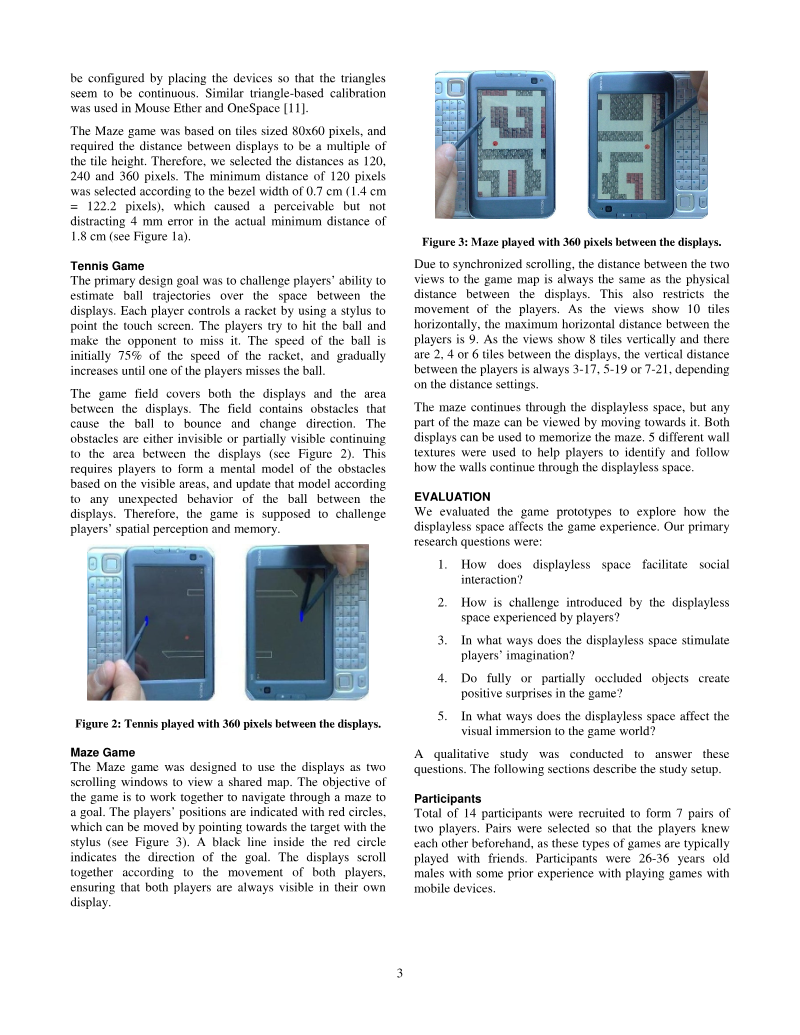
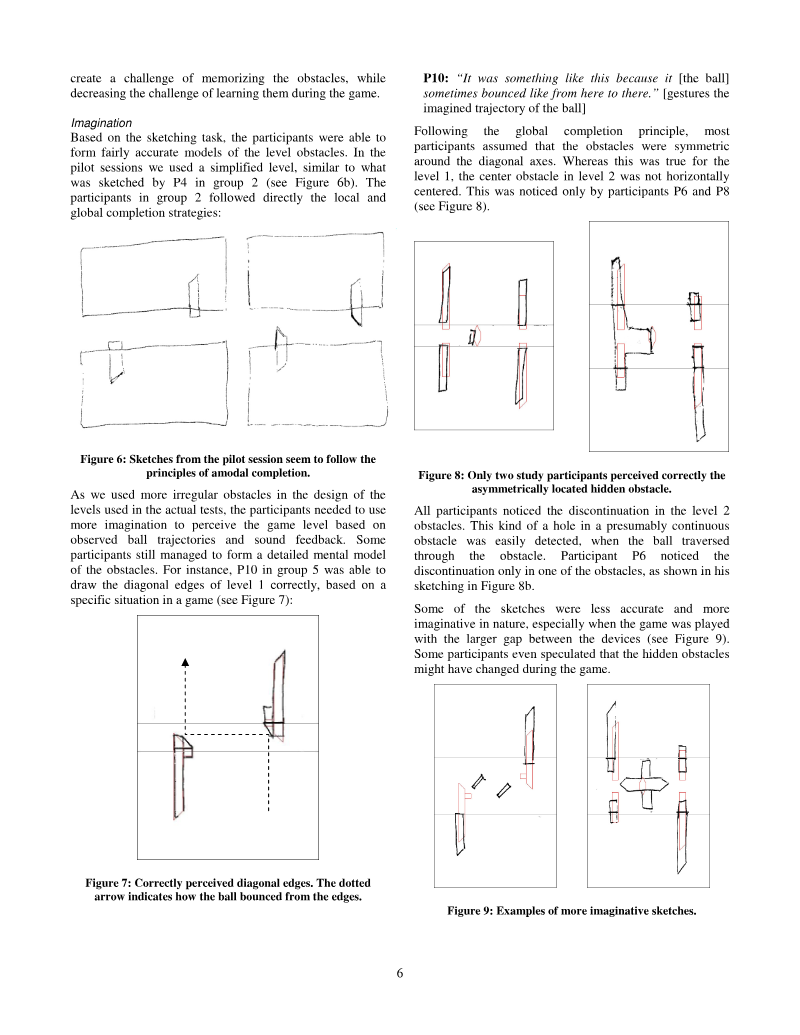
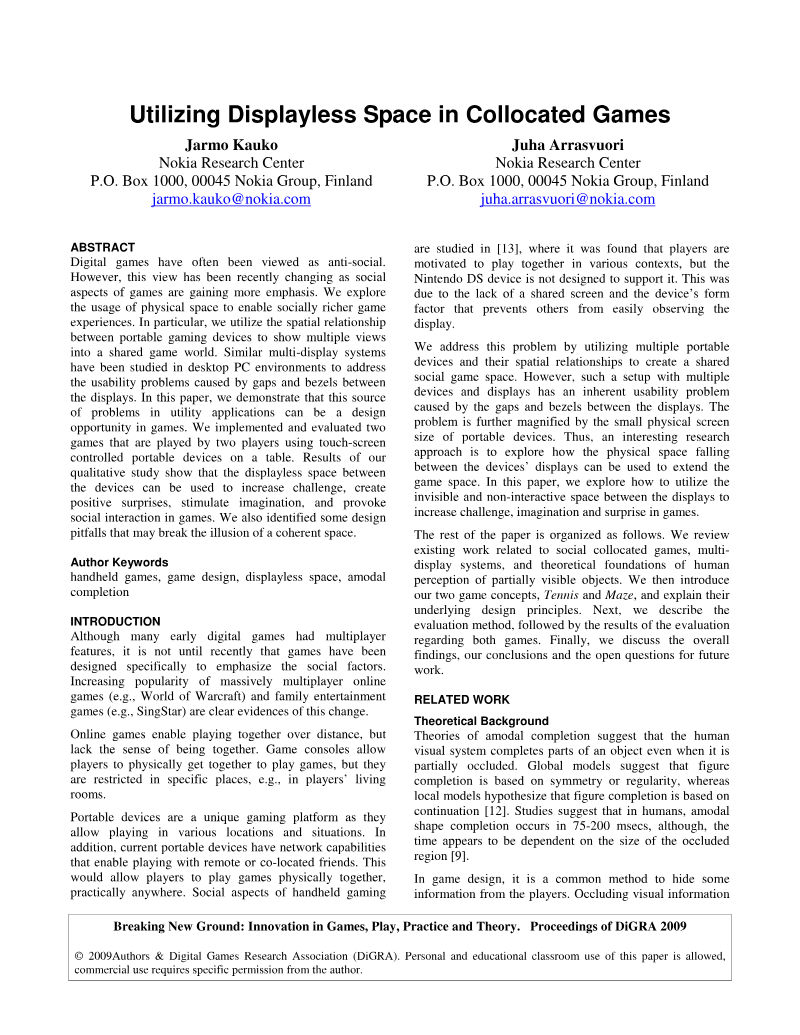
This document investigates the potential of "displayless space"—the physical gap between portable gaming devices—to enrich collocated multiplayer experiences.
- The displayless gap between two touchscreen handhelds can support social engagement in a shared game world when designed well, rather than being treated as a dead zone.
- In the Tennis prototype, most of the 14 participants (seven pairs) judged the experience socially engaging, with players discussing unseen areas, sharing commentary, and coordinating play.
- A larger gap between devices made ball trajectories harder to predict but gave players more reaction time, producing mixed reactions; hidden obstacles and occasional surprises heightened engagement.
DiGRAJan 2009
Article
Two Halves of Play: Simulation versus Abstraction and Transformation in Sports Videogames Design
Sports videogames do not simply simulate reality; they map it onto gameplay through two mediating processes.
- Sports videogames are best understood as simulations built for play rather than accuracy: developers depart from reality wherever doing so improves the experience, relying on players' willing suspension of disbelief.
- Kayali and Purgathofer identify three mediating mechanisms (simulation, abstraction, and transformation) and evaluate games across four categories: rules, player control, course of action, and presentation.
- Transformation keeps real-world elements functional while changing their form, as when judges' scores become collectable items, and control schemes on digital buttons almost always require it.
Eludamos: Journal for Computer Game CultureFeb 2008
Article
Black and White: Attending the Games Convention 2007
Games Convention 2007 in Leipzig is assessed as the leading international gaming fair following the decline of E3, drawing roughly 185,000 visitors, including 3,300 journalists and 503 exhibitors.
- The author judges Games Convention 2007 in Leipzig, presented as the industry's leading fair after E3's demise, to be disappointing, with offerings largely repetitive and few genuine advances in innovation.
- Crysis was shown in a demo the author found impressive, but it had not noticeably advanced since the previous year's showing, and Spore had no playable demo, with its release reportedly slipping to summer 2008.
- Take-Two showed no trailer for Mafia 2, and the Grand Theft Auto IV video offered little beyond material already online, though its reworked New York setting was seen as a promising step toward more authentic environments.
Eludamos: Journal for Computer Game CultureAug 2007