1 free read left. Create a free account for unlimited reading + AI research.
Create free accountArticle Eludamos: Journal for Computer Game Culture
1 free read left. Create a free account for unlimited reading + AI research.
Create free accountArticleEludamos: Journal for Computer Game Culture
Developers depart from reality wherever doing so improves the experience.
Kayali and Purgathofer's paper examines how sports videogames mediate between real athletic competition and play, arguing that they do so through three mechanisms: simulation, abstraction, and transformation. Abstraction constrains player actions, as in simplified control schemes, while transformation retains real-world elements in function but alters their form, such as judges' scores becoming collectable items. The authors contend that sports games derive their rules from two sources, the real sport and the modeling process itself, and they propose a conceptual framework that evaluates games across four categories: rules, player control, course of action, and presentation. Their aim is to offer terminology for understanding genre trade-offs rather than to quantify fidelity.
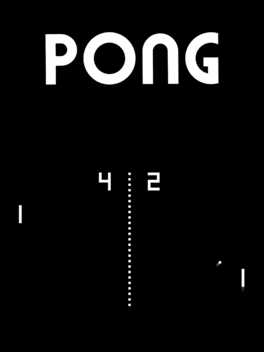
Applying this framework to titles including SSX 3, Skate, Wii Tennis, Pro Evolution Soccer, and Gran Turismo, the analysis finds a clear pattern. SSX 3 and Skate transform real sports into stylized, gravity-defying or city-wide playgrounds while reducing professional athletes to stereotypes. Wii Tennis preserves core tennis rules but abstracts scoring, match length, and movement to yield fast, accessible play. Pro Evolution Soccer and Gran Turismo come closest to real-world rules and presentation, though the former compresses match time and abstracts ball handling, and the latter omits a damage model. Across the sample, games driven by results, such as racing and position-based titles, adhere more closely to reality than score-driven games, and control schemes on digital buttons almost always require transformation, with Pong and Wii Golf marking the extremes.
The authors conclude that sports videogames are inherently simulations designed for play rather than accuracy. Developers depart from reality where doing so improves the experience, relying on the player's willing suspension of disbelief. Racing games are closest to realism because the player controls a vehicle rather than a human body, while games controlling human athletes sustain an "illusion of control" through predictable goals and statistical layers that make outcomes feel like direct consequences of input. Skilled players can perceive beyond this illusion, as with Pro Evolution Soccer's super cancel, which supports competitive depth and e-sports. Coverage centers on console and arcade-era sports titles from the mid-2000s, and the framework's applicability to later genres remains an open extension.
Eludamos: Journal for Computer Game Culture · 2026
The Game Business · 2026