SimCity
Game
11 documents in the library are about SimCity, from writers such as Game Developers Conference, PocketGamer.biz and Mobile Dev Memo. Each has a summary and key insights with the page they come from.
Connections
The documents about SimCity on the inner ring, the other games and companies they name on the outer one. Select a cover to see it up close and open it in a new tab; drag to move, pinch or Ctrl + scroll to zoom.
On Steam
Steam estimates as of 9 Oct 2026. Revenue is premium revenue on Steam only: game sales, without DLC.
- Games on Steam
- 2
- with sales
- Revenue to date
- $7.2M
- all of them
- Units sold
- 595K
| Game | Released | Share of the best seller | Revenue | Units |
|---|---|---|---|---|
| SimCity 4 Deluxe | 2003 | $7.1M | 572K | |
| SimCity™ 3000 Unlimited | 2024 | $67K | 24K |
Documents about SimCity

Podcast: AI and Video Games (with Julian Togelius)
The episode explores the intersection of artificial intelligence and video game design through a conversation between podcast host Eric Seufert and NYU professor Julian Togelius.
- Video games serve as critical sandbox environments for AI research, providing complex reward structures and learning signals that effectively model real-world challenges like financial markets.
- Current AI research is shifting away from narrow benchmarks like chess and Go toward broader applications, including procedural content generation, player modeling, and general game-playing agents.
- Generative AI tools offer the potential to accelerate production cycles and enable highly personalized player experiences, though their adoption is currently tempered by industry concerns regarding consumer backlash and authenticity.
S07, E16: AI and video games (with Julian Togelius)
Video games function as critical model organisms for artificial intelligence research, serving as sophisticated pedagogical environments that force agents to learn, adapt, and navigate complex, non-stationary action spaces.
- Generative AI tools will fundamentally shift game development by enabling shorter production cycles and lower costs, potentially making billion-dollar projects like GTA 6 the last of the pre-AI era.
- Video games serve as essential sandboxes for AI research because they provide structured environments for testing reinforcement learning and algorithmic theories, moving beyond simple win-loss mechanics to understanding player style and content generation.
- Consumer backlash against AI-generated assets, such as the reaction to placeholder textures in Crimson Desert, is often a proxy for broader societal anxiety regarding AI's impact on creative professions rather than a critique of the technical utility of the assets.

Don Daglow and Rebecca Ann Heineman Honored at GDCA 2026
The 26th Game Developers Choice Awards (GDCA), held during the 2026 GDC Festival of Gaming in San Francisco, has announced its special award recipients.
- Don Daglow is the recipient of the 2026 Game Developers Choice Awards (GDCA) Lifetime Achievement Award, recognizing a 55-year career spanning over 100 games.
- The late Rebecca Ann Heineman will be honored posthumously with the 2026 GDCA Ambassador Award for her 45-year career and advocacy for industry diversity.
- Daglow’s career includes pioneering work in interactive baseball, early chatbot technology, and executive production roles on major franchises like SimCity and Star Wars.

Everyone Got the EA Deal Wrong — This Was NEVER an LBO
The acquisition of Electronic Arts (EA) by the Public Investment Fund (PIF) represents a strategic shift rather than a leveraged buyout.
- The Public Investment Fund (PIF) holds 93% ownership of Electronic Arts, shifting the company's strategy from traditional game development toward a global sports, betting, and media super-platform.
- PIF’s long-term vision for EA centers on integrating interactive gaming with live sports rights and predictive simulation technology, though current management lacks the media-industry expertise required for this transition.
- Large-scale media conglomerates, such as those bidding for Warner Brothers Discovery, are deprioritizing gaming divisions in favor of volume-based streaming and algorithm-driven retention metrics.
EA Finland on live services game design with SimCity BuildIt
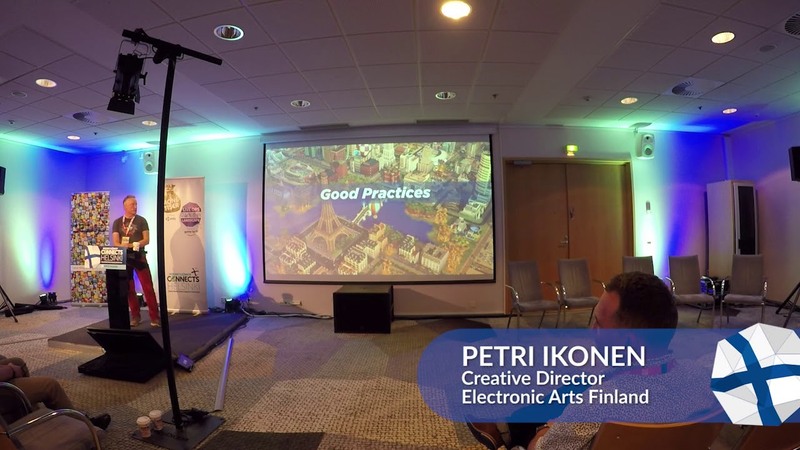
The transition from initial game development to live service operations requires a fundamental shift in organizational structure and design philosophy.
- Successful live service management requires transitioning from a product-based mindset to treating the game as an evolving entity that relies on continuous monitoring and iterative design.
- Development teams should be divided into three specialized units: a reactive team for troubleshooting, a live operations team for weekly content and A/B testing, and a development team for long-term roadmap execution.
- Studios must invest in robust live tools during the initial development phase to effectively track player behavior and optimize key performance indicators post-launch.
SimCity BuildIt - What Did I Learn as a Game Designer?
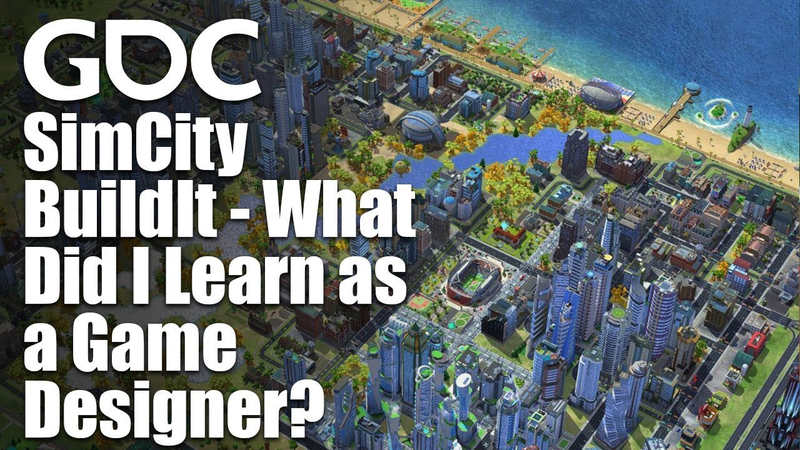
Adapting the SimCity franchise for mobile requires a fundamental reimagining of core mechanics rather than a direct port of PC-based systems.
- Adapting legacy PC simulation titles for mobile requires a fundamental reimagining of core mechanics rather than a direct port, focusing on simplified interfaces and non-punitive gameplay loops suitable for short sessions.
- Development teams should transition to agile, collaborative structures that prioritize radical honesty and player-first thinking to enable rapid iteration based on data-driven insights.
- High-quality mobile products can be delivered within compressed timelines, as demonstrated by the ability to move from initial concept to worldwide release in under 18 months.
Exploring SimCity: A Conscious Process of Discovery
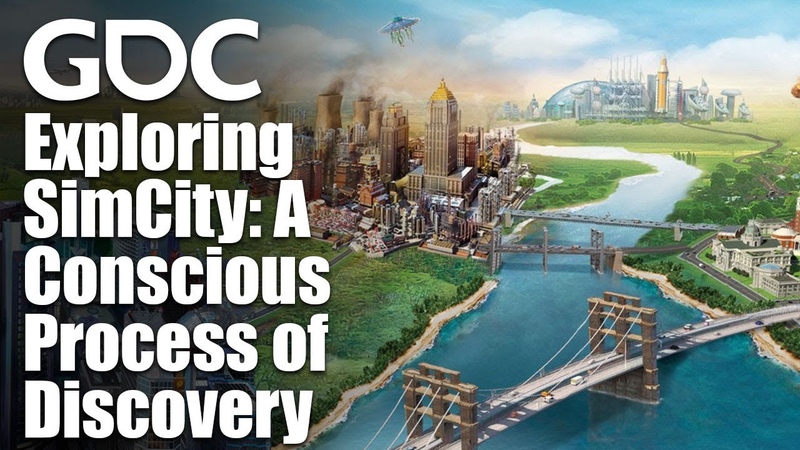
The development of SimCity centers on the philosophy that sandbox games thrive when built upon simple, modular systems that encourage emergent gameplay.
- Sandbox game development should follow a breadth-first approach, layering core mechanics, feedback, and player tools incrementally to justify development effort through actual gameplay experience rather than theoretical design.
- Avoid the 'complexity rabbit hole' by keeping individual simulation components simple; early prototypes for SimCity (2013) showed that over-engineering systems like power plants created unmanageable UI and performance requirements.
- Performance in sandbox simulations requires avoiding global loops; instead, use bucketed systems and round-robin scheduling to propagate navigation and agent information across frames.
Agile live services – The secret sauce to building a long lasting mobile game product
The primary objective of live service management in mobile gaming is to extend a product's lifecycle by transitioning from initial qualitative design assumptions to data-driven, quantitative iterations.
- Live service management shifts mobile game development from initial design assumptions to quantitative, data-driven iterations that treat the launch as the beginning of the product lifecycle.
- Long-term success in free-to-play titles is exemplified by SimCity BuildIt, which has maintained sustained growth in both engagement and revenue since its 2014 launch.
- A/B testing serves as the primary methodology for optimizing monetization and gameplay, allowing developers to refine pricing and mechanics based on actual player behavior.

Teaching AI-Based Game Design
The educational approach to AI-based game design focuses on empowering students to integrate advanced computational technologies into their artistic and design practices.
- AI-based game design is most effective when AI is treated as a foreground design element rather than a background utility, allowing students to move beyond standard game conventions.
- Anchoring complex AI systems in real-world metaphors, such as personality psychology or social behavior, is the primary driver of innovative and accessible game design.
- The 'SimCity effect'—using rich metaphors to make complex systems transparent—is a critical design strategy to avoid the 'tailspin effect,' where AI logic remains invisible and confusing to the player.
Revisiting the Strategy Genre Map: Age, Audience Homogeneity, and the Lasso Effect
This analysis updates the strategy genre map by integrating demographic and motivational data from over 220,000 global gamers.
- Games with high strategic complexity attract more homogenous audiences with similar motivation profiles, whereas high-excitement games do not exhibit this restrictive 'lasso' effect.
- There is a clear correlation between gameplay pace and player age: fast-paced competitive titles like League of Legends, DotA, and Counter-Strike attract the youngest audiences, while turn-based or pause-able games like Civilization and SimCity attract the oldest.
- World of Tanks is a significant outlier in the strategy genre, demonstrating the broadest age appeal among all analyzed titles with a standard deviation of 10.3.

FTUE: Downtown Showdown
Downtown Showdown, a mobile title from Japanese publisher COLOPL, serves as a case study in the adaptation of city-building mechanics for Western markets.
- COLOPL is utilizing 'Downtown Showdown' as a strategic vehicle to adapt Japanese city-building design sensibilities for Western markets in Europe and North America.
- The game hybridizes traditional urban simulation mechanics with competitive, combat-oriented progression systems similar to 'Clash of Clans'.
- The monetization model relies on standard free-to-play mechanics, specifically using premium 'diamonds' to bypass construction timers and wait times.
Companies behind it

As the documents state it.