City Builder reports and market data
33 game industry reports, presentations and talks about city builder from writers such as PocketGamer.biz, Game Developers Conference and Jonas Tyroller, newest from 2026. Every document has a summary and key insights with the page they come from.
Documents

Colossal Order's Mariina Hallikainen on leaving Paradox and life after Cities: Skylines
Colossal Order CEO Mariina Hallikainen reflects on the studio’s 17-year history, its recent departure from long-term publisher Paradox Interactive in November 2025, and the company’s future trajectory.
- Colossal Order ended its 15-year partnership with publisher Paradox Interactive in November 2025 after releasing four games, including the Cities: Skylines franchise.
- The studio is now self-sufficient and no longer requires publisher funding, allowing them to explore self-publishing or alternative partnerships that prioritize trust and open communication.
- Colossal Order is currently developing a new, unannounced simulation title, maintaining its long-standing focus on the PC simulation genre.
Design Play: Satisfactory | Design Club
Satisfactory functions as a sophisticated factory-building simulation that prioritizes long-term optimization and creative logistics over traditional failure states.
- Satisfactory eliminates traditional failure states by utilizing infinite resource nodes, shifting the core gameplay loop from survival to the optimization of throughput and infrastructure.
- The game employs a 100% resource recovery system for construction, ensuring that the penalty for inefficient design is limited to time investment rather than permanent material loss.
- Progression is structured through a milestone-based quest system and a satirical AI narrative that guides players from manual crafting to complex, automated industrial chains.
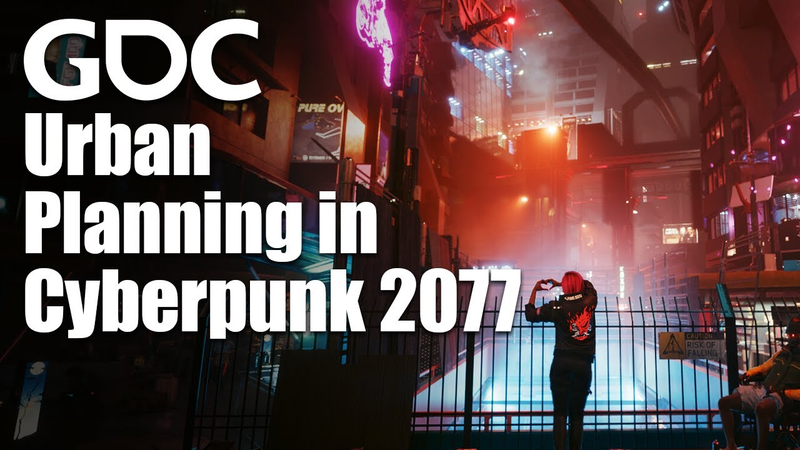
Urban Planning in Games
Urban planning in game development serves as the foundational architecture for creating immersive, functional, and navigable digital environments.
- Effective urban planning in games relies on three core spatial elements: streets, buildings, and open spaces like parks or plazas, which provide the essential structure players use to navigate and interpret the environment.
- Game world proportions must be adjusted based on player movement speed; faster traversal requires longer street segments and larger blocks to avoid the frustration of constant, repetitive turns.
- Neighborhoods should be defined by distinct layouts, architectural styles, and unique landmarks to ensure visual diversity and prevent player confusion, as demonstrated by the varied districts in Cyberpunk 2077.

Session: From Sounds of Chilling Winter to Voices in Outer Space - Audio Behind Frostpunk 2 & …
The development of audio for narrative-driven titles like The Alters relies on maximizing efficiency through modular design and automated middleware workflows.
- To manage limited audio team resources in The Alters, 11 bit studios implemented a modular foley system where designers were provided with a library of pre-defined events, allowing them to implement sounds without requiring constant direct input from sound designers.
- The team utilized Wwise's TSV import feature to manage voiceover implementation, providing a flexible, spreadsheet-based workflow that bypassed the need for constant audio programmer support.
- Base audio in The Alters uses a grid-based system where shared reverbs are dynamically assigned to modules based on their size (ranging from 2 to 8 units plus storage) to simulate realistic room acoustics and sound bleeding.
two & a half gamers session #48 - Could Frozen City earn 80% more revenue? Full UA, Admon, GD review
Frozen City has established a strong market presence as a mobile survival city-builder, achieving significant daily in-app purchase revenue of approximately $130,000.
- Frozen City generates approximately $130,000 in daily in-app purchase revenue but is under-monetizing its ad inventory, which currently contributes only 15% of total income.
- Implementing aggressive, user-tailored ad placements—such as resource boosts, time-skipping mechanics, and welcome-back multipliers—could increase monthly revenue by several million dollars.
- A simple technical update to the ads.txt file represents an immediate, low-effort opportunity to capture a 5–10% uplift in ad revenue.

The Crust: Steam Next Fest October 2023
The Crust serves as a case study for the strategic development and marketing of colony simulation games on Steam.
- Developers should initiate marketing early in the development cycle to build momentum, as demonstrated by The Crust achieving 40,000 wishlists prior to the October 2023 Steam Next Fest.
- To improve player retention, developers must prioritize accessibility over complexity by avoiding opaque user interfaces, illegible text, and overly punishing difficulty curves.
- External playtesting is essential to identify and mitigate high-friction design choices that internal teams often overlook due to bias.
City Builders Breaking the Mold
Game genres are often defined by player actions rather than emotional resonance, creating a disconnect between player expectations and actual gameplay experiences.
- Reintroducing risk and failure states into city builders transforms the genre from a passive optimization exercise into a high-stakes, emotionally resonant experience.
- Genre labels often create a disconnect between player expectations and design intent, as traditional city builders are typically associated with risk-free growth.
- Games like 'Ixion' demonstrate that city building mechanics can effectively serve as a vehicle for narrative-driven, role-playing experiences.
Ghost in the Machine: Authorial Voice in System Design, 'Frostpunk' & Beyond
The concept of authorial voice in game design posits that a creator’s worldview is inherently embedded within their work, manifesting not only through narrative, visuals, and audio but also through the underlying mechanics and system balance.
- Game mechanics are not neutral; they carry the authorial voice and worldview of the designer, meaning every systemic balance decision communicates a value judgment.
- In Frostpunk, the design team realized that balancing mechanics—such as the penalty for amputations—required careful ethical consideration, as purely functional math can inadvertently express a worldview the designer does not hold.
- Designers must be aware that players increasingly analyze games beyond surface-level narratives, interpreting the underlying systemic rules as a form of communication or ideological statement.
Content Fueled Gameplay Programming in Frostpunk
The development of Frostpunk centers on a data-driven architecture built upon a proprietary Liquid Engine, utilizing an Entity Component System (ECS) to manage the game’s intricate society-survival mechanics.
- 11 bit studios utilized a custom data-driven architecture based on Entity Component Systems (ECS) to manage the high entity count and complex gameplay logic required for Frostpunk.
- The architecture enforced a strict 'one system per component type' rule, which improved code clarity and maintainability for a growing development team by adhering to the single responsibility principle.
- Designers were empowered to control game flow, narrative events, and building visuals through a template-based system that allowed them to configure game state conditions and effects without direct programming.
Community Marketing and Management at Your Best and Worst Times
Community marketing functions as a strategic pillar for growth by leveraging deep insights into player language, shared narratives, and specific motivations.
- When managing a crisis like the 2017 Europa Universalis 4 review bombing, companies should transparently admit mistakes, offer compensation, and communicate changes early to rebuild trust.
- Effective community marketing requires adopting the 'language' of the target audience, which includes not just spoken words but also images, music, memes, and specific community-driven inside jokes.
- When marketing a game with a clear competitor, such as Cities: Skylines versus SimCity, focus on the unique value proposition of your own product rather than merely attacking the competitor's failures, which can foster a toxic community environment.
Kingdoms and Castles Postmortem
Kingdoms and Castles achieved commercial success by prioritizing iterative market validation and a disciplined approach to development scope.
- Validate game concepts early by setting measurable engagement goals, such as achieving 25 retweets on Twitter, to determine if a project is worth pursuing before committing significant development time.
- Use crowdfunding and early market testing to determine appropriate project scope, allowing developers to scale development effort based on actual audience interest rather than arbitrary timelines.
- Prioritize 'player fantasy' by ensuring the game's core loop and mechanics are intuitive and rely on existing cultural knowledge, which reduces the need for complex tutorials and extensive UI explanations.
Why Make Games? Lessons from Frostpunk and This War Of Mine
Meaningful game design centers on the creation of interactive experiences that prioritize emotional depth, social values, and complex moral decision-making over traditional mechanics like leveling systems or conventional reward loops.
- 11 bit studios shifted its development philosophy from mechanics-focused design to 'meaningful games' after scrapping a project called Shelter, concluding that games must convey a message and evoke strong emotions to align with the studio's DNA.
- The studio prioritizes 'mood' as the primary binding agent between gameplay, art, and music, rather than focusing on any single element as the most important component of the experience.
- In This War of Mine, the team utilized a community-focused perspective rather than individual character tracking to force players to consider the survival of a group, using chaotic combat and moral dilemmas to reflect the reality of war.