Monster Hunter
Game
Documents about Monster Hunter

Capcom Results of Operations and Strategies: First Half of Fiscal Year Ending March 31, 2011
Capcom’s financial results for the first half of the fiscal year ending March 31, 2011, reflect a period of increased net sales alongside a decline in profitability.
- Capcom reported net sales of 40,706 million yen for the first half of the fiscal year ending March 31, 2011, representing a year-over-year increase of 1,814 million yen.
- Operating income declined to 3,942 million yen, primarily due to increased development expenses and a 1,097 million yen foreign exchange loss caused by a stronger yen.
- The Consumer Online Games segment, driven by titles like Dead Rising 2 and Lost Planet 2, saw its operating margin narrow to 14.7% due to rising costs and currency volatility.
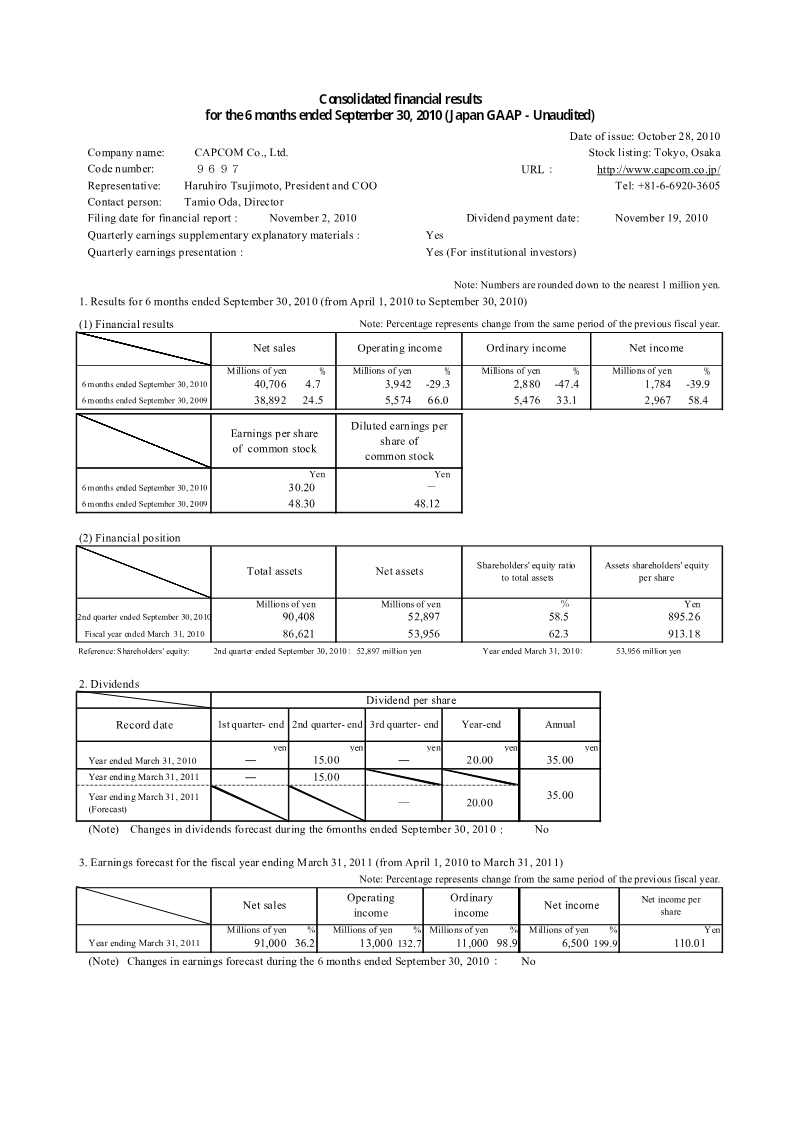
Capcom Consolidated Financial Results for the 6 Months Ended September 30, 2010
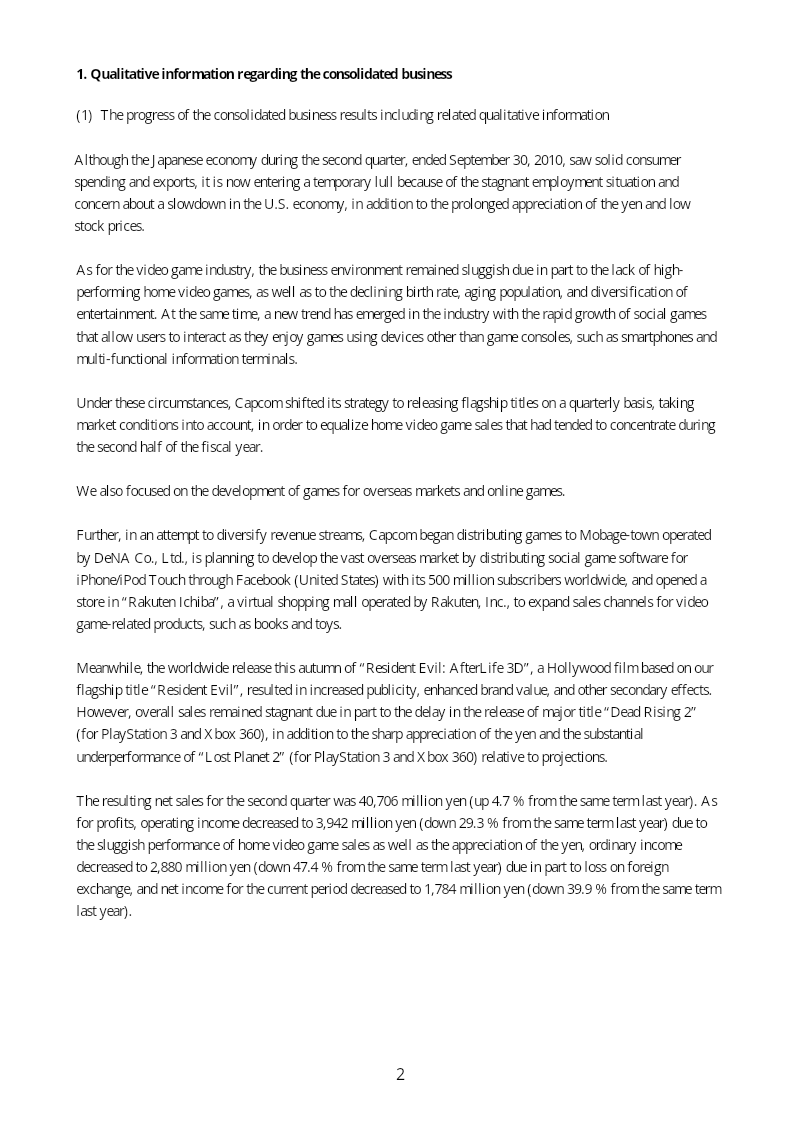
Capcom’s consolidated financial results for the six-month period ending September 30, 2010, reflect a challenging operating environment characterized by a stagnant video game market, the appreciation of the yen, and the underperformance of key software titles.
- Capcom experienced a profit decline in the six months ending September 30, 2010, with operating income falling 29.3% to 3,942 million yen and net income dropping 39.9% to 1,784 million yen.
- Despite falling profits, consolidated net sales increased 4.7% year-over-year to 40,706 million yen, driven by a shift toward international markets.
- Overseas revenue grew significantly, rising to 42.9% of total consolidated net sales compared to 30.2% in the previous year.
Capcom Additional Information for Results of Operations: Fiscal Year Ended March 31, 2010
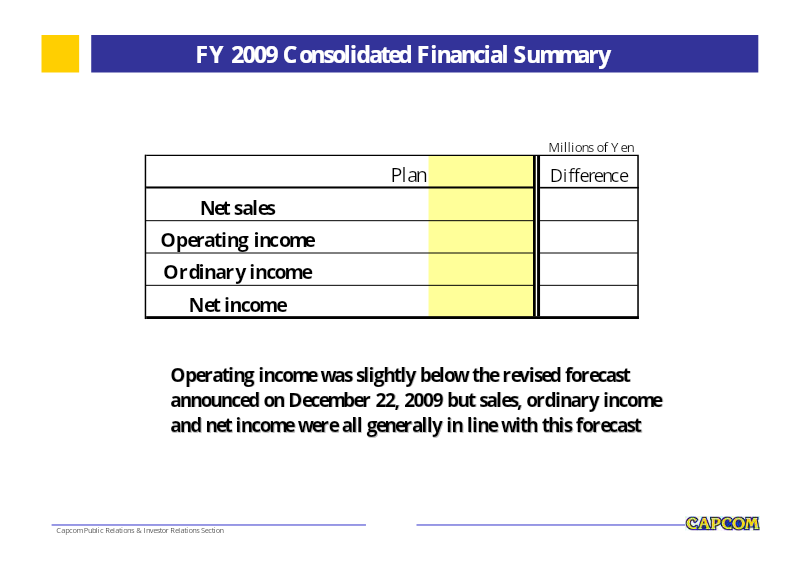
The fiscal year ending March 31, 2010, was a period of significant financial contraction for Capcom, characterized by a sharp decline in both net sales and operating income.
- Capcom experienced a significant financial downturn for the fiscal year ending March 31, 2010, with net sales falling to 66,837 million yen and operating income dropping to 5,587 million yen.
- The Home Video Games segment suffered a 72.7% revenue decline, primarily caused by the postponement of major titles including Lost Planet 2, Super Street Fighter IV, and the overseas release of Monster Hunter Tri.
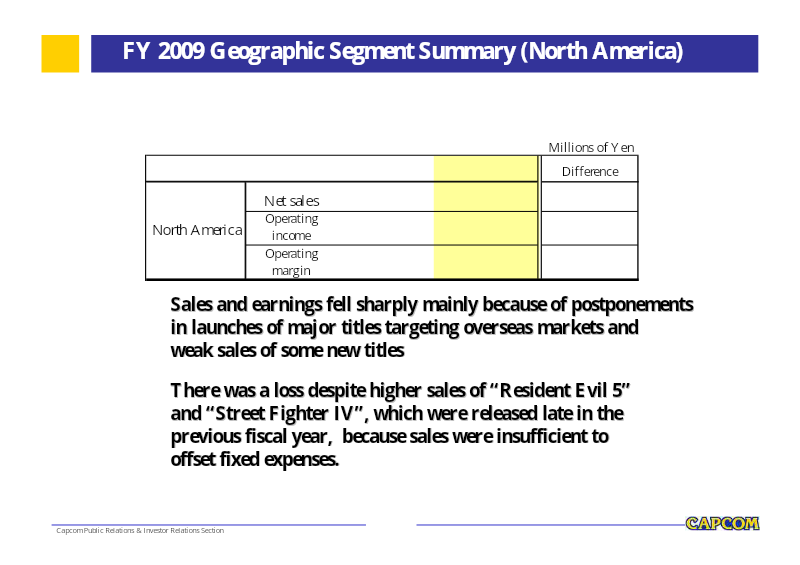
- North American and European markets saw substantial sales declines, with North America specifically recording an operating loss due to a weak product lineup.


Capcom 3rd Quarter Financial Results: Fiscal Year Ending March 31, 2010
The third-quarter financial results for the fiscal year ending March 31, 2010, reflect a period of transition for Capcom, characterized by strong performance in the first half of the year followed by a strategic slowdown in the third quarter.
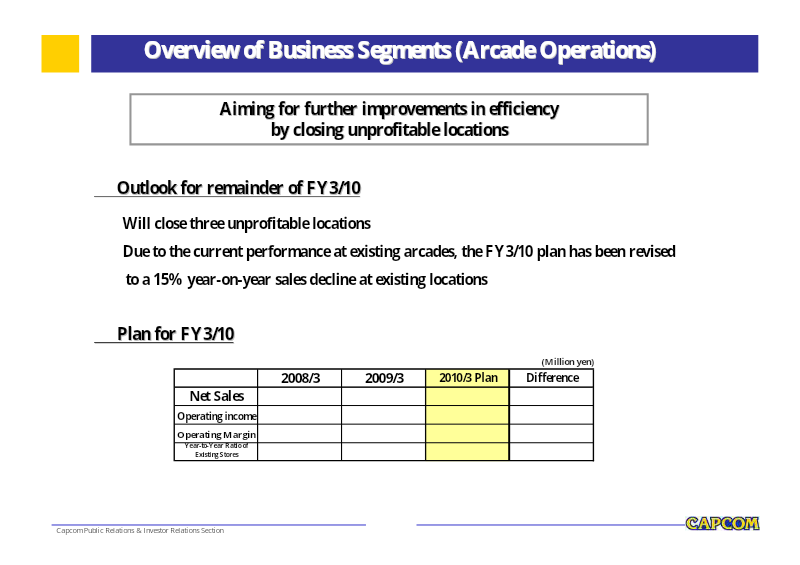
- Capcom revised its full-year fiscal 2010 sales forecast downward to 65,000 million yen due to a strategic decision to postpone major software titles.
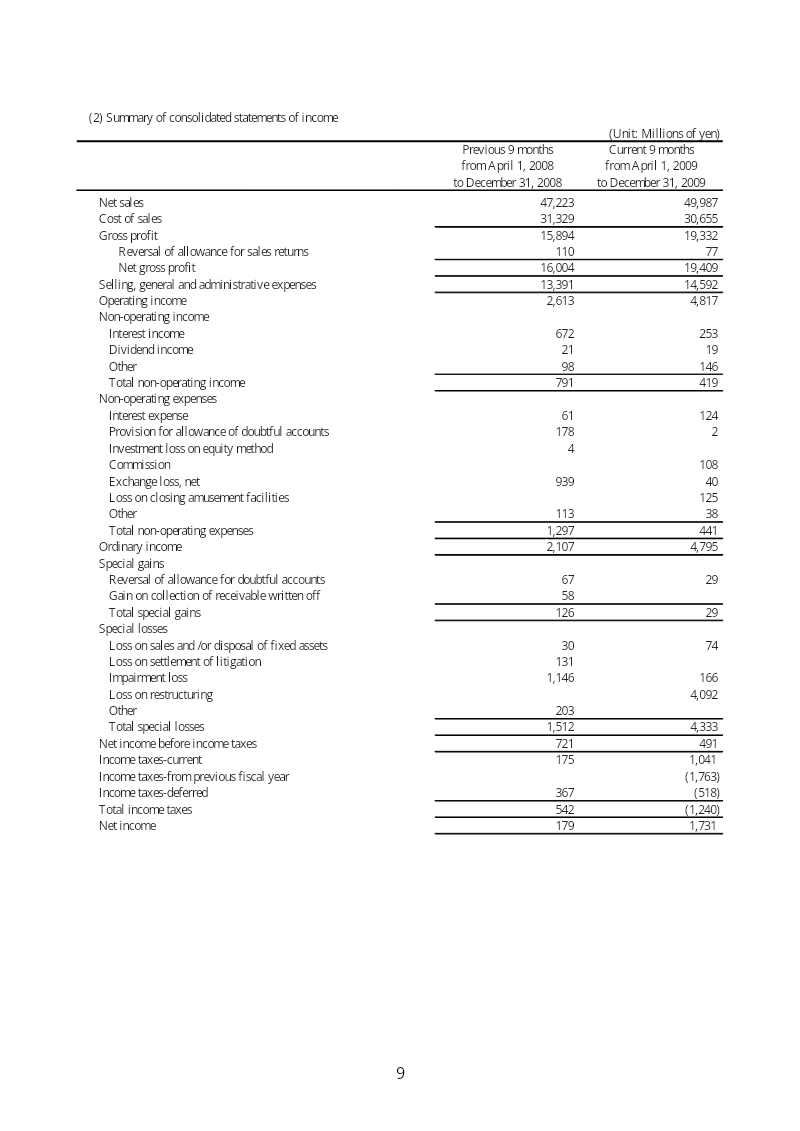
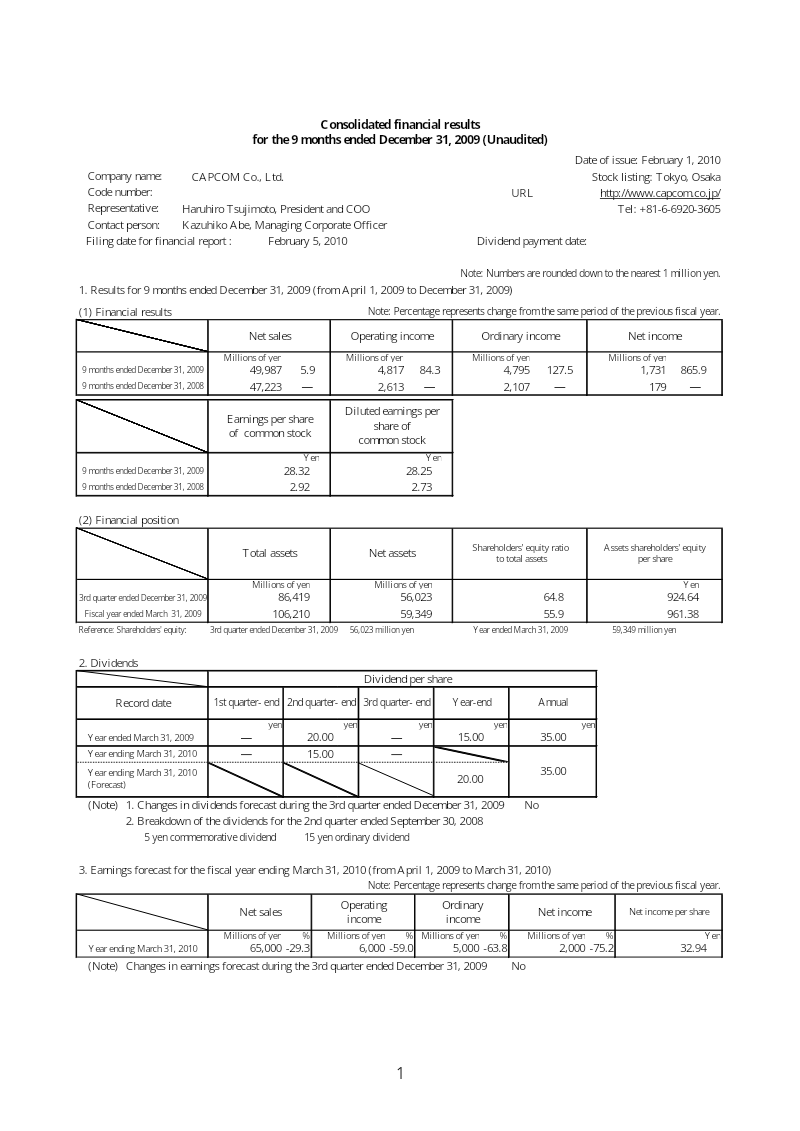
- Nine-month financial results for the period ending March 31, 2010, showed net sales of 49,987 million yen and operating income of 4,817 million yen.
- The home video game segment remains the company's primary revenue driver, with performance heavily reliant on the Monster Hunter series.
Capcom Consolidated Financial Results: 9 Months Ended December 31, 2009
Capcom’s consolidated financial results for the nine-month period ending December 31, 2009, reflect a period of moderate growth despite a challenging macroeconomic environment characterized by deflationary pressure and declining consumer confidence.
- Capcom reported net sales of 49,987 million yen for the nine months ending December 31, 2009, representing a 5.9% year-over-year increase.
- Operating income grew by 84.3% to 4,817 million yen, while net income surged 865.9% to 1,731 million yen, largely due to a corporate tax refund.
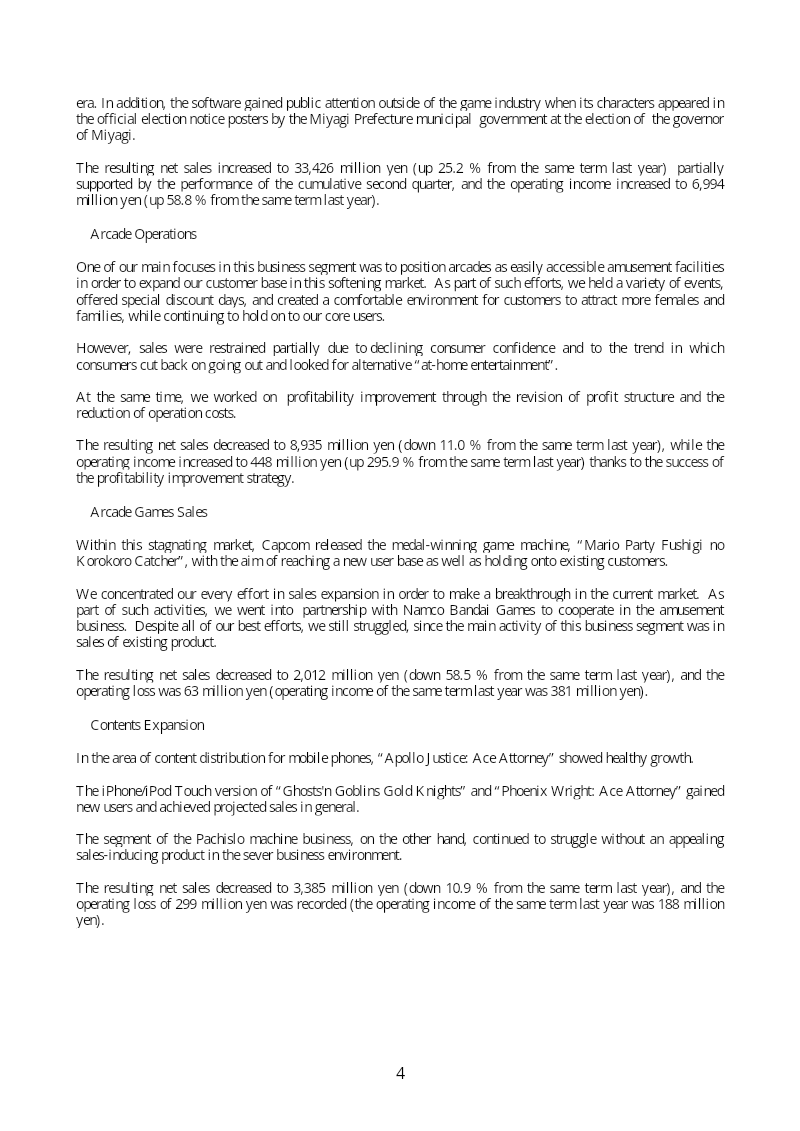
- The home video game segment drove performance with a 25.2% increase in net sales to 33,426 million yen, led by titles such as Resident Evil 5, Monster Hunter Tri, and Sengoku Basara Battle Heroes.
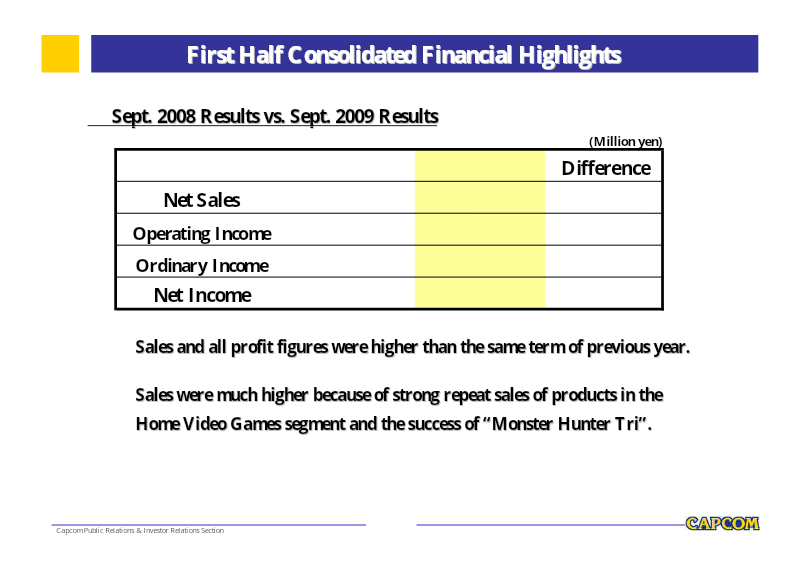
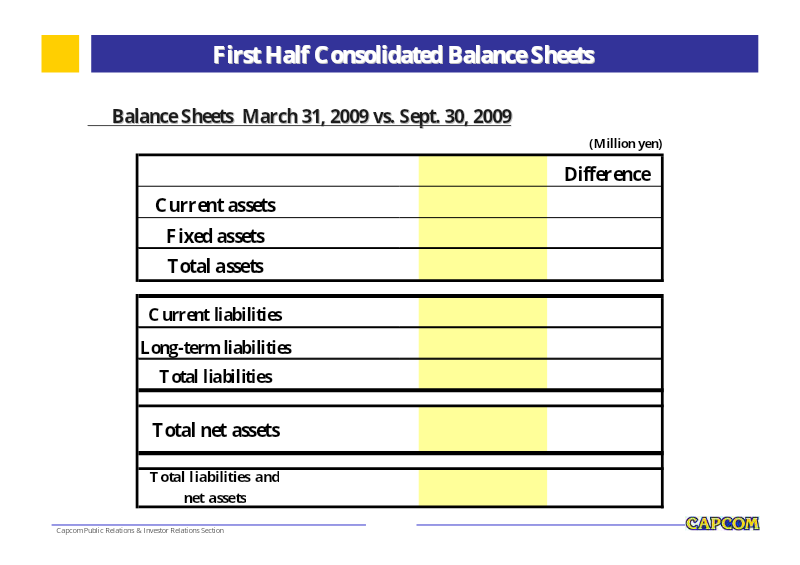
Capcom Financial Highlights and Basic Policies: First Half of Fiscal Year Ending March 31, 2010
The Capcom financial report for the first half of the fiscal year ending March 31, 2010, details a period of strong growth driven primarily by the company’s Home Video Game segment.
- Capcom achieved net sales of 38,892 million yen for the first half of fiscal year 2010, a significant increase from the 31,236 million yen reported in the same period of the previous year.
- Operating income rose to 5,574 million yen, up from 3,357 million yen, driven by the success of the Monster Hunter series and company-wide cost-cutting initiatives.
- A resolved transfer pricing dispute with Japanese and U.S. tax authorities will provide a 2 billion yen earnings boost in the third quarter via tax refunds.
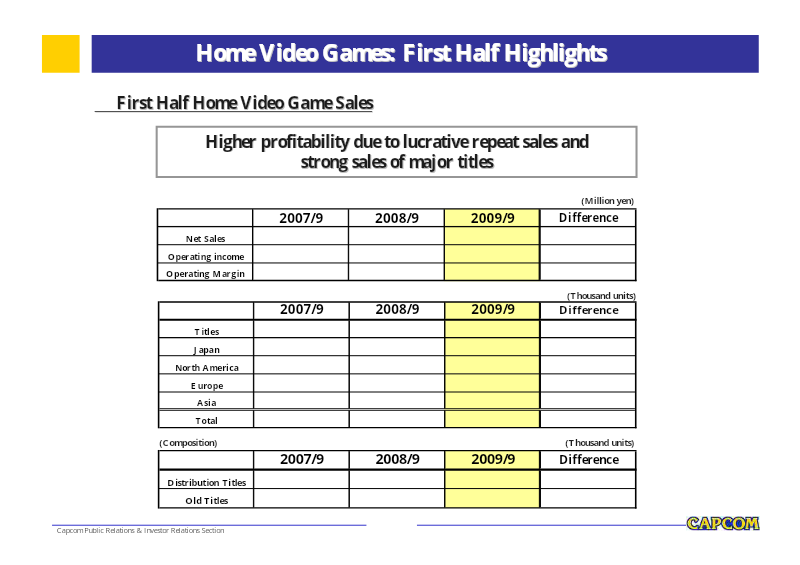
Capcom Results of Operations and Strategies: First Half of Fiscal Year Ending March 31, 2010
Capcom’s financial results for the first half of the fiscal year ending March 31, 2010, demonstrate a strong performance in the home video game segment, which served as the primary driver for overall profitability.
- Home video game net sales reached 27.7 billion yen with an operating margin of 26.3 percent, serving as the primary driver for overall company profitability.
- The Monster Hunter series achieved a significant milestone as Monster Hunter Tri became the first third-party title on the Wii to surpass one million units in sales.
- Capcom’s strategic focus for the second half of the fiscal year involves shifting 75 percent of its total title lineup toward overseas markets.
Capcom Consolidated Financial Results: 6 Months Ended September 30, 2009
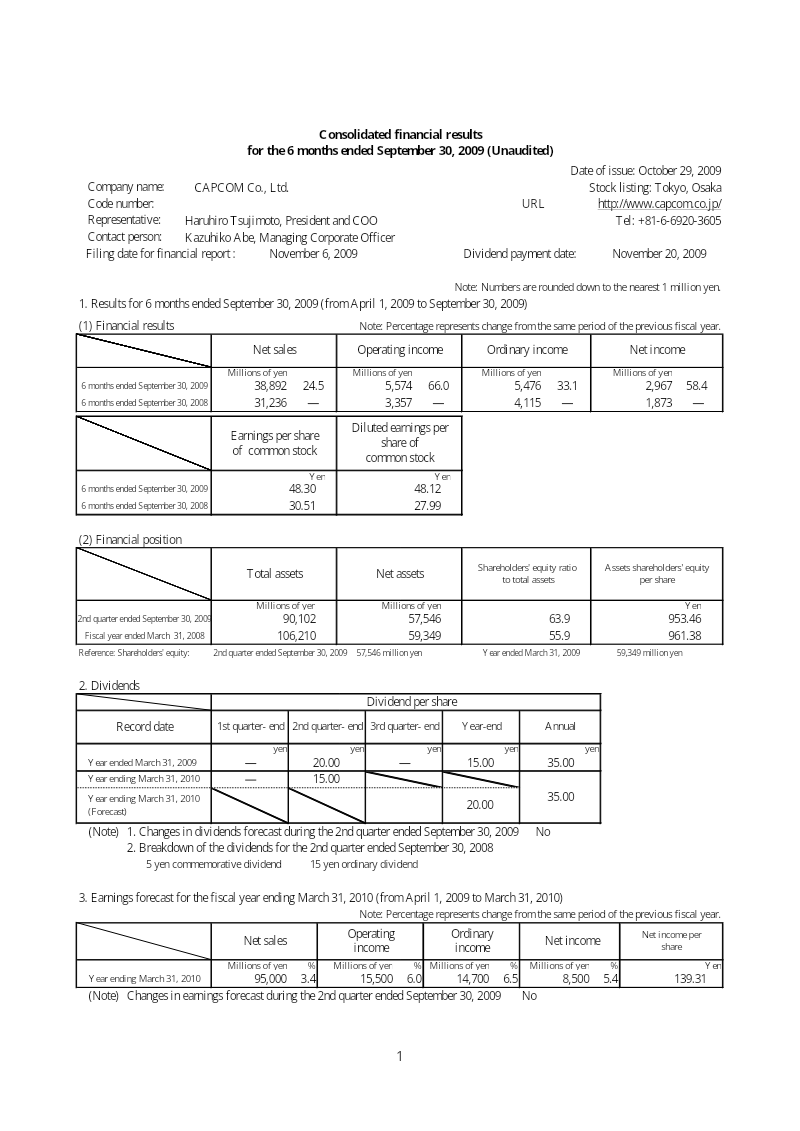
Capcom’s consolidated financial results for the six-month period ending September 30, 2009, demonstrate significant growth in net sales and profitability compared to the same period in the previous year.
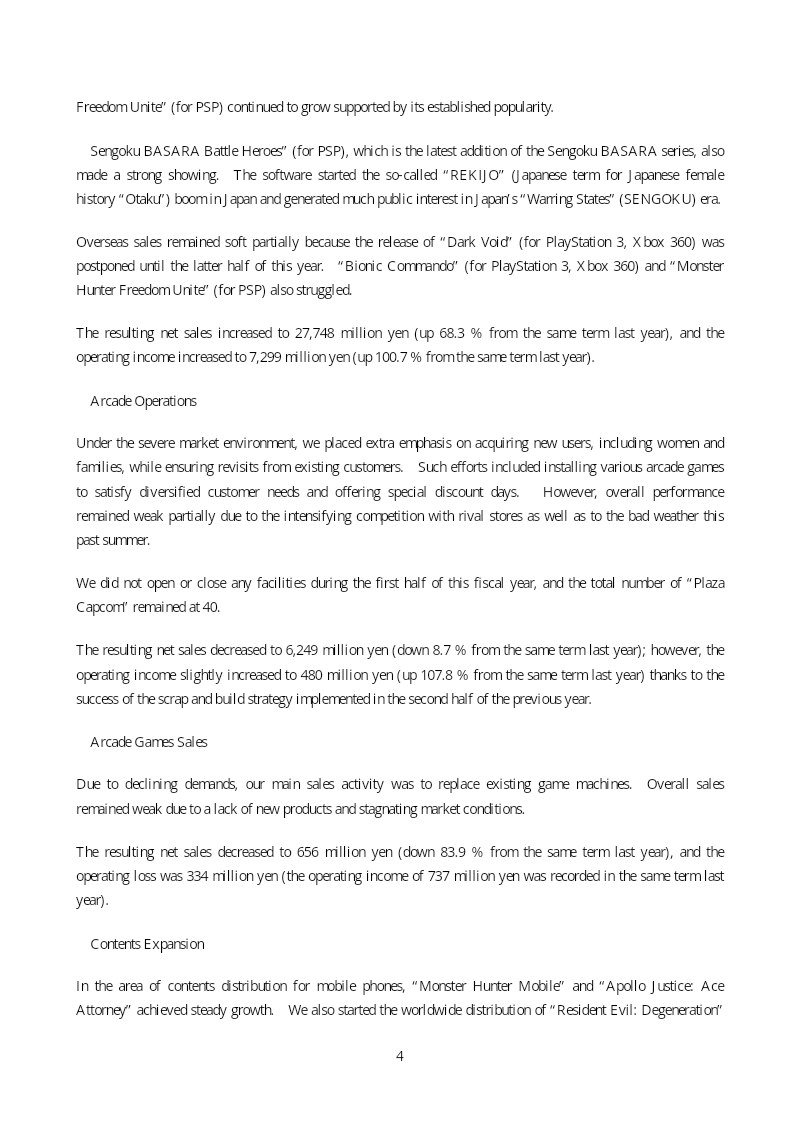
- Capcom achieved significant growth for the six months ending September 30, 2009, with net sales rising 24.5% to 38,892 million yen and net income increasing 58.4% to 2,967 million yen.
- The home video game segment drove overall performance with a 68.3% increase in net sales to 27,748 million yen, fueled primarily by the release of 'Monster Hunter Tri' for the Wii, which shipped over one million units.
- Operating income saw a substantial 66.0% increase to 5,574 million yen, despite weaker performance in the arcade and content expansion segments.

Capcom 1st Quarter Report: Fiscal Year Ending March 31, 2010
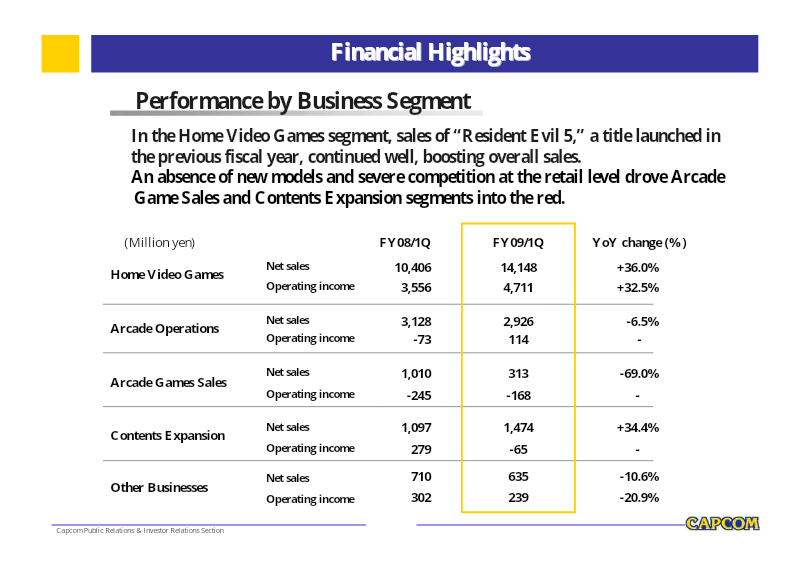
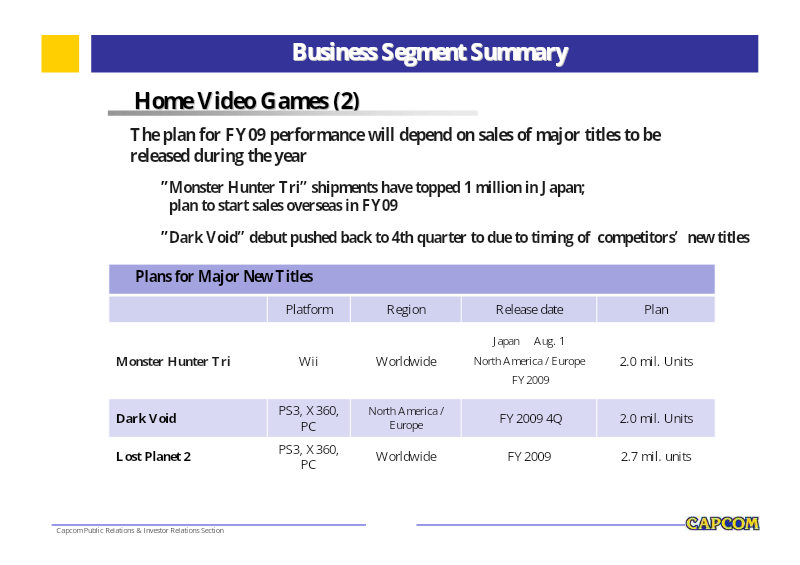
Capcom’s first-quarter financial results for the fiscal year ending March 31, 2010, demonstrate a period of robust growth driven primarily by the home video game segment.
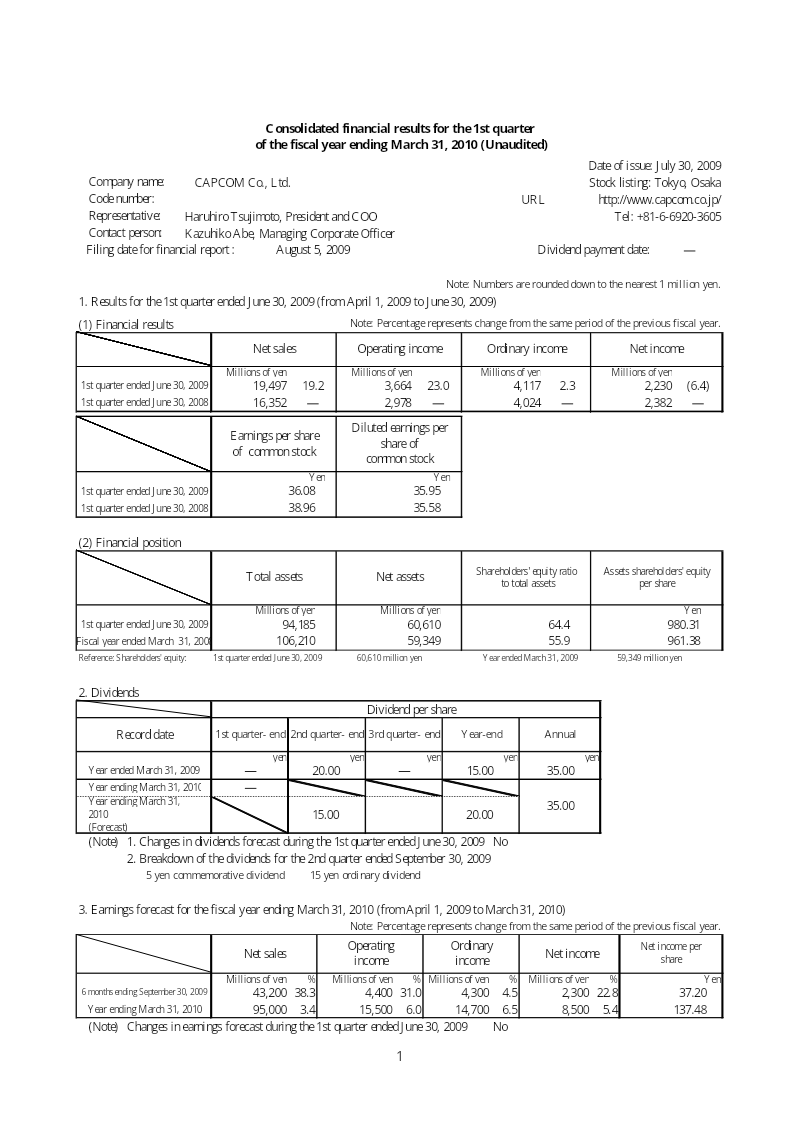
- Capcom reported a 19.2% year-on-year increase in consolidated net sales to 19.497 billion yen and a 23% rise in operating income to 3.664 billion yen for the first quarter of fiscal year 2010.
- The home video game segment drove overall growth, contributing 14.148 billion yen in sales and a 32.5% increase in operating income, largely due to Resident Evil 5 reaching 5 million units in global shipments.
- Management maintained conservative full-year forecasts despite the strong quarter, citing the strategic delay of Dark Void to the fourth quarter to avoid market saturation.
Capcom Consolidated Financial Results: 1st Quarter FY2010
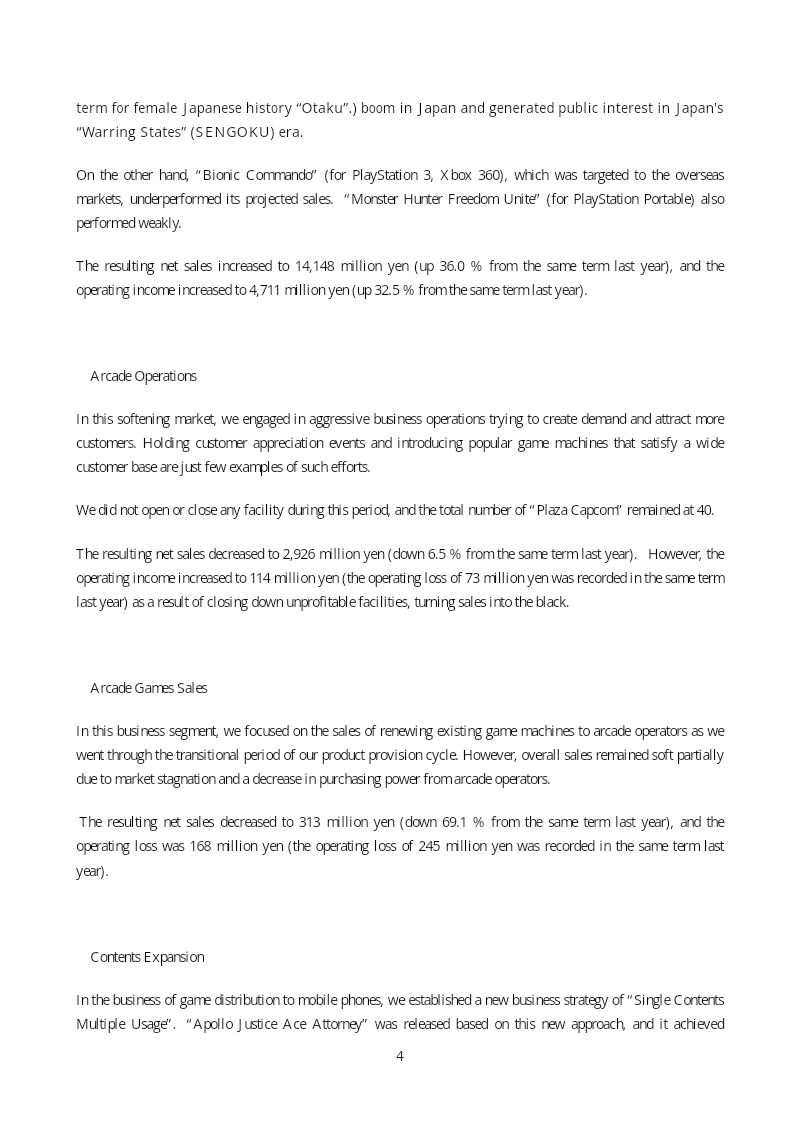
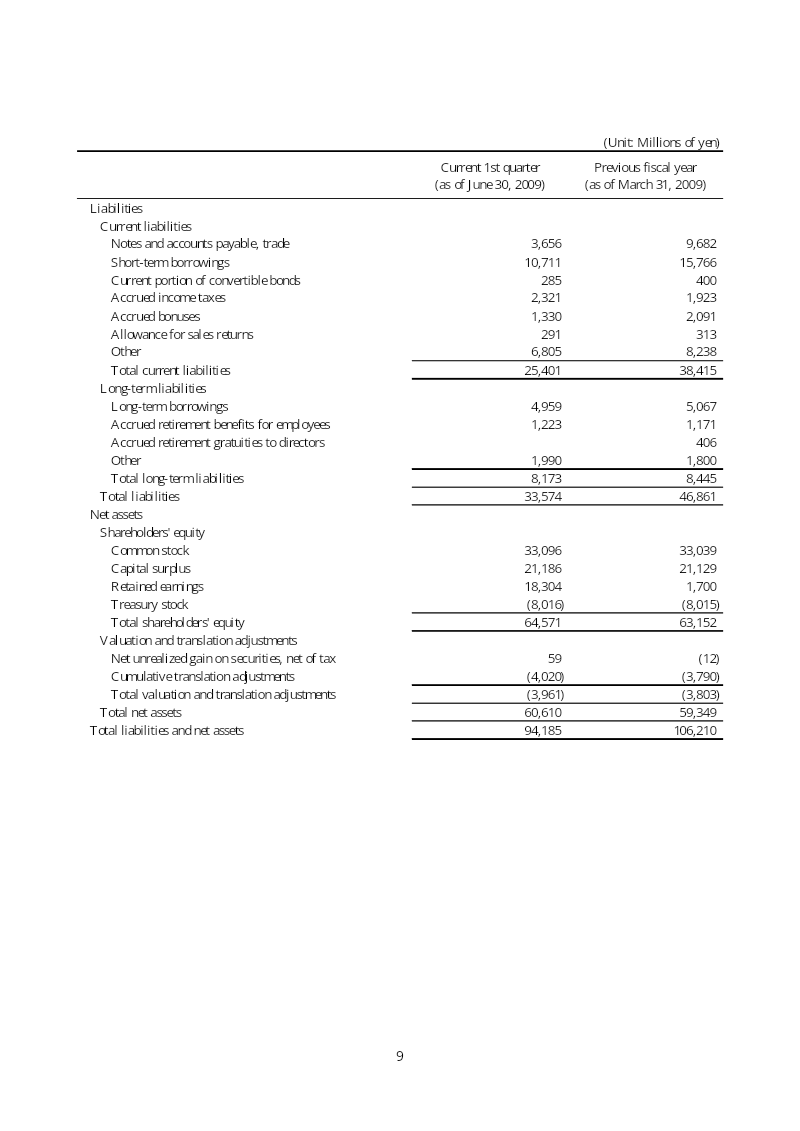
Capcom’s consolidated financial results for the first quarter of the fiscal year ending March 31, 2010, reflect a period of growth driven by strong demand for home video games, particularly in overseas markets.
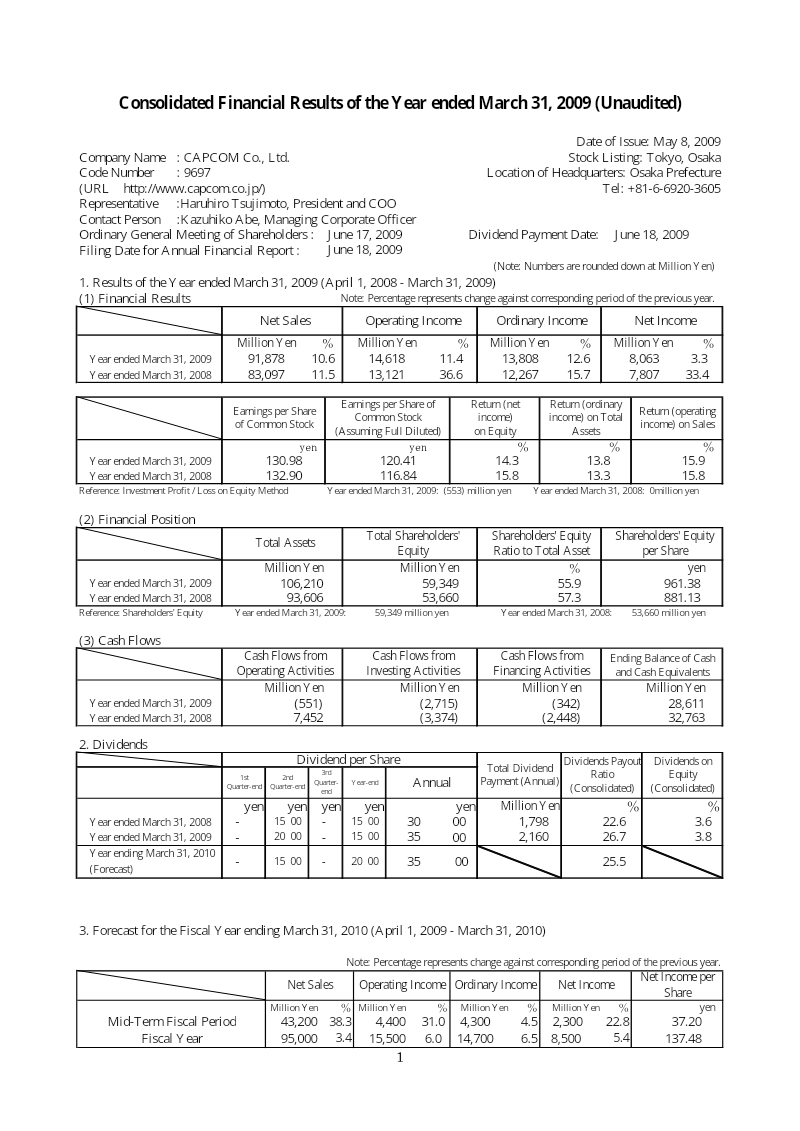
Capcom Consolidated Financial Results: Year Ended March 31, 2009
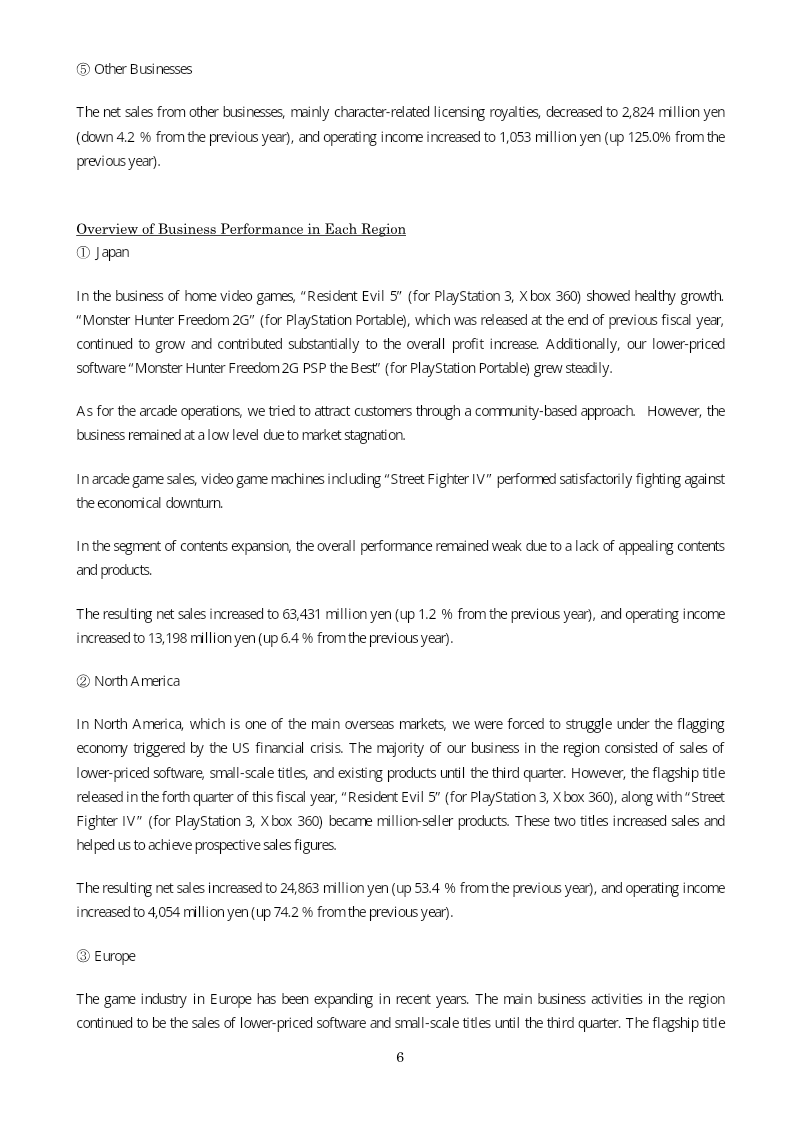
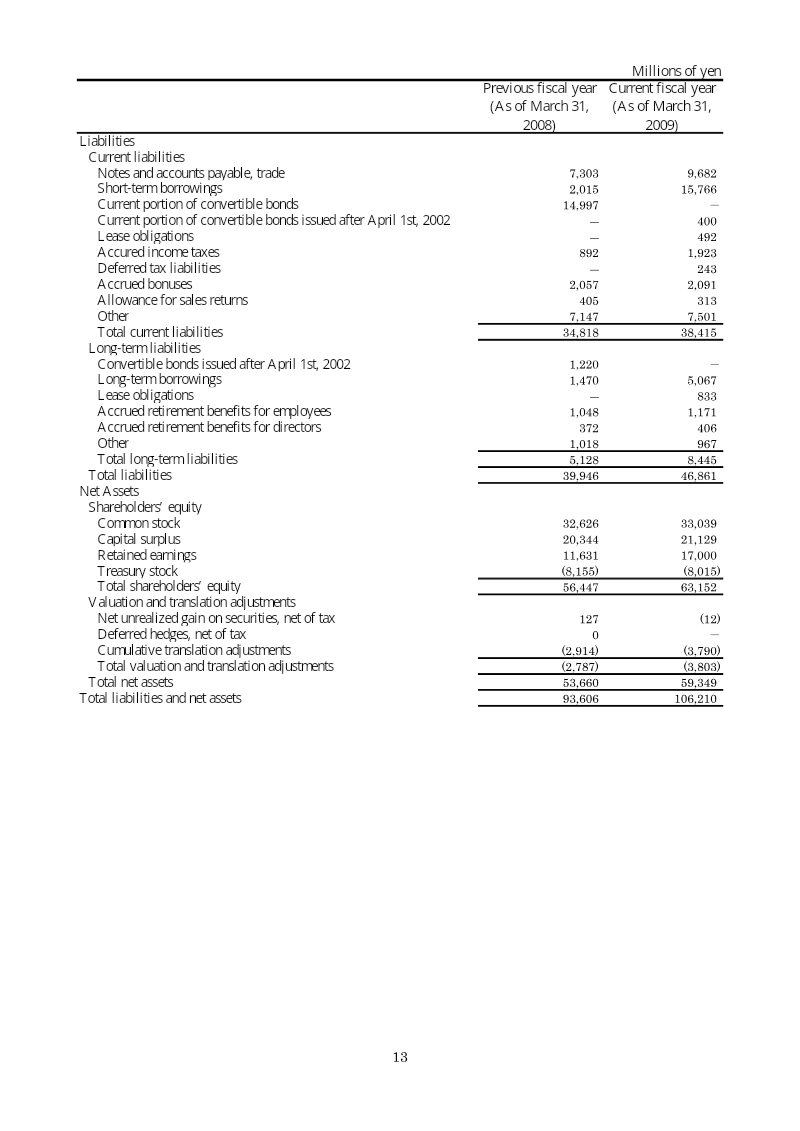
Capcom achieved robust financial growth during the fiscal year ending March 31, 2009, reporting consolidated net sales of 91,878 million yen and an operating income of 14,618 million yen.
- Capcom reported consolidated net sales of 91,878 million yen and operating income of 14,618 million yen for the fiscal year ending March 31, 2009, marking year-over-year increases of 10.6% and 11.4% respectively.
- The Home Video Game segment was the primary growth driver, generating 62,892 million yen in sales and 16,364 million yen in operating income behind the success of Resident Evil 5, Street Fighter IV, and Monster Hunter Freedom 2G.
- Despite strong software performance, the company experienced a net decrease in cash and cash equivalents, ending the fiscal period at 28,611 million yen.
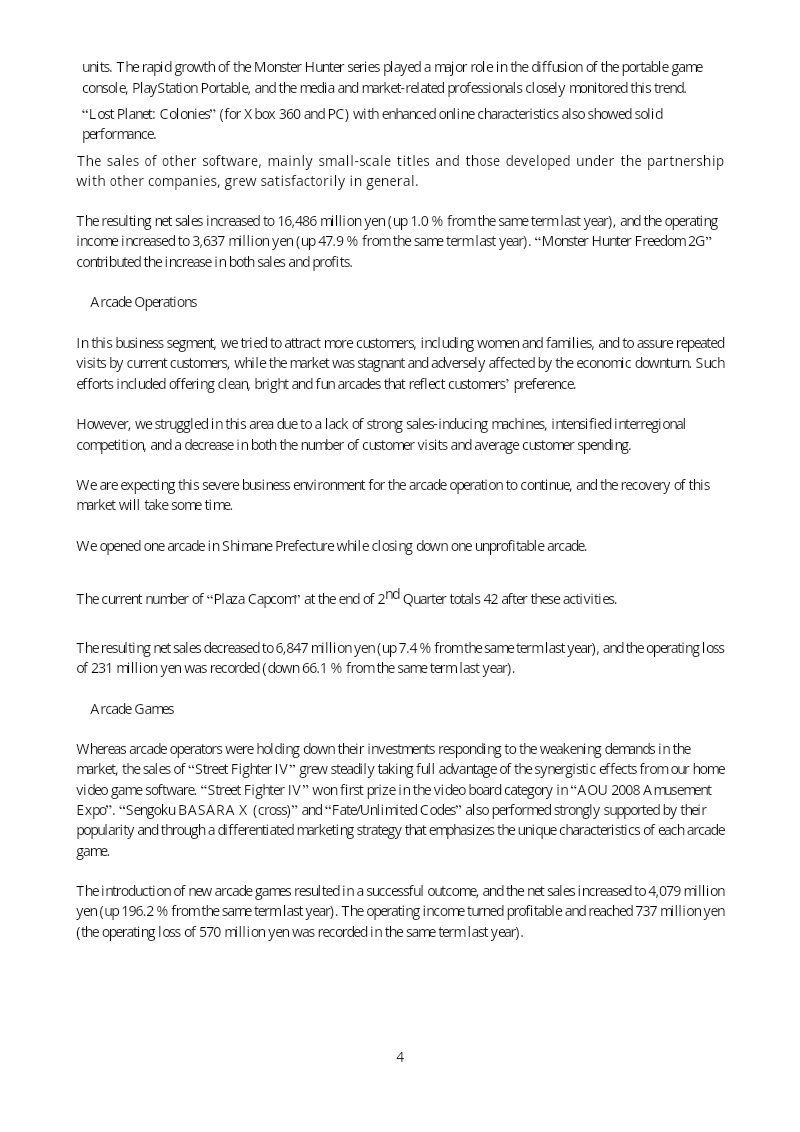
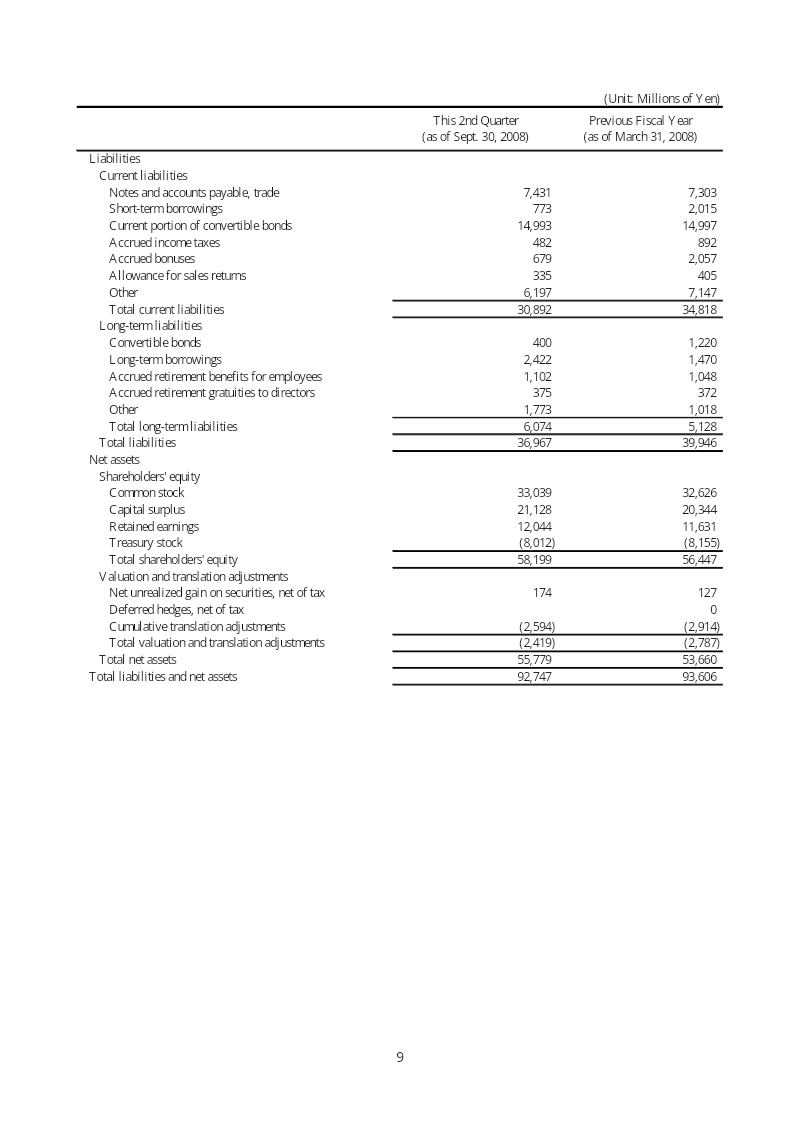
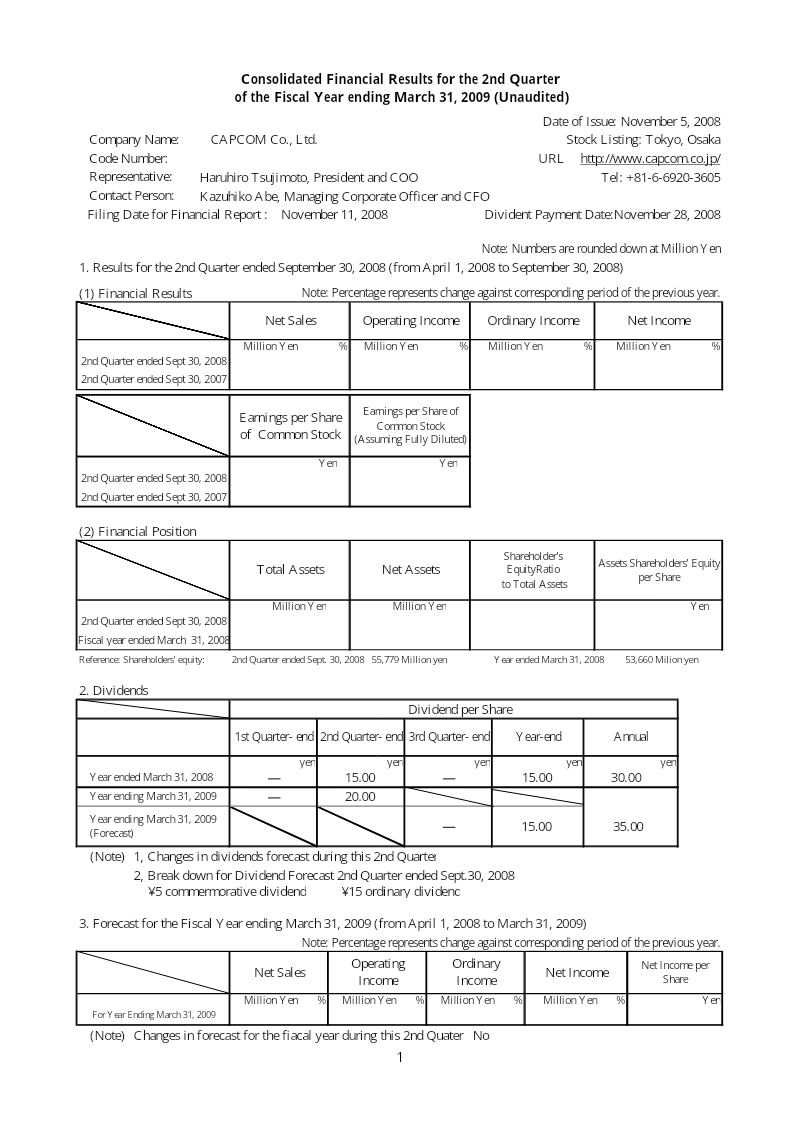
Capcom Consolidated Financial Results: 2nd Quarter Fiscal Year 2009
Capcom’s consolidated financial results for the second quarter of the fiscal year ending March 31, 2009, reflect a period of steady growth despite a challenging macroeconomic environment characterized by global recessionary pressures and a maturing domestic video game market.
Companies behind it


As the documents state it.