Mass Effect
Documents about Mass Effect
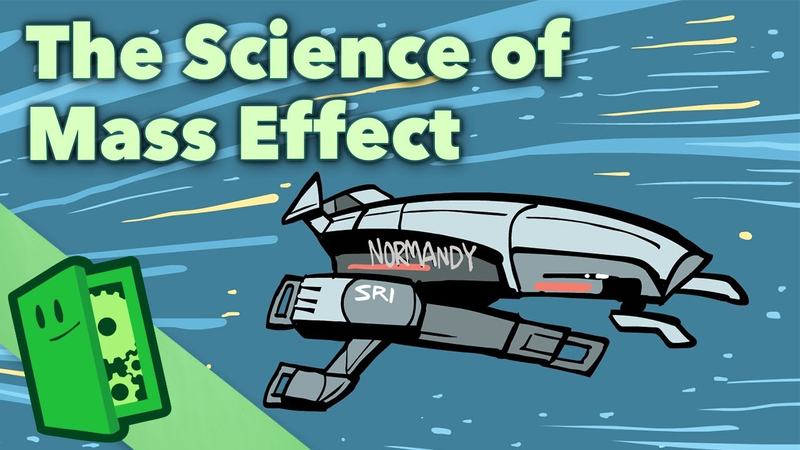
The Science of Mass Effect - Dark Energy and Worm Holes - Extra Credits
The Mass Effect trilogy is notable for grounding its expansive science fiction narrative in legitimate physical principles, specifically regarding the manipulation of space-time.
- The Mass Effect trilogy grounds its technology in the fictional element 'eezo,' which uses electrical currents to manipulate dark energy and simulate changes in mass.
- By reducing a vessel's mass to negative values, the game's lore enables faster-than-light travel by allowing ships to surf the curvature of space-time.
- The series utilizes the 'bowling ball and trampoline' analogy to explain how mass curves space-time, aligning with Einstein’s mass-energy equivalence.
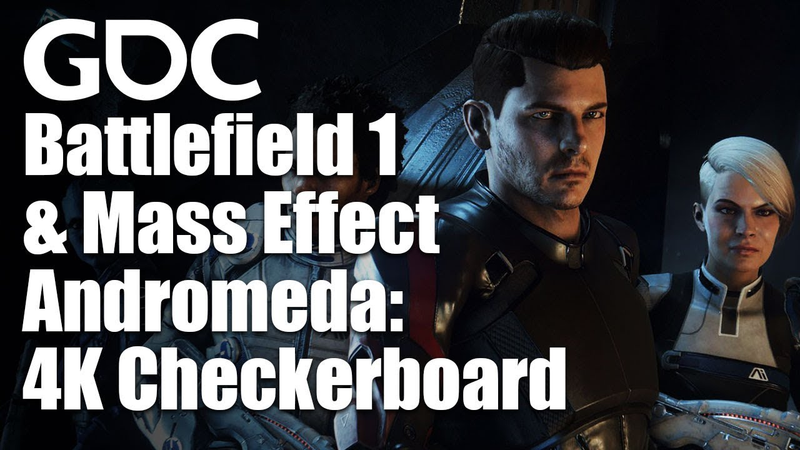
4K Checkerboard in Battlefield 1 and Mass Effect Andromeda
Achieving 4K-like visual fidelity on hardware with limited bandwidth requires sophisticated rendering techniques that balance performance budgets with image quality.
- The Frostbite engine utilizes packed checkerboard rendering to achieve 4K-like visual fidelity by shading a subset of pixels and reconstructing high-resolution frames from lower-resolution buffers.
- Implementing checkerboard rendering in Battlefield 1 reduced GPU frame costs by approximately 5.08 milliseconds, enabling stable 60Hz performance.
- To maintain visual integrity, the pipeline employs geometry-aware resolves, velocity-based reprojection, and object/primitive ID buffers to prevent color bleeding and z-fighting.
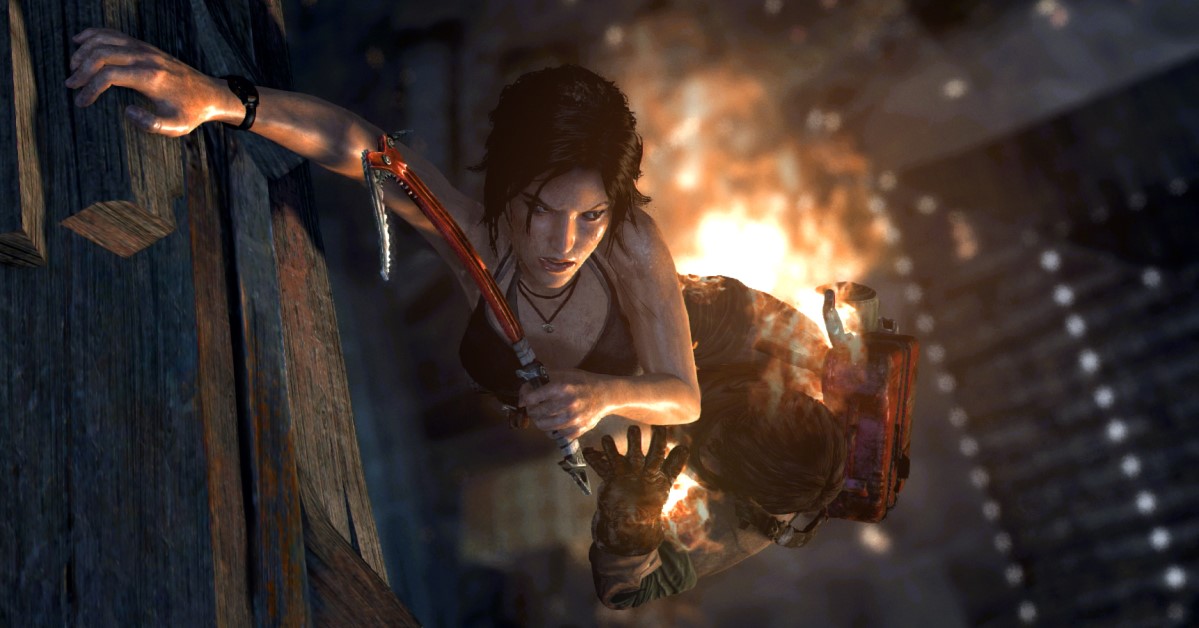
Why Female Protagonists Make Memorable Video Game Characters
The provided text examines the enduring impact and cultural significance of female protagonists within the video game industry.
- Female protagonists have established a long history of success in gaming, dating back to the 1986 reveal of Samus Aran in Nintendo’s Super Metroid.
- Lara Croft from the Tomb Raider franchise has achieved status as a global cultural icon, transcending her original game series to influence film and merchandising.
- Non-playable female characters like Alyx Vance in Valve’s 2004 Half-Life 2 demonstrate how well-written female roles can be pivotal to the narrative success and world-building of a title.
Ditch toxic systems so we can finally love video game romance
The presentation critiques the prevailing design of romantic systems in video games, arguing that current mechanics often reinforce toxic societal values, entitlement, and unrealistic expectations.
- Current romantic mechanics in RPGs and life-sims like Mass Effect, Dragon Age, Stardew Valley, and The Witcher rely on a 'kindness token' model that treats relationships as transactional rewards for repetitive tasks.
- The prevailing design framework prioritizes player entitlement and wish fulfillment, reducing complex human connections to predictable inputs rather than fostering genuine emotional growth.
- By framing romance as a goal to be achieved, these systems reinforce outdated tropes such as the 'damsel in distress' and the commodification of sexual encounters.
Dynamic Stories for Dynamic Games: Six Ways to Give Each Player a Unique Narrative
This 2016 GDC presentation advocates for the integration of dynamic storytelling techniques in single-player video games to increase player agency, replayability, and engagement.
- To increase player agency and replayability, developers should move away from static, linear narratives toward systems that allow players to influence their unique gameplay journey.
- The 'explorable story space' technique allows players to piece together narratives at their own pace through optional content, as seen in titles like Gone Home.
- Developers can use 'drama management' systems, which function like a tabletop dungeon master, to steer emergent gameplay back toward a cohesive narrative arc.
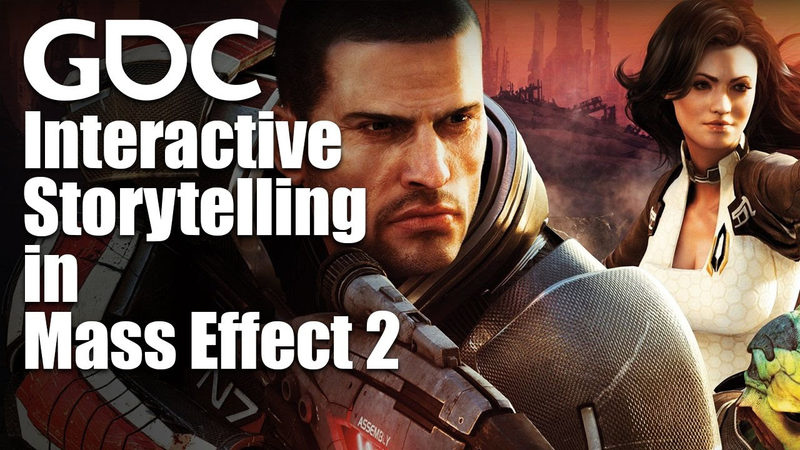
Interactive Storytelling in Mass Effect 2
Interactive storytelling in Mass Effect 2 centers on the successful integration of cinematic design with player agency, shifting the traditional role-playing paradigm from a purely subjective avatar experience to an objective character-driven model.
- BioWare treats game design and narrative as symbiotic, refusing to differentiate between the two by starting with story and building gameplay around it.
- The 'conversation wheel' interface uses 32-character paraphrases to provide players with a condensed, predictable preview of dialogue options, ensuring they understand the intent behind their choices.
- Mass Effect 2 shifted from a purely subjective role-playing model to an objective one, where the player controls a pre-defined character (Shepard) rather than a blank-slate avatar.

What Does Tomorrow Look Like? - How We Envision the Future - Extra Credits
The visual representation of the future has historically served as a mirror for contemporary societal anxieties and aspirations.
- Modern video games frequently rely on derivative mash-ups of 20th-century tropes rather than creating original aesthetic identities that reflect contemporary global concerns.
- The lack of a cohesive, modern vision for the future prevents the gaming industry from effectively engaging with the complexities of current societal issues.
- Historical aesthetic movements, such as 1920s Art Deco, 1960s space-age idealism, and 1980s cyberpunk, provided a shared cultural vocabulary that contemporary media currently lacks.
Most Popular Games by Gaming Motivations
The primary objective of this analysis is to categorize popular video games based on specific player motivations, providing a framework to understand what drives engagement across different gaming experiences.
- Quantic Foundry analyzed data from over 100,000 gamers to map specific game titles to 12 distinct psychological motivations, normalizing results to account for the base-rate popularity of major franchises.
- Games associated with the 'Power' motivation include World of Warcraft, Diablo, and League of Legends, while 'Completion' is driven by titles like Final Fantasy, Assassin’s Creed, and Animal Crossing.
- The 'Excitement' and 'Destruction' categories are dominated by high-intensity franchises such as Call of Duty, Battlefield, Destiny, and Counter-Strike.
Choices vs Consequences - What Player Decisions Mean in Games - Extra Credits
Game design often conflates the concepts of choice and consequence, yet these two mechanics serve distinct psychological and narrative functions.
- Choice-based design focuses on the player's internal conflict by presenting dilemmas without clear numerical solutions, forcing them to weigh personal values in real-time.
- Consequence-based design relies on retrospective analysis, where the impact of a player's past actions is revealed later to prompt reflection on previous behavior.
- Effective consequence-based systems, as seen in Chrono Trigger, require a clear causal link between minor actions and narrative outcomes to prevent players from feeling unfairly punished.
Games You Might Not Have Tried: 16-bit - Find New Games - Extra Credits
The 16-bit era of gaming contains numerous high-quality titles that remain under-appreciated by modern audiences.
- The 16-bit era on the SNES and Sega Genesis contains sophisticated design elements, such as branching narratives and complex character progression, that remain foundational to modern game development.
- Starflight serves as a critical historical precursor to modern space-faring RPGs like Mass Effect by establishing early exploration-based mechanics.
- E.V.O.: Search for Eden introduced unique biological evolution systems, while Warsong functioned as a key evolutionary step for the tactical strategy genre.
Mass Effect 3 DLC - Can Day 1 DLC be a Good Thing? - Extra Credits
The practice of releasing downloadable content (DLC) on a game’s launch day is often viewed as a predatory business tactic, yet it serves a functional role in the modern console development cycle.
- The console certification process creates a mandatory six-to-eight-week gap between the completion of a game and its retail release, which developers use to produce day-one DLC.
- Day-one DLC serves as a functional economic model to keep development teams employed during the post-gold, pre-launch window when the base game is already finished.
- Publishers rely on day-one DLC because consumer interest in a new title drops precipitously shortly after the initial release, creating a narrow window for monetization.

"Art" Is Not the Opposite of "Fun" - Why Analyzing Games Makes Them Better - Extra Credits
The critical analysis of video games as an art form does not diminish their entertainment value; rather, it serves as a vital mechanism for improving the medium.
- Critical analysis of video games does not diminish entertainment value but acts as a necessary mechanism to improve the quality and sophistication of the medium.
- Historical parallels in film and literature demonstrate that rigorous artistic study consistently elevates the quality of mainstream, commercial products.
- Landmark titles such as Bioshock, Portal, and Mass Effect demonstrate that exploring complex themes and human conditions creates a framework for deeper player engagement rather than abandoning fun.