
Manhunt
GameBy Rockstar North · Released Nov 18, 2003
Manhunt is a third-person stealth horror game. The game consists of twenty levels, and four bonus levels that can be unlocked; the levels are referred to as "scenes".
Connections
Each row is a game or company named alongside Manhunt, each column a document, oldest first. A mark means that document names it. Select a row to see those documents.
About the game
- Released
- Nov 18, 2003
- Developer
- Rockstar North
- Publishers
- Take-Two Interactive, Rockstar Games
- Genres
- Shooter, Tactical
- Platforms
- Xbox, PlayStation 3, PlayStation 4, PC (Microsoft Windows), PlayStation 2
- Links
- Wikipedia
Game data from IGDB.com
Documents about Manhunt

Meet the developer behind Bradley The Badger, The Game Awards’ most bonkers reveal
Day for Night, a game development studio founded by industry veterans Davide Soliani and Christian Cantamessa, recently debuted their upcoming title, Bradley the Badger, at The Game Awards.
- Day for Night, a studio founded by Mario + Rabbids and Red Dead Redemption veterans Davide Soliani and Christian Cantamessa, has debuted its first title, Bradley the Badger.
- The studio operates with a lean team of approximately 24 employees, prioritizing an agile, collaborative structure over the fragmented models typical of AAA development.
- The project has successfully secured funding from 1Up Ventures and Krafton, despite the current challenging global economic climate for game development investment.

GoldenEye and TimeSplitters creators return: “Maybe this isn’t what we should be doing”
The modern gaming industry is currently defined by a fundamental tension between the instability of large-scale production and the enduring dominance of legacy content.
- Over 50% of all current gaming activity is dedicated to titles that are at least six years old, highlighting the market's heavy reliance on legacy content.
- New game releases, excluding annualized sports franchises, are struggling to capture even 1% of the active player base.
- Major publishers are increasingly pivoting toward remakes and established live-service ecosystems to secure revenue as consumers prioritize massive backlogs over new, full-priced titles.

Where Do Geogames Go After Niantic’s $3.5B Exit with Lauren Steidl, CEO of Integrated Reality Labs
The evolution of location-based gaming is shifting away from the augmented reality-heavy geocaching models of the past toward proximity-based, real-world social interaction.
- Location-based gaming is shifting from AR-heavy models to proximity-based social interaction, utilizing sensor fusion (GPS, Bluetooth, and ultra-wideband) to achieve centimeter-level precision for real-time multiplayer gameplay.
- Current platforms are achieving strong engagement metrics with minimal paid acquisition, including over 60,000 monthly active users and Day 1 retention rates exceeding 50 percent.
- High-frequency engagement is driven by a viral flywheel effect, with users opening these applications more than ten times per day.
Plus: A Spectacular Week for Indie Debuts on Steam!
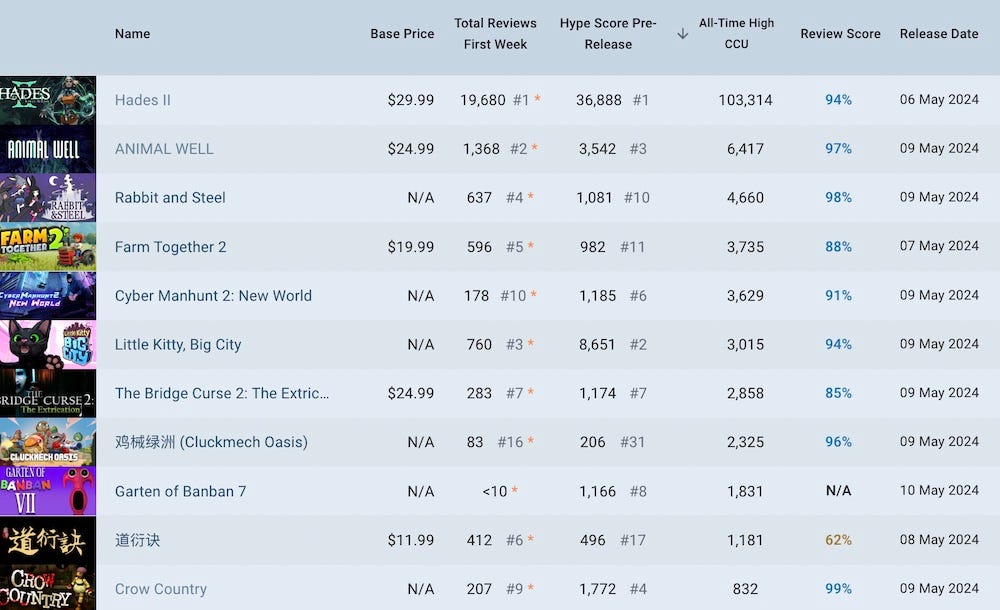
The analysis provides a comprehensive overview of the global video game market during a high-performing week for independent debuts in May 2024.
- Hades II dominated the May 2024 indie market with over 103,500 peak concurrent users (CCU) and nearly 20,000 positive reviews on Steam.
- Ten independent titles achieved over 1,000 CCU on Steam during their debut week, demonstrating the strong commercial viability of high-quality indie projects.
- Animal Well successfully utilized viral marketing and influencer support to reach 6,400 CCU, while Rabbit and Steel found success by blending bullet-hell mechanics with MMO-style raiding.
Ethically Notable Videogames: Moral Dilemmas and Gameplay
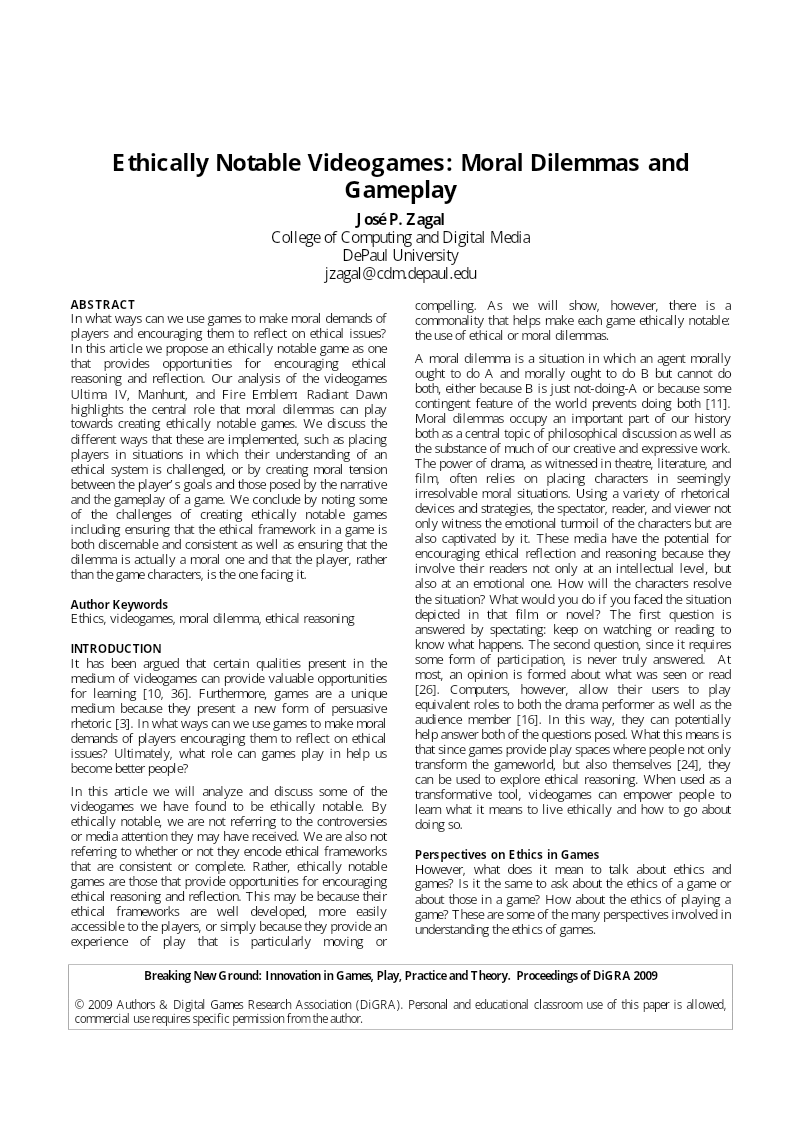
Ethically notable videogames are those that prompt players to reason and reflect on moral questions, typically through dilemmas that engage them both emotionally and intellectually.
- A game earns ethical notability when it makes players, not just their avatars, feel personally responsible for in-game choices and makes its ethical framework explicit enough to examine and challenge.
- Ultima IV's 'children's room' dilemma illustrates how a moral dilemma can provoke strong player investment, but playtester responses largely mirrored the game's built-in virtue-based character assignments rather than independent moral questioning.
- Ethical notability depends on consistent, discernible ethical frameworks and on dilemmas players genuinely experience as moral rather than as ordinary difficult gameplay decisions.