VideoDeconstructor of Fun
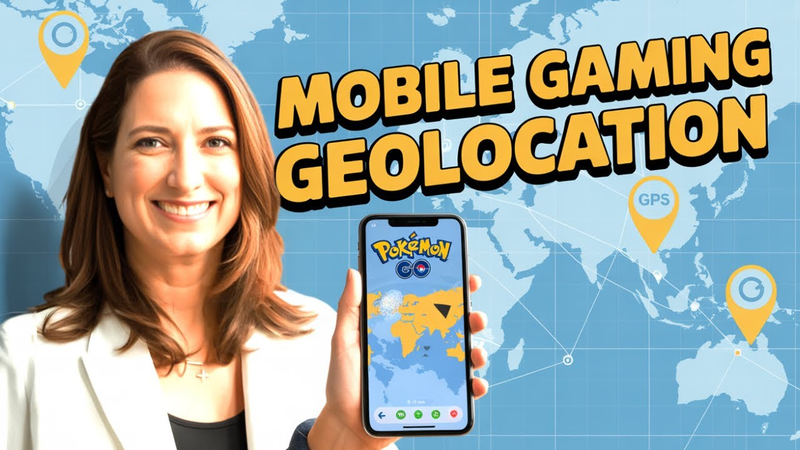
Where Do Geogames Go After Niantic’s $3.5B Exit with Lauren Steidl, CEO of Integrated Reality Labs
23 Jun 202536 min video
Web stores, you've seen what good looks like, but have you seen great? AppCharge is the direct-to-consumer platform backed by the likes of Supercell and built by monetization pros from Moon Active, Playtika, Huge Games and others. People who know the difference. AppCharge powers over half a billion dollars in transaction a year for top studios, optimizing every detail. Deeply personalized web store offers custom-made design, industry-leading monetization features, in-game payments SDK and more. 70% of the top grossing games already have a web store, but the one scaling fastest, they're doing it with AppCharge. Learn more at appcharge.com. Attention app and game developers. Are you ready to unlock the secrets behind the world's top performing apps and games? With Sensor Tower, you get the ultimate
competitive edge, whether it's breaking into new markets, fine-tuning your UA strategies or boosting monetization. Dive into data like never before. Track global trends across app stores. Analyze market-leading eat up purchase and in-app ad strategies and benchmark your performance with real-time insight. The best part, Sensor Tower doesn't just deliver data, it helps you turn it into action. With intuitive tools and expert analysis, it's everything you need to make smarter, faster decisions. Thousands of app and game studios from indie creators to global giants trust Sensor Tower to help them win. So, why not you? Start your free trial today at sensortower.com. That is sensortower.com. Hello everyone and welcome to the Deconstructor of Fun interview series.
It's been a while. I'm excited to do this one. I'm your host Jen Donahoe. I think many of you know I'm always looking for something innovative and different in our space. Today we're going to talk about something that kind of mixes the idea of old school IRL games and mobile in a way that's very cool for Gen A and even, you know, some of the Gen Z folks. This might even be taking on Pokémon Go. Is it the next Pokémon Go killer? Well, we'll see. So, do you remember the game Assassin? So, I played this back in high school. I was actually just blown away that kids still play this game today. So, for those of you that don't know it, it had a bunch of different names depending on where you are in the world, but the idea is that it's a live-action elimination game. Players are secretly assigned targets that you have to kind of quote kill. Typically, you use a water gun to like eliminate someone and then you also have to avoid being eliminated by whoever's chasing you. And so, it's kind of last person standing kind of thing and it usually it's a very high school rite of passage. So, now imagine that
you can layer on geolocation with a mobile game function. You have social media components. All of this facilitates the gameplay. So, kids can now use the phone, you identify kind of your next target and record all the kills and it it just really facilitates everything. So, it kind of blends two things together. So, as someone who's in the toy industry working on things like Nerf, you know, you think of water guns, you think of Nerf. I was really intrigued that this kind of blends everything together into one thing. So, today we're going to talk to two of the folks from Integrated Reality Labs, IRL. They have created a new game called Slap and it's going to take on Pokémon Go. The cool thing is that it is going to take what Pokémon Go does with geolocation to new and different places that kind of give it a shot and a reason for being that actually makes sense. I think many of you know on Twig, we talk a lot about how, you know, sometimes
geolocation hasn't made sense for some of the other games because of the IP and the play pattern not matching up. Well, this is a mix actually of those two things coming together. So, my guests today are Lauren and Ian from IRL. They're going to walk us through the blend of IRL social and multiplayer geolocation gaming. I think I need to give me a finder's fee when I introduce them to the Nerf team at Hasbro who is going to just absolutely love this and adopt this and pay them a lot of money because it's like the perfect blend. So, let's have them introduce themselves, give a little bit more. Lauren, why don't you go first? Sounds great. Thanks, Jen. I'm Lauren Steidle. I'm CEO and one of the co-founders at IRL. I do a lot of different things, but currently spending a lot of time preparing for our next fundraise. Previously, I was the first hire on the business side of a company at the intersection of health and entertainment called MedRhythms where we were building a music therapy mobile app, helped scale
their UA and marketing and comms from pre-seed to series B. So, I did that for 6 years. That was where I cut my teeth and then I wanted to start my own company with Ian who I've known for many years and we've been friends since high school. We've worked together before, actually. And now we're running a startup together and having a lot of fun doing it. Nice. It's so important to you're almost married to your business partners. You spend more time with them. So, it's fun to hear that you guys have, you know, kind of a history together. Totally. Cool. So, Ian, let's hear about you. Mhm. So, I'm the co-founding president of Integrated Reality Labs and previously serial entrepreneur, expertise in consumer apps, so especially social fitness. At IRL, I'm handling marketing, ops and product. Over the last 10 years, I've started five companies. Two of them have failed. The one in social fitness exited. One's a venture-backed company from Philadelphia and I'm getting run Integrated Reality Labs with Lauren Steidle. All right. So, not a ton of
game industry experience, but a lot of mobile experience coming into play here. So, let's get into the actual product and the platform that you are all building. So, can you walk me through a little bit more about the gameplay and how that works? We're going to show a video cuz you are blending two different things together. So, if you're watching on YouTube or you're listening or watching on Spotify video, you'll be able to see a little bit more. Obviously, you can go to their website and we'll give you all that in the show notes and at the end. Yeah, so our first game is called Slap and it's basically a modern take on the classic neighborhood games that we all grew up playing. So, games like Manhunt, Capture the Flag, Senior Assassin, um which is also called Water Wars some places. Basically, tag and hide-and-seek based games broadly. And since COVID, these games have been having a renaissance which started here in the United States, but has really grown to be a large international phenomenon in part actually thanks to Slap. Um so, Slap allows players to digitally tag one
another through their smartphones. You can play with as few as four friends and as many as several thousand over pretty much any sized area. So, small as like backyard, as large as a city. The match starts with players opening up the game, inviting their friends who invite their own friends or other friends into the lobby. Once everyone joins, all the players receive a specific target and they're also all being targeted by other players. Players are using the game map to track their target and once you get close to the person you're pursuing, you digitally tag them which triggers a video of the interaction and at the end shares that with the other players. The video also enforces the house rules which players can decide for themselves for each match. In the case of games like Senior Assassin, typically players eliminate one another with a water blaster. When there are two people left or when the time runs out, the game ends and as you can see, Slap is really about bringing back the enjoyment of
connecting with friends, competing in real life and spending time with other people face-to-face. Wow, that's super cool. So, what I noticed was there was a lot of video taking and I imagine, obviously, with Gen A and Gen Z, the first thing they want to do is share that to all of their socials. Is there a way that it instantly kind of blasts every, you know, all their social media? How does that work with the game? So, while the game is being played, we share the video content to the other players who are taking part in it and then players are generally taking that and sharing it to their own socials. We're also creating geo-specific social media pages kind of where these games are being played and we're sharing the content from the matches to those pages. We're tagging the nearby schools, students see it and then they share it to their own socials from there. So, there are like a few different ways that the video content makes its way onto social media, but we don't necessarily like push it out immediately right then and there. And what's kind of cool about this is it allows us to basically create this viral content flywheel and we are seeing all
of this organic growth across the globe and it's really just coming down to the core game mechanic is capturing this video and then it gets shared, but that's also excellent like marketing content. Yeah, I think when we talked beforehand and we were looking at it, I'm like, oh my god, you can monetize through filters, through, you know, different ways to enhance the video that you're going to share to make it more fun and obviously, you have an instant viral mechanic to get more people involved and then to make that video content more watchable and funny and great. So, Lauren, what has been the reaction so far? I think you're out on iOS and Android in the US. Like not that long, though. How long have you been out and what's been the results? So, the company started in 2022. That was when we started building our secret sauce tech that facilitates this. As Ian mentioned, we have this kind of sensor fusion approach. That's what allows the digital tagging. It's super low latency. We spent most of 2023 and 2024 testing
this out in the context of large-scale tag, the slap beta. And then we launched last month commercially in the US and abroad on both iOS and Android. And the the reaction has been really really exciting. It has pointed to strong appetite for real-world multiplayer as kind of like a new gaming category. So, we're seeing over 60% of our users are coming in just organically from, you know, seeing videos on TikTok and Instagram from outside of the US. A lot of growth in like the UK, the UAE, Saudi Arabia, all of these other marketplaces. And yeah, we're growing like twice as fast as we had predicted at this point, which is pretty exciting. We managed to unlock some server credits, so that's been helpful in just keeping up with the growth, but definitely monetization and revenue is top of mind kind of leading into this next stage of growth. What's kind of interesting too just in terms of
like early user adoption is I think in large part because of how many social hooks there are incorporated into the game. We're seeing that like active users are opening this 10 times plus per day. So, it's like, you know, twice as high as like a or five times as high actually as like a top-performing gaming app and more like akin to a social network. So, there's a like a really high level of engagement and I think it just speaks to how interested Gen Z is in like doing things socially, in person, and that uses video and other UGC elements. I think you told me the DAU number was pretty impressive for something that just launched without a lot of marketing. Yeah, we're putting like barely anything toward paid marketing at this point. It's really just focusing on this like organic approach and they crossed the 60,000 monthly active user mark. That's up from like 1,000 people in January. So, it's been growing like over 300% month on month, which is pretty
exciting. Awesome. Okay, so for sure early days, but what I love hearing is people who are seeing progress without the paid media machine that often has to get into place, which once you do turn that on could really start to help things. So, one of the things in thinking about this was Pokémon Go. Niantic has geolocation and a lot of other kind of studios have the same thing. What is different about your approach versus what they do? That is a really good question. Thanks to navigation and ride-share apps, everyone's pretty much used to seeing their own location accurately reflected on a map, but to actually create a real-world multiplayer game, the tricky part is mapping out the exact proximity of multiple people relative to each other in real time. You need to do it fast enough to actually enable play in real time. So, when we started this, the best available mobile tag out there could only pinpoint users within about 12 ft of one another and had refresh
times of up to a few seconds, which is fine for navigation or like a single-player experience, but was way too slow for real-world multiplayer action. Precision and real-time responsiveness are really essential for being fun. So, if you're playing a game of tag, if your phone doesn't register interactions accurately, it's kind of missing the whole point of the game. So, we looked at previous attempts. People had tried doing this with GPS alone. It's too laggy. Others had tried custom hardware, but it was too expensive for players and very painful to develop. So, we knew our solution had to use something that people already had access to. So, thanks to recent developments in Bluetooth and ultra-wideband, these technologies have become faster and they use battery a lot less intensively. So, this unlocked a potential solution for us. So, we basically used a sensor fusion approach where we took the technologies that were already available like GPS, Bluetooth, and fused ultra-wideband and Bluetooth so that we could really understand where
players were in real time using that peer-to-peer connection between devices. If one last note around like how is this different from these other location-based games that we've seen before, a lot of them have gone, you know, the way of the dodo. And I think the really big difference, in addition to what like everything that Ian's saying, like we're not just using the off-the-shelf location services, is the fact that we took as part of this multiplayer thesis, we took augmented reality and like the screen overlays out of the equation because we realized very quickly in looking into why Niantic and these other companies that had created these location-based games, well, we were looking into why they hadn't created a multiplayer title, we found that augmented reality in current era mobile just really doesn't support games in a multiplayer context. We go down that rabbit hole from a technical standpoint, but it kind of hamstrings you if you're trying to create like a bonafide multiplayer experience. Okay, so your thesis is like you don't need
the AR. You just focus on geolocation. It sounds like Bluetooth plays a big role in this. So, I imagine part of the rules of the game is you got to have your Bluetooth on. And that allows you to be able to do much more multiplayer activities. Is that right? Yeah, it's like the difference between a location-based game and a proximity-based game. Like ours is based on proximity. We can see like the 3D relationships between where people are in space in a way that like if you're looking at a map and you have two people on different floors of a building, it'll say that they're in the same location, right? But they might be, you know, very far apart. And with this technology, we can get within like with centimeter level accuracy where individuals are, whether they're standing next to each other, whether they're on separate floors. So, that's really what is critical to unlocking like a fast-paced, you know, player versus player mechanic. Oh, interesting. So, earlier I should have been calling it proximity gaming, not necessarily geolocation, which is what we all kind of think of
when we think of this. But that's interesting that, you know, maybe you rebrand that a little bit into it the unique direction that you're going because some of the comparisons are, you know, I make that comparison just to ground people a little bit in like what the play pattern is. Like you're out in the real world and you're hunting things down. Those things happen to be other people, not necessarily like hidden objects from the game. Is the right way to think about it? Just want to make sure I'm grokking it correctly. Game devs, here at Heroic Labs, we know that great gameplay is what players love. But integrating meta-game features like challenges, progression, and rewards is crucial for retention and monetization. But coding them is a tedious and time-consuming process. That's why top studios have turned to Hero from Heroic Labs. Hero provides a complete suite of battle-tested meta-game features that are quick to implement, letting you spend more time on the core gameplay experience. Ready to ship fully featured engaging games? Check out Hero today at heroiclabs.com.
In today's hyper-competitive digital landscape, understanding your app's journey from discovery to download isn't just insightful, it's the difference between scaling and stagnating. Enter AppsFlyer, the undisputed leader in mobile attribution and marketing analytics. They've mastered the science of making every app dollar work harder by revealing exactly where your players come from and how they interact with your app. Their platform transform mountains of complex data into clear, actionable intelligence that separates winning campaigns from budget-draining experiments. And I know that many of the top game companies leverage AppsFlyer and a are a key partner in their success. AppsFlyer, where your app's potential meets performance. Hey, are you building a game, launching an app, or considering an acquisition? Well, in that case, Deconstructor of Fun Consulting is here to help you out. We do everything from market research to go-to-market strategies to live ops
optimization and due diligence. We're trusted by some of the most beloved game development companies, makers of tools and tech, as well as some of the most renowned investors. Now, if you are building, launching, or buying, don't do it alone. Do it with us. Connect by emailing to [email protected]. All right, so I got a sense of the tech and the gameplay. On marketing, we talked a little bit about more of the organic approach. Can you tell me, Ian, a little bit more about how you're thinking about this, especially because it's such a hard-to-reach audience with Gen A and Gen Z? Yeah, it is definitely a unique challenge, but it's also a very significant opportunity. These players, generally speaking, all already know each other or at least have weak ties. They're part of the same communities. And so, we looked to other hyper-local consumer apps that had solved this
problem. So, paradigmatically, that looks like Bumble, Gas, and TBH, which both have scaled through strong local network effects. And the real trick is tying gameplay directly into social media. So, for example, every time someone eliminates another player or what we're calling slaps, the app captures that moment on video. And we take the content from the matches and post it to geo-specific social media pages. So, like Play Slap UK, Play Slap LA, and tag the nearest schools. Kind of like the Barstool Sports social media empire. Yeah. The students see themselves in our videos, which they want to share with their friends. They share it to their own socials. We've not yet started rolling out incentive programs to encourage players to share their slaps directly from the app into social media, and we're already seeing viral growth due to the content sharing. So, we know that this as a flywheel is something that is fundamentally working and that we want to continue investing
into. We've also developed some what we're calling growth technologies, so using AI and other tools to help us select the best videos to share, help us identify the optimal schools, and then within those schools find players that are likely to make great ambassadors and reach out to them and work with them. through that. That's been essential to driving our CAC down low enough to continue growing even though our marketing budget has been fractional compared to what it otherwise might be. Are you going to add like the Tinder feature where you like swipe left and swipe? It's interesting, you know, the dating app features because of location, you know, can play a role in some of the mechanics here. I didn't think about like the crossover of that type of category of mobile with what you're doing. Is that how you're thinking about it? Yeah, it is. In fact, it's funny you mention that cuz we're hearing from sororities and fraternities that they're using Slap as like a matchmaking or a meeting app. We were not anticipating
learning of this, but you know, it's a direction that we might want to lean into in the future. Yes, it is a meetup. Meetup's another thing and dating is another thing. It's like, huh, is this an activity you can Anyway, you could go a lot of different directions. There's so many like better ways of facilitating like meetups and first dates and networking. Like that just feels more natural when you introduce play. So, I think there's like a huge direction there. Oh, well, maybe we should introduce you to match, match.com. We know the guy who used to be the CEO there. your finder's fee. No, but seriously, I think, you know, dating is struggling and, you know, I listen to a lot of podcasts that talk about how the friendships are going down. Gen A and Gen Z are struggling with loneliness because they're not meeting people IRL. And so, one of, you know, again, I'm going to market you, sorry again for this, but one of the benefits that you could offer is that while it's a mobile game, it actually
does really facilitate and foster IRL relationships and promotes that. I think that's an angle that you can lean into in the positive. Like, well, you're eliminating or slapping friends, but still play is fun, right? Like it That's what it is. Definitely. So, I think when we talked too, you had aspirations of this, I I think we're going with this part of the conversation, for this being a platform or an underlying tech that can be applied to many different things. How are you thinking about expanding this or using this as a platform? Where are Where are you going with that idea? It's definitely what we have our sights on. Right now, we're in like heavy execution mode because we're a startup, so we're we're kind of using Slap as the proving ground for this engine or platform that we've developed for multiplayer play. And there's a lot left to do in Slap. Like Ian mentioned, there's already these ways kids are using Slap as it's, you know, the first mode is designed for senior assassin style play that's outside of the senior assassin realm. Like with these kind of dating app
angles, we're seeing kids using it as like a paintball companion app and so there's all of these kind of like wrong ways, quote unquote, that kids are already starting to use the app and like requesting other features and ways to kind of support this. So, we're definitely interested in meeting players where they want us to when it makes sense and we get like a critical mass of that input. And ultimately, I think in doing so, we can like really turn Slap into the definitive app for these games that are rooted in longstanding like the love folk traditions and neighborhood games like senior assassin, but there's tons of other ones like hide and seek and manhunt and capture the flag. Like, you know, the list goes on and on and we and so there's a lot left to tease out with Slap that we can facilitate in the app with the engine. But in terms of like feature for Integrated Reality Labs, what we are really excited about is actually deputizing our players as we build out this community to become game creators. In the same way
that Roblox has done for games that are played on screens, we think because all of these games that we're already starting to support with Slap are created by kids and we've already seen in like the Roblox community, kids are incredible game designers when you're giving them the the toolbox, like the keys to the kingdom, whatever analogy you want to use. And we believe we can package up this technology in a way that is usable by the players to create and share and monetize their own real-world games that can look 100 different ways in terms of level of complexity, but we're really excited for that kind of like future of the platform and really opening it up to focus on UGC and leveling up around the UGC we've already created. Oh, interesting. So, it's a UGC IRL game that they then kind of program into the app that allows, you know, the app to facilitate the game that they created in the real world instead of, you know, in Roblox, you're
in a sense programming a digital world, this is you're programming a real world game and then bringing it into the to the mobile ecosystem. That's a fun and different way to think about UGC. I think that's the perfect synopsis. Awesome. So, we talked a little earlier about your kind of tech secret sauce and how you were thinking about the proximity location as what was really interesting in your tech side. Is there any other secret sauce components that you have as you're bringing everything together? You know, you're trying to reach this new audience, you're trying to do a lot of different things here. What are some of the other secret sauce components that make you unique? I think it really comes down to understanding who our players are and what they haven't gotten in so far from gaming. So, they're Gen Z, they love competitive multiplayer experiences, they're digital natives, so they love capturing videos and sharing them on social media, but they're also looking to spend more time outside and to socialize
face-to-face more than they typically are getting to these days. And we designed Slap with these three insights kind of like in the forefront of our minds. So, we're giving players the thrill and competition of popular online games like Fortnite, but with the built-in social sharing that makes apps like TikTok so sticky. And because we make every interaction a social moment where when you digitally tag your friend, the app captures that moment and actually uses it as game content, we make sure that's also always shareable video content outside of the app. This formula has not yet been attempted by previous location-based games. They've generally speaking relied on AR geocaching, which are great for like solitary activities, but don't really work for multiplayer experiences. Even Pokémon Go mostly has you playing alone. With Slap, playing together is the entire point. It's already proving out to be pretty special. Just given one example, we're seeing that players are opening the app
like on average about 10 times a day. So, they're coming back, they're engaging with it. Our retention rates are pretty high and players seem to really appreciate the experience. Okay, so you said retention rates are high. Have you benchmarked that to gaming? Is there You definitely have it in app opens, it sounds like when you're engaged in the game, you're engaged in the game. Anything you could share more around retention rates? Our D1 is right now is higher than 50%. Our D7 is around 20% and our D30 is around 10%. Okay. Okay. You know, some solid numbers. I think that's always a good sign. 50% day one, awesome. You're going to get that, right? Because you've got like the viral nature of a friend asking you to come in and you want to be a part of the game and you want to play. So, that's fantastic. It's making sure they have that really first good game experience. Game one is amazing and you're doing something to incentivize them to come back for game two. That's going to be super important. As we kind
of get to the end, I imagine you're trying to think about what's next and how to grow the company. You said you're a startup. Lauren, how are you thinking about the future of IRL? I mean, right now, I alluded to this in the introduction, we are gearing up for a new note round. So, we're still an early stage company, but we're really excited about the growth that we're currently seeing. As you noted, we think that accelerating, you know, our performance marketing program, bringing that online now that we've really cracked the code with the organic piece of this, is worth putting money into. So, so we're interested in raising capital to that basically supercharge growth and also focus on R&D with for fully monetizing the product. So, we have a bunch of different ideas for monetization that we're kind of like testing out and and think are going to really be able to kind of take this to the next level. In terms of like the future for
like far future for IRL in the category, I think what's interesting and we've talked a lot about like the differences between us and Niantic and these other tech companies. At the end of the day, we really don't see this as mutually exclusive from like future smart tech, but actually is like complementary. There's been a lot of talk, I think even on this podcast, about how like the next generation is like someday we might move beyond mobile phones and into like an era of smart glasses or watches or some combination of all three. That's scary, I think, to a lot of game developers, but for us, I think it's actually really an exciting opportunity. There's a lot we don't know about what this future is going to look like, but what we know is that these devices will all retain the core sensors, the ultra wide band, the Bluetooth, all of the things that are critical to our secret sauce and like bringing multiplayer games into the real world. And we've made this tech super
extensible so that it can like flex really into any of these future tech paradigms. All right, so you got three possible exits. One is Niantic, well, which is now Scopely since Scopely bought them or maybe like old-school Niantic, but one is Scopely. The other is Hasbro. They might buy you and just, you know, put Nerf on top of it. And the other one that we discovered today was match.com. So dating So some major dating app. So that's cool. Hey, as a little baby startup, it's nice to know that you've got a couple potential futures. So what did I not ask you that I should have asked you? Ian, do you want to talk more about monetization quickly and what we are bringing online next? So we started out with a premium approach to monetization as we found that the app is actually It's being used more broadly than just for senior assassin. We designed it to be a utility first and a game second. But we're finding that people, especially internationally, are picking up the game and using it more organically with less structure than we had anticipated. They're not using it as
a utility to play an experience that they'd already like cooked up and designed. They're just using Exactly, they're just using it as a fun game. And on one hand, that's been stressful in as much as our monetization wasn't designed around that sort of play pattern, but on the other hand, it's a much more general or mass market sort of play pattern than we had anticipated. And so that's, I think, for the rest of 2025 really what we're looking to explore. So moving from a subscription model to an ads-driven model or an energy-driven model, something that makes space for a broader persona to engage with the application than just folks who are using it to play senior assassin at their high schools. That makes sense. It's really smart. Again, it goes into not just one game, multiple games, or even UGC games. You know, ads is obviously, you know, in
mobile gaming I think there's always a little bit of caution depending on the age of your audience, but you can absolutely figure that out with the right ad mon team. They can help, you know, facilitate what that is and maybe it's even sponsorships. Again, sorry, I'm going to market you for a second, but I imagine so many sponsors want to get in front. So maybe you have different game types sponsored by Nike or, you know, whatever, Monster Energy drinks, you know, whoever's trying to reach this audience and then you can have certain games sponsored by them. Sorry. Sorry. It's a really good point. So that's that is a big piece of the longer-term road map. It's figuring out how we can work with brick-and-mortar or physical location-based businesses to push users to retail establishments as part of the actual game mechanics and to ideally take a commission or a cut on transactions that go on there. We haven't built the infrastructure to like bring that online yet, but it's something that we're working towards. Yeah. Yeah, thinking about ads as like immersive experiences, I think it's so
key because we are capturing Gen Z and like on a recent DOF episode, there was talk about how like we have to be careful, right? Because like Gen Z is more likely to churn if the ads are intrusive, but like if the ads are part of the experience, they're more likely than any other generation to stay put and engage. And I think there's like a lot of opportunity there because of this being played not just on your phone, but in the real world. Yeah. Yeah, and I think there's even lighter touches where I just a game is brought to you by a certain sponsor and it doesn't have to be like overwhelmingly integrated or push to retail. It could be a lighter touch in the beginning while you're still figuring out those mechanics, but Totally. super cool. Yeah, I think that's smart for you is to, you know, I'm sure Phil would take your call on monetization opportunities and energy-based and how the economy would work. He would love to get his hands on something like that because that absolutely will like supercharge how you think about the revenue when you start to blend in traditional mobile gameplay mechanics to what you're thinking about
knowing that you all don't have the depths of gaming experience that, you know, some of the other folks have. All right. Well, this was super fun. Thank you so much. Where can people learn more about IRL, Integrated Reality Labs? Adam, Lauren, Ian, where should they go? LinkedIn is probably the best fit right now, but if you want to be part of the movement to get outside and play with friends, Slap is on the Play Store and the App Store. So you can just search Slap and download it, get some friends, and start playing. And you can email us at [email protected] and [email protected]. Play Slap, got it. All right. Well, thank you very much for coming and wish you the best of luck. Thank you, Jen. Thank you so much, Jen. It was great to be here. You did it. You made it to the end of the episode. As a fan of the show, it would help us out if you'd subscribe and leave us a review on the podcast service of your choice. Those stars and likes, while small action on your part, mean a lot to us
and help to grow the show. More importantly, are you a member of the Deconstructor of Fun Slack group? If you have five years or more of games industry experience, go to deconstructoroffun.com/slack and apply to join the games industry's best professional community filled with peers always willing to lend a hand. Or subscribe to our newsletter to get all the latest insights from the Deconstructor of Fun content creators. Thanks for listening.
Auto-generated captions from YouTube — names and numbers may be misheard.
The evolution of location-based gaming is shifting away from the augmented reality-heavy geocaching models of the past toward proximity-based, real-world social interaction. By leveraging proprietary sensor fusion technology that combines GPS, Bluetooth, and ultra-wideband, developers can now achieve the centimeter-level precision necessary for low-latency, real-time multiplayer experiences. This technical advancement allows for the modernization of classic neighborhood games, such as tag or assassin, by enabling seamless digital interaction within physical environments.
Current market performance indicates a strong appetite for these social-first experiences, as evidenced by platforms achieving 60,000 monthly active users with minimal paid acquisition. High engagement metrics, including daily session counts exceeding ten opens and Day 1 retention rates surpassing 50 percent, suggest that integrating social media sharing directly into the gameplay loop creates a powerful viral flywheel. This organic growth is particularly pronounced among Gen Z users, who prioritize physical-world engagement and community-driven content.
Looking forward, the industry is moving toward a user-generated content model that empowers players to create and monetize their own location-based games, mirroring the successful ecosystem dynamics of platforms like Roblox. To support this, technology is being designed to be hardware-agnostic, ensuring compatibility with emerging smart devices. Future monetization strategies are pivoting from premium models toward mass-market approaches, including non-intrusive advertising, brand sponsorships, and location-based retail integrations. By focusing on these immersive, community-centric frameworks, the sector aims to establish a sustainable, scalable alternative to the traditional AR gaming paradigm.

Deconstructor of Fun · 2026

Deconstructor of Fun · 2026

Deconstructor of Fun · 2026

Deconstructor of Fun · 2026

Deconstructor of Fun · 2026

Deconstructor of Fun · 2026

Deconstructor of Fun · 2026

Deconstructor of Fun · 2026

Deconstructor of Fun · 2026

Deconstructor of Fun · 2026

Deconstructor of Fun · 2026

Deconstructor of Fun · 2026

Deconstructor of Fun · 2026

BITKRAFT Ventures · 2026
Deconstructor of Fun · 2025
Deconstructor of Fun · 2025
Deconstructor of Fun · 2025
Deconstructor of Fun · 2025
Deconstructor of Fun · 2025
Deconstructor of Fun · 2025

Deconstructor of Fun · 2025
Sensor Tower · 2025
Deconstructor of Fun · 2025
Deconstructor of Fun · 2024
Comments