Action Roguelike
Documents
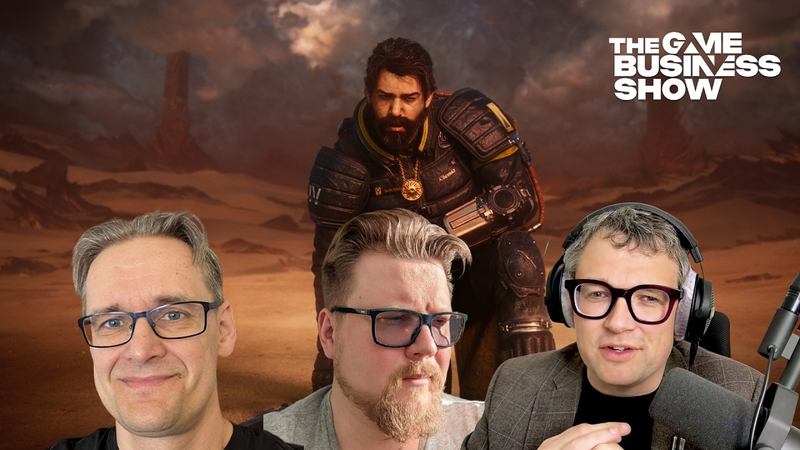
Can PlayStation’s Housemarque repeat the FromSoftware story?
Housemarque is currently navigating a strategic evolution as a first-party PlayStation studio, aiming to elevate its historically niche, arcade-inspired design philosophy into the realm of major, top-tier gaming franchises. By leveraging the internal resources, user testing, and collaborative environment provided by Sony, the studio seeks to scale its signature focus on flow-state gameplay and immersive sensory technology. The core objective is to broaden the appeal of challenging, high-intensity titles without compromising the uncompromising, hardcore sensibilities that have defined the developer’s thirty-year history.
The studio, which now employs approximately 120 people, views the development of fresh intellectual property as a primary competitive advantage in an industry increasingly hesitant to move away from established franchises. By treating recent projects like Returnal as the foundation for a long-term dialogue with the player community, the team intends to replicate the growth trajectories of established industry leaders such as Naughty Dog and Insomniac Games. This approach relies on a continuous feedback loop where critical discourse and player data directly inform the refinement of future genre standards.
Ultimately, the studio’s trajectory represents a deliberate attempt to balance creative autonomy with the demands of large-scale production. By maintaining a gameplay-first focus while utilizing the stability of the PlayStation ecosystem, the developer is positioning itself to bridge the gap between specialized arcade experiences and mainstream blockbuster success. This strategy hinges on the belief that high-fidelity, immersive mechanics can make demanding, skill-based gameplay accessible to a wider audience, thereby securing the studio’s long-term relevance within the global gaming market.

GoldenEye and TimeSplitters creators return: “Maybe this isn’t what we should be doing”
The modern gaming industry is currently defined by a fundamental tension between the instability of large-scale production and the enduring dominance of legacy content. While well-funded studios frequently face redundancies due to a lack of production discipline and an over-reliance on long-term, unreleased projects, the broader market is increasingly driven by back-catalog titles. Data reveals that over half of all gaming activity involves titles at least six years old, with new releases—excluding annualized sports franchises—struggling to capture even 1% of the active player base. Consequently, major publishers are pivoting toward remakes and established live-service ecosystems to maintain revenue, as consumers prioritize massive backlogs over new, full-priced offerings.
This shift is further complicated by the industry’s evolving global footprint. While traditional markets grapple with the saturation of legacy titles, emerging regions in Southeast Asia, India, and the Middle East are projected to see significant growth through 2029. These markets are not monolithic; they remain highly fragmented, with consumer preferences and platform adoption varying significantly based on local socio-economic factors. This diversity challenges the notion of a singular global gaming trend, suggesting that future growth will require localized strategies rather than broad, universal approaches.
Amidst this landscape, veteran developers like Steve Ellis and David Do are rejecting the resource-heavy demands of modern AAA production. By transitioning to independent development, these creators are prioritizing creative identity and agility over the high-risk, massive-scale models that have led to widespread studio instability. This return to smaller, niche projects reflects a growing sentiment that the industry’s obsession with massive live-service titles may be unsustainable. Instead, focusing on personal, hands-on development offers a viable path forward for creators looking to escape the volatility of the current corporate environment.

5 x Secrets Behind Mr. Autofire's $40M Success
Lightheart Entertainment has established a highly efficient model for mobile game development, exemplified by the success of Mr. Autofire. Over its first three years, the title generated more than $40 million in lifetime revenue and surpassed 10 million installs. This performance stems from a lean organizational structure of approximately 33 employees, which prioritizes developer well-being and operational efficiency to prevent burnout. By leveraging lessons from the broader mobile industry, the studio emphasizes that intellectual property must align organically with core gameplay mechanics to ensure sustainable growth and lower user acquisition costs.
The studio maintains a balanced monetization strategy, deriving 70 percent of revenue from in-app purchases and 30 percent from rewarded video advertisements. This financial stability is supported by a rigorous five-question evaluation framework applied to all prototypes. This process mandates a three-month development cycle, a focus on immediate clarity in ad creatives, and the integration of proven progression systems. By fostering a culture of intellectual honesty, the team avoids the pitfalls of subjective attachment to projects, allowing for rapid pivots based on player data and market performance.
Long-term retention is driven by a content-centric update schedule, while power progression features are utilized to optimize monetization. Despite industry-wide challenges regarding privacy-related targeting and measurement, the studio sustains its trajectory through high-quality ad creatives and efficient acquisition tactics. Ultimately, the studio identifies recruitment as a foundational competency, asserting that the quality of hiring decisions is the most critical factor in scaling a startup. This disciplined approach to both creative development and organizational management serves as a blueprint for maintaining profitability in a competitive mobile gaming landscape.
- Lightheart Entertainment achieved over $40 million in lifetime revenue and 10 million installs for Mr. Autofire within its first three years using a lean team of approximately 33 employees.
- The studio maintains a balanced monetization model consisting of 70% in-app purchases and 30% rewarded video advertisements.
- Prototypes are evaluated through a rigorous five-question framework and a strict three-month development cycle to ensure rapid pivots based on data rather than subjective attachment.
- Sustainable growth and lower user acquisition costs are achieved by ensuring intellectual property aligns organically with core gameplay mechanics.
- High-quality ad creatives and efficient acquisition tactics are prioritized to maintain performance despite industry-wide challenges in privacy-related targeting.