Hitman
Documents about Hitman
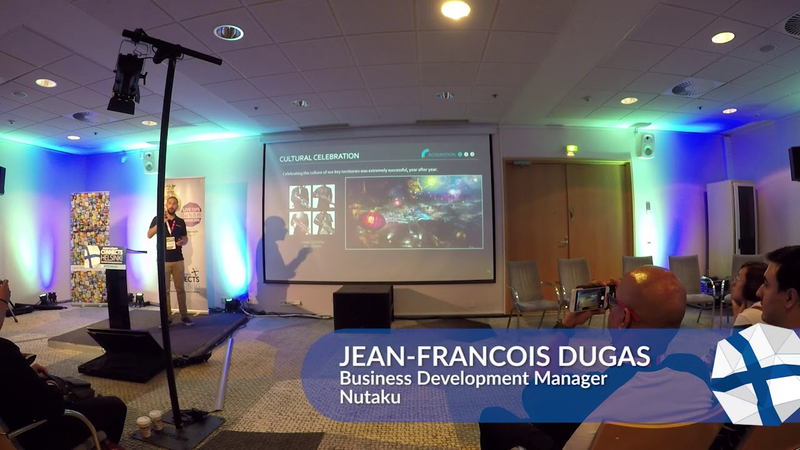
The Hitman Sniper post-mortem
The Hitman Sniper post-mortem details the transition of a premium mobile title into a sustainable, live-operated service.
- Square Enix Montreal successfully pivoted Hitman Sniper from a declining premium title to a sustainable live-operated service by implementing 36 iterative updates over three years.
- Regional price adjustments in emerging markets proved highly effective, resulting in a 115-fold increase in game downloads.
- The implementation of personalized, mission-specific rifle offers based on behavioral and geographic data increased conversion rates for key items by nearly four times.
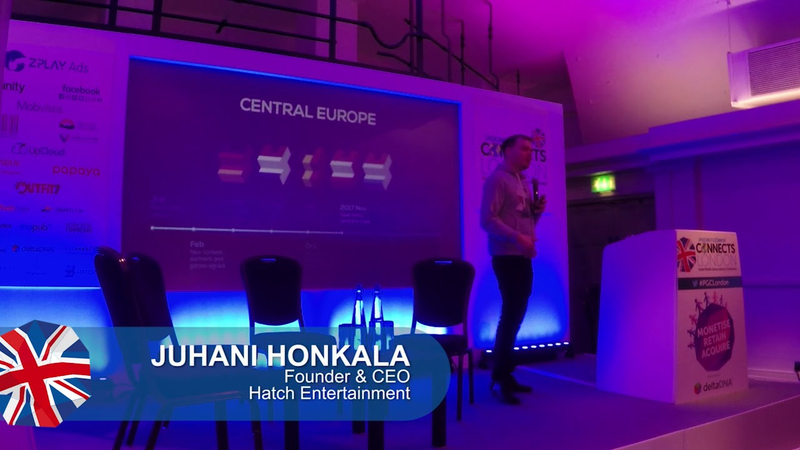
Hatch and the new opportunity of on-demand gaming
The emergence of on-demand, cloud-based gaming represents a significant shift in the mobile industry, mirroring the transition from ownership to subscription models seen in music and video streaming.
- The platform utilizes cloud architecture to stream native Android games, eliminating the need for HTML5 ports and reducing multiplayer prototype development time from months to days.
- The service operates on a dual-revenue model combining advertising and subscriptions, with a commitment to share 70% of generated revenue with content partners.
- The business model shifts mobile gaming from free-to-play monetization loops to a subscription-based, on-demand format that prioritizes premium content quality.
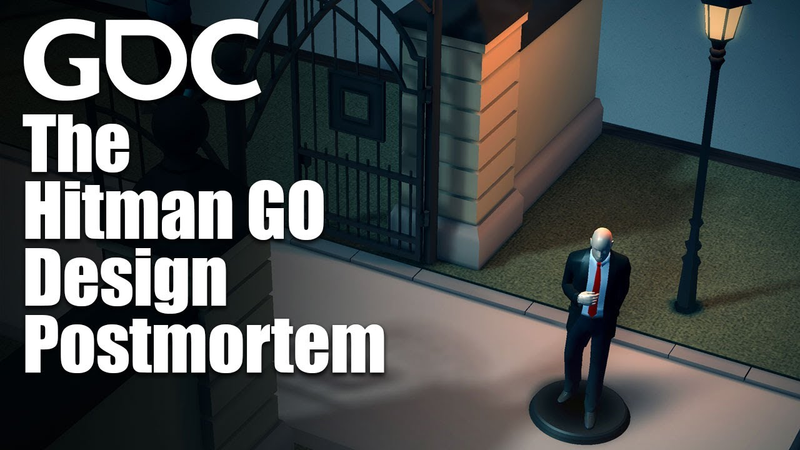
The Hitman GO Design Postmortem
The transition of Square Enix Montreal from cancelled AAA console development to mobile production necessitated a strategic pivot that prioritized creative incubation and brand adaptation.
- Square Enix Montreal developed Hitman GO within a six-month production window by utilizing a small, agile team and an incubation process that allowed staff to propose mobile-first concepts for established brands.
- The core gameplay mechanics were prototyped in just two weeks, focusing on turn-based strategy and diorama-style visuals to differentiate the title from traditional AAA stealth games.
- The team adopted a 'bottom-up' design philosophy, embracing unconventional ideas and constraints—such as the board game aesthetic—to solve the challenge of adapting a complex franchise for mobile platforms.
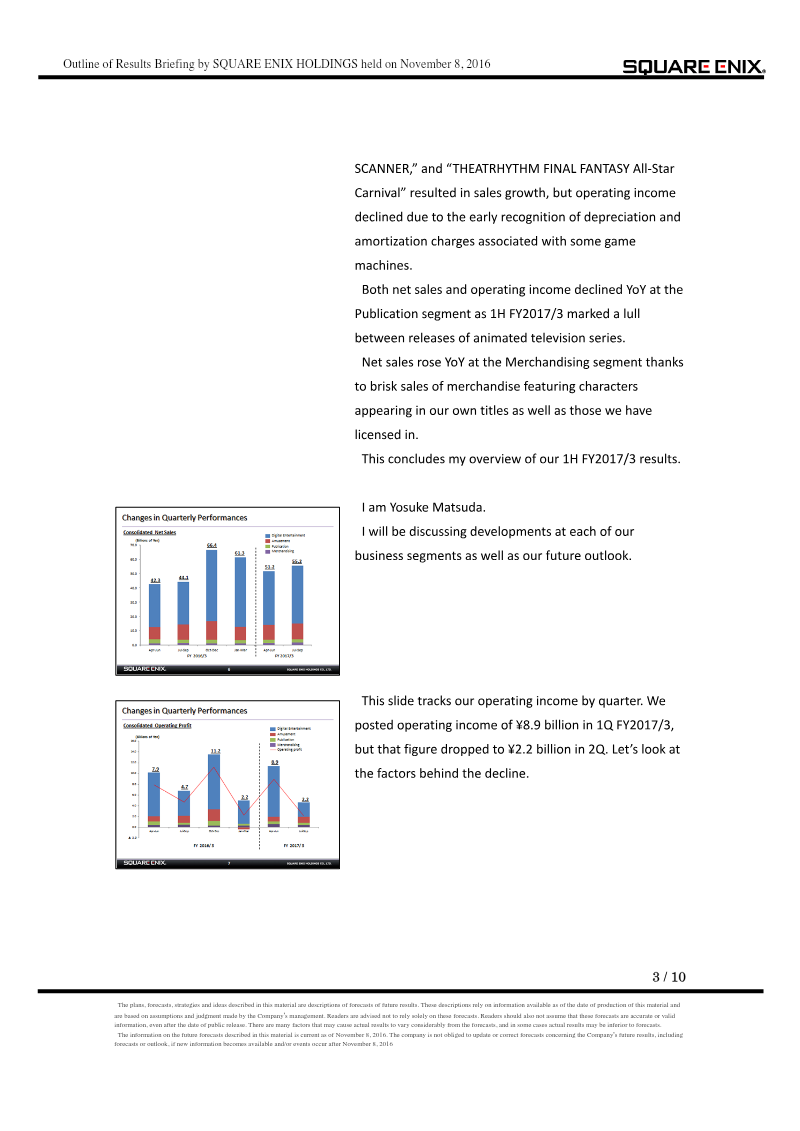
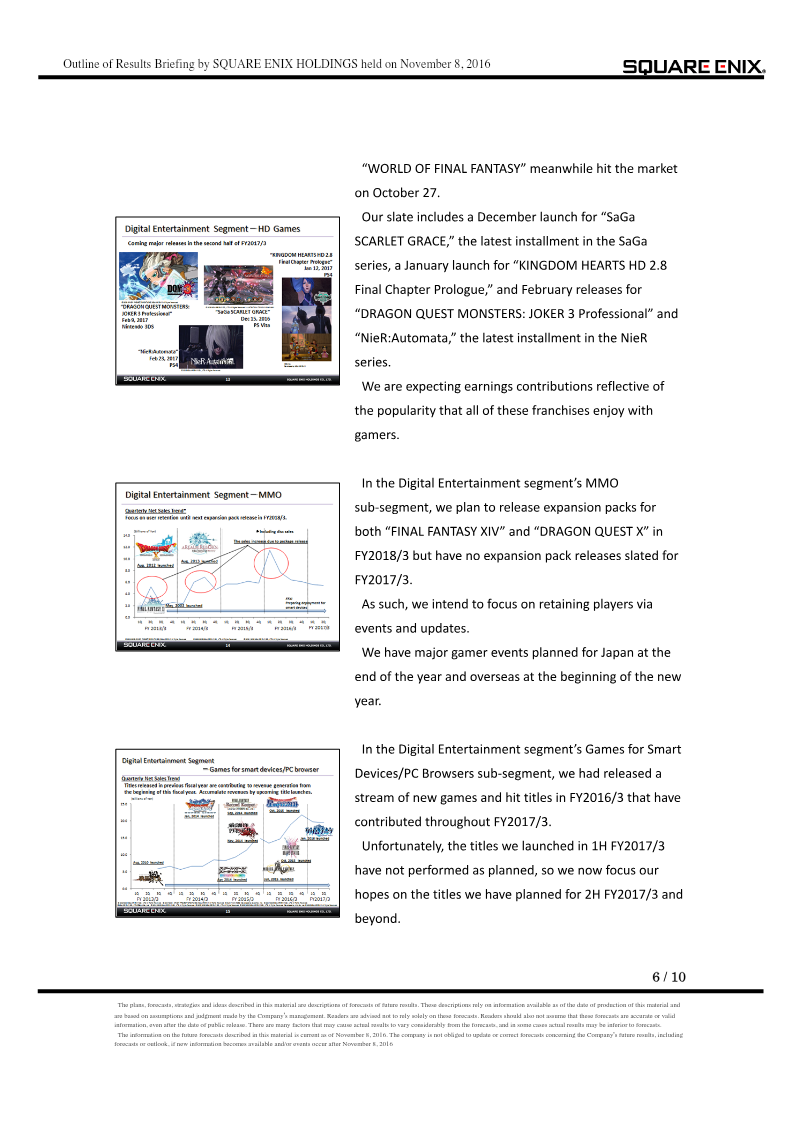
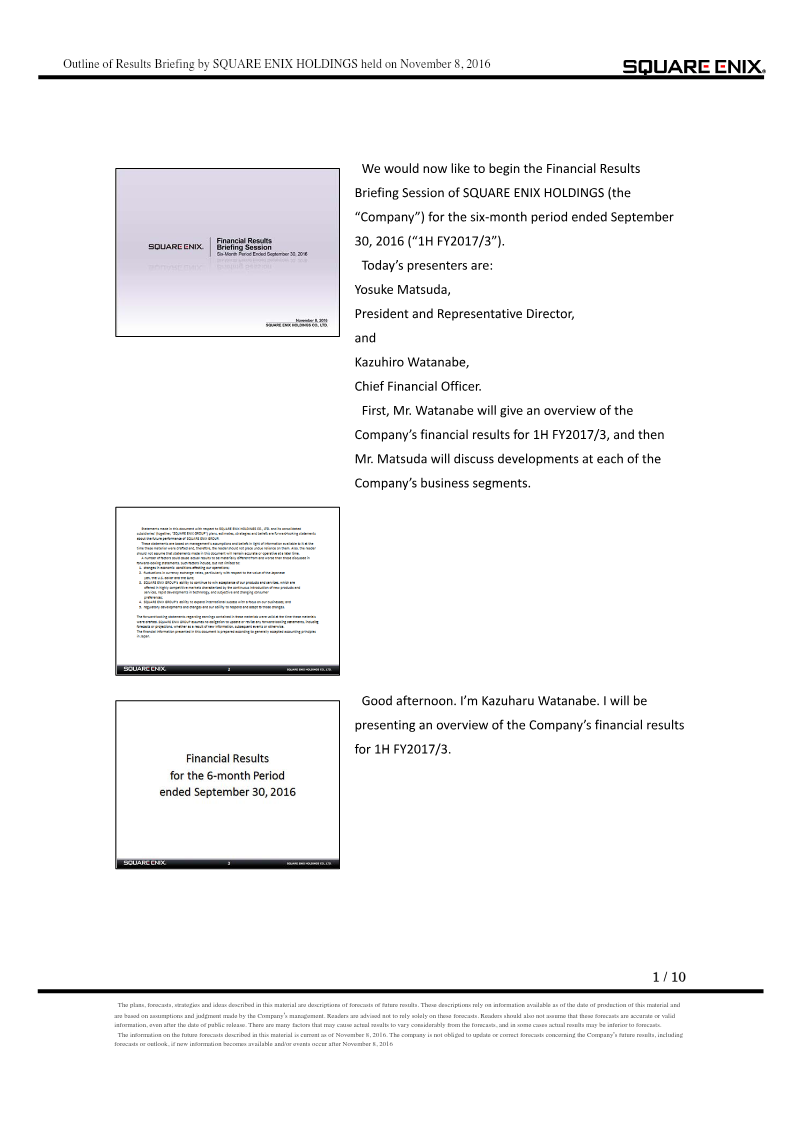
Square Enix Holdings Financial Results Briefing: 1H FY2017/3
Square Enix Holdings reported financial results for the first half of fiscal year 2017, ending September 30, 2016. The company achieved net sales of ¥106.3 billion, representing a year-over-year increase of ¥20 billion.
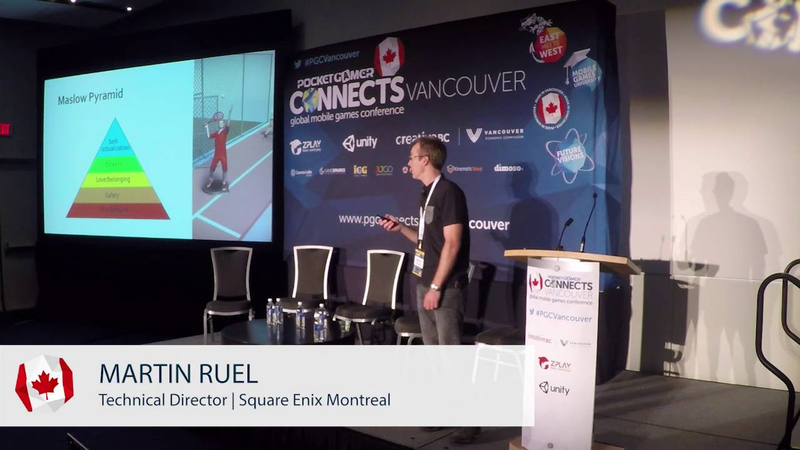
How Square Enix managed the teams behind Hitman GO and Lara Croft GO
Managing small, high-performing development teams requires a structured approach to individual performance, centered on the intersection of talent, experience, and motivation.
- Square Enix Montreal optimizes small team performance by prioritizing candidates with demonstrated passion and rapid learning capabilities over traditional academic credentials.
- Management increases the 'truck factor' and reduces production bottlenecks by fostering cross-functional skill sets, allowing team members to contribute across diverse areas like animation and narrative design.
- To drive intrinsic motivation, managers delegate challenging responsibilities and grant developers full ownership of specific game features.
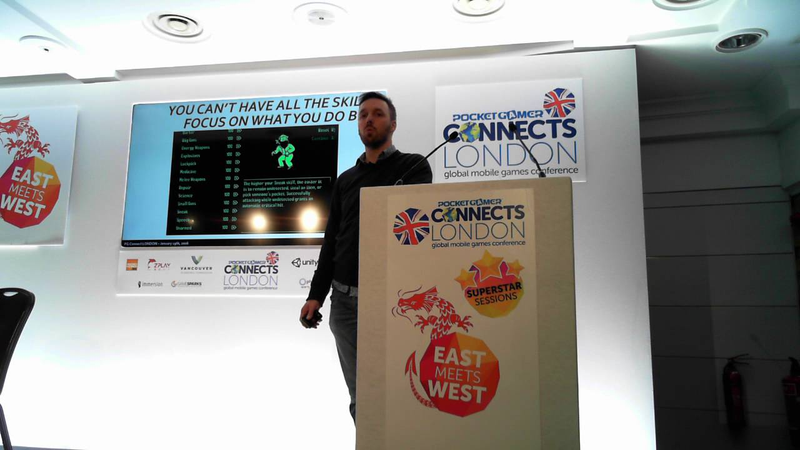
Square Enix Montreal on the hard learnings going from console to mobile success
Square Enix Montreal’s transition from a large-scale console developer to a successful mobile publisher serves as a case study in the necessity of organizational agility and strategic focus.
- Platform store discovery drives over 50 percent of user acquisition, significantly outperforming traditional media and social channels.
- Securing 'Editor’s Choice' or 'Game of the Year' status on app stores can triple revenue compared to standard featuring while generating millions of additional impressions.
- Transitioning from console to mobile requires hiring for a mobile-first mindset, as console-hardened developers often struggle with the leaner, iterative development cycles required for mobile.
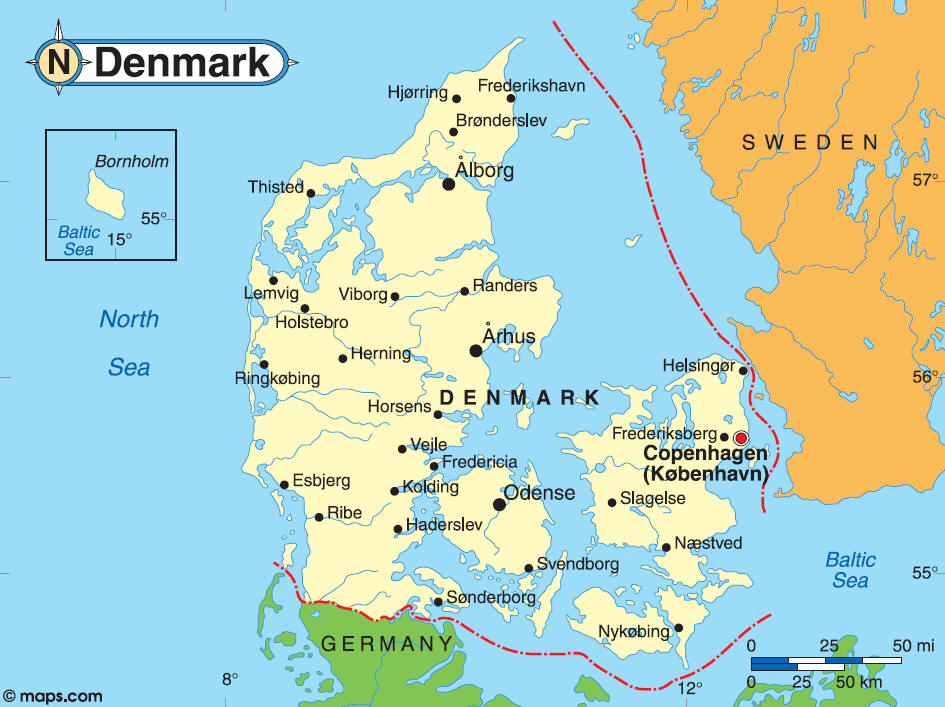
Facts and Figures about Games Industry in Denmark
The Danish games industry experienced significant growth between 2009 and 2013, establishing itself as the 27th largest market globally.
- Denmark is the 27th largest games industry in the world, with developer turnover growing 119% between 2009 and 2013.
- The country's video game export share increased by 80% during the 2009–2013 period, driving increased government investment in the sector.
- Interactive Denmark projects annual cultural support of €1.16 million and dedicated innovation funding of €2.67 million for the industry between 2015 and 2018.


Square Enix Annual Report FY2013
Square Enix experienced a period of severe financial volatility during the fiscal year ended March 31, 2013, reporting its first operating loss since the 2003 merger.
- Square Enix reported a net loss of ¥13,714 million for the fiscal year ending March 31, 2013, marking its first operating loss since the 2003 merger despite a 15.7% increase in net sales to ¥147,981 million.
- The company incurred ¥11,210 million in extraordinary losses due to the disposal and revaluation of game content as part of a major organizational restructuring.
- High-definition (HD) titles, specifically Tomb Raider and Hitman: Absolution, failed to meet sales targets, leading to a structural crisis driven by high retail promotion costs and intense competition.
Square Enix Holdings: Briefing Session of Revisions to Consolidated Results Forecasts
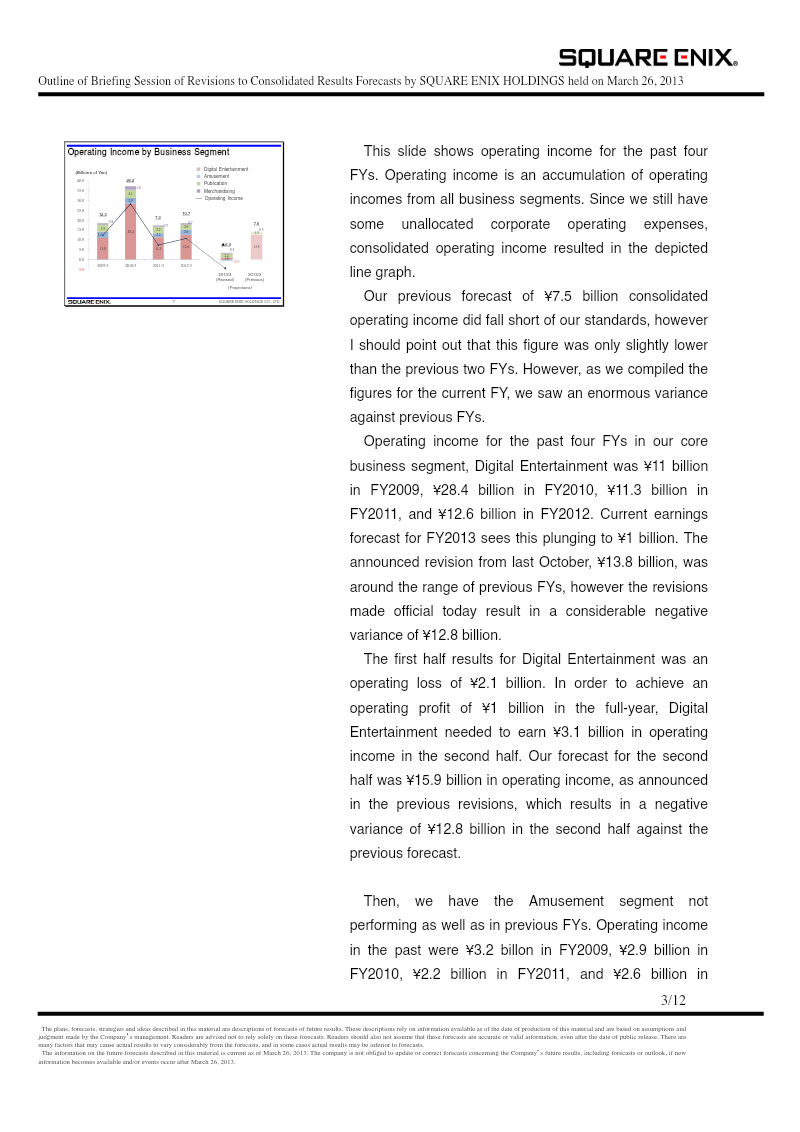
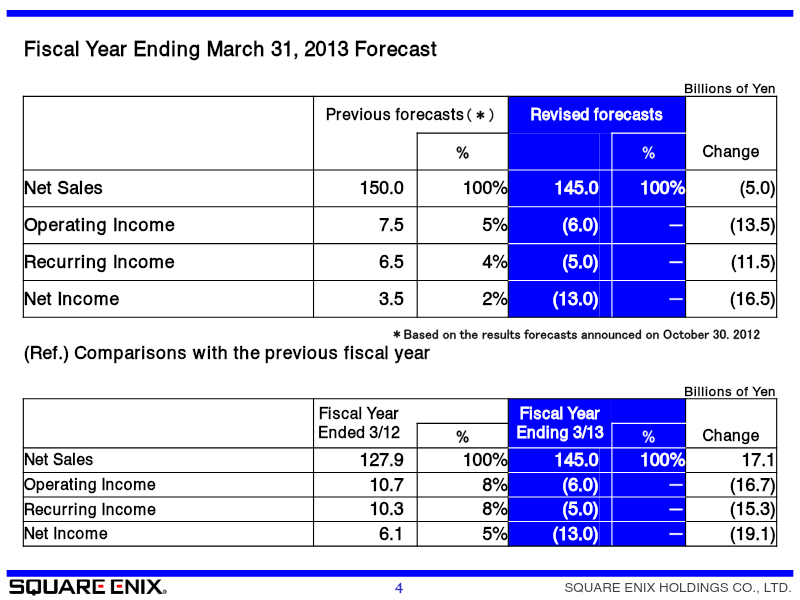
Square Enix faces a severe financial downturn for the 2013 fiscal year, shifting from an initial operating profit projection of ¥7.5 billion to a realized operating loss of ¥6 billion and a net loss of ¥13 billion.
- Square Enix revised its FY2013 consolidated operating income forecast from a profit of ¥7.5 billion to a loss of ¥6.0 billion, a negative variance of ¥13.5 billion.
- The Digital Entertainment segment, specifically HD console games in North America and Europe, was the primary driver of the shortfall, contributing over ¥8 billion to the negative operating income variance.
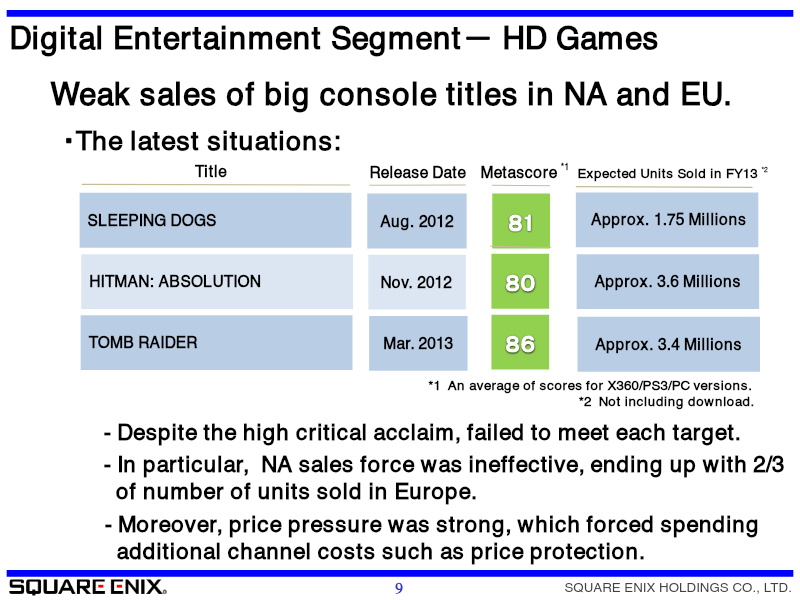
- Key console titles including Sleeping Dogs, Hitman: Absolution, and Tomb Raider failed to meet internal sales targets, leading to additional costs from price protection and ineffective sales execution.
Briefing Session for Revisions to Consolidated Results Forecasts: Fiscal Year Ending March 31, 2013
Square Enix Holdings issued a significant downward revision to its consolidated earnings forecast for the fiscal year ending March 31, 2013, citing poor performance in its core Digital Entertainment segment.
- Square Enix revised its fiscal year 2013 forecast from a 3.5 billion yen profit to a 13 billion yen net loss, driven by poor performance in the Digital Entertainment segment.
- Operating income projections shifted from a 7.5 billion yen profit to a 6 billion yen loss, largely due to underperforming HD console titles in North American and European markets.
- Major titles including Sleeping Dogs, Hitman: Absolution, and Tomb Raider failed to meet unit sales targets, with North American sales volume reaching only two-thirds of European levels.
Financial Results for the Three-Month Period Ended June 30, 2012: Square Enix Holdings Co., Ltd.
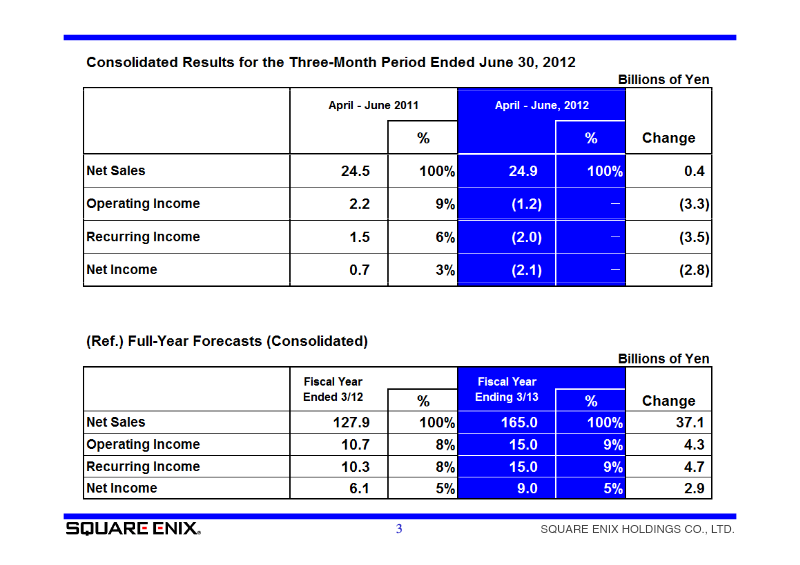
Square Enix Holdings Co., Ltd. provides a financial overview for the three-month period ending June 30, 2012, detailing the company's consolidated performance and strategic outlook.
- Square Enix reported total consolidated net sales of 24.9 billion yen and an operating income of 1.2 billion yen for the quarter ending June 30, 2012.
- Net income reached 2.8 billion yen and recurring income rose to 3.5 billion yen, representing a significant year-over-year improvement.
- The Digital Entertainment segment served as the primary revenue driver with 11.3 billion yen in net sales, followed by the Amusement segment at 10.0 billion yen.


Square Enix Annual Report FY2009
Square Enix faced a challenging fiscal year ending March 31, 2009, characterized by a global economic downturn and shifting consumer preferences.
- Square Enix acquired Eidos Ltd. for £84.3 million in 2008 to integrate Western intellectual properties like Tomb Raider and Hitman into its portfolio as part of a globalization strategy.
- Fiscal year 2009 performance saw net sales decline 8.0% to ¥135,693 million and net income drop 31.1% to ¥6,333 million, impacted by arcade segment contraction and inventory valuation losses of ¥5,368 million.
- On October 1, 2008, the company transitioned to a holding company structure, Square Enix Holdings Co., Ltd., to better manage its diverse gaming, mobile, and publishing operations.