1 free read left. Create a free account for unlimited reading + AI research.
Create free account
How Square Enix managed the teams behind Hitman GO and Lara Croft GO
Key insights
6 takeaways- 01The recruitment and management strategy for titles like Hitman GO and Lara Croft GO relies on aligning individual roles precisely with existing team strengths and specific design constraints.
- 02Square Enix Montreal optimizes small team performance by prioritizing candidates with demonstrated passion and rapid learning capabilities over traditional academic credentials.
- 03Management increases the 'truck factor' and reduces production bottlenecks by fostering cross-functional skill sets, allowing team members to contribute across diverse areas like animation and narrative design.
- 04To drive intrinsic motivation, managers delegate challenging responsibilities and grant developers full ownership of specific game features.
- 05The studio maintains high creative output by treating failure as a learning opportunity rather than a cause for reprisal, fostering a safe environment for experimentation.
- 06Performance is sustained by strictly controlling overtime to prevent burnout, treating developer well-being as a foundational requirement for long-term productivity.
Ask AI about this video
Transcript
so just a little bit about me so I am a producer and also the studio technical director at square enix Montreal Montreal obviously is in Quebec Down East so and I've been making games for 16 years I've been a manager for the majority of that time maybe 13 years or so I started my career as an engineer at behavior interactive then and became a manager there for the tool team after that I switched to electronic art where I did my first a game actually because I was working on the tech team I worked there for sixth year became a technical director switched to production as a development director and finally leaving electronic art as a senior development director hi John Square Enix when they open the studio four years ago we were
mandated to do a triple eight games in the Hitman franchise we change strategy to focus more on mobile and we've been making mobile games for two years now as a producer I shipped two titles at square enix so hit mango and Lara Croft go I consider myself mostly a people manager what I really like to do basically is hire talented people coach them and help them grow and reach their career goals so basically that's me so managing creative team so what we're going to talk about today is what makes a developer efficient and how can we as managers help them maximize is individual performance so to do so I would like to propose you a very simple model that I've been using for years to basically help me max maximize
performance of the upper so I introduce you to the equation of an instable maximum performance so to have great results you need obviously someone that's got in a talent we're not all born equal some people are more talented than others some people are gift with more creativity than others some people can actually build technology faster than other on top of that these guys learn different skill during their career they've got different experience and this can really help to max out your your result if you are you have a specific craft that is used to create your game and finally you need someone that has a lot of passion and motivation at work to be able to maximize its performance so these three things combined together can really make the difference between a nokia developer and
an exceptional one so on top of that there is something that can actually diminish the performance of an individual in a team is well being so basically if he's not feeling well if he's sick obviously as a result will go down to zero but this is something to to make sure that every developer in the team is as well so if we go a little bit deeper into this so let's go with the worst-case scenario so basically you've got on your team someone that is lacking talent he's not he's put in a place where this experience doesn't come into play and also is lacking motivation so basically that's a worst-case scenario it happens in probably to a lot of you as manager where there's someone that wasn't at the right place at the right time so how do we maximize that at squared X Montreal we we are hiring our
our developers very very carefully I think in the in four years of existence we've met more than 150 candidate in interview and wil filtered to a lot of developer out so what we're looking for is obviously a bright minds someone that has a lot of potential so we geared our our interview to really detect and find those exceptional talents also in interview we're looking for people that are learning very fast we are in a very dynamic environment we need people that can actually follow the technology curve follow the trends and be able to apply that very very rapidly and also it gives you a good sense of if the if the if you you have a rising star in front of you if he's learning super fast you know you can actually be better
than you know a seasoned veteran you know in a few years time so you need to coach him and make sure that you develop this potential finally what we're looking for also is a you know it's a great carrier story to when you're reading a CV so our resume usually what you want to see is a great Authority if someone basically decided this career say one year before going to university that's not usually a good a good story to tell if there's someone that at the beginning when he was young eight years old played game update for all his life the guy wrote his first game on his pocket calculator at 13 years old after that make a lot of game jams and breathes through college and university with straight A's I think that's obviously a better a better story to tell and we're looking specifically for those kind of the quality so the second
part is experience and skill so the first thing we need to do obviously is put the developer in the right seat I remember I was talking to two one of the one of the manager of a nadu team at electronic card I referred him a specific developer that was really a rising star and it was talking to me about this specific individual and it was saying to me well this guy is not working very well today and I was really surprised that he was telling me that about that specific guy because you know it was exceptional and he and the guy was a rendering engineer and he told me well it's not really good at writing networking code well duh so this is pretty normal because you know is not at the right place but you know after a quick conversation with him and after a few years the guy is now the lead rendering engineer on that specific team so you really need to put people at the right
at the right seat second one thing that we've been really doing well at square enix Montreal is basically it's put constraint on the zone at the design that fits basically the the skill set of the team so if the team is pretty is an expert at creating puzzle game well let's do a puzzle game because you guys are expert at doing these kind of games so let's let's put a constraint on the design and let's create a puzzle game also one one other thing we didn't have the dedicated VFX artist on on that hack cough go and as you can see in the game there's not a whole lot of VFX so the artistic direction was basically tailored in such a way that we didn't need that much VFX and finally favor developer that that has multiple skills
a lock of go the creative director was able to do environment art he was able to imagine the universe is he was able actually to program our our level designer our technical artist and they can do animation we have also an animator that created the characters of the game which which you didn't have the chance to do in C in 15 years so that was pretty awesome that has a couple of advantages the first one is your track factor your truck factor is very is very high so and it prevents a lot of bottlenecks in production for example we discovered very late into production that we wanted to put a little bit more narrative element in Lara Croft go so we we had a lot of basically cutscene to put into the the game but fortunately for us they were there were three people on the team that were able to do
animation and we were able to you know share the workload on three different developer to to really put such a good narrative experience into that Kafka finally motivation motivation is really really important so there's two type of motivation first there's extrinsic motivation that refers to the behavior that is driven by external reward this can be for example a bonus that you give to someone or something a little bit different or punishment and so do this thing or else you're going to get punished it's like the carrot and stick approach basically this is this is the old way it's it's not tailored for a creative environment obviously so what you need to work with is intrinsic motivation so that refers the behavior that is driven by internal reward of the developer when you're the you're driven
by intrinsic motivation basically we simply enjoy an activity that we're that we're doing till you lose the sense of time and you're just very concentrated on the task that you're you're doing so how do you foster that intrinsic motivation first and foremost give challenging responsibilities to to the staff so what I mean by that is get them out of their comfort zone I mentioned earlier that are our main animator Nets it didn't do any characters in 15 years well he was very passionate about that and we let him lose on on that specific thing and honestly you did a really good job of creating all the characters in Lara Croft go model them he skinned them and he animated them furthermore there was the one of the key engineer on the team that wanted to discover a little bit more how
to be a producer so I delegated to him a lot of responsibility for that ed did some some you did some scheduling with me he did a lot of communication with external partner and it was very very challenged by that and you know it was very very motivated so that was pretty cool second empower them give them responsibility to you say since we hired very talented people you don't give them task because they're going to get bored you don't give them problem give them responsibility and power them and also let them take give them the opportunity also to fail to protect them make sure that they they can fail without without being without having fear of reprisal basically so that's that's that's something that we really cherish at the at square next Montreal and also the
other the final thing is recognize their work this is super key to make sure that they stay motivated you need to you need to basically reward someone that did something amazing either by doing it yourself or one example on lack of lara croft someone was super enthused about a specific feature that he did and he was showing it to a couple of developer into production so the only thing I had to do is basically send other developer to look at that specific feature and that was kind of easy and now there was maybe five six people looking at the feature that he did and the guy you could see was super proud of what he accomplished because now everybody was telling him that you know he did an excellent job so recognize a contribution either directly or indirectly and you'll have a very happy developer and finally take care of them what I mean by that is make sure
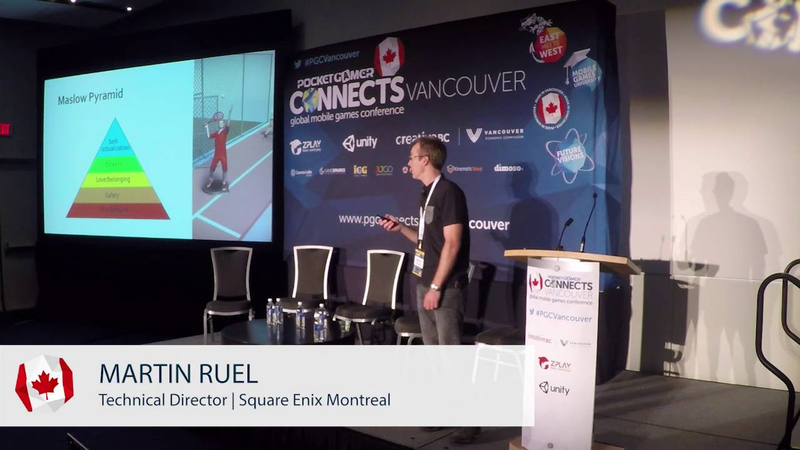
that they are well at work so I'm going to introduce you to the Maslow pyramid I don't if you heard about that but the thing that we want to do is for each developer to reach the self actually actually zation stage so self-actualization is basically the achievements of one's full potential through creativity independence spontaneity and a grasp of the real world that's a complicated definition but basically means that the guy will be they will have his mind free and will concentrate a hundred percent on the task that he has to do so what you have to do is basically make sure there's is achieving all the requirements of the floor below so physiological is basically all the fill the body physical need so you have you hidden today are you well rested that type of stuff so obviously when you see
that a developer is sick send him home because he needs to rest faster and he's come back and be a hundred percent if you feel that someone has been making too much overtime send him home he needs to rest it needs to be a hundred percent because the other stage is safety the motto pyramid says that safety basically is the the physical security of someone I prefer to interpret it as a kind of the safety at work are you afraid to you to lose or your job are you afraid to fail you need to create basically a context where failure is accepted and that will relieve a lot of pressure on the developer to imagine if you have a very perfectionist a very / fishing guide that is afraid to fail so is already spending a lot of time you know making sure is feature is perfect for demonstration and if you add a layer of
fear on top of that it's going to take him like two more weeks to just polish the this feature out but if it's not afraid to fail it's just going to do it as fast as you can and show it to everybody love and belonging is just we're we're human we r tribesmen basically we want to we want to be accepted by others so you need to create a context where everybody will feel comfortable with everybody on the team so make external events make sure that you know so you you get them out on on different activity this is very important and the last stage is self-esteem this is they need to be confident about what they're doing in order to to to be creative so what you have to do is is really boost their self-esteem by encouraging them by making sure that you know they're properly they're properly rewarded that you know you recognize the work that
they're doing usually pecan centrate also very much on people that have very low self-esteem so you need to put a little bit more effort on to those guys because usually these guys have a really high bar and these are generally the guy that will give you the most the biggest performance because you know they're they're really they really want to to perform well and that's pretty much it for the self-esteem so basically just to to sum up everything to achieve maximum performance first hire carefully make sure everybody is in the right seat motivate them and obviously take good care of them and that's it do you have any question cool thank you Ron any questions guys for the comments this
question here let me see if I can get a mic over there do ever wearing mic over here jet one with the while an eye on him oh wait while a neon says well hello hello hey my question is do you think there's something that's even higher up than your highest the highest thing you mentioned in the Muslim pyramid because i feel so I had thought a couple of times I really would like to hear your opinion about it that the Maslow motivators are all really individual things like per person things but I feel like a really strong motivator is a a mission in the world or maybe a mission of the company do you have something like that are you trying to give people a motivation that's bigger than than themselves I think for me I personally believe that the it's the sum of the individual performance that will make something great obviously you need a uni
division but I think it's a little bit different than this but I think you've got a good idea about that I think it's really important to to have a proper vision to support you know to make sure that people are all steering in the same direction and are trying to achieve the same goal as a unit but for me I wanted to focus really on the individual part for this for for this presentation but it's true that a fastening idea it's probably worth noting that Maslow is not actually based in science so sadly it is one of the most useful things i've ever used is incredibly practically useful but there's no scientific basis to support it unfortunately someone needs to do some science that for this idea of a group higher purpose i think is incredibly fascinating whether that's true or not I've loved somebody to do some actual research personally some more questions of the back I think the guy in the grey nearest you is the first we'll hand I saw but
apologies if I did another I think thank you for the talk do you have a philosophy around assessing team fit when you're hiring um that's a that's a really good question if we have a philosophy surrounding a team fit usually when we're doing interviews with which candidate he needs to meet at least 52 between five and six people in the process so and it depends on the role that is going to be a fulfilling but usually it's at least five people that is going to have to meet through the the full chain of command but we don't have something very very special to to to make sure that it's a global fit for a whole team and the guy with the star wars t-shirt the back with this hand I saw first of all just want to say these have been fantastic thank you so much for all of these and one of the
things just in relationship to the last the first question that was asked one thing that was brought up in the previous session was the talent keeping the talent pool in Vancouver rather than seeing it to sort of have a stop over here and then trickle down to San Francisco order but even keeping within Canada including Montreal can you talk about motivating you know some of the things you brought up our fantastic on the intrinsic motivation level are there things that you found or your colleagues have found within that the scope of what you were talking about or perhaps beyond that that can help to keep you know developers and and and just staff in general in Canada and not want to leave is there something within that or something beyond that that can help with that oh that's a that's a really really good question I've never thought about that actually to prevent them to leave usually will well for I'm going to speak about my experience in Montreal usually in Montreal people stay in Montreal there's
not a whole lot of people that are leaving montreal because there's such a big pool of developer out there and there's a lot of studio for someone to to jump around so if he's not happy in one company he can actually go next door and work in you know at Ubisoft at at at aedas Montreal you can work at Electronic Arts so there's a lot of big studio so we've never felt that people were actually you know leaving Montreal per se what what we have a problem with is keeping people that are coming to montreal and adapt to the culture there because they're not used to winter for example or know things happen they're not used to to the culture also because we're we've got a little bit of a you know we speak French and I think you've noticed that my English is not necessarily perfect and some people has
a hard time you know at that thing to that but usually it's not a big blocker because we have to we have mitigation in place we give them you know French courses and we make sure that they are well integrated into you know into the area so but how to prevent someone to go from Montreal to to San Francisco for example now we've we've never really looked at that yeah we're not here so yeah I love this absolutely take you talk I think there is a there is clearly a process that we are aware of namely that for people to move they have to have a motivation and also in a direction and there are inherent barriers to move in the status quo is much easier to sustain so if you are delivering so I mean frankly if you get the self-actualization state of making a
game the last thing you're thinking about is whether I should move or not and I think that's intrinsic in that model however you're right and it's something I think we're great to find a way to get that added to and talk someday so thank you for that
Summary
Managing small, high-performing development teams requires a structured approach to individual performance, centered on the intersection of talent, experience, and motivation. At Square Enix Montreal, the management philosophy for titles like Hitman GO and Lara Croft GO emphasizes that exceptional results stem from hiring individuals with high potential and rapid learning capabilities. The recruitment process is rigorous, prioritizing candidates with a demonstrated history of passion—such as early engagement with game development—over those with merely standard academic credentials.
Once talent is acquired, performance is maximized by placing developers in roles that align with their specific skill sets and by imposing design constraints that play to the team’s existing strengths. By fostering a culture of cross-functional skill sets, studios can reduce production bottlenecks and increase the team's "truck factor," ensuring that multiple members can contribute to critical tasks like animation or narrative design. This flexibility allows teams to pivot during production without sacrificing quality.
Motivation is categorized into extrinsic rewards and intrinsic drivers, with the latter being essential for creative environments. Managers foster intrinsic motivation by delegating challenging responsibilities, empowering staff to take ownership of features, and creating a safe environment where failure is viewed as a learning opportunity rather than a cause for reprisal. Recognition of individual contributions, both direct and peer-to-peer, serves as a vital tool for maintaining high morale.
Finally, the physical and psychological well-being of developers is treated as a prerequisite for performance. Drawing on a hierarchy of needs, management ensures that basic physiological requirements are met, such as preventing burnout through controlled overtime. By fostering a sense of belonging and boosting self-esteem, managers help developers reach a state of self-actualization, where they can focus entirely on their creative output. This holistic approach to management prioritizes the individual to ensure the collective success of the studio.















Comments