Ghost of Tsushima
Documents about Ghost of Tsushima
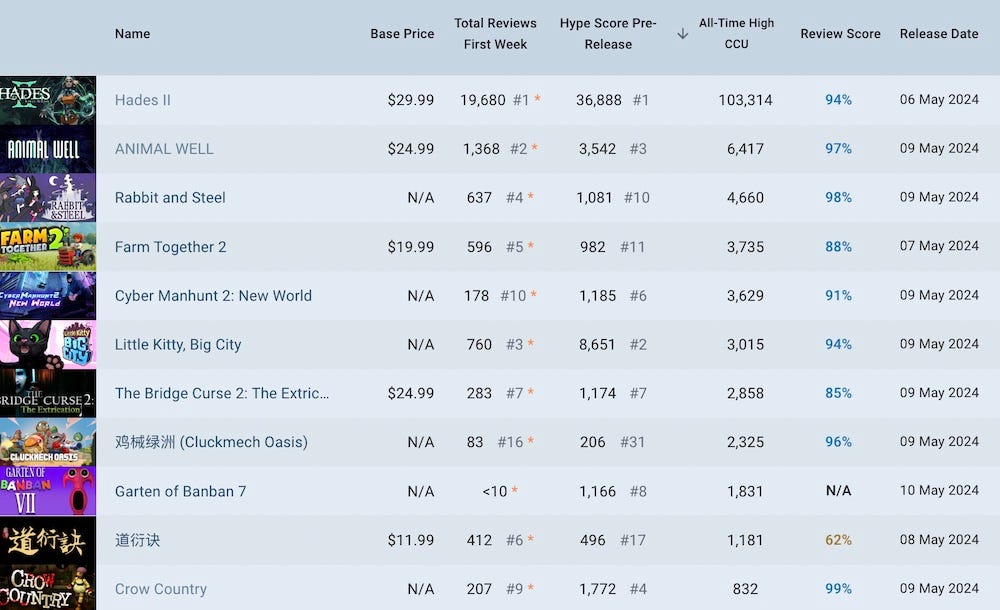
Plus: A Spectacular Week for Indie Debuts on Steam!
The analysis provides a comprehensive overview of the global video game market during a high-performing week for independent debuts in May 2024.
- Hades II dominated the May 2024 indie market with over 103,500 peak concurrent users (CCU) and nearly 20,000 positive reviews on Steam.
- Ten independent titles achieved over 1,000 CCU on Steam during their debut week, demonstrating the strong commercial viability of high-quality indie projects.
- Animal Well successfully utilized viral marketing and influencer support to reach 6,400 CCU, while Rabbit and Steel found success by blending bullet-hell mechanics with MMO-style raiding.

Top 10 Live Streamers for April
The April streaming landscape was defined by a shift back toward gaming-centric content, despite the presence of major esports events like the VALORANT VCT 2024 and Evo Japan 2024.
- Jynxzi maintained the #1 spot for the second consecutive month with an average minute viewership (AMA) of 79.5K, despite a 15.5K decline from March.
- N3on held the #2 position with 65K AMA, continuing to generate traffic through controversial IRL content that resulted in a temporary ban from the Kick platform.
- Kai Cenat moved to #3 with 60K AMA, successfully pivoting from his standard IRL content to a 24-hour playthrough of Ghost of Tsushima.
Expanding Horizons: Does PlayStation’s Multi-Platform Strategy Make Sense?
PlayStation’s shift toward a multi-platform strategy represents a calculated evolution from its traditional reliance on hardware-exclusive titles.
- PlayStation has shifted from a strict exclusivity model to a multi-platform strategy, resulting in over 28 million units sold on Steam across its ported titles.
- The porting strategy generates significant high-margin revenue, with the PC version of Horizon Zero Dawn alone contributing an estimated $120 million, representing a roughly 25% revenue increase for that title.
- PlayStation employs a tiered release schedule for PC ports: major IPs typically arrive 3–4 years after the console launch, secondary titles arrive after 2 years, and live-service games launch simultaneously on both platforms.
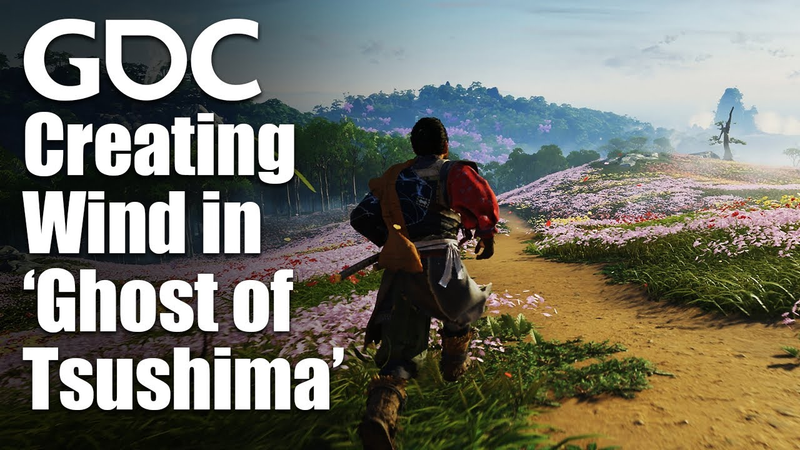
Blowing from the West: Simulating Wind in 'Ghost of Tsushima'
The development of Ghost of Tsushima required a sophisticated, performance-oriented approach to environmental simulation, specifically regarding the pervasive presence of wind.
- Sucker Punch Productions optimized Ghost of Tsushima's performance by offloading wind-driven simulations for particles, foliage, grass, and cloth entirely to the GPU using async compute shaders.
- The cloth simulation system manages up to 1,000 simultaneous simulations—totaling approximately 70,000 vertices—while consuming only 2% of the PlayStation 4 GPU's resources.
- To handle stiff materials like leather or rope without the performance cost of high-iteration spring-mass solvers, the team implemented a parallelized spring-set coloring approach to prevent thread contention.
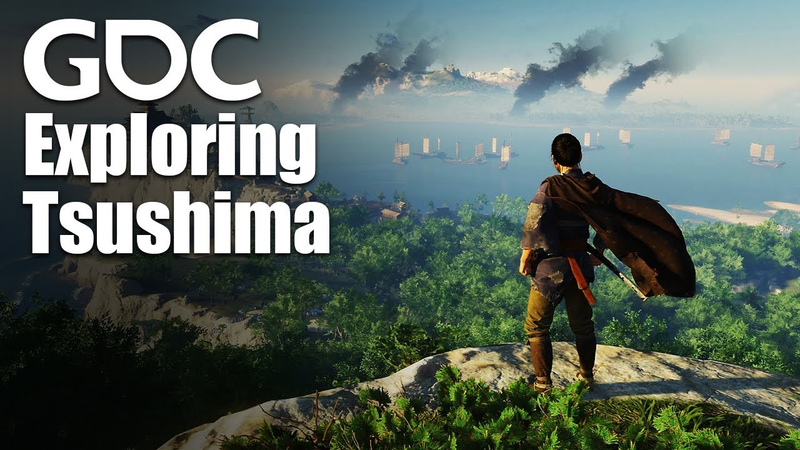
Exploration in 'Ghost of Tsushima': Letting the Island Guide You
The design philosophy behind Ghost of Tsushima centers on fostering deep player immersion by replacing traditional, intrusive user interface elements with diegetic navigation tools.
- Ghost of Tsushima replaces traditional UI elements like mini-maps and compasses with diegetic navigation to maintain player immersion and focus on the game world.
- The environment is designed to present a new point of interest or 'weenie' to the player every thirty seconds to sustain curiosity-driven exploration.
- The Guiding Wind mechanic uses natural environmental movement to direct players toward objectives, drawing inspiration from the cinematic language of Kurosawa films.
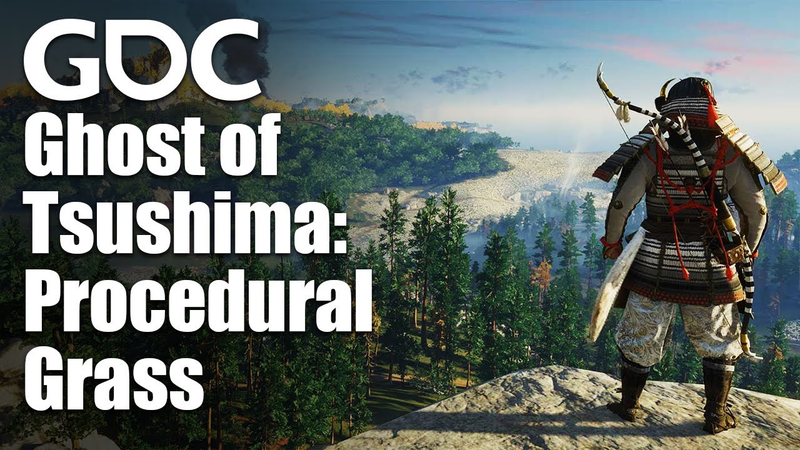
Procedural Grass in 'Ghost of Tsushima'
The procedural grass system developed for Ghost of Tsushima was designed to achieve a specific artistic vision: vast, painterly fields of foliage that maintain high visual fidelity while adhering to strict memory and performance constraints.
- Sucker Punch Productions achieved high-density foliage in 'Ghost of Tsushima' by rendering approximately 83,000 individual grass blades per frame, processed in roughly 2.5 milliseconds using a compute-shader-driven pipeline.
- To avoid the limitations of traditional grass cards, the team used a compute shader to generate instance data for tiles, which are then rendered via indirect draw calls to maintain performance while allowing for per-blade wind animation and artist-configurable parameters.
- The system utilizes a clumping algorithm that groups blades based on artist-authored parameters, preventing the uniform, artificial look of standard procedural grass and creating the appearance of a natural, varied field.
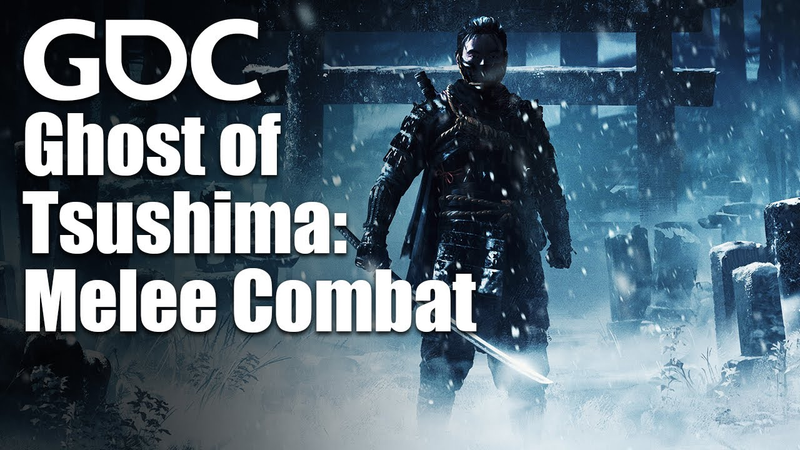
Master of the Katana: Melee Combat in 'Ghost of Tsushima'
The development of Ghost of Tsushima centers on the realization of a precise, skill-based samurai fantasy that prioritizes player discipline and fluid combat.
- Ensure the most effective way to play the game is also the most enjoyable, as players will resent being forced into either ineffective fun or effective drudgery.
- Front-load the best ideas and mechanics in the first 15 to 60 minutes of the game, because if the initial experience is not compelling, players will not reach the end.
- Use 'carrots' instead of 'sticks' to encourage variety; rather than nerfing overused abilities, incentivize the use of underused ones to improve player engagement and satisfaction scores.
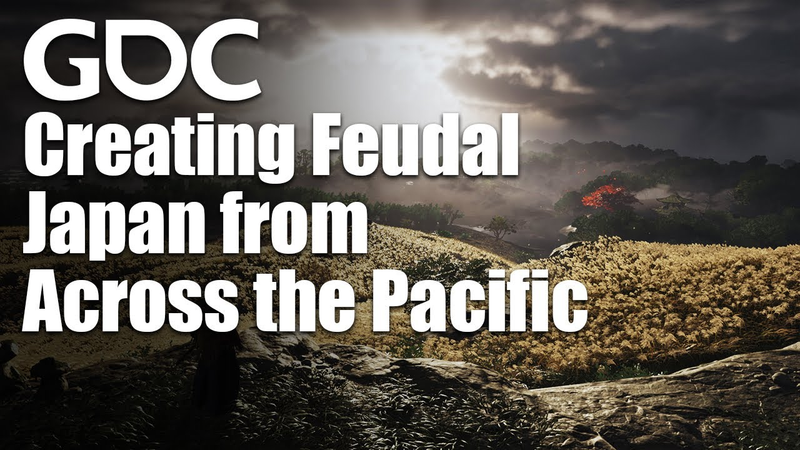
Creating Feudal Japan from Across the Pacific
The development of Ghost of Tsushima serves as a case study in navigating the complexities of representing a foreign culture within the interactive medium.
- To ensure cultural authenticity in 'Ghost of Tsushima,' Sucker Punch Productions prioritized hiring and collaborating with cultural consultants throughout the development process, viewing this investment as a necessary cost of entry rather than a production burden.
- The development team adopted a 'student' mindset, which included conducting field research in Tsushima and Japan to move beyond superficial internet-based assumptions and gain a deeper understanding of historical details like sword artistry.
- When game design requirements conflicted with cultural accuracy, the team prioritized authenticity by making significant changes, such as renaming characters to better fit historical naming conventions and removing mindless hunting mechanics that clashed with Japanese cultural values.
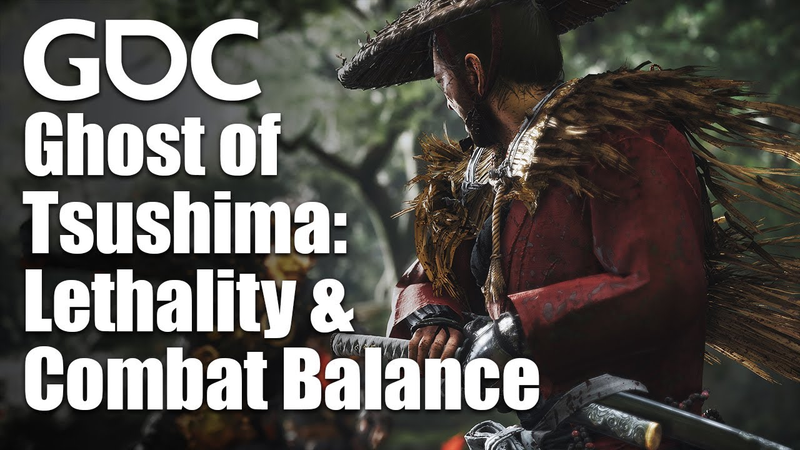
Honoring the Blade: Lethality and Combat Balance in 'Ghost of Tsushima'
The primary objective in the development of Ghost of Tsushima was to reconcile the mechanical requirements of a 30-hour open-world action game with the core samurai fantasy of lethal, high-speed sword combat.
- To maintain the 'samurai fantasy' of lethal blade combat, Sucker Punch limited the number of hits required to kill enemies, keeping the engagement window short even as players progressed through 30 hours of open-world gameplay.
- The team avoided traditional RPG-style level scaling—which often relies on artificial health bars and 'skull' indicators—because it undermined the grounded, realistic nature of the game's combat.
- Developers implemented a stagger meter system to force offensive play, allowing players to break enemy defenses using specific stances rather than relying solely on parrying, which had become a repetitive, dominant strategy.
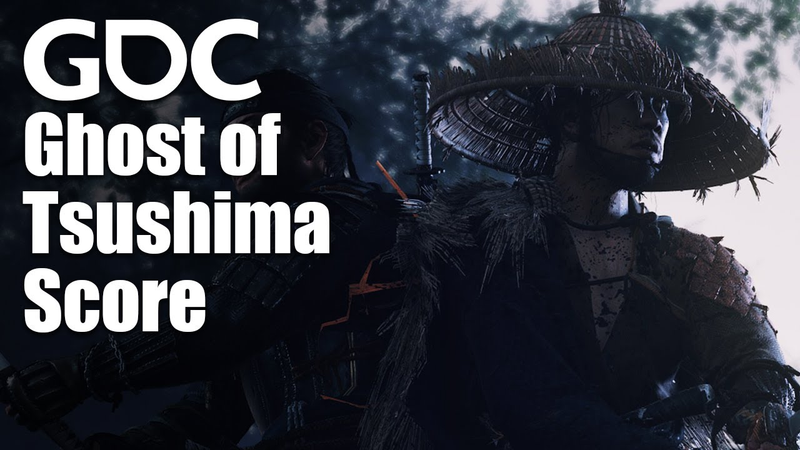
Scoring the Open World Samurai Epic 'Ghost of Tsushima'
The musical architecture of Ghost of Tsushima centers on the challenge of blending authentic feudal Japanese instrumentation with grand, cinematic orchestral themes to mirror the protagonist’s internal conflict.
- The score utilizes a 'Music Encounter System' that employs a buffer-based state system and dual-radii distance triggers to ensure fluid, non-jarring audio transitions during exploration.
- Musical intensity is dynamically calculated using a formula that balances enemy threat levels against a 'hero factor' derived from player progression.
- The production team prioritized a minimalist aesthetic to avoid listener fatigue, blending authentic feudal Japanese instruments like the shamisen and shakuhachi with grand orchestral themes.
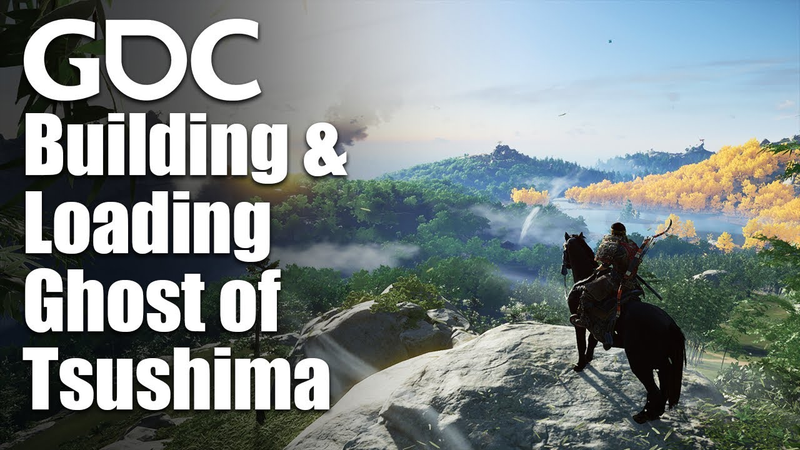
Zen of Streaming: Building and Loading 'Ghost of Tsushima'
The development of Ghost of Tsushima required a fundamental architectural shift to support an open-world environment twenty times larger than previous projects.
- Sucker Punch implemented a fixed-budget asset assembly system that packs small assets into aggregate files, allowing artists to manage memory and disk constraints effectively while minimizing duplication.
- The engine utilizes a seven-level quad tree to manage streaming, guaranteeing 200 meters of sightlines by loading a 3x3 grid of tiles at the finest detail level.
- To optimize pathfinding at scale, the team automated the generation of navigation meshes on a 20-centimeter grid, using vertical ray casting to coalesce terrain connectivity data.

Easy Modes Aren't Easy - Designing Dynamic Difficulty - Extra Credits
The design of difficulty settings in AAA action-adventure games is evolving from simple health and damage adjustments toward nuanced, accessible, and customizable experiences.
- The industry is shifting from binary difficulty tiers to granular, customizable gameplay settings that allow a broader audience—including casual players and those with disabilities—to engage with AAA action-adventure titles.
- The Last of Us Part II serves as the current industry benchmark by offering a comprehensive suite of accessibility features, including combat modifiers, motor-skill assistance, and puzzle-bypass options.
- Modern design strategies prioritize adjusting mechanics like enemy aggressiveness and reaction windows rather than relying solely on traditional health and damage scaling.