Europa Universalis
Game
Documents about Europa Universalis
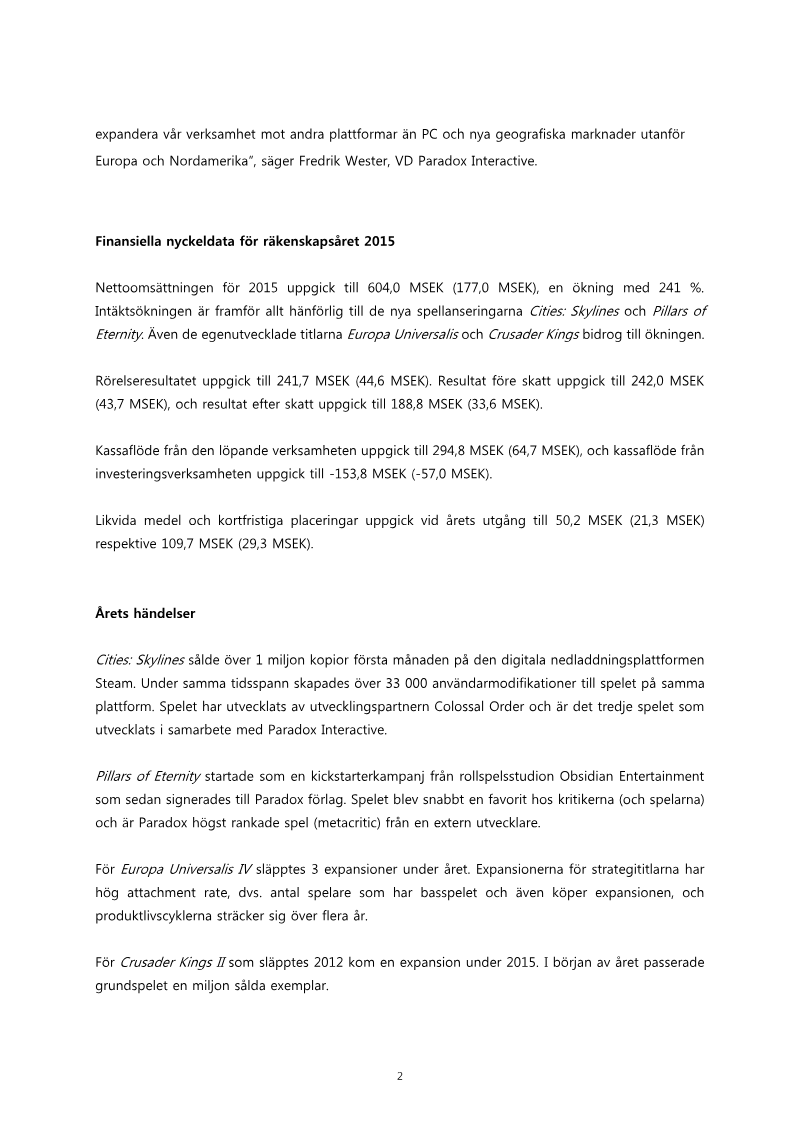
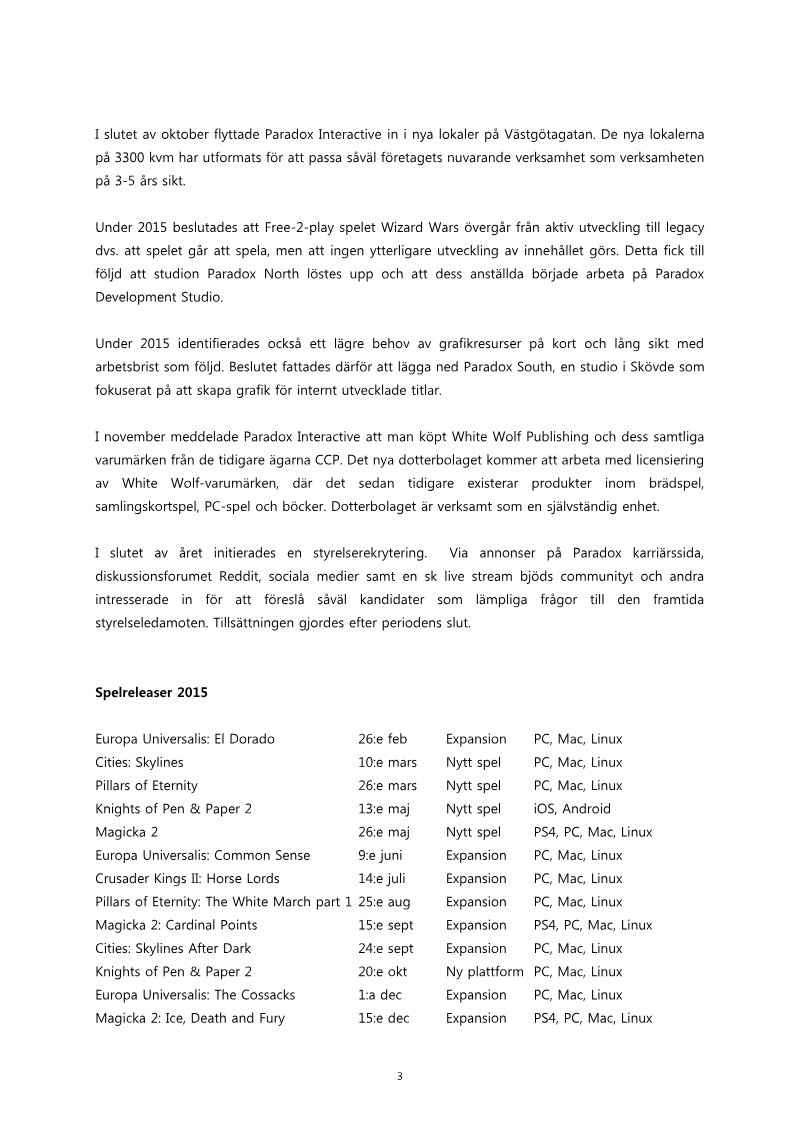
Paradox Interactive Year-End Report 2015
The 2015 year-end report for Paradox Interactive details a period of significant financial growth and organizational expansion, driven by a robust portfolio of new game releases and successful expansions.
- Paradox Interactive achieved significant financial growth in 2015, with net sales rising 241% to 604 million SEK and operating profit increasing 442% to 242 million SEK.
- The company’s operating margin improved to 40% in 2015, up from 25% in the previous year.
- Financial performance was driven by the successful launches of Cities: Skylines and Pillars of Eternity, alongside continued engagement with established titles like Europa Universalis IV and Crusader Kings II.
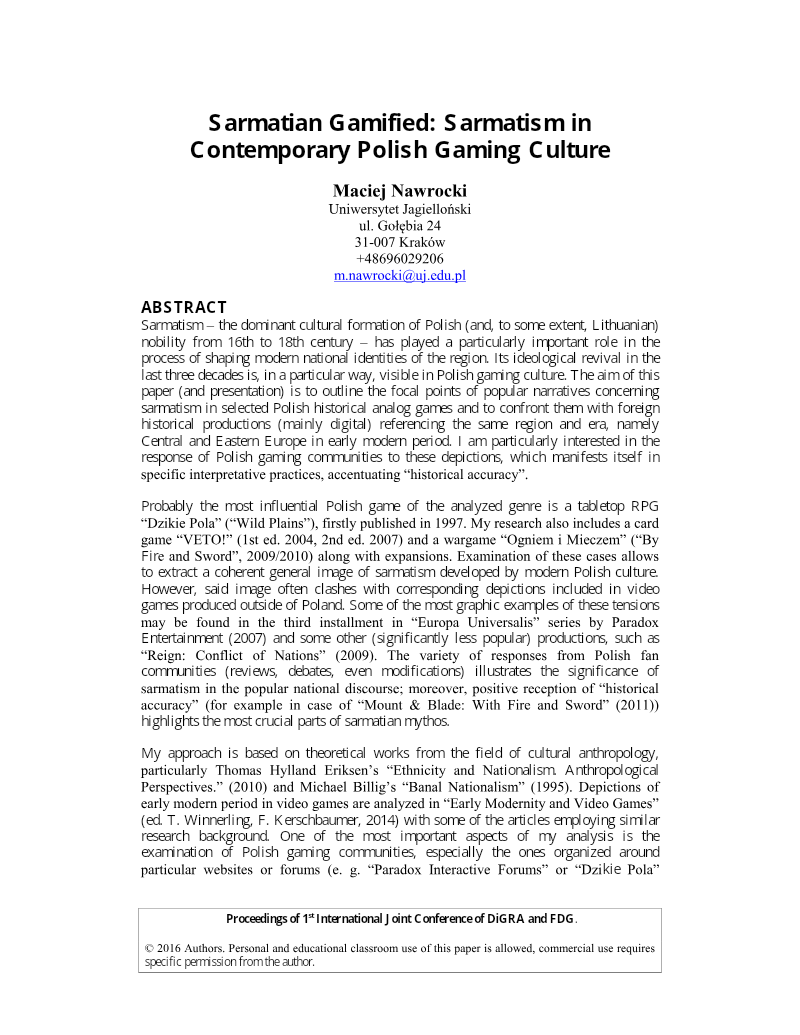
Sarmatian Gamified: Sarmatism in Contemporary Polish Gaming Culture
This paper examines how sarmatism, the cultural ideology of the Polish-Lithuanian nobility from the sixteenth to eighteenth centuries, has been revived and reinterpreted within contemporary Polish gaming culture.
- The paper argues that Polish players and designers have built a coherent image of sarmatism, the ideology of the Polish-Lithuanian nobility from the 16th to 18th centuries, through analog and tabletop products, and that this image often conflicts with how foreign-produced, largely digital games depict the same region and era.
- The central corpus is the tabletop role-playing game "Dzikie Pola" (1997), the card game "VETO!" (2004, 2007), and the wargame "Ogniem i Mieczem" (2009/2010) with its expansions, compared against Paradox's "Europa Universalis 3" (2007), "Reign: Conflict of Nations" (2009), and "Mount & Blade: With Fire and Sword" (2011).
- The author contends that appeals to "historical accuracy" by Polish communities tend to reaffirm the core elements of the sarmatian self-image rather than challenge it.
Game Audience Profiles
The primary objective of this analysis is to establish a framework for profiling video game audiences by correlating specific game titles with player demographics and psychological motivations.
- Quantic Foundry analyzed data from over 100,000 gamers to create specific audience profiles by mapping demographic data and motivation scores against individual game titles.
- The audience for Europa Universalis IV is predominantly male and scores high on strategy-based motivations while scoring very low on excitement-based, fast-paced gameplay.
- Candy Crush players are primarily female and older than the average gamer, with a strong focus on completion-based motivations and low engagement with other gaming factors.
Games You Might Not Have Tried (or Heard Of) - ep 1 - Find New Games - Extra Credits
This analysis focuses on identifying and recommending lesser-known or under-the-radar video games that offer unique mechanics, compelling narratives, or innovative design.
- The analysis identifies high-quality, under-the-radar games released from 2008 onward that prioritize mechanical innovation and thematic depth over mainstream industry trends.
- Strategy gaming is represented by titles like 'Fate of the World,' which uses scientific modeling for global survival simulations, and complex historical titles from Paradox Interactive, specifically 'Europa Universalis III' and 'Victoria II'.
- The RPG category highlights 'The World Ends with You' for its dual-screen combat mechanics and 'Demon’s Souls' for its atmospheric, high-difficulty design.
Technology Tells a Tale: Digital Games and Narrative
Kevin Schut's "Technology Tells a Tale: Digital Games and Narrative" contends that digital games are not narratives in themselves, but that the digital medium is reshaping how culture understands what a story is.
- Digital games are not narratives in themselves; the digital medium is reshaping how culture understands what a story is.
- The paper frames the long-running debate between narratologists (applying literary and film theory to games) and ludologists such as Aarseth, Frasca, and Eskelinen (prioritizing play and interactivity).
- The author identifies five recurring characteristics of computing as the basis for how games produce meaning: procedurality, participation, quantifiability, modularity, and finiteness.
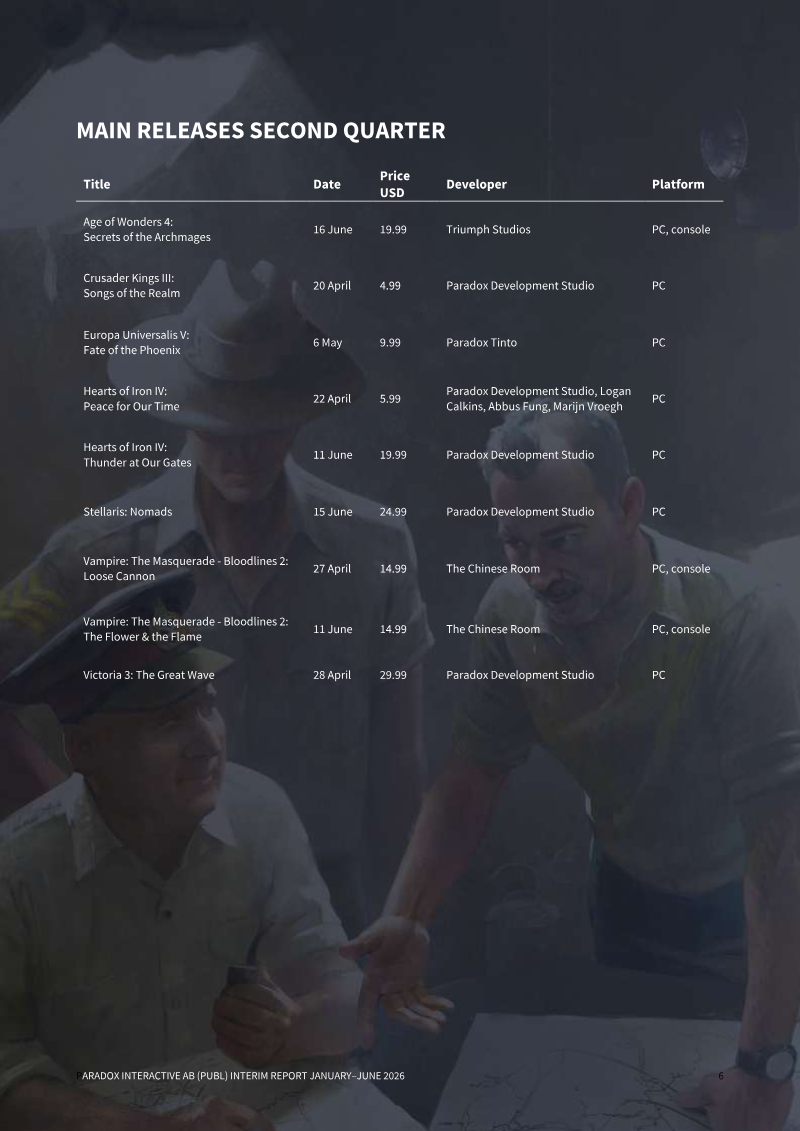
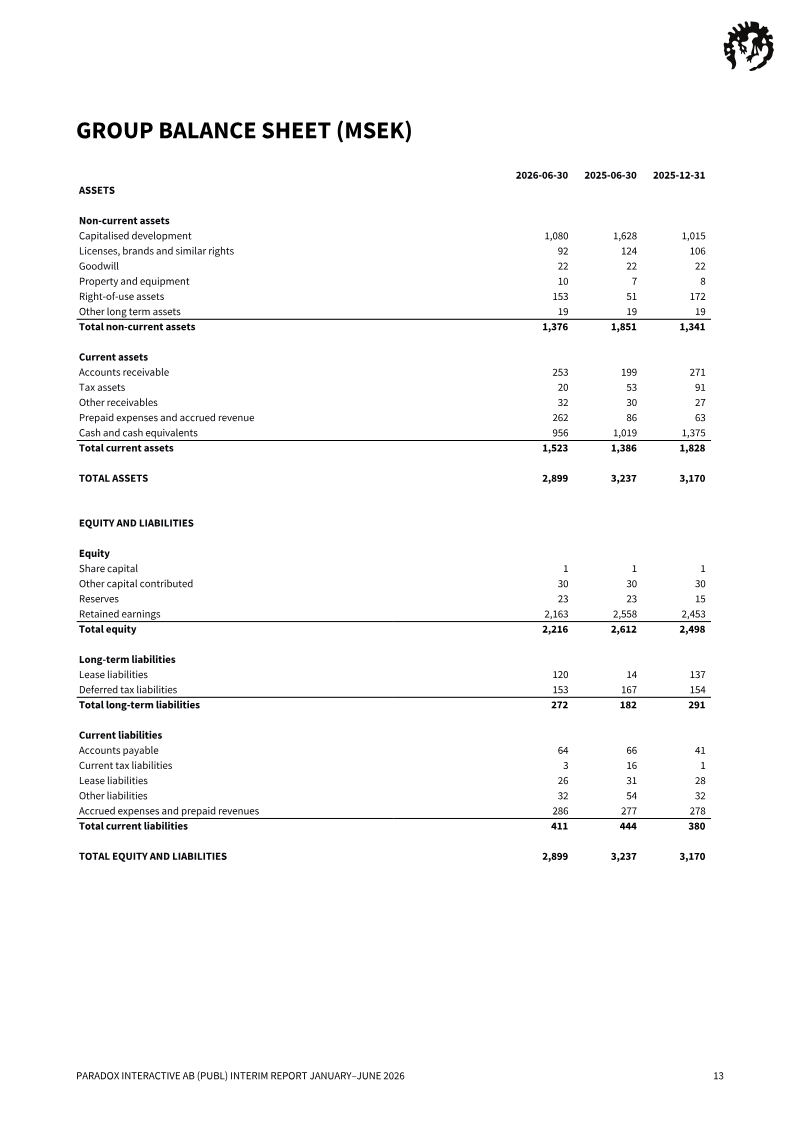
Interim Report: January-June 2026
Paradox Interactive demonstrated robust financial growth during the first half of 2026, characterized by a significant recovery in profitability and a successful transition to the Nasdaq Stockholm Main Market.
- Paradox Interactive achieved a 14% revenue increase in Q2 2026 to MSEK 524, contributing to a total H1 2026 revenue of MSEK 955, a 4% year-over-year growth.
- Operating margins significantly improved to 35% in Q2 2026, a substantial recovery from the 7% margin recorded for the full year of 2025.
- The company successfully transitioned to the Nasdaq Stockholm Main Market in June 2026, signaling a shift toward greater corporate stability.
Companies behind it

As the documents state it.