Detention
Game
6 documents in the library are about Detention, from writers such as DiGRA, Extra Credits and Nippon Ichi Software. Each has a summary and key insights with the page they come from.
Connections
Each row is a game or company named alongside Detention, each column a document, oldest first. A mark means that document names it. Select a row to see those documents.
Documents about Detention
Tangible and Terrifying: Cultural Heritage Representation in Chinese Horror Games
This study examines how Chinese horror games represent cultural heritage, organizing its analysis around two dimensions: "Tangible (Perceptible Heritage)" and "Terrifying (Affective Heritage)."
- Chinese horror games act as significant, if largely unintentional, carriers of Chinese cultural heritage, with the horror genre serving as the key link between tangible (perceptible) heritage and affective heritage.
- The study organizes its analysis around two dimensions: 'Tangible (Perceptible Heritage)', where games reconstruct recognizable material spaces and embed folk customs, symbols, and rituals, and 'Terrifying (Affective Heritage)', where horror mechanics use these elements as triggers to amplify emotional responses.
- Three case studies, Paranormal HK, Detention, and Firework, anchor the analysis of how these games reconstruct real-world spaces and cultural elements.
Reimagining Nostalgia in Hong Kong Games: Playing with the (Un)Familiar and (In)Authentic
This paper examines how two video games set in Hong Kong but developed outside the city, Kowloon's Gate (Zeque, 1997) and Sleeping Dogs (United Front Games, 2012), reimagine the territory as a symbol of nostalgia rather than a faithful physical or historical place.
- The paper argues that Kowloon's Gate (Zeque, 1997) and Sleeping Dogs (United Front Games, 2012), both developed outside Hong Kong, render the city as a playable emblem of nostalgia rather than a faithful depiction, despite inaccurate portrayals of its history and culture.
- Its central claim is that the appeal of these games lies in the coexistence of the familiar and exotic, and the authentic and invented, rather than in historical accuracy.
- Nostalgia is framed not as an objective recovery of the past but as a deliberate, modernized gaze that produces a sense of temporal displacement, drawing on scholarship on Hong Kong nostalgia cinema.
The Fearful Realism: Chinese Horror Indie Games and the Realist Horror
This paper examines Chinese horror indie games as a distinct subgenre that engages directly with social reality, proposing the term "fearful realism" to describe its aesthetic approach.
- The paper proposes "fearful realism" as a term for Chinese horror indie games that use supernatural elements to surface repressed histories and everyday injustices, drawing on Cynthia Freeland's concept of realist horror.
- The analysis centers on two mainland Chinese indie titles: Firework (Shiying Studio, 2021), in which a police officer reinvestigates a mountain village massacre, and Comedy Funeral (Great Fortune and Great Favour Unlimited, 2022), in which a child explores a grandmother's memories of trafficking and forced marriage.
- These games share a gameplay structure of diminished action, minimal combat and escape, simple untimed puzzles, and "archival adventure," in which players reconstruct stories from fragmentary memorabilia.
Gamifying Race: Play as Apparatus and Ludic Asianness as Diffracted Realities
This paper argues that video games and players come into epistemic existence through Karen Barad's concept of intra-action, such that the act of play transforms programs, codes, and audiovisual materials into "video games" and transforms those who play into "players."
- The paper argues that games and players are ontologically inseparable, mutually constituted through play: play turns programs and audiovisual materials into 'video games' and turns participants into 'players,' rejecting the presumption of a pre-existing separate player (drawing on Karen Barad's intra-action and Donna Haraway's diffraction).
- The paper's central conclusion is that production locale, developer background, and setting are less useful criteria for defining 'Asian games' than examining how ludic race, games, and players are jointly configured through play.
- 'Ludic Asianness' is presented as not intrinsic to players but gradually produced through ludic design that interpellates players as Asian protagonists, building on Christopher B. Patterson's idea of ludic race as virtual identity tourism.
Games You Might Not Have Tried: Horror - Find New Games for Halloween - Extra Credits
This analysis highlights a curated selection of horror-themed video games, focusing on titles that offer unique narrative experiences, innovative mechanics, or distinct atmospheres despite occasional lack of polish.
- The horror genre thrives on innovative mechanics and atmosphere over technical polish, as evidenced by titles like Prey, which uses a mimic mechanic to force constant environmental distrust.
- Games can effectively utilize specific historical and cultural settings to ground horror, such as Detention’s use of 1960s Taiwan to build its narrative foundation.
- Experimental design choices, such as the top-down perspective in Darkwood, can create intense feelings of claustrophobia and player disempowerment.


Nippon Ichi Software Q1 2012 Financial Results
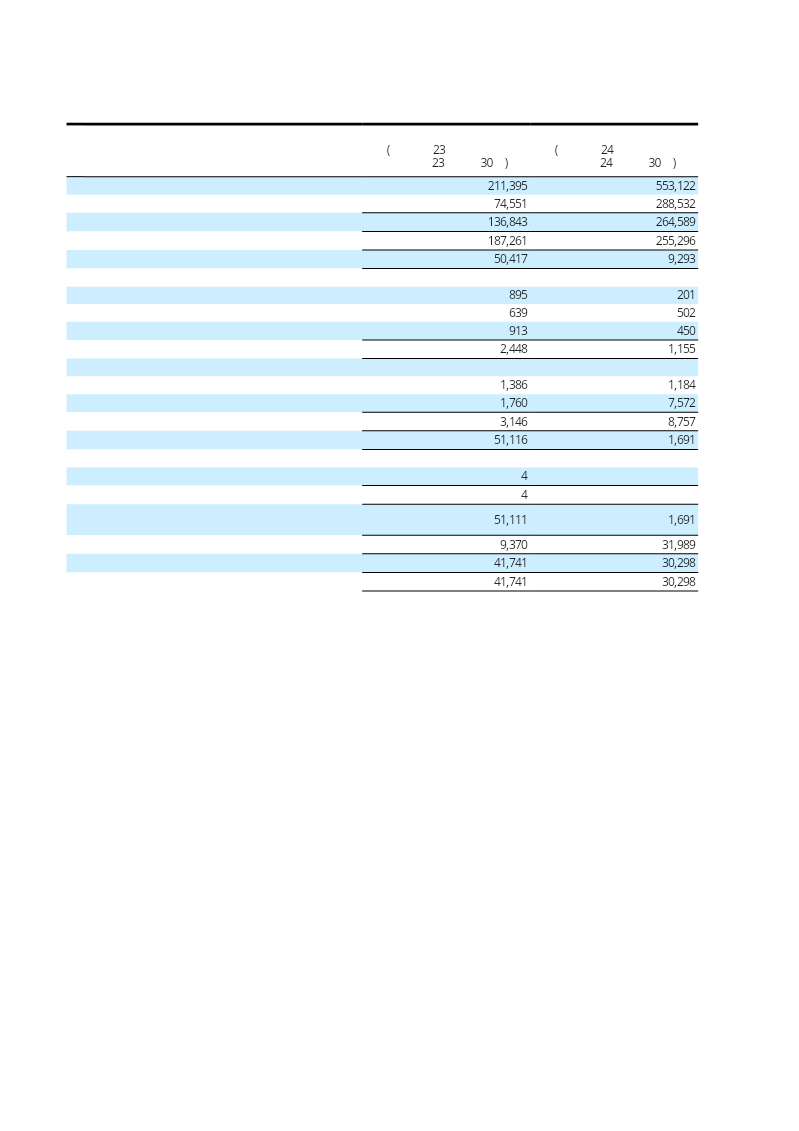
Nippon Ichi Software’s financial results for the first quarter of the fiscal year ending March 31, 2013, reflect a period of significant revenue growth and a transition toward profitability.
- Nippon Ichi Software achieved 553.1 million yen in net sales for Q1 2012, marking a 161.7% increase compared to the same period in the previous year.
- The company shifted toward profitability with an operating profit of 9.3 million yen and an ordinary profit of 1.7 million yen, reversing losses from the prior year's first quarter.
- Despite operational improvements, the company recorded a quarterly net loss of 30.3 million yen, an improvement over the 41.7 million yen loss reported in Q1 2011.
Companies behind it
As the documents state it.